Choosing the right machine matters when your day is split between IDEs, browsers, containers, databases, and long builds. The best desktop computers for programming should feel responsive under load, stay stable for hours, and leave room to grow.
In this roundup, we focus on practical performance, upgrade potential, and the right form factor for your workspace—whether you want a compact mini PC, a business tower, or a budget-friendly office desktop.
Best 10 Desktop Computers for Programming Picks for 2026
AI-Ready Tower

- Intel Core Ultra 7-265 with built-in AI support
- 32GB DDR5 memory for multitasking and coding
- Supports up to four FHD or two 4K displays
Best For: Developers who want a full-size Windows tower with strong multitasking and easy upgrades
Compact Silent PC
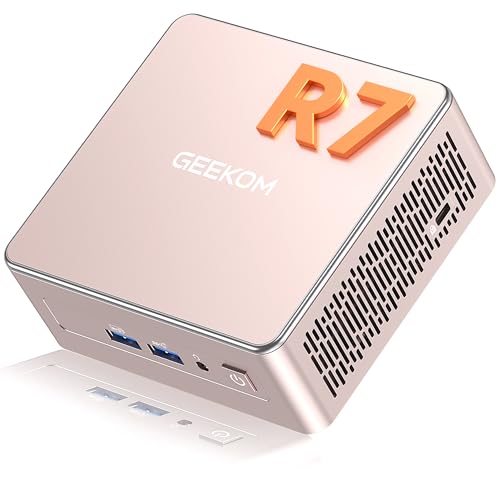
- Ryzen 7 7730U with low-power, quiet operation
- Upgradeable RAM and storage for future growth
- Up to four 4K displays plus 3-year warranty
Best For: Programmers and office users who want a small, quiet mini PC with strong expandability
Slim Business Desktop
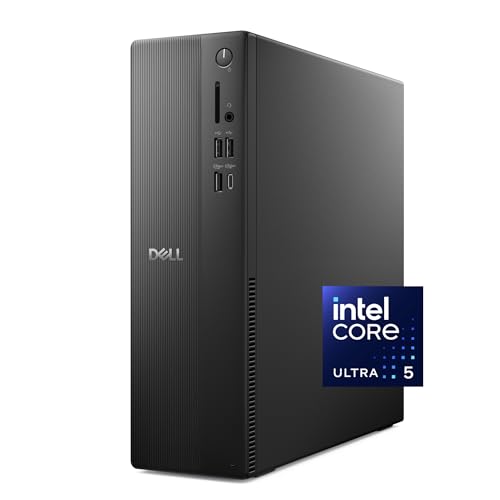
- Compact tower with a small footprint
- Core Ultra 5-225 and SSD for everyday productivity
- Supports up to four FHD or two 4K displays
Best For: Coders who want a slim, business-friendly desktop with good monitor support
Quad-Display Mini PC

- Ryzen 7 8745HS with 8 cores and 16 threads
- Supports up to four 4K displays
- USB4, dual 2.5G LAN, WiFi 6, and Bluetooth 5.3
Best For: Developers who want a compact mini PC with quad-monitor support and modern connectivity
Refurbished Office Workhorse
Dell OptiPlex 7050 SFF i7/32GB/1TB

- 32GB RAM for smooth multitasking
- 1TB SSD for fast boot and storage
- Dual-monitor support for coding setups
Best For: Developers who want a compact refurbished desktop with lots of memory
Compact Creator Mini PC
ACEMAGICIAN S3A Ryzen 7 / 16GB

- Ryzen 7 H 255 with 8 cores/16 threads
- Triple 4K display support
- PCIe 4.0 SSD with expandable storage
Best For: Programmers who want a compact mini PC with strong multitasking
Modern Business Tower

- 14th Gen Core i3 platform
- DDR5 RAM with NVMe SSD
- Dual 4K monitor support
Best For: Developers who want a modern Dell tower for everyday coding and office work
Compact Everyday Pick
Dell Optiplex 3060 Renewed with 32GB RAM

- 32GB DDR4 RAM for smooth multitasking
- 1TB SSD for fast boot and project storage
- Built-in Wi-Fi, Bluetooth, HDMI, and DisplayPort
Best For: Budget-conscious programmers who need a capable refurbished desktop
Modern Performance Pick
Dell Pro Desktop with i5-14500

- 14-core i5-14500 for fast multitasking
- DDR5 and PCIe SSD support for upgrade room
- Wi-Fi 6, Bluetooth, USB-C, and dual video outputs
Best For: Developers who want newer hardware and strong upgrade potential
Balanced Small-Form-Factor Choice

- 6-core i7-8700 with 32GB DDR4 RAM
- 512GB NVMe SSD for quick startup and access
- Small-form-factor design with dual DisplayPort
Best For: Coders who want a compact, dependable workstation
AI-Ready Tower – Dell Core Ultra 7 Tower
If you want desktop computers for programming that also handle business workloads and multiple displays well, this Dell Tower is built for that mix. The Intel Core Ultra 7-265, 32GB of DDR5 memory, and built-in AI support make it a strong fit for coding, testing, and everyday productivity.
Best For: Developers who want a full-size Windows tower with strong multitasking, easy upgrade access, and secure business features.
Pros:
- Intel Core Ultra 7 processor with built-in AI support for productive workloads
- 32GB DDR5 RAM helps with coding tools, browsers, and multitasking
- Supports up to four FHD monitors or two 4K displays
- Tool-less entry and removable side panel make upgrades easier
Cons:
- Integrated graphics are fine for coding, but not aimed at heavy GPU work
- Larger tower design takes more desk or floor space than a mini PC
- Ships with Windows 11 Home, which may be less ideal for some business setups
This is a practical pick if you want a roomy, service-backed tower with good memory and display flexibility. It leans more toward dependable productivity than flashy specs, which is often exactly what programming setups need.
Compact Silent PC – GEEKOM A5 Mini PC
For desktop computers for programming where desk space, low noise, and energy use matter, the GEEKOM A5 keeps things compact without giving up useful expansion. Its Ryzen 7 7730U, 16GB RAM, and 512GB NVMe SSD make it a practical machine for coding, document work, and multi-screen setups.
Best For: Programmers and office users who want a small, quiet mini PC with strong expansion options and long warranty coverage.
Pros:
- Ryzen 7 7730U offers reliable low-power performance for productivity tasks
- Dual-slot RAM is upgradeable to 64GB and storage can expand substantially
- Supports up to four 4K displays for multitasking
- 3-year limited warranty and 24/7 technical support add peace of mind
Cons:
- 16GB RAM is solid, but power users may want to upgrade sooner
- Integrated Radeon Vega 8 graphics are best for productivity, not heavy GPU workloads
- Mini PC design may be less convenient if you prefer easy front-access ports on a tower
The A5 stands out as a space-saving workstation with real upgrade flexibility, which is not always common in compact PCs. It is a sensible choice when you want quiet day-to-day performance and a cleaner programming desk.
Slim Business Desktop – Dell Slim Core Ultra 5
If you are comparing desktop computers for programming and want something compact for a small workspace, this Dell Slim Desktop is easy to place and easy to live with. The Intel Core Ultra 5-225, SSD storage, and multiple-monitor support make it a straightforward option for everyday development work and general business use.
Best For: Coders who want a slim, business-friendly desktop with solid display support and a small footprint.
Pros:
- Compact slim design fits well in tight workspaces
- Supports up to four FHD monitors or two 4K displays
- Tool-less entry and removable side panel simplify upgrades
- Includes hardware TPM security and 1-year onsite service
Cons:
- Integrated Intel UHD Graphics 730 is best for productivity, not graphics-heavy work
- Only one expansion slot is listed, so internal expansion is limited
- Windows 11 Home may not suit every business environment
This model is a good fit if you value a clean desk setup more than maximum internal expandability. It focuses on the essentials that matter for programming: a modern processor, SSD responsiveness, and flexible monitor output.
Quad-Display Mini PC – Glorlin Ryzen 7 8745HS
For desktop computers for programming that need a lot of screen space in a very small chassis, this Glorlin Mini PC is built around a Ryzen 7 8745HS and quad-display support. With 16GB DDR5 RAM, a 1TB NVMe SSD, and fast network options, it suits coding, multitasking, and home server-style use.
Best For: Developers who want a compact mini PC with strong multitasking, quad-monitor support, and modern connectivity.
Pros:
- Ryzen 7 8745HS delivers 8 cores and 16 threads for daily workloads
- Supports up to four 4K displays for coding and multitasking
- 1TB NVMe SSD plus dual M.2 slots allow storage expansion
- USB4, dual 2.5G LAN, WiFi 6, and Bluetooth 5.3 improve connectivity
Cons:
- Single 16GB memory configuration may be limiting for heavier workloads
- Integrated graphics are aimed more at productivity than demanding creative work
- Warranty is 1 year, which is shorter than some competing mini PCs
This is a flexible mini desktop for users who want multiple displays and fast wired networking in a tiny footprint. It is especially appealing if your programming setup also doubles as a compact office or home server environment.
Refurbished Office Workhorse – Dell OptiPlex 7050 SFF i7/32GB/1TB
If you want desktop computers for programming that feel fast without taking up much space, this refurbished Dell OptiPlex 7050 SFF is a practical pick. Its Intel Core i7-7700, 32GB of RAM, and 1TB SSD give you plenty of room for code editors, browser tabs, local tools, and virtual meetings, while the small-form-factor design fits neatly on a desk or under a monitor.
Best For: Developers, students, and home office users who want a compact, ready-to-use Windows 11 Pro desktop with generous memory.
Pros:
- 32GB DDR4 RAM is well suited to multitasking with IDEs, browsers, and productivity apps.
- 1TB SSD supports fast boot times and ample storage for projects and files.
- Dual-monitor support via HDMI and DisplayPort helps expand your coding workspace.
- Includes keyboard, mouse, Wi-Fi, Bluetooth, and Windows 11 Pro.
Cons:
- Uses an older 7th Gen Core i7 processor rather than a newer CPU.
- Integrated graphics are basic and not aimed at graphics-heavy development workloads.
- Refurbished condition may not appeal to buyers who want a brand-new system.
This is a strong budget-conscious programming desktop if you value lots of RAM and storage more than the newest processor generation. It’s especially appealing for everyday development, office tasks, and multi-monitor setups.
Compact Creator Mini PC – ACEMAGICIAN S3A Ryzen 7 / 16GB
For buyers comparing desktop computers for programming, this ACEMAGICIAN S3A stands out by packing desktop-class performance into a tiny chassis. The Ryzen 7 H 255, 16GB LPDDR5 memory, and PCIe 4.0 SSD are aimed at fast app launches, responsive multitasking, and smooth work across coding, content creation, and everyday business use.
Best For: Developers, creators, and home office users who want a compact mini PC with strong multitasking and triple-display support.
Pros:
- Ryzen 7 H 255 with 8 cores and 16 threads is built for demanding multitasking.
- Triple 4K display support can make coding and productivity workflows easier.
- PCIe 4.0 SSD and LPDDR5 memory help keep the system responsive.
- Quiet cooling and multiple performance modes let you tune noise and power use.
Cons:
- 16GB RAM is solid, but power users may want more headroom for heavy projects.
- Storage starts at 512GB, so larger software libraries may require expansion.
- Mini PC design is flexible, but it may not suit buyers who prefer a traditional tower.
This is a compelling compact option if you want a programming machine that also handles media, meetings, and light creative work. Its strengths are speed, display flexibility, and a space-saving footprint.
Modern Business Tower – Dell ECT1250 i3-14100 / DDR5
If you’re shopping for desktop computers for programming with a modern, business-friendly feature set, this Dell tower is a straightforward option. It pairs a 14th Gen Intel Core i3-14100 with 8GB DDR5 RAM, a 512GB PCIe NVMe SSD, and Windows 11 Pro, making it suited to everyday development work, office automation, and general multitasking.
Best For: Developers and business users who want a current-generation Dell tower with Windows 11 Pro and dual 4K monitor support.
Pros:
- 14th Gen Core i3-14100 brings a newer CPU platform for day-to-day development tasks.
- DDR5 memory and NVMe SSD help keep the system responsive.
- Supports dual 4K monitors, which is useful for coding and data-heavy workflows.
- Includes Wi-Fi 6, Bluetooth, USB-C, HDMI 2.1, DisplayPort, and Ethernet.
Cons:
- 8GB RAM is the most limiting spec here for larger projects or heavy multitasking.
- 512GB storage may fill up quickly if you keep many tools and files locally.
- Integrated graphics are fine for productivity, but not meant for demanding GPU work.
This Dell tower makes sense if you want a newer, enterprise-ready desktop for coding, office work, and multi-monitor productivity. The platform is modern, but the base RAM level suggests it’s best for lighter development workloads unless you plan to upgrade.
Compact Everyday Pick – Dell Optiplex 3060 Renewed with 32GB RAM
If you want desktop computers for programming that stay affordable without feeling underpowered, this renewed Dell OptiPlex 3060 is a practical option. The Intel Core i5-8500, 32GB of RAM, and 1TB SSD give you a responsive setup for coding, browsing docs, and running common dev tools on Windows 11 Pro.
Best For: Developers who want a budget-friendly refurbished tower with lots of memory and fast storage.
Pros:
- 32GB DDR4 RAM helps with multitasking across editors, browsers, and tools.
- 1TB SSD supports fast boot times and plenty of local project storage.
- Built-in Wi-Fi and Bluetooth make desk setup simpler.
- Includes DisplayPort and HDMI for monitor flexibility.
Cons:
- Integrated Intel UHD Graphics 630 is not aimed at graphics-heavy workloads.
- Renewed unit comes with a 90-day warranty.
- Older 8th-gen platform may not suit buyers wanting the newest CPU generation.
Overall, this OptiPlex 3060 is a straightforward programming desktop with strong memory and storage for everyday development work. It is best suited to coding, office tasks, and home setups where value matters more than cutting-edge hardware.
Modern Performance Pick – Dell Pro Desktop with i5-14500
For desktop computers for programming that prioritize speed and room to grow, this Dell Pro business desktop stands out. Its Intel Core i5-14500, DDR5 memory support, and PCIe SSD storage are geared toward fast application launches, responsive multitasking, and a cleaner modern workflow in Windows 11 Pro.
Best For: Programmers who want a newer business desktop with strong CPU performance and upgrade headroom.
Pros:
- 14-core, 20-thread Intel i5-14500 is built for demanding multitasking.
- DDR5 memory support and PCIe M.2 SSD options leave room to upgrade.
- Wi-Fi 6, Bluetooth, USB-C, HDMI-in/out, and DisplayPort improve connectivity.
- Includes wireless keyboard and mouse for a ready-to-use setup.
Cons:
- 16GB RAM and 512GB SSD are solid, but not the max configuration available.
- Integrated Intel UHD Graphics 770 is fine for productivity, not heavy graphics work.
- Designed as a business tower, so it is more utilitarian than flashy.
This is the strongest performance-focused pick in the group for coding, compiling, and juggling multiple tools at once. If you want a newer Dell desktop that can scale with your workload, it is the most future-ready option here.
Balanced Small-Form-Factor Choice – Dell OptiPlex 7060 SFF i7
If you need desktop computers for programming in a smaller footprint, this OptiPlex 7060 SFF is a balanced choice. The Intel Core i7-8700, 32GB of RAM, and 512GB NVMe SSD provide reliable day-to-day performance for coding, testing, and general office use, while the small-form-factor design keeps your desk tidy.
Best For: Programmers who want a compact workstation with strong multitasking and dual-monitor support.
Pros:
- 6-core Intel i7-8700 handles everyday development tasks smoothly.
- 32GB DDR4 RAM supports working across multiple apps and browser tabs.
- 512GB NVMe SSD offers quick boot and file access.
- Dual DisplayPort outputs make multi-monitor setups easier.
Cons:
- 512GB storage may feel limited for large local projects or media libraries.
- Renewed system includes a 90-day limited warranty.
- Integrated graphics are basic and not intended for demanding visual workloads.
This OptiPlex 7060 SFF hits a useful middle ground between size, speed, and practicality. It is a sensible coding desktop if you want dependable performance without a larger tower on your desk.
How We Picked the Best Desktop Computers for Programming
We prioritized desktops that make real development work smoother: fast CPUs, enough RAM for multitasking, SSD storage for quick project loads, and dependable connectivity for monitors, peripherals, and networks. We also considered whether each system is a good fit for common programming tasks like web development, app building, testing, virtualization, and light local server work.
Value mattered too. Some buyers need the strongest possible compile times, while others just want a quiet, dependable system that can run editors, a browser stack, and a few tools without slowing down. That is why this list includes both newer high-performance machines and affordable refurbished-style options.
Quick Comparison: What Matters Most
If you want the easiest path, match the desktop to your workload. Mini PCs are best for small desks and light-to-moderate development. Slim desktops strike a balance between size and upgrade flexibility. Towers are the safest bet for heavier multitasking, larger projects, and future expansion.
For programming, RAM often matters more than raw storage size once you move beyond basic use. A fast SSD keeps your environment responsive, but 16GB of memory is usually the practical minimum for modern development, and 32GB is better for Docker, VMs, or large IDE projects.
Key Buying Factors for Desktop Computers for Programming
Processor Performance
Choose a CPU with enough cores and modern architecture for compile speed, background tools, and multitasking. If you use containers, run tests constantly, or build larger applications, prioritize a stronger processor over extras you may not need.
Memory and Storage
For most buyers, 16GB RAM is the starting point, while 32GB is the sweet spot for serious development. An NVMe SSD is strongly preferred because it shortens boot times, speeds up project indexing, and makes dependency installs feel much faster.
Form Factor and Expandability
Towers usually offer the best upgrade path, making them ideal if you expect your workflow to grow. Mini PCs are compact and efficient, but you should check port selection, RAM limits, and storage expansion before buying.
Ports, Displays, and Networking
Developers often benefit from multiple monitor support, USB-C or USB4, and reliable Wi-Fi or Ethernet. If you use a dock, external SSDs, or several displays, port layout can matter as much as raw speed.
Who Should Buy Which Desktop Computers for Programming?
If you are a student or casual coder, a budget desktop with an SSD and 16GB RAM is usually enough. If you build applications professionally, work with large repos, or keep many tools open at once, a newer tower with 32GB RAM will feel significantly better.
If you need a clean desk and quiet setup, a mini PC is a strong choice. If you want the most flexible long-term option, a tower is still the best overall platform for Desktop Computers for Programming because it handles upgrades and heavier workloads more comfortably.