Choosing a 3D scanner for jewelry means balancing fine detail, stable capture, and a workflow that fits tiny reflective objects. The best models can help with design, reverse engineering, inspection, and rapid prototyping.
In this roundup, we focus on scanners that are better suited to rings, pendants, small components, and other high-detail pieces where accuracy and surface handling matter most.
Best 10 3d Scanner for Jewelry Picks for 2026
Precision Hybrid Scanner

- 0.02 mm accuracy with blue laser detail
- NIR and laser modes for small to large objects
- 24-bit color capture with fast scanning
Best For: Detailed jewelry scans plus broader multi-size scanning
Metrology-Focused All-in-One

- Photogrammetric metrology for dimensional capture
- 0.04 mm single-point cloud accuracy
- Portable with 48MP RGB and fast charging
Best For: Measurement-heavy jewelry and mixed-size scanning
Small-Object Detail Scanner

- 0.02 mm accuracy for small details
- Built for 10 to 300 mm objects indoors
- Anti-shake and scan-back help stability
Best For: Indoor jewelry scanning with fine detail
Mini Precision Scanner
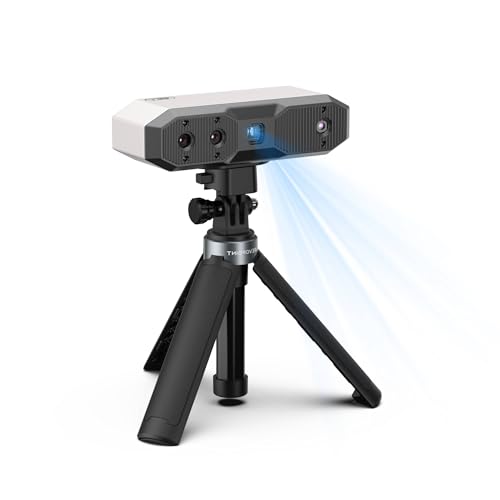
- Up to 0.02 mm precision for small parts
- Lightweight 175 g design with Wi-Fi 6
- IMU and buttons improve handheld stability
Best For: Portable precision scanning for jewelry-sized objects
Precision Starter Pick
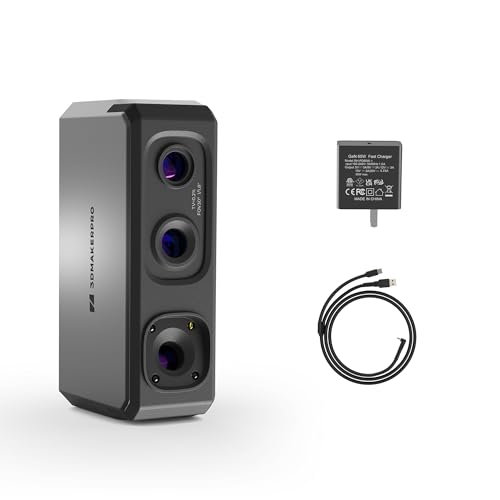
- 0.02mm claimed accuracy for fine details
- Optimized for small objects from 10 to 300mm
- Mono texture scanning with JMStudio software
Best For: jewelers who need a compact scanner for detailed small-object capture
Color Detail Pick
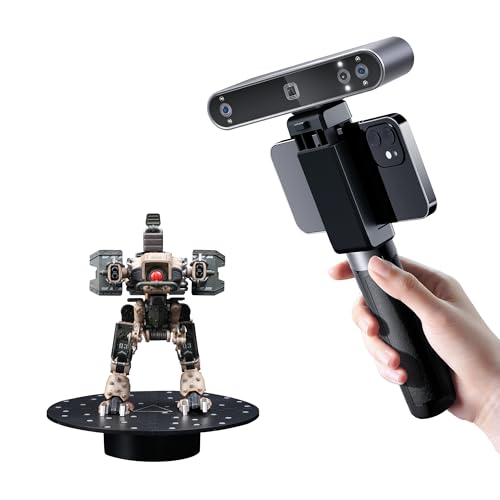
- Full-color scans with HD RGB camera
- 1.5x and 2x optical zoom for more detail
- Up to 18 fps with 9-axis IMU stabilization
Best For: users who want color scanning and portable performance for jewelry and beyond
All-in-One Workshop Pick
Toucan Premium Handheld 3D Scanner
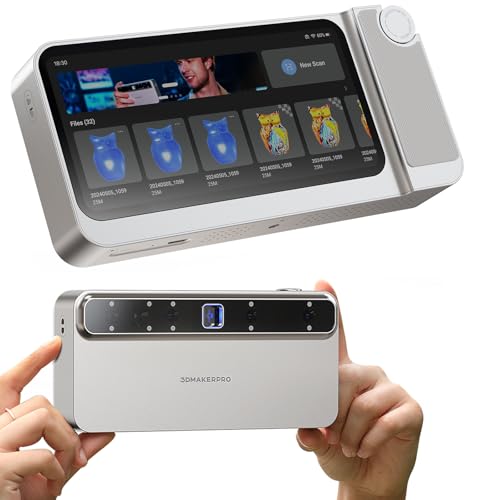
- No computer required for scanning and export
- Up to 0.03mm accuracy with blue laser structured light
- Deep scan mode helps capture complex and hidden areas
Best For: professionals who want an on-device scanner for jewelry and larger objects
Industrial Precision Pick
Revopoint MetroX Pro Blue Laser Scanner

- Up to 0.01 mm single-frame precision
- Blue laser modes handle shiny/dark surfaces
- Auto turntable and real-time streaming
Best For: Jewelry makers needing high-detail, precision scans
Easy Workflow Choice
Matter and Form THREE 3D Scanner

- 33 micron accuracy for detailed scans
- Autofocus 13MP cameras for small objects
- No tracking dots and broad OS support
Best For: Users who want simple, precise scanning across many devices
Portable Flexible Pick
Revopoint INSPIRE 2 Standard 3D Scanner

- Wireless scanning with WiFi 6.0
- Handles reflective or dark surfaces without spray
- Lightweight 190 g body with RGB color capture
Best For: Portable jewelry scanning with flexible on-the-go use
Precision Hybrid Scanner – Creality CR-Scan Raptor
If you want a 3d scanner for jewelry that can also handle larger objects, the Creality CR-Scan Raptor offers a flexible mix of blue laser and NIR scanning. Its 0.02 mm accuracy, marker-free support for feature-rich items, and 24-bit color capture make it a strong fit for detailed model work where speed and edge definition matter.
Best For: Users who need fine detail for small jewelry pieces but also want the option to scan medium and large items.
Pros:
- 0.02 mm accuracy with 0.1 mm fine-detail resolution for sharp geometry.
- Blue laser and NIR modes support objects from 5×5×5 mm up to 2000×2000×2000 mm.
- Up to 60 fps blue laser scanning helps speed up workflows.
- 24-bit full-color scanning with 12 circular LED texture lights.
Cons:
- Best results depend on a capable system, especially on Windows.
- Advanced features may take time to learn if you are new to 3D scanning.
For jewelry work, this scanner stands out more for precision and versatility than for being a niche, jewelry-only tool. If you need one scanner that can capture tiny details and still scale up for other products, it is an efficient all-around choice.
Metrology-Focused All-in-One – Revopoint MIRACO Plus
The Revopoint MIRACO Plus is a capable 3d scanner for jewelry if you also need measurement-oriented capture for larger or more complex pieces. Its photogrammetric metrology kit, 0.04 mm single-point cloud accuracy, and 48MP RGB camera are designed for users who want detailed scans with strong color and dimensional support.
Best For: Buyers who want a portable scanner for precise jewelry-related work and photogrammetric measurement tasks.
Pros:
- Photogrammetric kit helps measure large objects with 0.02 mm + 0.05 mm x L(m) accuracy.
- Quad depth cameras and near/far modes handle tiny parts through larger surfaces.
- 48MP RGB camera and flash LEDs support lifelike color capture.
- Portable 750 g design with 2-hour battery life and fast charging.
Cons:
- Revo Design is sold separately if you want the scan-to-CAD workflow.
- The software is only compatible with x86 architecture, which narrows some use cases.
This is the most measurement-driven option in the group, so it makes sense if your jewelry scanning work is part of a wider inspection or CAD pipeline. It is less specialized for tiny items than some compact scanners, but it brings a lot of workflow flexibility.
Small-Object Detail Scanner – 3DMakerpro Seal Lite
For a more compact 3d scanner for jewelry, the 3DMakerpro Seal Lite is built around small-format capture and fine detail. Its blue LED light source, 0.02 mm accuracy, and indoor-focused setup make it a practical choice for rings, pendants, and other small objects where edge texture matters.
Best For: Users scanning small jewelry pieces indoors with a focus on fine detail.
Pros:
- Blue LED structured light and 0.02 mm accuracy support detailed small-object scans.
- Designed for objects from 10 to 300 mm with a recommended 180–280 mm working distance.
- Scan-back and anti-shake features help stabilize handheld scanning.
- JMStudio software includes visual tracking, error correction, and export to common 3D formats.
Cons:
- Mono texture only, so color capture is limited.
- Recommended for indoor use and may require a more powerful PC.
This model is a strong match when jewelry is the main focus and you do not need full-color output. It is designed for controlled scanning conditions, so it rewards careful setup and a bit of practice.
Mini Precision Scanner – Revopoint MINI 2
The Revopoint MINI 2 is a compact 3d scanner for jewelry and other small items when high precision is the priority. Its blue light technology, up to 0.02 mm single-frame precision, and larger capture range make it a strong option for users who need careful detail capture with good tracking support.
Best For: Small jewelry pieces and other compact objects where precision and portability matter.
Pros:
- Up to 0.02 mm single-frame precision for tiny intricate details.
- 16 fps capture speed with a larger 168 x 132 mm single capture range.
- IMU and tactile buttons help improve stability and ease of use.
- Wi-Fi 6 and USB-C support flexible connection options.
Cons:
- Results can vary by material and color, and scanning spray may be needed.
- Best suited to small objects rather than very large or extremely tiny pieces outside its limits.
If your workflow centers on compact jewelry and you want a lightweight scanner, this is a very capable choice. It balances precision, portability, and easy connectivity without trying to be a general-purpose large-object machine.
Precision Starter Pick – 3DMakerpro Seal Lite
If you want a 3d scanner for jewelry that focuses on tiny details, the 3DMakerpro Seal Lite is built around small-format scanning and fine structured light capture. Its blue LED light source and claimed 0.02mm accuracy make it a sensible choice for rings, pendants, and other compact pieces where edge texture and small dents matter.
Best For: Jewelry makers who need a compact scanner for small objects and detailed surface capture.
Pros:
- Blue LED light source is tuned for finer structured light and small surface details.
- Designed for objects from 10 to 300mm, which suits many jewelry items.
- Scan-back and anti-shake features help produce more stable handheld results.
- Free JMStudio software supports alignment, error correction, and common export formats.
Cons:
- Captures mono texture only, so it is not a color-focused option.
- Indoor use is suggested for best results.
- Has a learning curve and may need a relatively powerful PC.
For jewelers who care more about small-part precision than full-color capture, this scanner is a practical entry point. It is best treated as a focused tool for controlled indoor workflows rather than a casual all-purpose device.
Color Detail Pick – Revopoint POP3 Plus
The Revopoint POP3 Plus is a versatile 3d scanner for jewelry if you want full-color capture alongside solid detail. It combines a claimed 20-micron accuracy target, 20% more precision, and a 1.5x/2x optical zoom function, which can help when scanning small objects that need extra point-cloud detail.
Best For: Users who want a portable scanner with color output and flexible workflows for jewelry and other medium-sized items.
Pros:
- Full-color scanning with an HD RGB camera and Flash LED lighting system.
- New optical zoom function adds 1.5x and 2x magnification for more detail.
- Up to 18 fps scanning and a 9-axis IMU help stabilize captures.
- Works with Wi-Fi 6 or USB-C and supports multiple export formats.
Cons:
- It is positioned for medium-sized objects overall, not jewelry-only workflows.
- Software compatibility is limited to x86_64 architecture.
- Getting the most from marker tracking may take some software familiarity.
For jewelry work, the POP3 Plus stands out when you want color plus portability in one device. It is a balanced option for creators who may also scan other small-to-medium objects and want a broader scan-to-design workflow.
All-in-One Workshop Pick – Toucan Premium Handheld 3D Scanner
The Toucan Premium is a different kind of 3d scanner for jewelry because it is fully self-contained and does not require a computer. With up to 0.03mm accuracy, blue laser structured light, and a deep scan range, it is aimed at users who want to scan jewelry and larger objects in one workflow without being tied to a PC.
Best For: Professionals who want an all-in-one handheld scanner that can handle jewelry plus larger items on the go.
Pros:
- No computer required; scanning, processing, editing, fusing, and exporting happen on-device.
- Claimed up to 0.03mm accuracy and 0.05mm resolution for detailed work.
- Blue laser structured light and adjustable scan modes support small and large objects.
- Deep scan capability and Smart Resume Scan Mode help capture complex shapes and hidden areas.
Cons:
- Higher-end feature set may be more than some jewelry-only users need.
- Battery life is listed at up to 120 minutes, so long sessions may need planning.
- At 735 g, it is portable but still heavier than ultra-compact scanners.
If you want a self-contained scanner that can move from jewelry to larger projects, Toucan offers the broadest workflow here. It is best suited to users who value independence from a laptop and need a flexible, field-ready tool.
Industrial Precision Pick – Revopoint MetroX Pro Blue Laser Scanner
If you need a 3d scanner for jewelry that prioritizes precision and surface capture, the Revopoint MetroX Pro is built for detail-heavy work. Its blue laser modes and structured light options are designed to handle shiny, dark, and feature-rich objects, making it a strong fit for fine jewelry, small parts, and other demanding scans.
Best For: Jewelry makers and professionals who need very high precision on small, reflective objects.
Pros:
- Up to 0.01 mm single-frame precision for highly detailed captures
- Blue laser and structured light modes help scan shiny or dark surfaces without spray
- Auto turntable and real-time streaming support a faster workflow
- Multiple tracking modes add flexibility for different object shapes
Cons:
- Revo Design and Revo Measure are paid software sold separately
- Windows-only support for some advanced software tools
- Larger, heavier setup than a compact portable scanner
Overall, the MetroX Pro is the most precision-focused option here, especially if your jewelry workflow depends on fine surface detail and repeatable scans. It leans more toward advanced users, but the scanning modes and automation make it a capable choice for demanding production work.
Easy Workflow Choice – Matter and Form THREE 3D Scanner
The Matter and Form THREE is a practical 3d scanner for jewelry if you want sharp results without a complicated setup. Its dual 13MP autofocus cameras, 0.033 mm accuracy, and no-tracking-dots workflow make it a clean option for scanning small jewelry pieces as well as larger objects.
Best For: Users who want a simple, high-accuracy scanner that works across many devices and operating systems.
Pros:
- Dual 13MP autofocus cameras help keep tiny jewelry in focus
- 0.033 mm accuracy supports professional-grade detail
- No tracking dots required for a cleaner workflow
- Works with Windows, Mac, Linux, iOS, Android, and Chromebooks
Cons:
- No built-in mobile or wireless scanning features listed
- Less specialized for shiny-surface capture than laser-based models
- Designed as a broad-use scanner rather than a jewelry-only tool
If you want one scanner that can handle jewelry and much larger objects, the THREE offers a straightforward balance of precision and ease of use. Its biggest advantage is the low-friction workflow, which is especially helpful if you want to spend less time setting up and more time scanning.
Portable Flexible Pick – Revopoint INSPIRE 2 Standard 3D Scanner
The Revopoint INSPIRE 2 is a versatile 3d scanner for jewelry if you need portability and flexibility alongside solid detail. With infrared laser lines, structured light, optical zoom, and built-in WiFi 6.0, it is aimed at users who want to scan small reflective pieces as well as work in more mobile or outdoor settings.
Best For: Portable scanning workflows that need good detail and the option to work on the go.
Pros:
- Can scan reflective or dark surfaces without scanning spray
- Compact 190 g design makes it easy to carry
- WiFi 6.0 and PC-to-mobile streaming add flexibility
- Built-in RGB camera captures true-to-life color and texture
Cons:
- Accuracy is lower than the more precision-focused options in this roundup
- Best performance depends on compatible hardware requirements
- Revo Design is sold separately and is Windows only
For jewelers who value portability and a more adaptable scanning setup, the INSPIRE 2 is an appealing middle ground. It is not the most specialized precision machine here, but it offers a useful mix of mobility, surface handling, and color capture for everyday scanning tasks.
How We Picked the Best 3d Scanner for Jewelry
We looked for scanners that offer strong small-object performance, reliable accuracy claims, and capture modes that make sense for jewelry workflows. That includes devices with higher resolution, fine detail capture, blue light or laser options, and software features that reduce setup friction.
We also prioritized practical factors such as ease of use, portability, support for color or texture where useful, and the ability to handle reflective or compact objects without excessive preparation.
Quick Comparison
For the most detail-oriented users, tabletop and high-precision scanners tend to be the best fit for rings, settings, and wax patterns. Handheld scanners are better when you need flexibility, larger working volume, or a mixed workflow that includes other product types.
If your priority is capturing tiny geometry with minimal compromise, look for the highest stated accuracy and the most stable close-range scanning. If you need a more versatile 3d Scanner for Jewelry and general use, a handheld model with strong anti-shake features may be the better all-around choice.
Key Buying Factors for a 3d Scanner for Jewelry
Accuracy and Detail
Jewelry work often depends on small dimensional differences. Check stated accuracy, point resolution, and whether the scanner is designed for close-range macro scanning. Higher accuracy matters most for stone settings, prongs, engraving, and fit-critical parts.
Surface Handling
Metallic and glossy surfaces can challenge many scanners. Blue light and laser systems often perform better than basic structured-light units, but you may still need scanning spray or matte preparation for highly reflective pieces.
Object Size and Capture Range
Some scanners are optimized for very small items, while others are better for medium-size objects or broader versatility. Match the scanner’s capture range to the kinds of pieces you actually make or inspect.
Workflow and Software
Good software can matter as much as hardware. Look for stable alignment, easy mesh cleanup, and export options that fit CAD, 3D printing, or inspection workflows.
Who Should Buy Which 3d Scanner for Jewelry?
If you mainly scan rings, stones, and small precision parts, choose a high-detail model built for close-up capture. If you also need to scan larger items or move between studio and field work, a handheld option may be a better balance.
For users who want a dedicated 3d Scanner for Jewelry with the least compromise on detail, prioritize accuracy and macro performance first. For mixed-purpose makers, choose versatility, speed, and easier setup over the absolute highest spec sheet numbers.