Choosing the right enclosure can make a big difference when you’re moving large video files, editing from external storage, or working under tight deadlines.
These picks focus on speed, thermal control, compatibility, and real-world reliability so you can match your workflow with the right drive housing.
Best 10 SSD Enclosures for Video Editing Picks for 2026
Cool-Running Thunderbolt Pick
ACASIS 40Gbps M.2 NVMe SSD Enclosure

- Built-in fan helps prevent throttling
- Intel JHL7440 for USB4/TB3/TB4 support
- Up to 2805/2734 MB/s tested speeds
Best For: Creators who need cooled Thunderbolt storage
High-Capacity Pro Pick
TERRAMASTER D1 SSD Pro 80Gbps Enclosure

- Up to 7061 MB/s read speed
- Fanless aluminum design is silent
- Built for sustained 8K editing
Best For: Pro editors needing top speed and quiet operation
Value 40Gbps Pick
UGREEN 40Gbps M.2 NVMe Enclosure
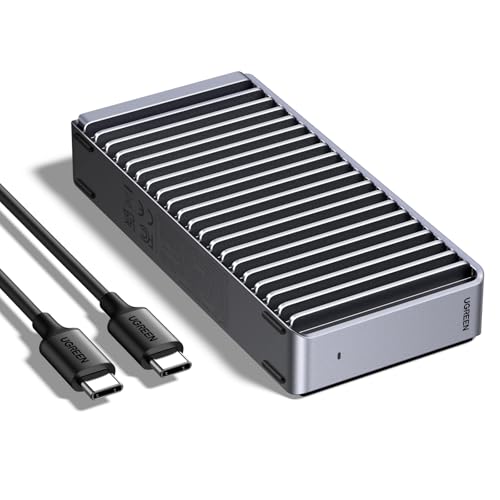
- Up to 3600 MB/s with TB4 gear
- Slim aluminum body with fin cooling
- Supports NVMe drives up to 8TB
Best For: Editors wanting a compact, quiet NVMe enclosure
Magnetic 4K Recording Pick

- Built-in silent fan and thermal pad
- Direct 4K@60 ProRes recording support
- Magnetic, compact design for mobile work
Best For: iPhone Pro creators recording and editing on the go
Thunderbolt Speed Pick
Yottamaster 40Gbps NVMe Enclosure

- 40Gbps support for Thunderbolt 4 and USB4
- Active cooling and aluminum construction
- Tool-free setup with up to 8TB support
Best For: Fast, sustained editing transfers on Thunderbolt/USB4 systems
Dual-Drive Flex Pick
ASUS ROG Strix Aiolos SSD Enclosure

- Supports both NVMe PCIe and SATA SSDs
- Up to 20Gbps with tool-free installation
- Thermal pad and SSD Dashboard included
Best For: Creators who want flexible drive support in a premium enclosure
Ultra-High-Speed All-Flash Docking

- USB4 40Gbps connection
- Up to 32TB across 4 SSDs
- Aluminum body with fan cooling
Best For: DITs and editors needing fast, portable multi-drive storage
Quiet Single-Drive Speed
Qwiizlab Fanless USB4 NVMe Enclosure

- Up to 40Gbps via USB4/TB4/5
- Fanless aluminum design
- Supports NVMe drives up to 8TB
Best For: Quiet single-SSD editing on Mac or Windows
Four-Bay Editing Storage
TERRAMASTER D4 SSD 40Gbps Enclosure

- Four NVMe bays up to 32TB
- 40Gbps USB4/Thunderbolt support
- Tool-free, hot-swappable design
Best For: Large editing libraries and multi-drive backup workflows
USB4 Speed Pick – SABRENT USB4 NVMe SSD Enclosure
If you want one of the fastest SSD enclosures for video editing, this SABRENT model is built for high-speed transfers and portable editing workflows. With USB4 support, tool-free NVMe installation, and active cooling, it suits creators moving large footage between a laptop and external storage.
Best For: Editors who want a very fast, portable NVMe enclosure with easy drive swaps.
Pros:
- Up to 3,900 MB/s over USB4, with strong Thunderbolt 3/4 support.
- Tool-free installation for 2230/2242/2260/2280 PCIe NVMe drives.
- Built-in active cooling fan helps keep speeds stable during long transfers.
- Works with Windows and macOS over USB-C, USB4, or Thunderbolt.
Cons:
- Does not support SATA M.2 SSDs.
- Top speed depends on having a compatible USB4 or Thunderbolt host.
Overall, this is a strong choice when raw transfer speed and convenience matter most. For editors handling large project files, it offers a practical mix of performance, cooling, and compatibility.
Cool-Running Thunderbolt Pick – ACASIS 40Gbps M.2 NVMe SSD Enclosure
This ACASIS enclosure is aimed at editors who need a reliable 40Gbps drive case for video editing and don’t want heat to slow them down. It combines a built-in fan, a certified Intel JHL7440 chip, and broad Thunderbolt/USB support for demanding external work drives.
Best For: Mac and PC users who want active cooling and stable Thunderbolt-class performance.
Pros:
- Built-in cooling fan plus heat-dissipation holes to reduce throttling.
- Certified Intel JHL7440 chip for USB4 and Thunderbolt 3/4 compatibility.
- Supports 2230/2242/2260/2280 NVMe drives.
- Tested speeds up to 2805/2734 MB/s with a Samsung 980 Pro on MacBook.
Cons:
- The fan must be switched on manually.
- Top performance depends on the right host and compatible cable.
If your editing work often runs long transfers or heavier timelines, this enclosure focuses on heat control as much as speed. That makes it a sensible pick for mobile creators and workstation users alike.
High-Capacity Pro Pick – TERRAMASTER D1 SSD Pro 80Gbps Enclosure
For editors looking at premium SSD enclosures for video editing, the TERRAMASTER D1 SSD Pro pushes into the 80Gbps class with a strong focus on sustained performance. Its fanless aluminum body, dual-fin heatsink design, and very high tested read speed make it suited to large, demanding media workflows.
Best For: Professional editors who want maximum throughput and silent operation.
Pros:
- Up to 7061 MB/s read speed for very demanding workflows.
- Fanless aluminum design keeps operation completely silent.
- Dual-fin heatsink structure is built for sustained 8K editing.
- Supports Thunderbolt 5/4/3 and USB4, plus up to 8TB NVMe 2280 drives.
Cons:
- Higher-end speed only makes sense with compatible Thunderbolt/USB4 hardware.
- Designed for 2280 drives only, not smaller M.2 sizes.
This is the most performance-focused option in the group, especially if your edit files are large enough to benefit from top-tier bandwidth. It stands out for users who want speed without fan noise.
Value 40Gbps Pick – UGREEN 40Gbps M.2 NVMe Enclosure
The UGREEN 40Gbps enclosure is a practical choice if you want a fast, compact drive case for video editing without going all the way to the highest-end models. It uses an ASM2464PD chip, supports a wide range of devices, and focuses on quiet cooling through a finned aluminum design.
Best For: Editors who want a slim, widely compatible NVMe enclosure for everyday project storage.
Pros:
- Up to 3600 MB/s with Thunderbolt 4 cables and devices.
- Compatible with USB4, Thunderbolt 3/4, and older USB standards.
- Double-sided fin design improves heat dissipation without a fan.
- Supports 2230/2242/2260/2280 NVMe drives up to 8TB.
Cons:
- Needs Thunderbolt 4 gear to reach the top advertised speed.
- Does not support SATA NGFF or mSATA drives.
This enclosure makes sense if you want solid performance in a portable body and broad compatibility across devices. It is a well-balanced option for editors who value simplicity and quiet operation.
Magnetic 4K Recording Pick – ACASIS 10Gbps NVMe Enclosure
If you want an SSD enclosure for video editing that also doubles as a mobile recording setup, the ACASIS magnetic M.2 NVMe enclosure is built around that use case. It pairs 10Gbps transfer speeds with a built-in silent cooling fan, aluminum alloy housing, and a thermal pad to help keep performance stable during long shoots and transfers.
Best For: iPhone Pro/Pro Max users who want direct 4K ProRes recording plus a portable editor-friendly drive.
Pros:
- Built-in silent fan and aluminum construction for triple heat dissipation
- Supports direct 4K@60 ProRes recording on compatible iPhone 15/16/17/18 Pro models
- Magnetic attachment helps keep the enclosure secured to the phone
- Compact 2230-size design is easy to carry for travel or event work
Cons:
- SSD is not included
- Requires formatting to ExFAT or APFS before use with a phone
- May need external power for larger drives over 1TB or multiple-device setups
For creators who move between capture and editing, this ACASIS model is a very specific but practical fit. Its value is strongest when you need stable mobile recording and fast file handling in one enclosure.
Thunderbolt Speed Pick – Yottamaster 40Gbps NVMe Enclosure
For high-end ssd enclosures for video editing, the Yottamaster M.2 NVMe enclosure is aimed at users who can take advantage of Thunderbolt 4 or USB4 speeds. It uses the ASM2464PD controller, includes active cooling, and is designed for sustained performance when moving large video files or working through demanding projects.
Best For: Thunderbolt 4 and USB4 users who want fast, steady transfers for professional editing.
Pros:
- 40Gbps-rated enclosure for Thunderbolt 4 and USB4 systems
- Active cooling fan plus aluminum body for better thermal control
- Tool-free installation with a clear transparent cover
- Supports 2230/2242/2260/2280 SSD sizes up to 8TB
Cons:
- Best speeds depend on a compatible 40Gbps host and cable
- Actual performance varies with SSD, system, and file type
- Thunderbolt 4 / USB4 focus makes it less universal than basic USB-C options
This enclosure makes sense when transfer speed and sustained thermals matter more than simplicity. If your editing workflow is built around a fast Thunderbolt or USB4 machine, it is the most performance-oriented option in this group.
Dual-Drive Flex Pick – ASUS ROG Strix Aiolos SSD Enclosure
If you want an SSD enclosure for video editing that can handle both NVMe PCIe and SATA drives, the ASUS ROG Strix Aiolos is the most flexible option here. It offers up to 20Gbps over USB-C 3.2 Gen 2×2, tool-free installation, and a thermal setup designed to keep drives stable during heavier workloads.
Best For: Editors who want broad drive compatibility and a premium, travel-friendly enclosure.
Pros:
- Supports both M.2 NVMe PCIe and SATA SSDs
- Up to 20Gbps transfer speeds over USB-C 3.2 Gen 2×2
- Tool-free push-to-open design for quick drive swaps
- Includes thermal pad, heat-resistant coating, and SSD Dashboard support
Cons:
- Top speed is lower than 40Gbps Thunderbolt/USB4 enclosures
- Requires compatible systems for USB 3.2 Gen 2×2 performance
- Features are geared toward ASUS/ROG style workflows, which may be more than some users need
This is the most versatile enclosure of the three if you switch between drive types or want a polished mobile setup. It is a strong pick for creators who value compatibility, easy access, and solid cooling over absolute peak speed.
Ultra-High-Speed All-Flash Docking – ORICO 40Gbps 4-Bay NVMe Dock
If you need ssd enclosures for video editing that prioritize raw throughput and high-capacity media handling, this ORICO 4-bay model is built for demanding workflows. Its USB4 connection and all-flash design are aimed at speeding up imports and keeping large 4K/8K projects moving, while the fan and aluminum housing help it stay stable under load.
Best For: DITs, editors, and production teams needing a compact, high-capacity NVMe enclosure for multi-drive workflows.
Pros:
- USB4/40Gbps interface supports fast transfers for editing workloads.
- Holds up to four M.2 NVMe drives for a total of 32TB.
- All-aluminum body, cooling fan, and vents are designed for sustained operation.
- Compact solid-state design is lighter and more portable than 3.5-inch drive cabinets.
Cons:
- SSD drives are not included.
- Single-drive operation is noted at up to 10Gbps, not full 40Gbps per drive.
- Larger multi-bay setup may be more than casual users need.
For editors who want one enclosure to handle large media libraries and fast on-set or studio transfers, this ORICO stands out for capacity and mobility. It makes the most sense when you value multi-drive storage over a simple single-SSD setup.
Quiet Single-Drive Speed – Qwiizlab Fanless USB4 NVMe Enclosure
Among ssd enclosures for video editing, this Qwiizlab model is a strong pick if you want a quiet, fanless single-drive setup with serious bandwidth. It supports USB4 and Thunderbolt 4/5 ports, with a design focused on heat dissipation through its aluminum chassis rather than an active fan.
Best For: Editors who want a quiet, portable NVMe enclosure for one high-speed SSD on macOS or Windows.
Pros:
- Supports USB4 and Thunderbolt 4/5 with up to 40Gbps transfer speeds.
- Fanless aluminum enclosure keeps operation quiet.
- Works with M.2 NVMe sizes from 2230 to 2280 and up to 8TB.
- Includes cable, thermal pads, screwdriver, screws, and a carry bag.
Cons:
- Single-drive enclosure only, so no multi-SSD expansion.
- Does not include an SSD.
- Not compatible with Thunderbolt 2 or 1.
If you want a clean, simple external drive for editing footage without fan noise, this enclosure keeps the focus on speed and portability. It is a practical choice for users who value a compact footprint over multi-bay capacity.
Four-Bay Editing Storage – TERRAMASTER D4 SSD 40Gbps Enclosure
If you’re comparing ssd enclosures for video editing, the TERRAMASTER D4 SSD is built for users who want four NVMe drives in one compact box. It advertises 40Gbps connectivity, support for large-capacity 2280 SSDs, and active cooling aimed at keeping sustained transfers and project work steady.
Best For: Editors who want a four-bay NVMe enclosure for fast project storage, backups, and large media libraries.
Pros:
- 40Gbps connectivity with support for Thunderbolt 5/4/3 and USB4.
- Four M.2 NVMe 2280 slots support up to 32TB total capacity.
- Active cooling with temperature-controlled fans and multiple sensors.
- Tool-free installation and hot-swap support make drive changes easier.
Cons:
- No built-in RAID.
- SSD drives are not included.
- Requires external power for operation.
This is a strong fit when your workflow needs more than a single scratch disk and you want the flexibility of four independent NVMe drives. Its combination of capacity, cooling, and tool-free access makes it especially appealing for heavy editing and backup use.
How We Picked the Best SSD Enclosures for Video Editing
For SSD Enclosures for Video Editing, speed alone is not enough. We prioritized sustained transfer performance, interface support, thermal management, build quality, and ease of installation. We also looked for models suited to common editing setups, from portable offload drives to higher-capacity desktop workstations.
Quick Comparison
USB4 and Thunderbolt-class enclosures are the best fit when you want the highest throughput for large ProRes, RAW, or multicam projects. 40Gbps models are a strong sweet spot for most creators, while 10Gbps enclosures are better for lighter editing, backups, and budget-conscious workflows. Multi-bay options are ideal when capacity and scratch-disk organization matter more than portability.
Key Buying Factors for SSD Enclosures for Video Editing
Interface Speed
Match the enclosure to your computer first. USB4 and Thunderbolt-compatible options can deliver much higher bandwidth than older USB 3.2 models, but only if your system supports them.
Thermals
Video editing can keep an SSD busy for long stretches, so cooling matters. Look for aluminum shells, built-in fans, or designs with strong heat dissipation if you expect sustained writes.
Drive Support and Capacity
Check whether the enclosure supports NVMe only, SATA as well, or multiple drives. Also verify the maximum capacity per slot if you plan to use large media libraries or extended project caches.
Workflow Fit
A portable single-drive enclosure works well for on-set media handling and client delivery. A multi-bay dock is better for editors who want more storage volume, separation of source footage and scratch space, or a desktop-style setup.
Who Should Buy Which SSD Enclosures for Video Editing?
If you want the fastest external editing experience and your system supports it, choose a USB4 or Thunderbolt 4/5 enclosure. If you edit on a laptop and need dependable all-around performance, a well-cooled 40Gbps model is often the best balance of speed and value. If your work is mostly proxy editing, backups, or file shuttling, a 10Gbps enclosure is usually enough. Creators managing larger archives or multiple projects at once should consider a multi-bay enclosure for better organization and capacity planning.
In short, the best choice depends on how you edit, how much you move, and how long your drive will stay under load.