If you need a dependable way to clone, erase, or dock drives on a Windows PC, the right duplicator can save a lot of time and hassle. The best models make it easy to copy data offline, manage multiple drive types, and avoid software-heavy workflows.
Below, we’ve rounded up 10 of the best hard drive duplicators for Windows, with options for everyday dual-bay use, faster USB-connected docks, and multi-bay duplication tools for larger backup jobs.
Best 10 Hard Drive Duplicators for Windows Picks for 2026
Standalone SATA Cloner & Wiper
StarTech SATDUP11 standalone SATA duplicator

- 14 GB/min 1:1 SATA cloning
- 3 copy modes and 4 erase modes
- Copy & Compare verification
Best For: IT pros who need standalone SATA cloning and secure erasing
Dual-Bay Dock & Offline Cloner
Sabrent EC-HD2B USB 3.0 dual-bay cloner
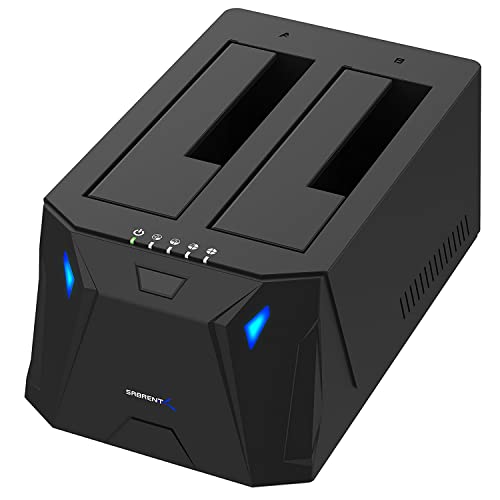
- Offline cloning up to 60Mbps
- USB 3.0 dock with plug-and-play use
- Supports 2.5-inch and 3.5-inch SATA drives
Best For: Users who want a simple dock and offline clone function
Image Library Cloner
StarTech SATDUP11IMG image library duplicator

- Built-in disk image library manager
- 4 copy modes including sector-by-sector
- SATA III 6Gbps with LCD display
Best For: IT deployment teams that need backup, restore, and image storage
Cross-Platform Clone Dock
ORICO DD28U3-C dual-bay offline clone dock

- Offline clone without a PC
- USB 3.0 with UASP and Trim
- Supports Windows, Mac, Linux, and more
Best For: Cross-platform users who need simple offline cloning and drive access
Standalone SATA Cloner

- No computer or software required
- Supports 2.5-inch and 3.5-inch SATA drives
- Copies and erases at up to 90MB/s
Best For: Offline SATA cloning and sanitizing
Triple-Bay Dock Dock Clone

- Offline cloning without a host computer
- USB 3.2 Gen 2x1 up to 10Gbps
- Works with Windows, Mac, Linux, Android, and iOS
Best For: Portable multi-platform drive cloning and docking
Batch SATA Duplicator
Systor SYS105HS-DP 5-Bay Cloner

- Standalone 1:5 duplicator and eraser
- Supports 2.5-inch and 3.5-inch SATA drives
- Copies and sanitizes at up to 90MB/s
Best For: Batch cloning and drive wiping in standalone setups
Dual-Bay Offline Cloning Dock

- Offline cloning without a computer
- Supports 2.5-inch and 3.5-inch SATA drives
- USB 3.0 up to 5Gbps with cooling features
Best For: Windows users who want easy dual-drive cloning and docking
Standalone 1:9 Sanitizing Duplicator

- Standalone copying and erasing with no PC
- Copies multiple SATA drives at once up to 90MB/s
- Supports 2.5-inch and 3.5-inch HDDs and SSDs
Best For: Technicians needing standalone duplication and sanitization
USB 3.0 Clone Dock with UASP

- Offline cloning with dual-bay SATA support
- UASP and USB 3.0 for faster transfers
- Tool-free setup with hot-swapping support
Best For: Windows users wanting a fast dual-bay clone dock
Standalone SATA Cloner & Wiper – StarTech SATDUP11 standalone SATA duplicator
If you need hard drive duplicators for windows workflows but want a computer-free tool, this StarTech model is built for straightforward 1:1 SATA cloning and secure wiping. It supports 2.5-inch and 3.5-inch SATA HDDs and SSDs, with multiple copy and erase modes for backup, recovery, deployment, and drive sanitizing.
Best For: IT teams that need a standalone duplicator and eraser for SATA drives without relying on a PC.
Pros:
- Up to 14 GB/min duplication speed for faster drive-to-drive copies
- 3 duplication modes, including sector-by-sector, system and file, and all partitions
- 4 erase modes, including secure erase and 3-pass overwrite
- Copy & Compare option helps verify the cloned drive
Cons:
- Designed for SATA drives, with adapter support sold separately for some interfaces
- Only handles 1:1 duplication rather than multi-drive batch cloning
Overall, this is a solid pick when you want a dedicated cloning and wiping station with clear menu controls and IT-focused features. The included cables, pads, and technical support make it easier to slot into a Windows-based admin workflow.
Dual-Bay Dock & Offline Cloner – Sabrent EC-HD2B USB 3.0 dual-bay cloner
For users comparing hard drive duplicators for windows setups, this Sabrent dual-bay dock combines everyday drive access with offline cloning. It works with standard 2.5-inch and 3.5-inch SATA HDDs or SSDs, supports drives up to 10TB, and does not require drivers.
Best For: Windows users who want a simple dual-bay dock that can also clone drives offline.
Pros:
- Offline cloning support up to 60Mbps
- Plug-and-play design with no drivers needed
- Supports USB 3.0 transfer speeds up to 5Gbps
- Works with 2.5-inch and 3.5-inch SATA HDDs/SSDs up to 10TB
Cons:
- Cloning is limited to offline use rather than software-based Windows imaging
- Warranty is 1 year by default unless registered for extension
This is a practical choice if you want a dock that doubles as a cloner without adding extra software steps. It fits well in a Windows environment where quick drive swapping and simple offline duplication matter more than advanced imaging features.
Image Library Cloner – StarTech SATDUP11IMG image library duplicator
If your hard drive duplicators for windows search is really about deployment and recovery, this StarTech unit stands out for its built-in image library manager. It can clone 2.5-inch and 3.5-inch SATA drives, store multiple host images on one drive, and restore those images without connecting to a computer.
Best For: System builders and IT staff who need a standalone duplicator with image library storage and restore capability.
Pros:
- Built-in image library manager for backup and restore workflows
- 4 duplication modes, including sector-by-sector and percentage copy
- SATA III 6Gbps support with LCD and LED status feedback
- TAA compliant and backed by 2 years of support
Cons:
- Slower copy speed than the 14 GB/min StarTech model at 6 GB/min
- Primarily aimed at IT deployment use rather than casual home cloning
For imaging multiple systems, this is the more specialized tool in the lineup. The ability to keep a library of disk images on a single drive makes it especially useful for repeat Windows deployments and restores.
Cross-Platform Clone Dock – ORICO DD28U3-C dual-bay offline clone dock
This ORICO dock is a flexible option if you want hard drive duplicators for windows-compatible drives without using cloning software. It supports offline cloning, 2.5-inch and 3.5-inch SATA HDDs and SSDs, and USB 3.0 connections for fast file transfers and general drive access.
Best For: Users who want a dual-bay dock that can clone drives offline and also work across many devices.
Pros:
- Supports offline clone function with a simple press-and-hold button process
- Compatible with Windows, Mac, Linux, iPad OS, and Android
- USB 3.0 with UASP and Trim support up to 5Gbps
- Works with 2.5-inch and 3.5-inch SATA HDDs and SSDs up to 44TB total
Cons:
- Target disk must be larger than the source disk for cloning
- Listed supported device quantity is 1, so it is more of a dock/cloner than a heavy-duty duplicator station
That mix of cloning and broad device compatibility makes it a practical everyday dock for cross-platform storage tasks. If you need a Windows-friendly, no-software cloning option with modern USB performance, it covers the basics well.
Standalone SATA Cloner – Systor 1:1 HDD/SSD Cloner
If you need hard drive duplicators for windows workflows but want to avoid depending on a PC, the Systor SYS101HS-DP is a straightforward standalone option for SATA HDDs and SSDs. It copies data or whole drives at up to 90MB/s and also includes secure erase functions, making it useful for simple duplication and sanitization jobs.
Best For: IT users, small businesses, and anyone who wants a no-computer SATA duplicator for 2.5-inch and 3.5-inch drives.
Pros:
- Standalone operation requires no computer or software.
- Supports both 2.5-inch and 3.5-inch SATA HDDs and SSDs.
- Copies or erases drives with up to 90MB/s transfer speed.
- Includes DoD 5220.22-M compliant data sanitization.
Cons:
- Limited to SATA HDDs and SSDs, so it is not a broad multi-format dock.
- Best suited to offline duplication rather than general file management.
Overall, this Systor unit is a practical pick when your priority is reliable offline cloning and wiping rather than a feature-heavy docking station. The lifetime technical support and 1-year parts warranty add useful peace of mind.
Triple-Bay Dock Dock Clone – Rosewill M.2 NVMe & SATA Dock
For buyers comparing hard drive duplicators for windows systems, the Rosewill RS-N2S-CL stands out as a versatile docking station that works across Windows, Mac OS, Linux, Android, and iOS. It supports offline cloning and also functions as a reader dock, so it fits setups where you want both drive access and duplication in one compact unit.
Best For: Users who want a portable triple-bay dock that can clone drives offline and connect over USB 3.2 Gen 2.
Pros:
- Offline cloning works without a host computer.
- USB 3.2 Gen 2×1 supports data transfer up to 10Gbps.
- Works as both a docking station and a duplicator.
- Tool-free design makes installation and removal easier.
Cons:
- Plastic enclosure may not feel as rugged as metal alternatives.
- One-year warranty is shorter than some dedicated duplicators.
This is a flexible choice if you want one device for cloning, docking, and everyday drive handling across multiple platforms. Its compact size and offline cloning support make it especially convenient for mobile or mixed-device workflows.
Batch SATA Duplicator – Systor SYS105HS-DP 5-Bay Cloner
If you need hard drive duplicators for windows-related deployment tasks but want a unit that works without a computer, the Systor SYS105HS-DP is built for standalone copying and sanitization. It supports both 2.5-inch and 3.5-inch SATA HDDs and SSDs, with copy speeds up to 90MB/s and a 1:5 design for handling multiple drives at once.
Best For: Batch cloning and erasing multiple SATA drives without relying on host software.
Pros:
- Standalone copier and sanitizer needs no computer or software.
- Supports both 2.5-inch and 3.5-inch SATA HDDs and SSDs.
- Copies multiple drives simultaneously at up to 90MB/s.
- Includes DoD 5220.22-M compliant sanitization.
Cons:
- Large 26-pound build is less portable.
- Focused on SATA drives, so it is not a universal drive dock.
For environments that clone drives in batches, this Systor model offers the core functions most buyers need in a dedicated duplicator. The lifetime technical support and 3-year labor coverage also help justify it for heavier-duty use.
Dual-Bay Offline Cloning Dock – UGREEN USB-C SATA Dock
If you want hard drive duplicators for windows that are simple to use and don’t require a PC to start cloning, this UGREEN dual-bay dock is a practical pick. It supports offline cloning, works with 2.5-inch and 3.5-inch SATA drives, and connects over USB 3.0 for everyday file transfers when you do want to use Windows.
Best For: Users who want a dual-bay dock with offline cloning and broad Windows compatibility.
Pros:
- Offline cloning lets you copy drives without connecting to a computer.
- Supports two SATA drives at once, including 2.5-inch and 3.5-inch models.
- USB 3.0 connection offers up to 5Gbps transfer speed for file moves.
- Built-in cooling, dust cover, and anti-slip pads add practical protection.
Cons:
- Cloning requires the target drive capacity to be at least as large as the source drive.
- Transfer speed is lower than newer 6Gbps docks.
- Not designed as a multi-disk duplicator tower.
This is a good fit if you need a straightforward Windows-friendly docking station that doubles as an offline cloner. It balances convenience, compatibility, and simple drive handling without adding extra software steps.
Standalone 1:9 Sanitizing Duplicator – Systor SYS109HS-DP Duplicator
Among hard drive duplicators for windows, this Systor unit stands out because it works completely standalone and does not need a computer or software. It is built for copying or erasing multiple SATA drives at once, and it supports both 2.5-inch and 3.5-inch hard drives and SSDs for straightforward batch workflows.
Best For: IT teams and technicians who need a standalone multi-drive copier and eraser.
Pros:
- Complete standalone operation with no computer or software required.
- Copies multiple drives simultaneously at up to 90MB/s.
- Supports both duplication and data sanitization, including DoD 5220.22-M erasure.
- Works with both 2.5-inch and 3.5-inch hard drives and SSDs.
Cons:
- It is a larger-purpose duplicator rather than a simple dock.
- The interface details are geared toward SATA drive workflows, not general docking use.
- Best suited to users who need repeated copy or wipe tasks.
If your priority is repeatable drive duplication or secure wiping, this Systor model is a more specialized choice than a standard dock. It is well matched to environments that need standalone cloning and sanitization without relying on a Windows PC.
USB 3.0 Clone Dock with UASP – WAVLINK Dual-Bay SATA Dock
This WAVLINK option is a strong fit if you want hard drive duplicators for windows that also function as a fast dual-bay dock. It supports offline cloning, works with 2.5-inch and 3.5-inch SATA HDDs and SSDs, and adds UASP support for faster USB 3.0 performance when used with Windows or other supported systems.
Best For: Users who want a dual-bay dock with offline cloning and faster USB transfer support.
Pros:
- Supports offline cloning from a source disk to a target disk.
- UASP and USB 3.0 support help improve transfer performance.
- Compatible with 2.5-inch and 3.5-inch SATA HDDs and SSDs.
- Tool-free installation and hot-swapping make setup easy on supported systems.
Cons:
- Offline clone requires the target disk to be the same size or larger than the source.
- It does not support online cloning.
- Mac support excludes M1/M2-based Macs.
This dock is a sensible pick if you want cloning capability plus day-to-day storage access in one device. It offers a useful balance of ease of use, cross-platform support, and faster transfer features for Windows-based setups.
How We Picked the Best Hard Drive Duplicators for Windows
We focused on Hard Drive Duplicators for Windows that balance speed, compatibility, and ease of use. Priority went to models that support common 2.5-inch and 3.5-inch SATA drives, as well as SSDs where applicable. We also looked for practical features such as offline cloning, drive erasing, UASP or USB 3.x connectivity, and clear capacity support for larger drives.
For duplicators with multiple target bays, we favored units that are better suited to bulk cloning and workstation-style workflows. For docking stations, we prioritized flexibility for everyday drive access, backups, and quick swaps.
Quick Comparison
Choose a single-bay or dual-bay unit if you mainly clone one drive at a time or need a simple dock for external use. Step up to a 1:5 or 1:9 duplicator if you routinely deploy the same image or data to many drives at once. If your work includes mixed media, look for support for both HDDs and SSDs, plus M.2/NVMe only when you actually need that format.
Key Buying Factors for Hard Drive Duplicators for Windows
Drive Type Support
Make sure the dock or duplicator supports the exact drives you use: 2.5-inch SATA SSDs, 3.5-inch HDDs, or both. Some units also handle M.2 NVMe, but many Windows users only need SATA compatibility.
Cloning Speed and Workflow
Off-line duplicators can be more convenient than software-based cloning because they work without tying up your PC. Check the rated copy speed, but remember real-world performance depends on the source drive, target drive, and drive health.
Bay Count and Capacity
Dual-bay products are ideal for day-to-day cloning and docking. Multi-bay units make more sense for IT teams, small businesses, or anyone duplicating drives in batches.
Windows Compatibility
Most docks connect through USB and work well with Windows for file access and drive management. If you need cloning to happen without relying on Windows software, confirm that the unit supports offline duplication.
Additional Features
Useful extras include drive erasing, LED status indicators, tool-free installation, and UASP or USB-C support. These features can make Hard Drive Duplicators for Windows easier to use and better suited to heavier workloads.
Who Should Buy Which Hard Drive Duplicators for Windows?
If you want a simple home or office setup, a dual-bay dock is usually the best value. If you’re migrating systems, refreshing SSDs, or keeping backup copies ready, a faster offline duplicator is the better choice. If you manage multiple machines or need to clone drives in volume, a 1:5 or 1:9 unit is the most efficient option.
For mixed-use buyers, choose the model that matches your most common drive type and workflow first, then look for speed and expansion features second. That keeps the purchase practical and avoids paying for capabilities you won’t use.