Choosing among astronomy cameras for planetary imaging is less about chasing the highest megapixel count and more about matching the camera to your telescope, computer, and observing goals. Fast capture, low read noise, and dependable software support usually matter most when recording lunar and planetary video.
This roundup covers compact USB and Wi-Fi models across several sensor sizes and resolutions, from beginner-friendly electronic eyepieces to more capable planetary cameras. Use the guide below to narrow the options by workflow, target, and budget.
Best 10 Astronomy Cameras for Planetary Imaging Picks for 2026
High-Sensitivity Pick
SVBONY SV705C IMX585 Astronomy Camera

- IMX585 sensor with high sensitivity and low read noise
- 3856×2180 resolution for detailed celestial images
- Supports planetary imaging, EAA, and lucky imaging
Best For: EAA enthusiasts seeking a versatile planetary and entry-level deep-sky camera
High-Resolution Choice
Celestron NexImage 20 Solar System Imager

- 20 MP BSI CMOS sensor for detailed color imaging
- ROI mode helps improve planetary capture workflow
- USB-C and built-in autoguiding support
Best For: Solar System imagers wanting high resolution and flexible capture features
Budget Video Option
SVBONY SV205 7.05MP Telescope Camera

- 7.05 MP IMX415 color sensor
- Up to 30FPS at 1920×1080 in MJPG mode
- Plug-and-play 1.25-inch telescope connection
Best For: Beginners wanting straightforward lunar and planetary video capture
Beginner-Friendly Pick
Celestron NexImage 10 Solar System Imager
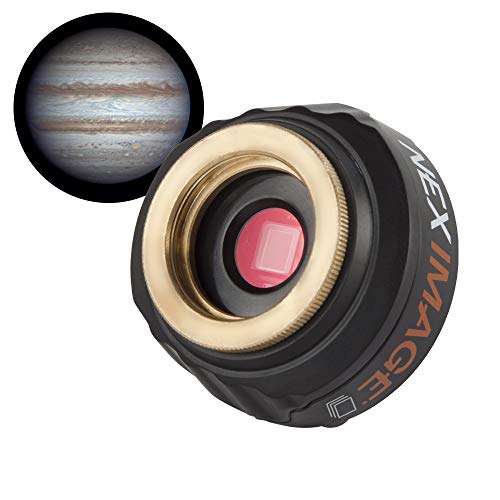
- 10.7 MP color sensor for lunar and planetary detail
- Includes capture and stacking software
- Standard 1.25-inch barrel for broad telescope compatibility
Best For: Beginners learning Solar System imaging and frame stacking
Wireless EAA Pick

- Low-noise IMX662 sensor with up to 30-second exposures
- Built-in WiFi, battery, and included 32GB TF card
- Standard 1.25-inch fit for lunar and planetary imaging
Best For: Wireless EAA and beginner lunar or planetary imaging
High-Speed USB Pick
2.07MP USB 3.0 Planetary Camera
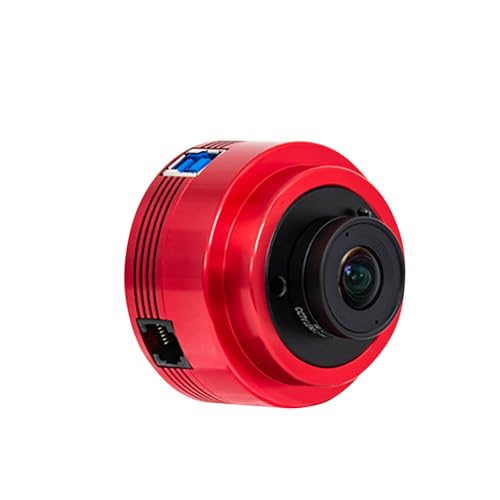
- 2.07MP low-noise CMOS sensor for lunar and planetary images
- Up to 107.6 fps at full resolution via USB 3.0
- Plug-and-play support for Windows, Linux, and macOS
Best For: High-frame-rate computer-based planetary video
High-Resolution USB Pick

- 8MP sensor with up to 4K video capture
- UVC support plus optional Windows ASCOM compatibility
- 1.25-inch barrel with removable IR cut filter
Best For: High-resolution lunar and bright-planet imaging
High-Resolution Detail Pick
SVBONY SC715C IMX715 Color Camera

- 1.45μm pixels for detailed planetary imaging
- USB 3.0 supports up to 45.5fps at full resolution
- 512MB cache and ST4 autoguider interface
Best For: Detailed lunar and planetary video with astronomy software
Best Heavy-Duty Pick

- 1080P planetary video at 30fps
- UVC plug-and-play across major desktop systems
- Removable UV/IR cut filter included
Best For: Accessible lunar, planetary, and classroom viewing
Flexible Entry-Level Pick

- IMX662 sensor with low noise and improved red sensitivity
- ROI and BIN2×2 modes expand capture flexibility
- 128MB buffer helps protect frames during transfer
Best For: Entry-level planetary imaging, lunar work, and EAA
High-Sensitivity Pick – SVBONY SV705C IMX585 Astronomy Camera
For shoppers comparing astronomy cameras for planetary imaging, the SVBONY SV705C stands out for its IMX585 sensor, high quantum efficiency, and broad use beyond planetary work. Its 3856×2180 resolution, 1/1.2-inch format, and USB 3.0 connection make it a flexible option for EAA, lucky imaging, and entry-level deep-sky shooting.
Best For: EAA enthusiasts and planetary imagers who also want to explore entry-level deep-sky imaging.
Pros:
- IMX585 sensor offers high signal-to-noise performance and a peak QE of about 90%.
- Large 3856×2180 resolution captures detailed lunar and planetary views.
- High near-infrared sensitivity and dual-gain HCG support imaging efficiency and dynamic range.
- CS port with C-CS adapter supports C-mount and CS-mount lenses.
Cons:
- Its broader feature set may be more than beginners need for basic planetary capture.
- Use with a telescope requires checking compatibility with the camera’s CS-port configuration.
The SV705C is a strong all-around choice when sensitivity and versatility matter. It is especially appealing for users who want one camera for planetary imaging, live observing, and occasional wide-angle or lens-based projects.
High-Resolution Choice – Celestron NexImage 20 Solar System Imager
The Celestron NexImage 20 is a practical choice among astronomy cameras for planetary imaging when high resolution and straightforward setup are priorities. Its 20 MP back-illuminated CMOS sensor, ROI cropping, USB-C connection, and included iCap software are designed for detailed lunar, planetary, and solar capture with a compatible filter.
Best For: Solar System imagers who want high-resolution color capture, ROI control, and the option to guide deep-sky exposures.
Pros:
- 20 MP AR2020 BSI CMOS sensor records detailed lunar, planetary, and solar images.
- ROI sub-framing can increase frame rate, reduce file sizes, and speed stacking.
- USB-C connectivity provides fast transfers without an additional power supply.
- Built-in autoguiding support adds utility for deep-sky imaging setups.
Cons:
- It requires a Windows PC for the listed iCap capture workflow.
- A solar filter is required for solar imaging and is not presented as built in.
- Manual focus and a telescope with a 1.25-inch holder or suitable C-thread adapter are required.
With its high-resolution sensor and ROI mode, the NexImage 20 is well suited to capturing and processing Solar System video. The autoguiding feature also gives it usefulness beyond strictly planetary sessions.
Budget Video Option – SVBONY SV205 7.05MP Telescope Camera
The SVBONY SV205 is a compact, plug-and-play option for shoppers seeking astronomy cameras for planetary imaging without a complicated setup. Its 7.05 MP IMX415 color sensor supports live computer viewing, 2K video at up to 30 frames per second in MJPG mode, and direct connection through a standard 1.25-inch barrel.
Best For: Beginners who want an affordable camera for lunar, planetary, and real-time computer-assisted observing.
Pros:
- Plug-and-play operation supports quick setup for live viewing and recording.
- Captures up to 30FPS at 1920×1080 in MJPG video mode.
- 1.25-inch machined aluminum barrel fits telescopes using standard 1.25-inch eyepiece interfaces.
- Includes a USB 3.0 cable, dust cover, cleaning cloth, and manual.
Cons:
- Its 7.05 MP sensor and 2K video capability are less resolution-focused than higher-end options.
- Apple laptop users need Astroamx Capture, and the camera is not compatible with Apple phones or tablets.
- Compatibility depends on having a suitable 1.25-inch telescope interface or adapter.
The SV205 emphasizes accessible live video and simple planetary recording. It makes the most sense for new users who value ease of use and included accessories over maximum resolution or advanced deep-sky capabilities.
Beginner-Friendly Pick – Celestron NexImage 10 Solar System Imager
The Celestron NexImage 10 is designed as an approachable entry point for astronomy cameras for planetary imaging. Its 10.7 MP color sensor, included capture and stacking software, and standard 1.25-inch barrel provide a straightforward path to imaging the Moon, Sun with appropriate protection, Jupiter, Saturn, Mars, and other Solar System targets.
Best For: Beginners who want an easy-to-use planetary camera with capture, stacking, and manual control features included.
Pros:
- 10.7 MP color sensor uses noise-reducing ON Semiconductor technology.
- Included software supports live viewing, frame stacking, and manual image adjustments.
- 1.25-inch barrel is compatible with most telescopes accepting 1.25-inch eyepieces.
- Selectable ROI, 2×2 binning, integrated IR-cut window, and C-threads add flexibility.
Cons:
- It is primarily designed for Solar System imaging rather than broad deep-sky use.
- Solar imaging requires appropriate external solar protection.
- The supplied notes indicate a software CD and USB cable, so users should ensure their computer supports the setup.
The NexImage 10 balances useful imaging controls with beginner-oriented software and a familiar 1.25-inch format. It is a sensible choice for learning video capture and stacking on common telescope setups.
Wireless EAA Pick – SVBONY SC311 IMX662 Camera
For beginners seeking astronomy cameras for planetary imaging with a phone or tablet, the upgraded SVBONY SC311 combines a 2.1MP IMX662 sensor, built-in WiFi, and a standard 1.25-inch connection. Its up-to-30-second exposure setting also gives it some flexibility for beginner deep-sky imaging and EAA.
Best For: Wireless lunar, planetary, and EAA observing with portable telescope setups.
Pros:
- IMX662 sensor is designed for low noise, no amp glow, and enhanced red/NIR sensitivity.
- Creates a 2.4G WiFi hotspot for direct phone or tablet control through the newer SvbonyAstroCam app.
- Includes a 2500mAh battery, 32GB TF card, and storage expansion up to 256GB.
- Supports photo, video, RAW/FITS saving, scheduled shooting, and exposures up to 30 seconds.
Cons:
- Photo mode does not provide a live image preview; you must tap the exposure button to view the image.
- The upgraded model requires a different app from the older SC311.
- Its 2.1MP resolution is more modest than higher-resolution planetary cameras.
The SC311 is a convenient choice when wireless control and EAA matter more than maximum resolution. Its battery, onboard storage, and 1.25-inch compatibility make it especially approachable for casual observing and beginner imaging.
High-Speed USB Pick – 2.07MP USB 3.0 Planetary Camera
This 2.07MP model is a straightforward option for shoppers comparing astronomy cameras for planetary imaging on a computer. Its USB 3.0 connection, DDR3 cache, and claimed full-resolution rate of up to 107.6 fps are aimed at capturing smooth video of the Moon and planets.
Best For: Computer-based lunar and planetary video capture where high frame rates are a priority.
Pros:
- Back-illuminated CMOS sensor is designed to produce low-noise lunar and planetary images.
- USB 3.0 and built-in DDR3 cache support fast data transfer and high frame rates.
- Plug-and-play compatibility is listed for Windows, Linux, and macOS.
- Compact ABS housing is suited to portable sessions and extended outdoor use.
Cons:
- The supplied information does not specify the telescope connection size or included accessories.
- It requires a computer-based setup rather than offering built-in wireless or standalone operation.
- The generic model designation provides limited product-specific detail.
This camera makes the most sense for users who already have a compatible computer and capture software and want fast planetary video. Its platform support broadens compatibility, while the compact housing keeps field setup simple.
High-Resolution USB Pick – FIBONAX NOVA8M 4K Camera
For buyers wanting higher-resolution astronomy cameras for planetary imaging, the FIBONAX NOVA8M offers an 8MP sensor with up to 4K video and high-frame-rate 1080P capture. It uses a standard 1.25-inch barrel, UVC viewing, and a removable IR cut filter for a flexible computer-connected setup.
Best For: Beginner lunar and bright-planet imaging with a laptop or desktop computer.
Pros:
- 8MP sensor supports up to 4K video and high-frame-rate 1080P capture.
- Standard UVC viewing works with compatible Windows, macOS, and Linux software.
- Optional ASCOM support is available for supported Windows astronomy applications.
- Removable IR cut filter and M28.5×0.6 filter thread add setup flexibility.
Cons:
- Manual focusing through the telescope is required; the camera does not autofocus.
- The telescope must have sufficient focuser travel, so a 1.25-inch fit alone does not guarantee focus.
- It is designed primarily for lunar and planetary imaging rather than long-exposure deep-sky photography.
The NOVA8M is a strong fit for users who value resolution and broad computer compatibility. Its manual-focus workflow is typical of telescope cameras, but buyers should confirm focuser travel and software compatibility before purchase.
High-Resolution Detail Pick – SVBONY SC715C IMX715 Color Camera
For serious planetary imaging, the SVBONY SC715C stands out with its 1.45μm pixels and IMX715 color sensor. It is designed for detailed lunar and planetary video, with USB 3.0 transfer, astronomy-software support, and a built-in image cache to help maintain smooth capture.
Best For: Astrophotographers prioritizing fine planetary detail, high-resolution video, and compatibility with software such as SharpCap, AstroDMX Capture, and NINA.
Pros:
- 1.45μm pixels and an IMX715 sensor support detailed planetary images.
- USB 3.0 transfer reaches up to 45.5 frames per second at full resolution.
- 512MB DDR3 cache helps reduce frame delays and loss during recording.
- Lightweight 147g aluminum body includes an ST4 autoguider interface.
Cons:
- Requires dedicated download software and is not compatible with smartphones.
- It has no built-in focus adjustment; focusing must be done with the telescope focuser.
The SC715C is a strong choice when detail and capture control matter more than plug-and-play simplicity. Plan to use a computer, compatible software, and your telescope’s focuser for the complete setup.
Best Heavy-Duty Pick – FIBONAX Nova200 1080P Camera
The FIBONAX Nova200 is a straightforward option for newcomers exploring astronomy cameras for planetary imaging. Its 1080P, 30fps output, UVC plug-and-play operation, and standard 1.25-inch format make it practical for viewing and recording the Moon and bright planets from a computer.
Best For: Beginners, classroom demonstrations, astronomy clubs, and backyard observers who want simple computer-based lunar and planetary viewing.
Pros:
- 1080P video at up to 30fps is suitable for lunar and planetary capture.
- UVC plug-and-play support works with compatible Windows, macOS, and Linux systems.
- Removable UV/IR cut filter provides more flexibility than a fixed filter.
- Lightweight 110g CNC aluminum body fits standard 1.25-inch focusers.
Cons:
- Its 2MP sensor and 1080P output are less resolution-focused than higher-end planetary cameras.
- Windows users need the optional ASCOM driver for supported astronomy workflows.
- Manual focusing is required.
The Nova200 favors accessibility over advanced capture features. It is a sensible starting point if you want live computer viewing, easy sharing, and a removable filter without a complicated initial setup.
Flexible Entry-Level Pick – SVBONY SV305C IMX662 Camera
The SVBONY SV305C offers a flexible entry point for astronomy cameras for planetary imaging, lunar photography, and electronically assisted astronomy. Its IMX662 color sensor, ROI controls, binning, and dedicated SharpCap modes give beginners room to refine capture settings as their experience grows.
Best For: Entry-level planetary and lunar imagers who want adjustable capture modes, improved sensitivity, and EAA capability.
Pros:
- IMX662 sensor provides low readout noise, no glow, and improved red-band sensitivity.
- ROI settings can reduce the readout area and increase capture rate.
- BIN2×2 mode can improve sensitivity when conditions require it.
- Built-in 128MB buffer helps prevent dropped or damaged frames during transfer interruptions.
Cons:
- The camera uses USB 2.0 rather than USB 3.0.
- The built-in UV/IR cut filter is not removable, although the protective glass is detachable.
- Manual focusing is required.
The SV305C is a capable value choice for users who want more control than a basic electronic eyepiece provides. Its ROI and binning functions are particularly useful for adapting capture speed and sensitivity to different planetary targets.
How We Picked These Astronomy Cameras for Planetary Imaging
We selected cameras that are designed for telescope-based lunar, solar, and planetary capture, prioritizing features that affect real-world video stacking. The comparison considers sensor type and size, stated resolution, USB or Wi-Fi connectivity, compatibility with common telescope accessories, and the practical value of high-speed capture. We also included a range of formats, from simple 1080p electronic eyepieces to higher-resolution IMX-based cameras.
Specifications can vary by software, computer hardware, lighting, and capture settings. For solar work, always use a properly rated solar filter over the telescope’s front aperture; a camera alone does not make solar viewing safe.
Quick Comparison
| Priority | Look for | Best fit |
|---|---|---|
| Simple setup | USB plug-and-play design and 1.25-inch format | Beginners and visual observers adding imaging |
| High-resolution lunar detail | Larger sensor or higher pixel count | Moon mosaics and broad lunar scenes |
| Planetary video | Fast frame rates, low noise, and stable drivers | Jupiter, Saturn, Mars, and close lunar features |
| Flexible placement | Wi-Fi connectivity or wireless preview | Casual setups and shared observing |
Key Buying Factors for Astronomy Cameras for Planetary Imaging
Sensor Size, Pixels, and Sampling
A larger sensor captures a wider field, which helps with the Moon and makes it easier to locate a planet. Smaller pixels can record fine detail when paired with an appropriate focal length, but they also demand accurate focusing and adequate light. Match the camera’s pixel size to your telescope rather than assuming the highest resolution will produce the sharpest image.
Frame Rate and Exposure Control
Planetary imaging relies on recording many short exposures and selecting the sharpest frames during stacking. A camera with a genuinely useful frame rate, adjustable exposure, and gain control can freeze atmospheric turbulence more effectively than a high-resolution model that captures slowly. Check whether advertised speeds apply to the chosen resolution and connection mode.
Connectivity and Software
USB 3.0 is generally preferable for demanding video capture, while USB 2.0 can be adequate for lower-resolution cameras. Confirm that the camera works with your operating system and preferred capture software before buying. Wi-Fi models can be convenient, but wireless performance depends on network conditions and may offer fewer controls than a direct USB connection.
Fit, Power, and Observing Conditions
Most cameras here use a 1.25-inch telescope interface, but verify the included nosepiece, cable length, and whether an IR-cut filter or adapter is supplied. Cooling is usually unnecessary for short planetary exposures, so prioritize low-noise video performance and easy focusing instead.
Who Should Buy Which Astronomy Cameras for Planetary Imaging?
Beginners should favor a straightforward 1.25-inch USB camera with broad software compatibility, such as the entry-level electronic-eyepiece style options. Lunar photographers may prefer an 8MP, 10MP, or larger-sensor camera for mosaics and detailed full-disc captures. Planetary observers should concentrate on IMX-based models with small pixels, low noise, and fast USB transfer, including the SV705C, SC715C, SV305C, or comparable cameras in this list. Choose a Wi-Fi model such as the SC311 when wireless preview and flexible placement matter more than maximum wired capture control.
Finally, confirm your telescope’s focal ratio, available back focus, and computer ports before ordering. The best camera is the one that delivers a suitable image scale, stable capture, and a workflow you will use consistently.