The best electronics microscopes for hobbyists make small solder joints, circuit-board details, coins, and repair work easier to see without requiring a professional lab setup. This roundup covers digital, HDMI, autofocus, 3D, wireless, and trinocular designs.
Use the buying guide below to compare display options, magnification claims, working space, lighting, camera flexibility, and the features that matter most for hands-on projects.
Best 10 Electronics Microscopes for Hobbyists Picks for 2026
Best Multi-Lens Kit
Andonstar AD246S-M 2160P Digital Microscope

- Three lenses for soldering, general viewing, and slides
- 2160P recording with HDMI output
- Adjustable boom arm and included accessories
Best For: Hobbyists needing one versatile microscope for repairs, coins, and slides
Best Autofocus Upgrade
Elikliv EM4K-AF 4K Digital Microscope

- Autofocus uses AI algorithms and a TOF sensor
- 4K video, 52MP images, and an 8-inch IPS screen
- Rechargeable battery and 10-inch stand
Best For: Detailed repair and coin inspection with minimal manual focusing
Best Optical Stereo Setup
Professional Trinocular Stereo Zoom Microscope

- 3.5×–90× magnification with auxiliary lenses
- Trinocular port for cameras or electronic eyepieces
- Stable boom stand with adjustable LED ring light
Best For: Bench-based electronics inspection requiring stereo depth and camera expansion
Best Large-Screen Value
Andonstar AD210 10.1-Inch Digital Microscope

- Large 10.1-inch IPS display with 178° viewing angle
- 1080p video and 12MP photo capture
- Adjustable stand and three-way LED illumination
Best For: Multi-purpose bench work with a spacious screen and working area
Portable Budget Pick
Skybasic Wireless Digital Microscope

- Wi-Fi and USB connectivity
- Eight adjustable LED lights
- Compact handheld design
Best For: Casual inspection, learning, and portable hobby use
3D Soldering Pick
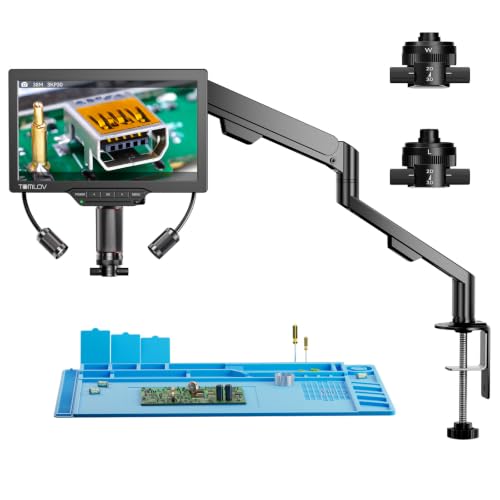
- Side-viewing with 360-degree rotation
- Magnetic long-distance and wide-angle lenses
- 3K UHD display with flexible lighting
Best For: PCB repair and multi-angle soldering inspection
Best Large-Screen Workbench Pick

- 10.1-inch IPS screen with 12MP imaging
- Spacious metal stand for soldering and PCB work
- Includes multiple lights, remote, slides, and 32GB card
Best For: Large-bench electronics, coin, and specimen inspection
Best Multi-Lens Upgrade

- Three lenses for soldering, coins, and biological slides
- 2160P recording with HDMI output
- Windows measurement software and adjustable boom stand
Best For: Versatile hobbyists handling varied inspection projects
Best Compact Coin-and-Repair Option

- 7-inch screen with 12MP imaging and 1080P video
- Stable black metal base for coin and PCB inspection
- Flexible lighting and 16GB storage included
Best For: Coin collectors doing occasional electronics and soldering work
Best Multi-Lens Kit – Andonstar AD246S-M 2160P Digital Microscope
For hobbyists comparing electronics microscopes for hobbyists, the Andonstar AD246S-M stands out as a flexible digital option for soldering, coin inspection, and slide viewing. Its three interchangeable lenses, 7-inch display, HDMI output, recording tools, and adjustable boom arm make it suitable for both hands-on work and demonstrations.
Best For: Hobbyists who want one microscope for electronics repair, coins, plants, stones, and prepared biological slides.
Pros:
- Includes dedicated lenses for soldering, general viewing, and biological slides.
- Records 2160P video and supports HDMI output to a larger display.
- Adjustable metal boom arm provides a broader work envelope for repairs.
- Includes measurement software support, remote control, lighting adjustment, and a 32GB microSD card.
Cons:
- Changing lenses requires removing and installing screws.
- The feature-rich kit may be more involved than needed for simple inspection tasks.
The AD246S-M is a strong all-purpose choice when versatility matters more than a simple plug-and-view setup. Its multiple lenses and included accessories give hobbyists room to explore different types of specimens and repair work.
Best Autofocus Upgrade – Elikliv EM4K-AF 4K Digital Microscope
The Elikliv EM4K-AF is a high-resolution choice among electronics microscopes for hobbyists, especially for users who prefer automatic focusing and a large built-in display. Its autofocus system, 4K video, 8-inch IPS screen, rechargeable battery, and tall stand support detailed inspection at a workbench or away from a fixed power source.
Best For: Electronics repair, coin inspection, watchmaking, and hobbyists who want autofocus with a large screen.
Pros:
- AI-assisted autofocus and a TOF sensor are designed to adjust focus quickly.
- Captures 4K video and 52MP images with a 1280×800 IPS display.
- Includes HDMI/USB outputs, a rechargeable battery, controller, and 16GB card.
- Tall 10-inch stand, broad base, freeze mode, and split-screen viewing add flexibility.
Cons:
- The advanced feature set may be more than casual viewers need.
- The supplied storage capacity is smaller than some competing kits.
Choose the EM4K-AF if reducing manual focusing is a priority. Its autofocus and large screen are particularly practical for extended inspection sessions, while the stand and outputs accommodate both bench work and shared viewing.
Best Optical Stereo Setup – Professional Trinocular Stereo Zoom Microscope
For hobbyists who prefer traditional optical viewing, this trinocular stereo zoom microscope offers a more substantial alternative to compact electronics microscopes for hobbyists. Its continuous zoom, dual auxiliary lenses, long working distance, trinocular port, and adjustable ring light suit detailed bench inspection and optional camera integration.
Best For: Serious electronics hobbyists who want binocular stereo viewing with the option to connect a camera or electronic eyepiece.
Pros:
- Continuous 3.5×–90× magnification range with included 0.5× and 2× auxiliary lenses.
- Trinocular head supports electronic eyepieces and digital camera adapters.
- Heavy-duty steel base and single-arm boom stand provide a stable, flexible setup.
- 56S LED ring light offers adjustable, shadow-free illumination.
Cons:
- It does not include a built-in digital display or camera in the listed kit.
- The large, heavy stand requires more dedicated workspace than a compact digital microscope.
This is the better fit for users who value depth perception, optical clarity, and a long working distance over an integrated screen. The trinocular design also leaves room to add a camera as your documentation needs grow.
Best Large-Screen Value – Andonstar AD210 10.1-Inch Digital Microscope
The Andonstar AD210 is a practical large-screen option for shoppers evaluating electronics microscopes for hobbyists. Its 10.1-inch IPS display, generous working distance, strong metal stand, multiple LED lighting modes, and included slide stage make it useful for soldering, coin collecting, and basic biological observations.
Best For: Hobbyists who want a spacious display and working area for electronics repair, coins, and prepared slides.
Pros:
- 10.1-inch IPS screen provides a wide 178-degree viewing angle.
- Supports 1080p video and 12MP photos with a supplied 32GB card.
- Working distance adjusts from 1cm to 26cm, with a stand reaching up to 12.6 inches.
- Top, side, and bottom LED illumination accommodate repairs, coins, and slides.
Cons:
- Its listed video resolution is lower than the 4K and 2160P models in this roundup.
- The larger stand and display take up more bench space than compact designs.
The AD210 makes sense when a large viewing area and adaptable lighting are more important than maximum video resolution. It is a well-rounded kit for hobbyists who want to switch between repair work, collecting, and slide observation without buying separate equipment.
Premium Autofocus Pick – TOMLOV TM4K-AF Max
For hobbyists seeking electronics microscopes for hobbyists that reduce the need for constant manual adjustments, the TOMLOV TM4K-AF Max combines autofocus, a large screen, and a flexible arm. Its 4K video, 52MP image capture, and repair-focused controls make it suited to detailed bench work.
Best For: Circuit repair, micro-soldering, watch inspection, coin collecting, and teaching.
Pros:
- TOF sensing and AI autofocus help maintain a sharp view hands-free.
- 4K UHD video, 52MP images, and a 10.1-inch IPS display provide detailed viewing.
- 360-degree rotating arm, adjustable stand, ring light, grid lines, and HDMI/USB output support precision work.
Cons:
- Its larger screen and metal-base setup are less portable than a handheld microscope.
- The extensive feature set may be more than casual users need.
This is the most feature-rich option here for a dedicated electronics bench. Autofocus and the flex arm are especially useful when you want to concentrate on soldering or inspection rather than repeatedly repositioning the scope.
Portable Budget Pick – Skybasic Wireless Digital Microscope
For beginners comparing electronics microscopes for hobbyists, the Skybasic offers a compact way to inspect components and other small objects using a phone, tablet, or computer. Wireless mobile viewing and adjustable LEDs make it convenient for quick checks, though it is designed more as a fixed-focus magnifier than a professional microscope.
Best For: Casual electronics inspection, children’s projects, plants, minerals, insects, and portable use.
Pros:
- Wi-Fi connection supports Android and iOS devices, while USB works with Windows and Mac computers.
- Eight adjustable LED lights help illuminate inspection subjects.
- Compact handheld design and one-button photo or video capture are convenient for travel and quick documentation.
Cons:
- It is a fixed-focus magnifying device rather than a traditional microscope for serious professional work.
- Sharpness depends on keeping the subject within the stated 3–60 mm focal range.
- Computer and mobile setup may require app, camera, or privacy-setting adjustments.
Choose this model when portability and low-complexity digital viewing matter more than a stable soldering workstation. It is a practical entry point for hobby exploration, but users doing demanding micro-soldering may want a stand-mounted scope instead.
3D Soldering Pick – TOMLOV TM3K-3D
For hobbyists who need more than a straight-on view, the TOMLOV TM3K-3D stands out among electronics microscopes for hobbyists with side-viewing and 360-degree 3D rotation. Its dual magnetic lenses, flexible arm, and targeted gooseneck light are designed for PCB repair and other precision inspection tasks.
Best For: PCB repair, micro-soldering, watchmaking, jewelry inspection, and viewing components from multiple angles.
Pros:
- 3D side-viewing and 360-degree rotation help reveal solder joints and components from different perspectives.
- Magnetic L and W lenses switch quickly between long-distance repair work and wide-angle viewing.
- 3K UHD imaging, a 7-inch IPS screen, flexible arm, and HDMI/USB display options support detailed bench work.
Cons:
- The specialized 3D design may be unnecessary for users who only need basic magnification.
- Its 7-inch display is smaller than the TM4K-AF Max’s 10.1-inch screen.
This is a strong choice for hobbyists who regularly work around components and need changing viewpoints. The lens system and movable spotlight add flexibility, while the built-in screen and external display options keep the setup adaptable.
Best Large-Screen Workbench Pick – JOYALENS JL210
For hobbyists comparing electronics microscopes for hobbyists, the JOYALENS JL210 stands out when a large display and generous work area matter. Its 10.1-inch screen, elevated metal stand, multiple lights, and included accessories make it suitable for soldering, PCB inspection, coin collecting, and basic slide viewing.
Best For: Hobbyists who want a spacious soldering setup with a large built-in screen and broad use beyond electronics.
Pros:
- 10.1-inch IPS display with 1080P video and 12MP imaging.
- Large metal stand and base provide useful clearance for soldering and PCB repair.
- Multiple illumination options include LEDs, gooseneck lights, and a bottom stage light.
- Includes a remote, 32GB memory card, prepared slides, and PC connectivity.
Cons:
- Its larger stand and base require more bench space than compact microscopes.
- The supplied notes do not specify a maximum optical magnification.
The JL210 is a versatile choice for a dedicated hobby bench. Its strongest advantage is the combination of comfortable viewing, working clearance, and adaptable lighting rather than a highly specialized electronics-only design.
Best Multi-Lens Upgrade – Andonstar AD249S-M
The Andonstar AD249S-M is a strong option for shoppers seeking electronics microscopes for hobbyists with more specialized viewing needs. It includes separate lenses for soldering, coins and general objects, and biological slides, plus 2160P recording, HDMI output, and Windows measurement software.
Best For: Experienced hobbyists who want one microscope for electronics repair, collecting, biological viewing, and measurement tasks.
Pros:
- Three interchangeable lenses cover soldering, general inspection, and biological slides.
- 2160P video recording and HDMI output support detailed viewing on a larger screen.
- Adjustable boom-arm stand offers a larger work envelope for repair projects.
- Windows software supports measurements, photos, videos, and area calculations.
Cons:
- Changing lenses adds setup steps compared with a single-lens microscope.
- The measurement software is specified for Windows PCs, so platform compatibility matters.
- Its broad feature set may be more than needed for simple inspection.
The AD249S-M is the most flexible pick in this group. Its interchangeable lenses make it particularly appealing when your projects range from circuit-board repair to coins and slides, while HDMI and measurement support add room to grow.
Best Compact Coin-and-Repair Option – TOMLOV DM9B
For hobbyists looking for approachable electronics microscopes for hobbyists, the TOMLOV DM9B combines a 7-inch screen with a stable metal base and adjustable lighting. It is designed around coin inspection but also supports small PCB work, solder joints, jewelry, crafts, and other close-up projects.
Best For: Coin collectors and DIY users who occasionally inspect small electronics or perform light soldering.
Pros:
- 7-inch display provides a comfortable direct view without requiring a separate monitor.
- Solid black metal base and 8.5-inch stand help reduce shaking and glare.
- 12MP camera, 1080P video, PC connection, and 16GB storage support documentation.
- Eight built-in LEDs and two flexible gooseneck lights improve illumination flexibility.
Cons:
- Its smaller screen and stand provide less workspace than the larger models here.
- The product is positioned primarily as a coin microscope, so heavier repair work may favor a larger stand.
- The supplied notes do not detail the optical-versus-digital breakdown of the stated 1200X magnification.
The DM9B makes sense when coin collecting is the main priority and electronics inspection is a secondary use. Its metal construction, glare-reducing base, and flexible lights offer practical support for light bench work without the footprint of a larger microscope.
How We Picked the Best Electronics Microscopes for Hobbyists
We focused on the features that affect real-world hobby use: image clarity, usable working distance, lighting control, screen or eyepiece comfort, camera connectivity, stand stability, and ease of adjustment. We also considered whether each microscope is better suited to soldering, electronics inspection, coin viewing, general repair, or portable use.
Magnification numbers can be misleading, especially on digital microscopes. A practical stand, bright and adjustable illumination, and enough room for tools are often more valuable than an extreme maximum zoom. Models with HDMI output, autofocus, multiple lenses, or flexible arms may also be more convenient for demonstrations and repeatable inspection.
Quick Comparison
| Best For | Look For | Most Suitable Design |
|---|---|---|
| Soldering and circuit repair | Long working distance, stable stand, adjustable LEDs | Digital HDMI or 3D microscope |
| Coins and collectibles | Even lighting, sharp detail, comfortable display | Large-screen digital microscope |
| Flexible inspection | Autofocus, adjustable arm, multiple lenses | 4K autofocus model |
| Sharing or recording | HDMI, USB, wireless connectivity | Digital camera microscope |
| Eyepiece-based precision | Optical zoom and binocular or trinocular viewing | Stereo zoom microscope |
Key Buying Factors for Electronics Microscopes for Hobbyists
Optical View, Digital View, or Both?
Digital microscopes with built-in displays are easy to use and convenient for group viewing. HDMI models can provide a larger external screen and may reduce reliance on a small built-in display. A trinocular stereo microscope offers a more traditional optical view and can be preferable when depth perception and hand-eye coordination matter during delicate work.
Working Distance and Stand Design
For soldering, choose a microscope that leaves room beneath the lens for an iron, tweezers, and components. A rigid base or articulated arm helps prevent vibration. Magnetic or flexible-arm designs can be useful, but check that the arm remains stable at the working height you need.
Lighting and Image Control
Adjustable ring lights help reveal surface detail and reduce harsh shadows. Diffusers, brightness controls, and auxiliary lighting are valuable for reflective coins and glossy circuit boards. Autofocus is convenient, although manual focus can offer more predictable results during fixed-distance inspection.
Connectivity and Recording
USB, HDMI, and Wi-Fi support different workflows. HDMI is useful for a monitor or television, USB can support a computer, and Wi-Fi is convenient for viewing on a mobile device. Confirm whether recording, image capture, and the required cables are supported before buying.
Who Should Buy Which Electronics Microscopes for Hobbyists?
Choose a large-screen digital model if you want straightforward coin viewing, repairs, or shared inspection. An autofocus 4K design suits hobbyists who switch frequently between objects and distances. A 3D digital microscope is a strong choice for soldering when depth and tool clearance are priorities. Pick a trinocular stereo model if you prefer optical viewing and want a more traditional inspection setup. For occasional field checks or quick phone-based viewing, a portable wireless microscope is the most convenient option.