Leather rewards careful machine selection. The right setup can sew consistent seams through hides, vinyl, canvas, and layered assemblies without excessive skipped stitches, needle breakage, or motor strain.
This roundup compares ten options ranging from portable heavy-duty machines to dedicated cobbler and industrial-style systems, helping you match power, format, and working space to your projects.
Best 10 Sewing Machine for Leather Crafts Picks for 2026
Industrial Power Pick
VEVOR Industrial Lockstitch Sewing Machine

- Servo motor and metal body for thick materials
- LCD speed and needle-position controls
- Wide table with knee lifter and LED light
Best For: Shop-based leather, canvas, denim, and upholstery projects
Manual Repair Specialist
Leather Cobbler Shoe Repair Machine
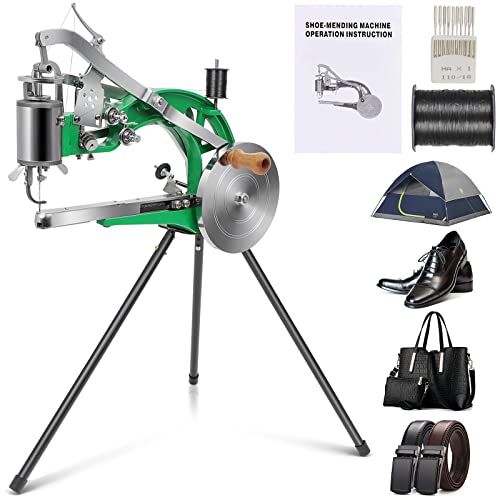
- Hand-driven for controlled stitching
- Compact design for home use
- Handles shoes, bags, clothing, and leather goods
Best For: Hands-on shoe and leather repair at home
Versatile Home Option
SINGER HD500 Classic Sewing Machine
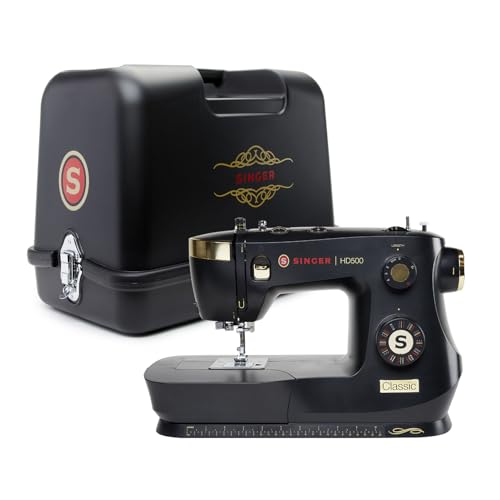
- Heavy-duty frame with strong piercing power
- 23 stitches and 110 stitch applications
- Hard case, needle threader, and top bobbin
Best For: Portable home sewing with occasional leather projects
Handcrafted Cobbler Choice
New Cobbler Machine 10-Bearings

- Manual machine with reinforced bearing design
- Includes nylon line for leather repairs
- Aluminum-alloy tripod and broad repair use
Best For: Manual mending of shoes, bags, clothing, and leather goods
Editor’s Pick
SINGER 4411 Pink Heavy-Duty Machine

- Extra-power motor for leather, denim, and canvas
- 11 stitches deliver 69 stitch applications
- Includes four presser feet and accessory kit
Best For: Home creators working across leather and everyday fabrics
Dedicated Cobbler Choice
Hand-Powered Leather Shoe Repair Machine
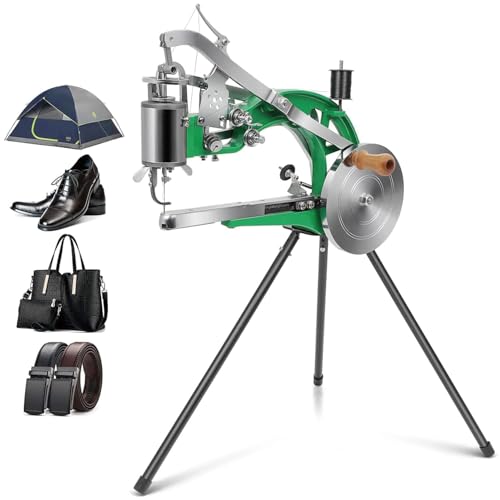
- Designed for shoes, bags, canvas, and leather
- Supports 5–6 mm listed sewing thickness
- Detachable stand and 360-degree foot and needle
Best For: Manual shoe repair and thick-material projects
Heavy-Material Alternative
2021 Cobbler Machine with Motor

- Listed maximum sewing thickness of 0.48 inches
- Manual operation with motor-matching capability
- Revised spindle aims for smoother operation
Best For: Experienced users handling thick leather and cobbler projects
Best Heavy-Duty Manual Pick
BEAMNOVA Leather Stitching Machine

- Free-standing tripod design
- Open arm for curved areas
- Includes needles and nylon thread
Best For: Manual shoe repair and thick leather projects
Best Powered Upgrade Option
Electric Cobbler Sewing Machine

- Motor-compatible design
- Sews material up to 0.48 inches
- Supports nylon and cotton thread
Best For: Leather repair users seeking higher-efficiency operation
Best Compact Manual Choice

- Adjustable spacing up to about 6 mm
- Foot turns for directional sewing
- Supports cotton and nylon line
Best For: DIY shoe repair and compact leather mending
Industrial Power Pick – VEVOR Industrial Lockstitch Sewing Machine
For demanding leather crafts, the VEVOR industrial lockstitch machine offers a table-mounted setup, servo-motor power, and fine speed controls. It is designed for substantial materials, including leather, denim, canvas, and automotive or upholstery projects.
Best For: Makers who need a powerful, full-size sewing machine for leather crafts and other thick materials.
Pros:
- Servo motor and metal construction support heavy-duty sewing.
- LCD controls allow speed, needle-position, and soft-start adjustments.
- Knee lifter, LED light, wide table, and adjustable table height improve workflow.
- Supports applications ranging from bags and garments to furniture and outdoor gear.
Cons:
- At 130.1 pounds, it is not a portable option.
- The large table-mounted design requires considerable workspace.
- Its industrial speed and controls may be more machine than occasional users need.
This is the strongest choice here for sustained, shop-based leather work. Choose it when stability, capacity, and control matter more than portability.
Manual Repair Specialist – Leather Cobbler Shoe Repair Machine
This compact manual cobbler machine is a practical sewing machine for leather crafts focused on repairs. Its hand-driven operation lets you pause and control the stitching force, while its small footprint suits home workshops.
Best For: Home users repairing shoes, bags, clothing, and other leather goods by hand.
Pros:
- Manual drive provides direct control over speed and stitching force.
- Compact 19.5-pound design is easier to move than an industrial table machine.
- Works with nylon or cotton thread across shoes, bags, raincoats, pants, and similar items.
- Aluminum-alloy construction is described as durable and low-noise.
Cons:
- Manual operation is slower and more labor-intensive than powered sewing.
- Assembly and lubrication are required before use.
- Its compact cobbler format is more specialized than a general-purpose sewing machine.
For occasional shoe and leather repairs, this machine emphasizes control and portability over speed. It is a sensible fit for users comfortable with hands-on operation.
Versatile Home Option – SINGER HD500 Classic Sewing Machine
The SINGER HD500 Classic is a versatile sewing machine for leather crafts when you also want everyday sewing capability. Its heavy-duty metal frame and robust motor are paired with 23 built-in stitches, a needle threader, and a protective carrying case.
Best For: Home sewists who want one portable machine for leather-capable projects, garments, repairs, and decorative work.
Pros:
- Heavy-duty frame and strong piercing power are designed to handle leather and other fabrics.
- 23 built-in stitches provide 110 stitch applications, including utility and stretch options.
- Built-in needle threading and a top drop-in bobbin simplify setup.
- Included hard case supports storage and transportation.
Cons:
- It is less specialized for thick leather than the dedicated industrial machine.
- The included accessories and stitch selection may be more than simple repair projects require.
- Its compact frame provides less workspace than a table-mounted industrial setup.
This is the most balanced choice for a household sewing area. It combines leather-capable construction with features that make it useful for a broad range of fabric projects.
Handcrafted Cobbler Choice – New Cobbler Machine 10-Bearings
The New Cobbler Machine 10-Bearings is a manual sewing machine for leather crafts centered on shoe and item repair. Its reinforced bearing design, aluminum-alloy tripod, and included nylon line make it suitable for hands-on mending of leather goods and clothing.
Best For: Users seeking a manually operated cobbler machine for shoes, bags, coats, trousers, and similar repairs.
Pros:
- Ten bearings are intended to improve durability and operating smoothness.
- Manual operation gives the user direct control over mending.
- Handles leather, shoes, bags, clothes, quilts, coats, and trousers.
- Aluminum-alloy tripod keeps the support relatively light.
Cons:
- Manual sewing requires more physical effort and is slower than powered machines.
- The iron body can rust if the anti-rust coating and lubrication are not maintained.
- Hand-forged construction may leave visible marks and a less uniform finish.
This cobbler machine suits buyers who prioritize repair capability and traditional manual control. Regular oiling and rust prevention are important parts of ownership.
Editor’s Pick – SINGER 4411 Pink Heavy-Duty Machine
For sewists seeking a versatile sewing machine for leather crafts, the SINGER 4411 combines a metal frame, a stronger motor, and fast operation. Its 11 stitches provide 69 applications, while the included accessory kit supports a range of DIY projects.
Best For: Home creators who want to work with leather, denim, canvas, and everyday fabrics on a conventional electric machine.
Pros:
- Motor is designed to provide extra power for denim, canvas, and leather.
- Offers 11 stitches and 69 stitch applications, including stretch options.
- Runs at up to 1,100 stitches per minute for faster project completion.
- Includes four presser feet, bobbins, needles, tools, and a soft cover.
Cons:
- It is a general-purpose machine rather than a dedicated shoe-repair model.
- The supplied notes do not specify a maximum leather thickness.
The 4411 is a practical choice when leather is part of a broader sewing workload. Its speed and accessory bundle are useful, but buyers needing very thick or specialized leather work may prefer a dedicated cobbler machine.
Dedicated Cobbler Choice – Hand-Powered Leather Shoe Repair Machine
This hand-powered leather sewing machine for leather crafts is built around shoe and repair work. Its aluminum-alloy construction, rotating foot and needle, and support for thicker materials make it suited to shoes, bags, canvas, tents, and similar projects.
Best For: Repair-focused users who need a compact, manually operated machine for shoes, leather goods, canvas, and related materials.
Pros:
- Supports nylon and cotton thread for different repair projects.
- Handles a listed sewing thickness of 0.19–0.24 inches, or 5–6 mm.
- Rotating foot and needle can turn 360 degrees to help with shoe work.
- Detachable stand can be mounted to a board or table and stored when idle.
Cons:
- Requires self-assembly and oiling of moving parts.
- Hand-powered operation may be slower than an electric machine.
- At about 9.07 kg, it is not especially lightweight for a compact tool.
This model makes the most sense for users prioritizing cobbler-style access and material thickness over automated speed. Its manually operated design offers flexibility, but it requires more setup and hands-on operation than a standard electric sewing machine.
Heavy-Material Alternative – 2021 Cobbler Machine with Motor
For buyers comparing a sewing machine for leather crafts with a cobbler-style setup, this 2021 model offers both manual operation and a 110V electric design. Its stainless-steel base and revised spindle are intended to support smoother operation, while the listed maximum thickness reaches 0.48 inches.
Best For: Experienced users who want a cobbler machine for leather, shoes, bags, clothing, and other thick materials, with optional motor assistance.
Pros:
- Listed maximum sewing thickness is 0.48 inches.
- Updated spindle and main-shaft curvature are designed to reduce friction and jamming.
- Can be matched with a motor for improved efficiency.
- Supports leather, shoes, bags, clothes, quilts, coats, and trousers.
Cons:
- The electric mode may still require manual operation with thick leather.
- The stainless-steel base may show knocking marks from its handmade construction.
- Its 21-by-16-by-8-inch footprint may require dedicated workspace.
This machine offers useful capacity for thick leather and cobbler projects, but it is not a fully automated heavy-duty solution. Consider it when manual control and a substantial base matter more than polished finishing or effortless electric sewing.
Best Heavy-Duty Manual Pick – BEAMNOVA Leather Stitching Machine
If you want a sewing machine for leather crafts that can handle shoe repair and thick materials without bench installation, the BEAMNOVA is a practical manual option. Its free-standing design, open arm, and hand-powered operation suit focused repair and restoration work.
Best For: Shoe repair shops, leather workshops, and DIY users working on boots, bags, belts, and other thick leather goods.
Pros:
- Free-standing tripod design needs no workbench installation.
- Open arm helps reach narrow or curved areas, including shoe uppers and bag corners.
- Handles leather, canvas, cotton fabric, rubber, and other thick materials.
- Includes 10 needles and a nylon thread coil.
Cons:
- Manual operation requires continuous hand control.
- Its specialized cobbler design may be less suitable for general garment sewing.
The upgraded metal structure and included starter supplies make this a capable choice for hands-on leather repair. Choose it if portability and access to curved work areas matter more than powered speed.
Best Powered Upgrade Option – Electric Cobbler Sewing Machine
For shoppers seeking a sewing machine for leather crafts with the option to increase efficiency, this electric cobbler machine is designed for shoe, bag, clothing, and repair work. Its optimized main-shaft curvature is intended to reduce friction, while the machine can be matched with a motor.
Best For: Users repairing leather shoes, bags, coats, quilts, and other materials who want an electric-cable machine with motor compatibility.
Pros:
- Can be matched with a motor to improve efficiency.
- Maximum sewing thickness is listed at 0.48 inches.
- Supports nylon or cotton thread.
- Works with leather, rubber, cloth, shoes, bags, pants, and coats.
Cons:
- Requires assembly before use.
- Moving parts need lubrication for smoother operation and longer service life.
- Motor availability or setup is not specified in the supplied details.
This model stands out when you want a cobbler-style machine with a path toward powered operation. Account for assembly and maintenance, and verify the motor arrangement before buying if increased speed is essential.
Best Compact Manual Choice – Manual Leather Shoe Cobbler
This compact manual machine is a straightforward sewing machine for leather crafts, particularly shoe repair and small leather mending jobs. It accepts cotton or nylon line, allows the needle spacing to be adjusted, and can turn its foot to sew in different directions.
Best For: DIY users repairing shoes, bags, raincoats, trousers, and other leather or fabric items in a compact manual setup.
Pros:
- Adjustable needle spacing reaches up to about 6 mm.
- Turning foot supports sewing in different directions.
- Works with nylon and cotton line across varied materials.
- Assembly is described as straightforward.
Cons:
- Manual operation may be slower than powered equipment.
- Setup must be done correctly for reliable stitching.
- The supplied dimensions indicate a compact but heavy 20-pound machine.
Choose this model if directional control and adjustable needle spacing are priorities for shoe and leather repairs. Its compact dimensions may help with placement, but the listed weight is worth considering before moving it frequently.
How We Picked the Best Sewing Machine for Leather Crafts
We focused on the features that matter most when sewing leather: useful piercing power, stable construction, controllable speed, compatible presser-foot clearance, and practical support for leather needles and bonded or nylon thread. The selection includes domestic heavy-duty machines, manual patchers, cobbler machines, and industrial-style lockstitch systems because leather projects vary widely.
We also considered setup requirements. A machine that can handle thick material is not automatically the best choice for a beginner or occasional repairer. Table-mounted models may offer better stability and power, while manual or compact cobbler designs can reach awkward areas on shoes and bags.
Quick Comparison
| Machine type | Best suited to | Main advantage | What to watch |
|---|---|---|---|
| Industrial lockstitch | Frequent production and long seams | Power, stability, and speed | Large footprint and setup needs |
| Domestic heavy-duty | Craft rooms and mixed materials | Familiar controls and versatility | Limited thickness and thread range |
| Manual patcher | Shoe, bag, and curved-area repairs | Access to difficult locations | Slower operation and a learning curve |
| Cobbler machine | Footwear repair and small leather goods | Purpose-built reach and feeding | Variable setup quality and accessories |
Key Buying Factors for a Sewing Machine for Leather Crafts
Material Thickness and Clearance
Check the maximum practical stack height rather than relying only on a marketing label. Multiple leather layers, folded edges, lining, and reinforcing tape quickly become thicker than a single hide. A high presser foot lift and a strong feed system make bulky seams easier to manage.
Motor Power and Speed Control
Power helps the needle penetrate dense material, but control is equally important. A servo motor or adjustable-speed setup is valuable for slow starts, corners, and short repair seams. Very high top speed is useful for production, not necessarily for detailed craft work.
Needles, Thread, and Stitch Formation
Use leather-specific needles in an appropriate size and test thread tension on scrap material. Bonded nylon or polyester thread is common for durable leather seams, but the machine must accommodate the thread size. A balanced lockstitch, reverse function, and consistent feeding are more useful than a long list of decorative stitches.
Machine Format and Workspace
Industrial machines with tables provide excellent stability but need permanent floor or bench space. Domestic models are easier to store and can handle lighter leather, canvas, and everyday sewing. Cobbler and patcher machines are especially useful when you must sew inside shoes, around soles, or across curved repairs.
Who Should Buy Which Sewing Machine for Leather Crafts?
- Choose an industrial lockstitch setup if you sew leather regularly, need repeatable seams, or work with larger panels and heavier assemblies.
- Choose a heavy-duty domestic machine if you want one approachable machine for light-to-medium leather, fabric, bags, costumes, and home repairs.
- Choose a manual patcher if access matters more than speed and your projects include shoe uppers, straps, boots, or localized repairs.
- Choose an electric cobbler machine if footwear repair is your primary use and you want more assistance than a hand-operated design provides.
Whichever format you select, begin with test pieces, use the correct needle, avoid forcing the material, and confirm replacement parts and accessories are available before buying.