The best play kitchens for preschoolers turn everyday routines into hands-on pretend play, helping children practice language, sharing, sequencing, and fine-motor skills.
We selected 10 options across different sizes, materials, features, and budgets so you can match a kitchen to your child’s space, age, and play style.
Best 10 Play Kitchens for Preschoolers Picks for 2026
Interactive Value Pick
Step2 Fun with Friends Kitchen
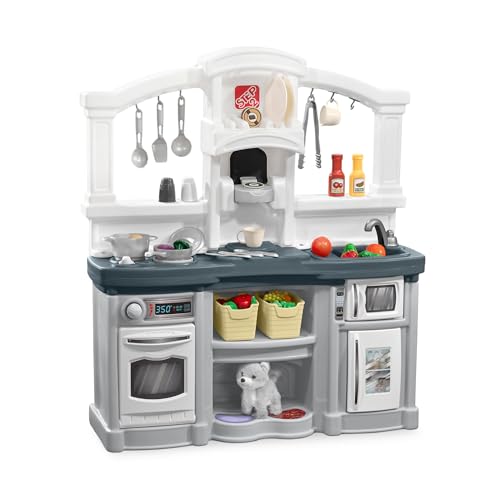
- Light-up burner with sizzling sounds
- 25 accessories with built-in storage
- Compact, durable plastic design
Best For: Preschoolers who like interactive cooking play
Feature-Rich Wooden Pick

- Multiple pretend appliances and accessories
- Modern wooden design with smooth surfaces
- Side handles help with relocation
Best For: Preschoolers who want varied appliance play
Social Play Classic

- Open design supports shared role-play
- Lights, sounds, and working doors
- 25 accessories with storage areas
Best For: Younger children playing together
Small-Space Wooden Pick

- Compact wooden design for smaller rooms
- Includes sliceable food and steel cookware
- Storage features support easy cleanup
Best For: Preschoolers in apartments or compact playrooms
Best Full-Size Wooden Set
Amazon Basics Kids Kitchen Set

- Full kitchen layout with stove, oven, sink, and refrigerator
- Includes five cookware accessories
- Sturdy 43-pound wooden construction
Best For: Families seeking a roomy, durable kitchen for ages 3 and up
Best Adjustable Interactive Pick
Tiny Land Adjustable Play Kitchen

- Three height settings for growing children
- Light-up stove and range-hood sounds
- Includes 18-piece food and cookware accessories
Best For: Ages 3–8, especially children who enjoy interactive role play
Best Storage-Focused Modern Set
Wooden Play Kitchen with Light

- LED light and multiple opening appliance doors
- Storage space encourages cleanup habits
- Non-toxic wood with ASTM F963 and CPSIA compliance
Best For: Ages 3–8 who enjoy realistic storage and pretend cooking
Best Realistic Layout

- Multiple realistic kitchen zones
- Interactive knobs, faucet, and ice dispenser
- Cabinets and shelves support organization
Best For: Preschoolers who enjoy detailed role play and tidy storage
Best for Group Play

- Configures for up to three children
- Includes 74 cooking accessories
- Adds simulated spray, sounds, and lights
Best For: Siblings and preschool groups playing together
Best Traditional Wooden Set

- Full kitchen layout with opening doors
- Includes LED light and kitchenware
- Wood construction with listed safety compliance
Best For: Preschoolers who prefer classic cooking role play
Interactive Value Pick – Step2 Fun with Friends Kitchen
For families comparing play kitchens for preschoolers, the Step2 Fun with Friends offers a practical balance of interactive features, storage, and a compact footprint. Its light-up burner, sizzling sounds, clicking knobs, and 25-piece accessory set support hands-on pretend cooking.
Best For: Preschoolers who enjoy interactive play and families seeking easy cleanup and durable plastic construction.
Pros:
- Light-up burner and cooking sounds add engaging sensory play.
- Includes a built-in coffee maker, sink, refrigerator, oven, and 25 accessories.
- Built-in storage spaces help children tidy accessories independently.
- Compact dimensions and easy-clean plastic suit busy play areas.
Cons:
- Requires two AA batteries, which are not included.
- Plastic construction may be less furniture-like than a wooden set.
With a three-year limited warranty and a recommended age range beginning at 2 years, this is a sensible choice when durability, interaction, and organization matter more than a natural-wood appearance.
Feature-Rich Wooden Pick – ROBUD Play Kitchen Set
Among play kitchens for preschoolers, the ROBUD Play Kitchen Set stands out for its broad selection of pretend appliances in a wooden design. Children can explore a refrigerator, ice maker, coffee machine, juicer, microwave, oven, dishwasher, utensils, and coffee cups.
Best For: Children ages 3 and up who want many appliance-themed activities in a stylish wooden corner kitchen.
Pros:
- Offers numerous play stations, including an ice maker, dishwasher, microwave, and oven.
- Wooden construction has a modern bean-green finish with gold handles.
- Smooth, burr-free surfaces and lightweight cookware support comfortable play.
- Hollow side handles make the 37.5-pound set easier to move between rooms.
Cons:
- At 37.5 pounds, it is heavier than the plastic alternatives in this roundup.
- The many components may require more assembly and organization.
The ROBUD is a substantial option for families prioritizing variety and a furniture-inspired look. Its recommended starting age of 3 years makes it particularly appropriate for preschool play.
Social Play Classic – Step2 Best Chefs Kitchen
The Step2 Best Chefs is a compact choice among play kitchens for preschoolers, with an open layout designed for social play. It combines a light-and-sound burner with working oven and refrigerator doors, a pass-through window, and 25 accessories.
Best For: Toddlers and preschoolers ages 2 to 5 who benefit from an open setup for shared pretend cooking.
Pros:
- Pass-through window and open design encourage cooperative role-play.
- Light-up stove burner, sounds, and working doors add hands-on interaction.
- Hooks, shelves, and a recycling bin provide places for the 25 accessories.
- Double-walled plastic is designed to resist chipping, fading, cracking, and peeling.
Cons:
- Accessories and decals require setup and organization.
- The plastic design may not match homes seeking a wooden aesthetic.
This Best Chefs model is a practical fit when easy maintenance and social play are priorities. Its compact dimensions and three-year limited warranty add everyday convenience for younger children.
Small-Space Wooden Pick – Tiny Land Cream Play Kitchen
For shoppers seeking play kitchens for preschoolers in a smaller home, the Tiny Land Cream Play Kitchen offers a compact wooden footprint and a warm, modern appearance. Its sink, oven, stove, clicking knobs, sliceable food, and stainless steel cookware support open-ended pretend play.
Best For: Preschoolers ages 3 and up in apartments or playrooms where space-conscious wooden furniture is important.
Pros:
- Compact 22.6-inch-wide design suits apartments and smaller play areas.
- Includes sliceable wooden food, a knife, frying pan, shovel, and stainless steel cookware.
- Movable storage cover and open shelf make small accessories easier to retrieve and organize.
- Cream finish, light wood accents, floral curtain, and metallic details create a polished look.
Cons:
- Recommended for ages 3 and up, so it may not suit younger toddlers.
- Its smaller size provides less counter and storage space than larger sets.
- Wood construction may be heavier to relocate than a compact plastic model.
The Tiny Land is a good match for families who want a visually refined wooden kitchen without giving up practical storage. Its included cookware and food pieces make it ready for hands-on play from the start.
Best Full-Size Wooden Set – Amazon Basics Kids Kitchen Set
For shoppers comparing play kitchens for preschoolers, this Amazon Basics set offers a generously sized wooden setup with the core stations children expect. Its stove, oven, sink, refrigerator, overhead vent, turning knobs, and opening doors support realistic pretend play for children ages 3 and up.
Best For: Families wanting a sturdy, full-featured kitchen with included cookware and a taller 39-inch design.
Pros:
- Includes a stove, oven, sink, refrigerator, and overhead vent.
- Comes with a spatula, ladle, pot, lid, and skillet.
- Wood construction is designed for lasting, active play.
- Encourages storytelling, fine-motor practice, and organization.
Cons:
- At 43 pounds, it may be difficult to move frequently.
- The large footprint may require more dedicated playroom space.
This is a practical choice when size, storage-style organization, and a complete basic cooking setup matter more than portability. Its neutral white-and-gray finish may also blend easily with many play spaces.
Best Adjustable Interactive Pick – Tiny Land Adjustable Play Kitchen
Among play kitchens for preschoolers, the Tiny Land set stands out for combining interactive details with three height settings. Light-up stove elements, range-hood sounds, turning knobs, a faucet, and a removable sink give children several hands-on ways to play while the compact design suits shared living areas.
Best For: Growing children ages 3 to 8 and families who want adjustable height, lights, sounds, and an extensive accessory set.
Pros:
- Adjusts to three height settings as children grow.
- Features light-up stove elements and interactive range-hood sounds.
- Includes pretend food, cookware, plates, utensils, a cup, chef hat, and apron.
- Wood construction uses non-toxic, BPA-free materials and is described as meeting ASTM F963 and EN71 standards.
Cons:
- The interactive features may require more attention to batteries or upkeep than a basic set.
- Its 30.3-inch width offers less room than larger kitchen models.
This model is especially appealing for preschoolers who enjoy sensory details and role-play costumes. Its adjustable design can help extend usability, while the compact profile keeps the full pretend-kitchen experience relatively space-conscious.
Best Storage-Focused Modern Set – Wooden Play Kitchen with Light
This espresso-finish option gives families looking at play kitchens for preschoolers a modern wooden design with lighting and multiple storage areas. Children can open and close the oven, cabinet, freezer, refrigerator, and microwave doors while practicing pretend cooking, organization, and cooperative play.
Best For: Children ages 3 to 8 who enjoy realistic compartments, pretend cooking, and tidying up their play accessories.
Pros:
- Includes an LED light and several opening appliance and storage doors.
- Storage space supports cleanup and organization habits.
- Made from non-toxic wood and described as complying with ASTM F963 and CPSIA standards.
- Reinforced, anti-scratch surface is designed for regular play.
Cons:
- Assembly requires a screwdriver.
- The supplied notes mention possible missing-part or installation support needs, so setup should be checked carefully.
- At about 31.2 inches wide, it may offer less counter space than the largest sets.
This is a sensible pick for children who like opening compartments and putting items away after play. The modern espresso finish, LED detail, and storage-focused layout make it a functional choice for pretend kitchens in playrooms or bedrooms.
Best Realistic Layout – Tiny Land Wooden Play Kitchen
For families comparing play kitchens for preschoolers, the Tiny Land Wooden Play Kitchen stands out with a realistic, organized layout and several dedicated play zones. Its stovetop, sink, microwave, oven, coffee station, and storage areas support varied pretend-play routines while fitting a modern playroom style.
Best For: Preschoolers who enjoy realistic role play, organizing accessories, and exploring multiple kitchen activities.
Pros:
- Includes cooking, washing, baking, coffee-station, and storage areas.
- Clicking knobs, a turning faucet, and an ice dispenser add interactive detail.
- Built-in cabinets and open shelving encourage tidy cleanup habits.
- Uses natural wood, water-based paint, rounded edges, and a sturdy design.
Cons:
- At 35.6 pounds, it is relatively heavy to move.
- Assembly is required, even though numbered parts and illustrated instructions are provided.
This is a well-rounded choice when realistic features and organized storage matter most. Its 3+ age recommendation and substantial wooden construction make it particularly suitable for everyday preschool play.
Best for Group Play – VEVOR 3-in-1 Kids Kitchen Set
The VEVOR 3-in-1 Kids Kitchen Set is a practical option among play kitchens for preschoolers when more than one child may play at once. Its separated or combined configuration, extended counters, storage baskets, and 74-piece accessory set are designed to support shared pretend cooking.
Best For: Siblings, playgroups, or preschoolers who benefit from a larger collaborative play setup.
Pros:
- Can be used as separate sections or combined for up to three children.
- Offers a spacious workbench, extended counters, and storage baskets.
- Includes a chef hat, apron, and a 74-piece cooking accessory set.
- Features simulated spray, sounds, and lights for added play interaction.
Cons:
- The large 3-in-1 footprint may require considerable playroom space.
- The supplied details list inconsistent dimensions and age information, so shoppers should verify the current product listing.
Choose this set if cooperative play is the priority. Its configurable design offers more room for shared activities than a compact single-station kitchen, though available space should be measured carefully first.
Best Traditional Wooden Set – Kids Pretend Kitchen Playset
For shoppers seeking play kitchens for preschoolers with a familiar wooden-kitchen format, this set combines an oven, refrigerator, freezer, microwave, sink, and faucet with LED lighting and kitchenware accessories. Its opening doors and storage space give children plenty of room for everyday pretend cooking and cleanup play.
Best For: Preschoolers who want a traditional kitchen setup with lights, opening compartments, and included utensils.
Pros:
- Includes an oven, cabinet, freezer, refrigerator, microwave, sink, and faucet.
- Opening and closing doors create hands-on role-play opportunities.
- Storage space can encourage organization and tidying habits.
- Made from non-toxic wood and listed as compliant with ASTM F963 and CPSIA standards.
Cons:
- A screwdriver is required for assembly.
- The set weighs 31.3 pounds, so repositioning it may take effort.
This kitchen offers a balanced mix of classic pretend-play features and a light-up detail. It is a solid fit for ages 3 to 8 when families want a sturdy wooden set with storage and several opening compartments.
How We Picked These Play Kitchens for Preschoolers
We compared the selected sets by construction, size, included accessories, interactive features, storage potential, and likely age fit. We also considered whether each kitchen suits compact rooms, shared play areas, or children who prefer more elaborate pretend scenarios.
Because product specifications can vary, check the current listing for exact dimensions, materials, recommended age, assembly requirements, and included pieces before buying.
Quick Comparison
| Best For | Look For |
|---|---|
| Small spaces | Compact footprints, fewer loose accessories, and lightweight construction |
| Longer-term use | Sturdy materials, adjustable height, and durable doors or hinges |
| Interactive play | Working lights, realistic sounds, spray features, or moving controls |
| Open-ended play | Multiple appliances, generous counter space, and varied accessories |
| Value | A balanced combination of construction quality, features, and included pieces |
Key Buying Factors for Play Kitchens for Preschoolers
Size and Room Layout
Measure the intended area before ordering, including clearance for doors and for children to stand comfortably. A tall, feature-rich kitchen may be exciting but impractical in a bedroom or apartment.
Safety and Stability
Choose a set with a stable base, smooth edges, secure hardware, and age-appropriate accessories. Anchor taller furniture when recommended, supervise younger children around small parts, and inspect the kitchen periodically for loose pieces or damaged components.
Materials and Maintenance
Wooden kitchens often provide a substantial feel, while plastic models may be easier to move and wipe clean. Look for surfaces that tolerate regular cleaning and finishes that do not create difficult-to-clean seams.
Features and Accessories
Lights and sounds can make pretend cooking more engaging, but they may require batteries and add noise. A large accessory count is useful only if there is storage and your child enjoys sorting and role-play.
Height and Longevity
Counter height matters for comfortable play. Adjustable designs can accommodate growth, while a fixed-height model may be better for a younger child or a specific playroom setup.
Who Should Buy Which Play Kitchens for Preschoolers?
Choose a compact wooden or streamlined plastic model for small homes, shared bedrooms, or families that want less visual clutter. Pick a sturdier, larger kitchen when two children will play together or when counter space is important.
Interactive sets are best for children who enjoy buttons, realistic sounds, and action-based play. An accessory-rich option suits imaginative cooks who like serving meals, organizing utensils, and creating extended stories. For frequent rearranging, prioritize a lighter model with manageable assembly and a footprint that is easy to move.
Whichever set you choose, confirm dimensions and supervision requirements first. The right play kitchen should fit both your child’s interests and your home—not simply have the longest feature list.