The best headphone amplifiers with preamp output do more than power headphones. They can also feed powered speakers, a power amplifier, or another component, making them useful control centers for desktop and compact hi-fi systems.
This roundup compares 10 options across premium balanced designs, DAC-equipped desktop units, compact headphone splitters, and affordable analog preamps. Focus on output power, connections, source compatibility, and how you plan to build your system.
Best 10 Headphone Amplifiers with Preamp Output Picks for 2026
Best Reference-Grade Power
TOPPING A900 Headphone Amplifier
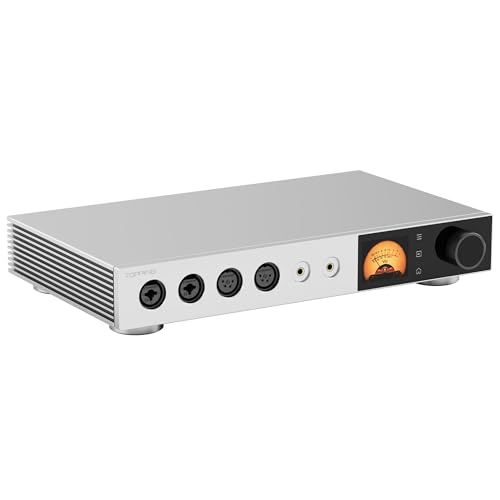
- Up to 22,000mW at 16Ω
- Six balanced and single-ended outputs
- Pure preamp mode for system integration
Best For: High-end desktop systems and demanding headphones
Best Portable Tone Control

- Three-band analog EQ and loudness control
- Up to 2,400mW in high-impedance mode
- Battery-powered with 3.5mm and 6.35mm outputs
Best For: Portable or desktop listening with adjustable sound
Best for Shared Listening
Mackie HM-4 Headphone Amplifier

- Four independent headphone outputs
- Separate level control for each listener
- Compact metal design for monitoring setups
Best For: Tracking, rehearsals, and group headphone monitoring
Best All-in-One DAC and Preamp
Fosi Audio ZH3 DAC Headphone Amp
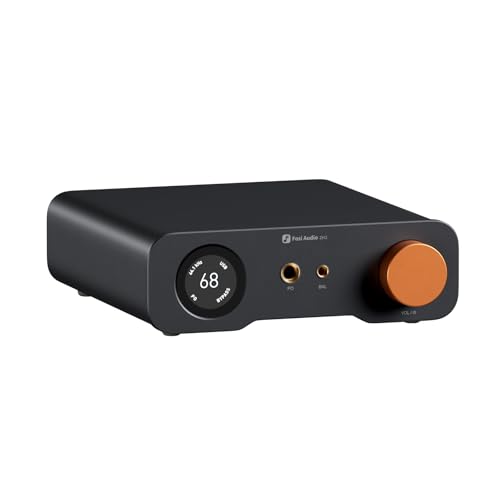
- DAC, headphone amp, and preamp in one unit
- Balanced 4.4mm output with high power
- USB, optical, coaxial, RCA, and XLR connectivity
Best For: Flexible desktop HiFi systems with digital sources
Premium Analog Control
SINGXER SA2 Class A Headphone Amplifier

- Fully balanced, all-discrete Class A circuit
- Balanced and single-ended preamp outputs
- Flexible gain and impedance settings
Best For: Balanced headphone and analog preamp systems
All-in-One System Hub

- Headphone amp, DAC, power amp, and phono stage
- 2.1-channel output with dedicated subwoofer connection
- Wide USB, Bluetooth, optical, coaxial, RCA, and phono input selection
Best For: Complete desktop or home-audio systems
Compact Desktop Flexibility
Fosi Audio SK02 DAC Headphone Amplifier

- USB-C and optical DAC inputs
- 3.5mm and powerful 4.4mm balanced outputs
- Preamp function for active speakers or amplifiers
Best For: Compact computer and desktop audio setups
Compact Analog Pick
Mini Stereo Preamplifier Headphone Amplifier
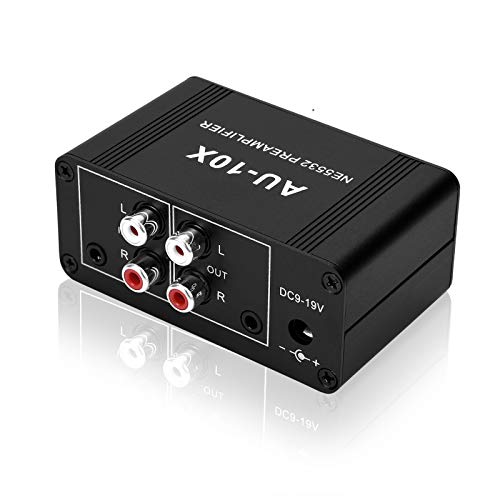
- 20dB gain for weak audio signals
- RCA and 3.5mm input/output options
- Supports headphones up to 16 ohms
Best For: Small analog and desktop audio systems
High-End System Hub
SMSL H200 Balanced Headphone Amplifier

- Balanced XLR and single-ended RCA inputs
- Pre-out for active speakers or power amps
- Three gain levels and dual headphone outputs
Best For: Flexible audiophile desktop systems
Desktop Drive Value
Douk Audio U3 Class A Headphone Amp

- Class A circuit with up to 1300mW output
- 6.35mm and 3.5mm headphone connections
- Swappable op-amp socket for experimentation
Best For: Desktop users driving high-impedance headphones
Best Reference-Grade Power – TOPPING A900 Headphone Amplifier
For listeners building a high-end system around headphone amplifiers with preamp output, the TOPPING A900 combines exceptionally high power, balanced signal handling, and a dedicated pure preamp mode. Its broad output selection and relay-based volume control make it suitable for demanding headphones and connected HiFi equipment.
Best For: Reference-focused desktop systems, power-hungry headphones, active speakers, and power amplifiers.
Pros:
- Up to 22,000mW at 16Ω for substantial headroom
- Fully differential architecture with six headphone outputs
- Dedicated pure preamp mode for power amps and active speakers
- Precise relay volume control with 0.5dB steps
Cons:
- Its extensive feature set may be more than casual listeners need
- Designed primarily for a stationary, premium desktop system
The A900 is the strongest choice here when output power, balanced connectivity, and system integration matter most. Its display, remote, and isolated power architecture further support a polished high-end setup.
Best Portable Tone Control – Fosi Audio SK01 Headphone Amp
The Fosi Audio SK01 is a flexible option for shoppers seeking headphone amplifiers with preamp output alongside practical tone shaping. It combines a Class A analog amplifier, three-band EQ, loudness control, and battery operation in a compact aluminum enclosure.
Best For: Desktop or portable listening, users who want adjustable bass, midrange, and treble, and compatible headphones from 32Ω to 300Ω.
Pros:
- Functions as a headphone amp, analog preamp, and equalizer
- Three-band tone controls with a tone-defeat button
- Up to 2,400mW in high-impedance mode
- Built-in 2,500mAh battery with up to six hours of use
Cons:
- Offers fewer connection options than larger desktop units
- Battery life is limited to up to six hours
The SK01 suits listeners who value hands-on sound adjustment and flexible placement more than extensive digital connectivity. Its 3.5mm and 6.35mm jacks support common headphone setups, while the preamp function adds system versatility.
Best for Shared Listening – Mackie HM-4 Headphone Amplifier
The Mackie HM-4 is a straightforward choice for headphone amplifiers with preamp output when the main goal is distributing one source to several listeners. It provides four independent headphone outputs, each with its own level control, in a compact metal enclosure.
Best For: Tracking sessions, rehearsals, small recording setups, and shared monitoring from a single source.
Pros:
- Drives four headphones from one source
- Independent volume control for every listener
- Compact metal build that can be attached to a desk, rack, or stand
- Plug-and-play operation with no separate power-supply complications
Cons:
- Uses 1/4-inch connections rather than offering multiple output formats
- Focused on headphone distribution rather than advanced preamp features
The HM-4 is best viewed as a practical monitoring splitter rather than a feature-rich HiFi preamp. If four people need separate headphone levels from one source, its simple layout and compact design are well suited to the task.
Best All-in-One DAC and Preamp – Fosi Audio ZH3 DAC Headphone Amp
The Fosi Audio ZH3 is a versatile pick among headphone amplifiers with preamp output, combining a high-resolution DAC, balanced headphone amplification, and RCA/XLR preamp connections. Its digital inputs, gain settings, EQ options, and remote make it a strong central hub for a desktop HiFi system.
Best For: Users wanting one desktop unit for digital sources, headphones, active speakers, or a downstream amplifier.
Pros:
- Supports PCM up to 768kHz/32-bit and DSD512
- Balanced 4.4mm output rated at 2,570mW per channel at 32Ω
- Includes USB, optical, coaxial, RCA, XLR, 4.4mm, and 6.35mm connections
- Three gain levels support headphones from 16Ω to 300Ω
Cons:
- EQ adjustments apply only to headphone output
- RCA and XLR output levels differ significantly, so system matching requires care
The ZH3 is the most versatile connectivity option in this group. It works especially well when a desktop system needs both headphone outputs and preamp feeds, provided you select the appropriate RCA or XLR level for the connected equipment.
Premium Analog Control – SINGXER SA2 Class A Headphone Amplifier
LEAUDIO SINGXER SA2 Class A Fully Balanced Discrete Headphone Amplifier & Preamplifier
Check Price On AmazonThe LEAUDIO SINGXER SA2 is a strong option if you want headphone amplifiers with preamp output and a fully analog, balanced design. Its selectable gain and impedance modes help it accommodate sensitive IEMs as well as demanding headphones.
Best For: Listeners building a flexible analog headphone and preamp system around balanced or single-ended equipment.
Pros:
- True quad-channel, fully balanced, all-discrete Class A amplification.
- Supports XLR 4-pin, 6.35mm, and 4.4mm headphone connections.
- Provides both balanced and single-ended preamp outputs.
- High/low gain and impedance settings suit a broad range of headphones and IEMs.
Cons:
- Purely analog amplification may be less suitable if you need built-in digital inputs or DAC functions.
- Its feature set and desktop-oriented design may be more than a simple headphone setup requires.
The SA2 stands out for connection flexibility and output control. It is especially compelling when your system includes balanced sources, multiple headphone types, and powered speakers or another amplifier connected through the preamp outputs.
All-in-One System Hub – SMSL AS400 DAC Headphone Amp
The SMSL AS400 combines a headphone amp, DAC, preamp-style source hub, power amplifier, and phono stage. For shoppers comparing headphone amplifiers with preamp output, it offers a particularly broad set of digital, wireless, vinyl, and speaker-system connections.
Best For: Users who want one central component for headphones, active or powered bass systems, speakers, Bluetooth, USB audio, and vinyl.
Pros:
- Includes USB, optical, coaxial, RCA, Bluetooth, 4.4mm, 6.35mm, and phono connectivity.
- Built-in MM phono stage simplifies connection to a turntable.
- 2.1-channel design provides dual 165W outputs plus an independent subwoofer channel.
- Offers XMOS USB processing, MQA support, five PCM filters, and eight EQ modes.
Cons:
- Its extensive speaker and source features may be unnecessary for a headphone-only setup.
- The supplied specifications describe it as a large, feature-packed desktop or home-audio component rather than a minimal portable amp.
The AS400 is less a standalone headphone specialist than a complete audio centerpiece. Choose it when preamp and headphone duties need to coexist with powered speakers, a subwoofer, digital sources, wireless playback, and a turntable.
Compact Desktop Flexibility – Fosi Audio SK02 DAC Headphone Amplifier
The Fosi Audio SK02 is a compact choice among headphone amplifiers with preamp output, pairing USB-C and optical inputs with both 3.5mm single-ended and 4.4mm balanced headphone outputs. Its plug-and-play controls make it well suited to computer and desktop listening.
Best For: Desktop listeners who need a small DAC/headphone amp that can also feed active speakers or another amplifier.
Pros:
- Supports PCM up to 32-bit/384kHz and DSD256 decoding.
- 4.4mm balanced output delivers up to 1100mW at 32 ohms, while 3.5mm output supports standard headphones and IEMs.
- Functions as a preamp for active speakers or compatible amplifiers.
- Driver-free operation, high/low gain switching, and a multifunction control knob simplify desktop use.
Cons:
- Input selection is limited to USB and optical, with no analog RCA input listed.
- Its compact desktop format is intended for headphone and nearfield systems rather than high-power speaker amplification.
The SK02 makes the most sense when space, convenience, and digital connectivity matter. It adds useful preamp functionality without requiring a larger component, while its balanced output gives compatible headphones additional power.
Compact Analog Pick – Mini Stereo Preamplifier Headphone Amplifier
If you need headphone amplifiers with preamp output for a small analog setup, this compact unit combines a 20dB preamp stage with RCA and 3.5mm connectivity. It includes a volume knob and can drive headphones up to 16 ohms, but it is not designed to power passive speakers.
Best For: Small desktop systems, turntable setups, and users needing simple RCA/3.5mm preamp output.
Pros:
- Provides 20dB gain for weak signals and includes adjustable volume.
- Offers RCA and 3.5mm inputs and outputs plus a headphone connection.
- Compact design uses a NE5532 dual op amp and a noise-reduction circuit.
Cons:
- Headphone output supports a maximum impedance of 16 ohms.
- The headphone output cannot be used with the other output ports simultaneously.
- Requires a separate DC 9–19V power supply and cannot drive passive speakers.
This is a practical, low-cost analog preamp for short signal chains and easy volume control. Its limited headphone-impedance support makes it better suited to earbuds and low-impedance headphones than demanding over-ear models.
High-End System Hub – SMSL H200 Balanced Headphone Amplifier
For a more capable option among headphone amplifiers with preamp output, the SMSL H200 combines balanced and single-ended inputs, powerful headphone drive, and a dedicated pre-out. Its three gain levels and remote-controlled relay volume make it suitable for a flexible desktop audio system.
Best For: Audiophile desktop systems using active speakers or a separate power amplifier alongside headphones.
Pros:
- Provides XLR balanced and RCA single-ended analog inputs.
- Pre-out supports connection to active speakers or power amplifiers.
- Three gain settings accommodate sensitive IEMs and higher-impedance headphones.
- Includes 4.4mm and 6.35mm headphone outputs, remote control, and headphone protection circuits.
Cons:
- Its desktop-focused design and built-in linear power supply are less portable than mini amplifiers.
- The supplied details do not specify a digital input section.
- The product information lists the color as “Sliver,” which may reflect a cataloging error.
The H200 is the strongest choice here for a full preamp-based listening chain. Its high output rating, balanced connectivity, gain control, and pre-out make it more adaptable than compact single-ended alternatives.
Desktop Drive Value – Douk Audio U3 Class A Headphone Amp
The Douk Audio U3 is a compact headphone amplifier for desktop listeners who prioritize drive power and a simple RCA input. Its Class A circuit, 5–20V operating range, and swappable op-amp socket give it useful flexibility, although the supplied specifications do not identify a preamp output.
Best For: Home or office desktop users driving high-impedance headphones from an RCA source.
Pros:
- Offers 6.35mm and 3.5mm headphone connections with RCA input.
- Class A output stage and 1300mW maximum output power are intended to drive demanding headphones.
- Pluggable op-amp socket supports future experimentation and upgrades.
- Compact design works with a 5–20V DC input range.
Cons:
- The supplied notes do not list a preamp output, so it is not a direct match for every preamp-output setup.
- It has no listed remote control or balanced headphone connection.
- Requires a suitable external DC power source.
This is a straightforward choice when headphone drive is the priority rather than system expansion. Consider it for high-impedance models and desktop listening, but verify the output requirements if you specifically need headphone amplifiers with preamp output.
How We Picked the Best Headphone Amplifiers with Preamp Output
We compared these models by looking at their preamp functionality, headphone output options, input and output connectivity, power capability, DAC features, controls, and intended use. The selection covers several categories rather than treating every amplifier as interchangeable: high-power balanced amplifiers, desktop DAC/amp combinations, compact distribution units, phono-friendly preamps, and integrated systems that can also drive speakers.
Product specifications and feature claims should be checked against the latest manufacturer or retailer listing before purchase, particularly for output power, balanced operation, impedance support, and included accessories.
Quick Comparison
| Best For | Look For | Typical Advantage |
|---|---|---|
| Power-hungry headphones | High output power and balanced drive | More headroom for demanding planar models |
| Computer listening | USB DAC, volume control, and compact design | Simple desktop setup with fewer components |
| Powered speakers or an amplifier | Dedicated preamp outputs and selectable modes | Easy switching between headphones and speakers |
| Multiple listeners | Several headphone outputs or distribution channels | Shared listening without repeatedly swapping plugs |
| Vinyl-based systems | Phono input or compatible external phono stage | Better integration with turntable equipment |
Key Buying Factors for Headphone Amplifiers with Preamp Output
Output and Headphone Compatibility
Check the amplifier’s power at the impedance your headphones actually use, not only its maximum headline figure. Balanced outputs can provide additional power on compatible headphones, but they require the correct cable and should never be used with improperly wired adapters. Gain settings are also useful for matching sensitive in-ear monitors with high-impedance or planar headphones.
Preamp Connections and Signal Routing
Confirm whether the preamp output is fixed or variable, and whether it uses RCA, XLR, or another connection. A variable output is generally more useful for powered speakers or a power amplifier because the front-panel volume control can manage the whole system. A dedicated preamp mode or output switch can help prevent accidental signal routing.
DAC, Inputs, and Everyday Controls
For computer audio, USB input and a built-in DAC may be more important than extreme analog output power. Bluetooth, optical, coaxial, RCA, and 3.5mm inputs broaden source compatibility. Consider whether you need remote control, display information, bass or treble adjustment, gain selection, and memory for volume levels.
Size, Heat, and System Matching
Class A and high-power designs may produce more heat and need ventilation. Measure your desk and leave space around the chassis. Also match the amplifier’s output style to the rest of your system: balanced connections can reduce cable clutter in some setups, while RCA remains the simplest choice for many powered speakers and compact amplifiers.
Who Should Buy Which Headphone Amplifiers with Preamp Output?
Choose a premium balanced model if you own demanding headphones and want maximum control, power, and upgrade flexibility. A DAC/amp with preamp output is the better fit for a computer-centered desk where one unit should handle digital sources and headphone listening. Select a compact analog amplifier for a small budget system or a simple line-level source. If several people need to listen at once, prioritize a multi-channel headphone amplifier instead of a conventional single-output design. For a system built around turntables, verify phono compatibility or plan to add a separate phono preamp.