Modern laptops often trade ports for slimmer designs, making a dependable USB hub an essential accessory for monitors, storage drives, keyboards, networking, and other peripherals.
This roundup compares 10 USB hubs and multiport adapters across compact travel models, powered desktop hubs, and docking-style options so you can match features to your setup.
Best 10 USB Hubs Picks for 2026
Best Overall USB Hub

- 4K@60Hz HDMI output
- 85W laptop charging support
- SD/TF readers and 5Gbps ports
Best For: USB-C laptops needing broad everyday connectivity
Best Compact USB Hub

- Adds four USB-A ports
- 5Gbps USB 3.0 transfers
- Compact 33g travel-friendly design
Best For: Travelers needing simple USB-A expansion
Best Dual-Monitor USB Hub

- Dual HDMI display connectivity
- Up to 85W pass-through charging
- Includes Ethernet and SD/microSD readers
Best For: Windows users creating a dual-monitor workstation
Best Powered USB Hub
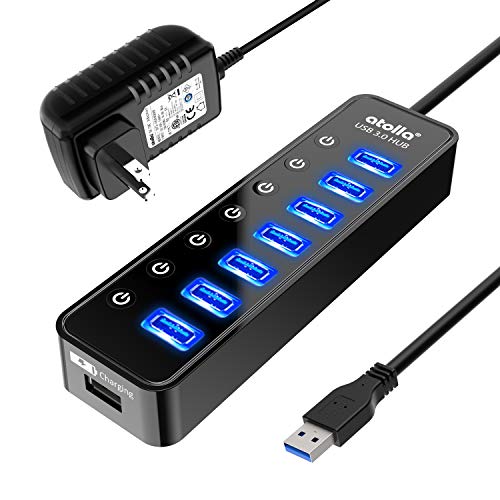
- Seven USB 3.0 data ports
- Dedicated smart charging port
- Individual on/off switches and power adapter
Best For: Power-hungry multi-device desktop setups
Best Wired Connectivity Value

- Four USB-A and two USB-C data ports
- Gigabit Ethernet and 5Gbps USB speeds
- Compact aluminum body with 1-foot cable
Best For: Laptop users needing wired networking and multiple USB peripherals
Best for Large Desktop Setups
Wenter 11-Port Powered USB Hub

- 10 USB 3.0 data ports plus a charging port
- Individual switches and power-status LEDs
- Includes 12V/3A adapter and long cables
Best For: Desktop workstations with many USB-A peripherals
Best for 4K Displays and Docking

- HDMI supports up to 4K at 60Hz
- Includes Ethernet, SD, microSD, and USB ports
- Supports up to 85W pass-through charging
Best For: USB-C laptop docking with display, networking, and card access
Best Compact Pick

- Expands one USB-A port to four
- Up to 5Gbps transfer on the USB 3.0 port
- Slim, plug-and-play design
Best For: Travelers and users adding basic USB-A peripherals
Best USB-C Versatility

- Adds HDMI, USB, card slots, and PD charging
- Supports up to 100W Power Delivery
- 4K HDMI output at 30Hz
Best For: USB-C laptop users building a flexible workstation
Best for Desktop Expansion

- Seven USB 3.0 ports with 5Gbps transfers
- Four-foot cable for flexible placement
- Aluminum body with a Type-C power port
Best For: Desktop setups with multiple USB-A peripherals
Best Overall USB Hub – Anker 7-in-1 USB-C Hub
For shoppers seeking versatile USB hubs, this compact Anker model combines USB-A and USB-C data ports with display output, card readers, and laptop charging support. Its HDMI port delivers 4K at 60Hz, while the three data ports support transfers up to 5Gbps.
Best For: USB-C laptop users who need a compact all-purpose hub for displays, storage, cards, and pass-through charging.
Pros:
- Seven functions, including HDMI, dual card slots, three data ports, and USB-C PD input.
- Supports 4K@60Hz video through the HDMI port.
- Provides up to 85W laptop charging and 5Gbps data transfers.
- Compact metal enclosure with an 18-month warranty.
Cons:
- Only HDMI supports video; the USB-C port is data-only.
- Charger is not included.
- Requires a compatible USB-C port with DP Alt Mode for video.
This is a strong choice when one small adapter needs to cover everyday connectivity, media cards, an external display, and charging. Confirm your laptop supports the required USB-C video and Power Delivery features before buying.
Best Compact USB Hub – UGREEN 4-Port USB-A Hub
This slim UGREEN adapter is a straightforward option among USB hubs, turning one USB-A port into four USB-A connections. It supports USB 3.0 transfer speeds up to 5Gbps and works without additional drivers on several common operating systems.
Best For: Travelers and desktop users who need more USB-A ports for peripherals, flash drives, or similar accessories.
Pros:
- Expands one USB-A port into four USB-A ports.
- Supports data transfers up to 5Gbps.
- Plug-and-play compatibility with Windows, macOS, Linux, and Chrome OS.
- Lightweight, 0.4-inch-thick design with a 0.5-foot cable.
Cons:
- Provides USB-A ports only, with no USB-C, video, or card-reader functions.
- The notes do not list a dedicated power adapter or charging input.
- Plastic construction may offer less durability than a metal hub.
If you simply need additional USB-A connections, this hub keeps the setup small and uncomplicated. It is best suited to low-fuss peripheral expansion rather than display connectivity or high-power device charging.
Best Dual-Monitor USB Hub – Anker 8-in-1 Docking Station
This Anker docking station is one of the more capable USB hubs for a USB-C workstation, adding dual HDMI, Ethernet, USB-A data ports, card readers, and pass-through charging from one connection. It can drive one display at 4K@60Hz or two at 4K@30Hz under supported setups.
Best For: Windows laptop users building a dual-monitor desk setup with wired networking and peripheral connectivity.
Pros:
- Offers eight functions, including dual HDMI, Ethernet, SD/microSD, and USB-A ports.
- Supports one 4K@60Hz display or two 4K@30Hz displays.
- Passes through up to 85W of power with a compatible USB-C PD charger.
- Supports USB-C, USB4, and Thunderbolt connections.
Cons:
- On macOS, both external monitors display identical content.
- Not compatible with Linux.
- Charger and USB-C cable are not included.
For a compatible Windows laptop, this hub can consolidate a full desk setup into one USB-C connection. Check DP Alt Mode, Power Delivery, operating-system compatibility, and the included-display limitations before purchase.
Best Powered USB Hub – Atolla 8-Port USB 3.0 Hub
This powered Atolla hub suits setups with many USB accessories. It adds seven USB 3.0 data ports plus a dedicated smart charging port, with individual switches that make it easy to disable devices without repeatedly unplugging them.
Best For: Desktops and workstations with multiple peripherals, external drives, printers, or devices that benefit from dedicated power.
Pros:
- Adds seven USB 3.0 data ports and one charging port.
- Supports data transfers up to 5Gbps.
- Individual on/off switches simplify device management.
- Includes a 5V/4A power adapter and supports plug-and-play operation.
Cons:
- It is a desktop-oriented powered hub rather than a compact travel adapter.
- The charging port is separate from the seven data ports.
- There is no USB-C or video connectivity listed.
The Atolla is a practical pick when port count and power management matter more than portability. Its supplied adapter and per-port switches make it especially useful for a permanent workstation with several connected USB devices.
Best Wired Connectivity Value – 7-in-1 USB-C Hub
If you need USB hubs for a laptop with wired networking and several everyday peripherals, this compact aluminum model combines Gigabit Ethernet with six USB data ports. Its 5Gbps USB performance and 1-foot cable suit a desk setup, though its USB-C ports are data-only.
Best For: Laptop users who need Ethernet plus multiple keyboards, mice, flash drives, or other USB accessories.
Pros:
- Includes four USB-A and two USB-C data ports.
- Supports 10/100/1000Mbps Gigabit Ethernet.
- USB data ports support speeds up to 5Gbps.
- Plug-and-play design with optional 5V/3A power support.
Cons:
- USB-C ports do not support video or PD charging.
- Power adapter and cable are not included.
This is a practical choice when wired internet and port expansion matter more than display output or USB-C charging. Its short cable keeps the hub accessible without taking up much desk space.
Best for Large Desktop Setups – Wenter 11-Port Powered USB Hub
Among USB hubs for a crowded workstation, this powered Wenter model stands out with 10 USB 3.0 data ports and a separate smart-charging port. Individual switches, status LEDs, and the included power adapter make it suited to keeping many peripherals connected and manageable.
Best For: Desktop users with numerous keyboards, mice, printers, drives, tablets, and other USB devices.
Pros:
- Provides 10 USB 3.0 data ports plus one charging port.
- Supports data transfer speeds up to 5Gbps.
- Individual on/off switches and LEDs simplify device management.
- Includes a 12V/3A power adapter and long connection cables.
Cons:
- Its powered desktop design is less portable than a compact travel hub.
- Charging output is limited to the dedicated smart-charging port.
The Wenter is a strong fit when the main problem is a shortage of USB-A ports rather than video expansion or Ethernet. It offers useful control over a large collection of connected devices, with power supplied in the box.
Best for 4K Displays and Docking – Anker 8-in-1 USB-C Hub
For USB hubs that also serve as a laptop dock, Anker’s 8-in-1 model combines HDMI, Ethernet, card readers, USB data ports, and USB-C Power Delivery input. It supports up to 4K at 60Hz with a DP 1.4 laptop and up to 85W pass-through charging when paired with an appropriate charger and cable.
Best For: USB-C laptop users who need one connection for an external display, networking, storage cards, peripherals, and charging.
Pros:
- HDMI supports 4K@60Hz on DP 1.4 laptops and 4K@30Hz on DP 1.2 laptops.
- Includes Ethernet, SD and microSD readers, two USB-A ports, and USB-C data.
- USB data ports support transfer speeds up to 10Gbps.
- Offers up to 85W USB-C Power Delivery pass-through.
Cons:
- The USB-C port does not support video output; only HDMI does.
- Requires a 100W charger and cable for adequate power, and the hub uses 15W.
- Not compatible with Linux.
This is the most versatile option of the three for a modern USB-C desk setup, especially when display output and card access are important. Confirm that the laptop supports DP Alt Mode and Power Delivery before buying.
Best Compact Pick – VIENON 4-Port USB 3.0 Hub
If you need more USB-A connections without adding much bulk, this compact USB hub expands one port into four. It includes one USB 3.0 port with transfer speeds up to 5Gbps, while its plug-and-play design works with common laptops, desktops, gaming consoles, and peripherals.
Best For: Travelers and everyday users who need a slim USB-A hub for keyboards, mice, flash drives, printers, or other low-power accessories.
Pros:
- Four USB-A ports from a single computer connection
- Up to 5Gbps data transfer through the USB 3.0 port
- Compact 1.5-ounce design with a soft blue activity indicator
- No drivers required and compatible with Windows, macOS, and Linux
Cons:
- Does not support laptop, tablet, or high-power device charging
- Only one port is specified as USB 3.0; the additional ports are intended for standard accessories
This is a straightforward choice among USB hubs for expanding a USB-A port on a laptop or desktop. Its small footprint and simple setup are useful for daily peripherals, but users needing charging or broader connectivity should consider a different type of hub.
Best USB-C Versatility – Acer 7-in-1 USB-C Hub
This Acer USB-C hub combines display output, charging, data, and memory-card connectivity in one aluminum adapter. It provides HDMI output up to 4K at 30Hz, 100W Power Delivery, two USB-A data ports, a USB-C data port, and separate SD and microSD slots.
Best For: USB-C laptop users who want one travel-friendly adapter for monitors, card transfers, peripherals, and pass-through charging.
Pros:
- Seven-in-one layout with HDMI, USB, PD, SD, and microSD connectivity
- Supports up to 100W Power Delivery with a compatible charger and laptop port
- HDMI supports 4K at 30Hz or Full HD output
- Aluminum housing helps with durability and heat dissipation
Cons:
- HDMI is not suitable for 4K at 60Hz or 2K at 144Hz
- Video output requires a USB-C port with DP Alt Mode
- USB-C and USB-A data ports support data transfer only, not video or audio
Among USB hubs, this is the more versatile option for modern USB-C workstations and mobile setups. Check your computer’s video and Power Delivery support before buying, especially if you need higher refresh rates.
Best for Desktop Expansion – ABFCRTTW 7-Port USB 3.0 Hub
Designed for a fixed desktop setup, this 7-port USB hub pairs seven USB 3.0 connections with a long 4-foot cable. Its aluminum housing, 5Gbps transfer rate, and 5V/3A Type-C power port make it useful for connecting several peripherals and storage devices at once.
Best For: Desktop users who need multiple USB-A ports with extra cable reach for keyboards, mice, external drives, USB flash drives, or USB fans.
Pros:
- Seven USB 3.0 ports support data transfers up to 5Gbps
- Four-foot cable offers flexible placement on or beside a desk
- Aluminum construction supports heat dissipation and stability
- Dual-chip design and plug-and-play compatibility across major operating systems
Cons:
- Does not support charging
- Designed for data transmission rather than video output or general-purpose expansion
- Its longer cable and seven-port layout may be less convenient for travel
This hub is a practical choice when port count and placement flexibility matter more than portability. It can organize a busy desktop with several data peripherals, but it is not the right pick if you need device charging or display connectivity.
How We Picked These USB Hubs
We selected models that cover the main ways shoppers use USB Hubs: adding USB-A or USB-C ports, connecting external displays, transferring files, attaching Ethernet, and powering multiple peripherals. The lineup includes compact adapters for laptops, longer-cable desktop hubs, and powered options designed for several connected devices.
We also considered practical specifications such as USB generation, port count, video support, network connectivity, power delivery, cable length, switch placement, and portability. Because compatibility varies by computer, confirm your laptop or desktop supports the required USB-C features before buying.
Quick Comparison
| Best For | Look For | Typical Choice |
|---|---|---|
| Travel and everyday expansion | Compact design and several USB ports | Small 4-port or 7-in-1 hub |
| External monitors | HDMI support and the right USB-C video mode | Multiport hub with 4K output |
| Many accessories | Powered operation and individual switches | 8-port or 11-port powered hub |
| Wired networking | Gigabit Ethernet | USB-C hub with RJ45 |
| Desktop setups | Long cable and stable external power | Powered hub with extended lead |
Key Buying Factors for USB Hubs
Port Type and Count
USB-A remains common for keyboards, mice, flash drives, and printers, while USB-C is increasingly used for newer storage and charging accessories. Count the devices you connect regularly, then leave room for one or two additions.
Speed and Power
USB 3.0 or faster is preferable for external drives and large file transfers. A bus-powered hub draws power from the computer and is convenient for low-demand accessories. A powered model is a better fit for several drives, cameras, or other power-hungry peripherals.
Video, Charging, and Ethernet
HDMI output does not automatically guarantee every resolution or refresh rate. Check whether your computer supports video over USB-C and compare the hub’s stated display limits with your monitor. If you want wired internet, select a model with Gigabit Ethernet. Charging support can also differ substantially, so verify the adapter’s power-delivery requirements.
Build and Placement
A short cable keeps a hub close to a laptop, while a longer lead works better beside a desktop or monitor. Individual switches, status LEDs, detachable cables, and a sturdy enclosure can make a noticeable difference in a permanent setup.
Who Should Buy Which USB Hubs?
Frequent travelers: Choose a compact USB-C hub with the ports you need for presentations, storage, and charging without carrying a full dock.
Home-office users: A multiport model with HDMI, Ethernet, and USB-A ports can connect a monitor and common peripherals through one laptop connection.
Power users: Pick a powered hub with multiple high-speed ports and individual switches if you regularly attach several drives, cameras, or accessories.
Desktop users: Favor a longer cable, external power, and a port layout that remains accessible beside your computer. Before ordering, check connector types, operating-system support, display requirements, and the included power adapter.