Outdoor dead zones can make streaming, security cameras, smart-home devices, and remote work frustrating. The right mesh system extends dependable Wi-Fi beyond your walls without relying on a single indoor router to reach every corner of the property.
We compared 10 mesh WiFi systems with outdoor nodes across coverage, wireless standards, weather protection, speed, installation, and ecosystem compatibility to help you choose a practical setup for your home or business.
Best 10 Mesh Wifi Systems with Outdoor Nodes Picks for 2026
Best All-Weather Coverage
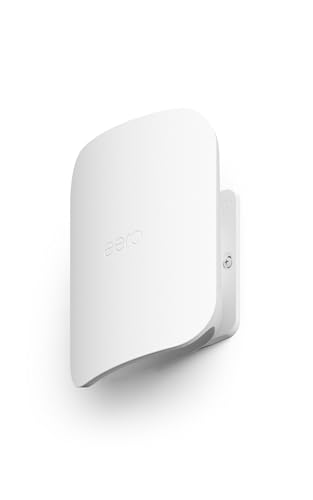
- Up to 15,000 sq. ft. of outdoor coverage
- IP66 weatherproof design
- Wi-Fi 7 speeds up to 2.1 Gbps
Best For: Large yards and existing eero networks
Best Value Outdoor Add-On

- Adds up to 2,200 sq. ft. of coverage
- IP65 protection for outdoor use
- Two 2 Gbps PoE ports
Best For: Existing TP-Link Deco Wi-Fi 6 networks
Best Complete Wi-Fi 7 Kit

- Up to 6,000 sq. ft. of indoor coverage
- Supports plans up to 2.5 Gbps
- Wi-Fi 7 with Multi-Link Operation
Best For: Indoor eero coverage with future outdoor expansion
Best High-Performance Outdoor Add-On

- Adds up to 3,000 sq. ft. of coverage
- Tri-band Wi-Fi 7 with 6 GHz support
- Dual 2.5 Gbps PoE+ ports
Best For: Multi-gig Deco networks and demanding outdoor use
Premium Outdoor Wi-Fi 7 Pick

- Wi-Fi 7 speeds up to 5,000 Mbps
- IP65 weather-resistant design
- PoE or AC power with 2.5G ports
Best For: High-speed outdoor ASUS AiMesh installations
Best Deco-Compatible Outdoor Node

- Wi-Fi 6 outdoor mesh extension
- PoE+ or AC power options
- Works with TP-Link Deco systems
Best For: Extending an existing TP-Link Deco network outdoors
Best for UniFi Networks

- Wi-Fi 6 with four spatial streams
- Up to 2,000 square feet of coverage
- Supports 350-plus connected devices
Best For: PoE-powered UniFi outdoor deployments
Best Orbi Outdoor Add-On

- Adds up to 2,500 sq. ft. of outdoor coverage
- Tri-band Wi-Fi 5 with IP66 protection
- Works only with compatible Orbi Home or Pro systems
Best For: Existing Orbi Home or Orbi Pro owners extending coverage outdoors
Best Complete Outdoor Mesh Kit

- Indoor and outdoor Wi-Fi 6 mesh system
- Up to 6,000 sq. ft. total stated coverage
- Weatherproof nodes and HomeShield security features
Best For: Homes starting fresh with broad indoor and outdoor coverage needs
Best for Large Properties
WAVLINK WING 12HP Outdoor Mesh

- Long-range outdoor coverage for large properties
- Four 7 dBi antennas and dual Gigabit ports
- IP65 housing with active/passive PoE support
Best For: Farms, ranches, barns, and managed outdoor deployments
Best All-Weather Coverage – eero Outdoor 7
If you need mesh wifi systems with outdoor nodes, the Amazon eero Outdoor 7 is a purpose-built option for extending coverage across patios, yards, and other exposed areas. It combines Wi-Fi 7 speeds, broad outdoor coverage, and flexible AC or PoE+ power in a weather-resistant enclosure.
Best For: Large outdoor areas, smart-home owners, and users who want a dedicated outdoor node with simple app-based management.
Pros:
- Provides up to 15,000 square feet of outdoor coverage and supports 100+ devices.
- IP66 weatherproofing and an operating range from -40°F to 131°F support year-round outdoor installation.
- Wi-Fi 7 delivers wireless speeds up to 2.1 Gbps.
- Supports both AC power and Power over Ethernet Plus.
Cons:
- This is a single outdoor node, so a compatible eero network is needed for a complete mesh system.
- Advanced security features such as VPN and malware protection require an optional eero Plus subscription.
The eero Outdoor 7 stands out when outdoor reach and weather resistance matter more than buying a complete indoor-and-outdoor kit. Its eero app, automatic updates, and backward compatibility make it a practical upgrade for existing eero households.
Best Value Outdoor Add-On – TP-Link Deco X20-Outdoor
The TP-Link Deco X20-Outdoor is a practical choice among mesh wifi systems with outdoor nodes when you already use a compatible indoor Deco network. This Wi-Fi 6 add-on expands coverage outdoors while offering wired backhaul flexibility, multiple mounting options, and IP65 protection.
Best For: Deco users who want affordable outdoor expansion for patios, gardens, cameras, and other connected devices.
Pros:
- Adds up to 2,200 square feet of coverage and supports up to 150 devices.
- IP65 protection helps guard against rain, dust, moisture, shocks, and vibrations.
- Two 2 Gbps PoE ports provide flexible wired connectivity.
- Includes pole, wall, and tabletop mounting options, with PoE+ or AC power support.
Cons:
- Requires an indoor mesh Wi-Fi system to extend the network outdoors.
- Wi-Fi 6 is less advanced than the Wi-Fi 7 standard used by newer models.
- Actual speeds vary with distance, obstacles, and surrounding conditions.
For households already invested in TP-Link Deco, the X20-Outdoor offers a straightforward way to reduce outdoor dead zones without replacing the main system. Its mounting and power choices are especially useful for permanent installations.
Best Complete Wi-Fi 7 Kit – eero 7 3-Pack
The eero 7 three-pack is a strong starting point for shoppers building mesh wifi systems with outdoor nodes later. While these routers are designed for indoor use, they establish a Wi-Fi 7 mesh supporting up to 6,000 square feet, and they can work with compatible eero outdoor hardware.
Best For: Homes that need a complete indoor mesh foundation with the option to add an eero outdoor node.
Pros:
- Three units cover up to 6,000 square feet and support 120+ devices.
- Supports internet plans up to 2.5 Gbps through two auto-sensing 2.5 GbE ports per router.
- Wi-Fi 7 features include Multi-Link Operation for improved performance.
- TrueMesh, TrueRoam, and TrueChannel help devices stay on an optimal connection.
Cons:
- The included routers are not described as weatherproof outdoor nodes.
- Advanced security, ad blocking, parental controls, and VPN features require an optional eero Plus subscription.
This kit makes sense when indoor coverage is the priority and outdoor connectivity will be added separately. Its three-node layout, high-speed Ethernet ports, and compatibility with previous eero generations provide a flexible foundation.
Best High-Performance Outdoor Add-On – TP-Link Deco 7 Outdoor
For demanding networks, the TP-Link Deco 7 Outdoor brings tri-band Wi-Fi 7 to the category of mesh wifi systems with outdoor nodes. It adds up to 3,000 square feet, supports up to 200 devices, and includes dual 2.5 Gbps PoE+ ports for high-throughput installations.
Best For: Wi-Fi 7 households, large outdoor entertainment areas, and users with multi-gig wired networking equipment.
Pros:
- Adds up to 3,000 square feet and supports up to 200 devices.
- Tri-band Wi-Fi 7 supports 6 GHz speeds up to 5,765 Mbps, 5 GHz up to 4,324 Mbps, and 2.4 GHz up to 688 Mbps.
- Two 2.5 Gbps PoE+ ports support high-speed wired connectivity.
- IP65 protection and included pole, wall, and tabletop mounting accessories suit outdoor installations.
Cons:
- It is an add-on extender and requires a compatible Deco mesh network.
- Its advanced Wi-Fi 7 capabilities require compatible client devices to realize their full potential.
- Most internet providers require a modem for service.
The Deco 7 Outdoor is the performance-focused pick in this group. Its tri-band design, 6 GHz support, and 2.5 Gbps PoE+ ports make it well suited to multi-gig networks, while backward compatibility keeps it usable with other Deco generations.
Premium Outdoor Wi-Fi 7 Pick – ZenWiFi BD5 Outdoor
For shoppers comparing mesh wifi systems with outdoor nodes, the ASUS ZenWiFi BD5 Outdoor stands out as a weather-resistant Wi-Fi 7 option for extending coverage beyond the house. It supports speeds up to 5,000 Mbps, ASUS AiMesh compatibility, and both PoE and AC power for flexible installation.
Best For: Homes that want a high-speed outdoor node with flexible mounting and power options.
Pros:
- Wi-Fi 7 dual-band performance with MLO and 4K-QAM, rated up to 5,000 Mbps.
- IP65 water- and dust-resistant enclosure with ESD and surge protection.
- Supports PoE and AC power, with two 2.5G PoE-in ports.
- Can be wall-mounted, pole-mounted, or placed on a flat surface.
Cons:
- Designed as a single outdoor unit, so additional nodes may be needed for larger properties.
- Its Wi-Fi 7 benefits are most useful with compatible client devices and ASUS AiMesh equipment.
The BD5 Outdoor is a strong choice when outdoor durability and network speed matter equally. Its PoE support simplifies placement near patios, yards, or other areas where a conventional indoor node would be impractical.
Best Deco-Compatible Outdoor Node – Deco X50-Outdoor
The TP-Link Deco X50-Outdoor is a practical pick among mesh wifi systems with outdoor nodes, especially for homes already using TP-Link Deco equipment. This Wi-Fi 6 add-on is weatherproof, supports PoE or AC power, and can be mounted on a wall, pole, or table.
Best For: Existing TP-Link Deco users who need reliable backyard, patio, or guest-house coverage.
Pros:
- Works with all TP-Link Deco mesh Wi-Fi systems through the Deco app.
- Weatherproof construction is designed to handle dust and heavy rain.
- Supports 802.3at PoE+ or AC power, with two Gigabit PoE ports.
- Includes app-based setup, guest networking, QoS, and basic HomeShield features.
Cons:
- It is a Wi-Fi 6 unit rather than a Wi-Fi 7 model.
- Its maximum wired port speed is Gigabit Ethernet.
- Some HomeShield security and control features are premium services.
For a Deco household, the X50-Outdoor offers one of the simplest ways to add outdoor coverage without creating a separate network. PoE support and flexible mounting make it easier to install where AC outlets are inconvenient.
Best for UniFi Networks – UniFi U6 Mesh Pro
Ubiquiti UniFi U6 Mesh Pro Dual-Band Indoor/Outdoor Wi-Fi 6 Access Point (U6-Mesh-Pro)
Check Price On AmazonThe Ubiquiti UniFi U6 Mesh Pro is an indoor/outdoor Wi-Fi 6 access point for buyers who want mesh wifi systems with outdoor nodes and already use, or plan to use, a UniFi network. It provides up to 2,000 square feet of coverage, supports 350-plus connected devices, and uses PoE for power.
Best For: Home or business UniFi deployments needing an exposed outdoor access point with broad device capacity.
Pros:
- Weatherproof design supports outdoor-exposed installation.
- Four spatial streams and an integrated omnidirectional antenna.
- Rated for up to 2,000 square feet of coverage and 350-plus connected devices.
- PoE-powered installation helps reduce the need for a nearby power outlet.
Cons:
- It is an access point rather than a complete standalone mesh kit.
- Its wired LAN bandwidth is limited to 1,000 Mbps.
- UniFi-focused deployment may be less convenient for users outside the Ubiquiti ecosystem.
The U6 Mesh Pro makes the most sense when capacity and UniFi integration are priorities. It is particularly suited to larger connected-device counts, provided the network has PoE infrastructure and a compatible UniFi management setup.
Best Orbi Outdoor Add-On – Orbi RBS50Y Outdoor Satellite
The NETGEAR RBS50Y is an outdoor satellite for existing Orbi Home or Orbi Pro systems. For shoppers comparing mesh wifi systems with outdoor nodes, it adds up to 2,500 square feet of outdoor coverage and uses tri-band Wi-Fi 5 connectivity in an IP66-rated enclosure.
Best For: Orbi owners who need dedicated outdoor coverage around a home or small property.
Pros:
- Extends compatible Orbi Home or Orbi Pro networks outdoors.
- Rated for outdoor use with IP66 protection.
- Tri-band design supports data rates up to 3 Gbps.
- Includes a wall mount, bracket, screws, and power adapter.
Cons:
- Only compatible with Orbi Home and Orbi Pro systems.
- Not compatible with Orbi Wi-Fi 6 systems.
- This is an add-on satellite, not a complete standalone mesh kit.
The RBS50Y is a straightforward choice when you already use a compatible Orbi network and want weather-protected coverage outside. Confirm system compatibility before buying, particularly if your existing Orbi setup uses Wi-Fi 6.
Best Complete Outdoor Mesh Kit – TP-Link Deco WM9000 3-Pack
The TP-Link Deco WM9000 is a three-unit Wi-Fi 6 mesh system designed for indoor and outdoor coverage. It is a strong option for shoppers seeking mesh wifi systems with outdoor nodes, offering stated coverage of up to 4,500 square feet indoors and 2,500 square feet outdoors.
Best For: Homes that need a new whole-home mesh network with dedicated indoor and outdoor coverage.
Pros:
- Three-pack supports combined coverage of up to 6,000 square feet.
- Wi-Fi 6 dual-band performance reaches up to 3 Gbps.
- Weatherproof design is suitable for outdoor placement.
- HomeShield adds network protection, parental controls, and IoT security features.
Cons:
- Dual-band rather than tri-band.
- The supplied coverage figures are divided between indoor and outdoor areas.
- Some advanced security and control features may depend on the HomeShield offering.
Unlike a single-brand outdoor add-on, the WM9000 is presented as a complete three-unit mesh system. Its Wi-Fi 6 platform and stated device capacity of more than 150 devices make it suitable for busy connected homes, while weatherproofing expands the network beyond the walls.
Best for Large Properties – WAVLINK WING 12HP Outdoor Mesh
The WAVLINK WING 12HP is an outdoor dual-band mesh extender/router built for long-range deployments. Among mesh wifi systems with outdoor nodes, it stands out for its four 7 dBi antennas, PoE support, IP65 enclosure, and compatibility with WAVLINK devices that support Everything Mesh.
Best For: Farms, ranches, barns, outbuildings, and other large properties needing wired outdoor access-point installation.
Pros:
- Claims up to 300 meters of range per unit, depending on conditions.
- Four 7 dBi antennas and dual-band speeds up to 1,200 Mbps.
- Two Gigabit Ethernet ports and active/passive PoE support.
- Supports WPA2/WPA3-Mixed and enterprise security modes.
Cons:
- Mesh operation is limited to compatible WAVLINK Everything Mesh devices.
- The PoE converter must be installed indoors because it is not waterproof.
- Centralized Fit AP management requires a separately sold WAVLINK AC Controller.
This unit is more deployment-focused than a typical home mesh node. Its weather-resistant housing, long-range antenna setup, and PoE flexibility suit expansive properties, but buyers should plan around the WAVLINK ecosystem and any required controller or indoor PoE equipment.
How We Picked the Best Mesh Wifi Systems with Outdoor Nodes
We focused on systems and add-on nodes designed for exterior use, weighing weatherproof ratings, wireless generation, coverage claims, wired networking options, and compatibility with the manufacturer’s mesh platform. We also considered whether each product is best suited to a typical home, a large property, or a more technical installation.
Because advertised range depends on walls, trees, interference, device count, and internet service, treat coverage figures as estimates rather than guarantees. A strong system should also provide stable roaming and straightforward management through a mobile app or controller.
Quick Comparison
| Best For | What to Prioritize | Recommended Type |
|---|---|---|
| Typical home and backyard | Simple setup and seamless roaming | Consumer mesh system with an outdoor node |
| Gigabit-plus internet | Wi-Fi 7, multi-gig Ethernet, and tri-band capacity | Premium Wi-Fi 7 mesh |
| Large outdoor areas | High placement flexibility and wired backhaul | Weatherproof access point or outdoor satellite |
| Budget expansion | Compatibility with your existing mesh kit | Wi-Fi 6 outdoor add-on |
| Advanced networks | VLANs, centralized control, and PoE | Prosumer access point system |
Key Buying Factors for Mesh Wifi Systems with Outdoor Nodes
Weatherproofing and Placement
Look for an explicit IP rating. IP65 or IP66 protection helps defend against dust and water, but installation still matters. Mount the node under suitable shelter when possible, keep connectors protected, and follow the manufacturer’s temperature and mounting guidance.
Wireless Standard and Capacity
Wi-Fi 6 is a strong value for most households, while Wi-Fi 7 makes more sense for newer devices, crowded networks, and multi-gigabit service. Dual-band models are often less expensive; tri-band designs can reduce congestion and improve wireless backhaul performance.
Backhaul, Ethernet, and Power
Wired Ethernet backhaul is usually the most reliable way to connect an outdoor node. Check port speeds before buying, especially if your internet plan exceeds 1Gbps. PoE can simplify installation for access points, but it may require a compatible injector or network switch.
Compatibility and Management
Outdoor add-ons generally work only within their matching ecosystem. Confirm support for your existing router, app, firmware, and preferred security features. A unified system is easier to manage than mixing unrelated extenders and access points.
Who Should Buy Which Mesh Wifi Systems with Outdoor Nodes?
Choose a mainstream Wi-Fi 6 mesh system if you want reliable backyard coverage at a sensible price and do not need extreme throughput. Select a Wi-Fi 7 option if you have a fast internet plan, newer client devices, or many simultaneous users. For detached garages, patios, and larger grounds, prioritize an outdoor-rated node with Ethernet or PoE rather than judging by range alone. Buyers comfortable with network configuration should consider a dedicated prosumer access point, while anyone wanting the simplest setup should stay within one consumer mesh ecosystem.