The best memory card readers make it easier to move photos, videos, and other files between cards and modern devices without relying on slow wireless transfers.
This roundup compares 10 memory card readers with different port combinations, card-format support, and device compatibility, so you can choose the right fit for your workflow.
Best 10 Memory Card Readers Picks for 2026
Most Versatile
UGREEN 4-Slot USB 3.0 Card Reader
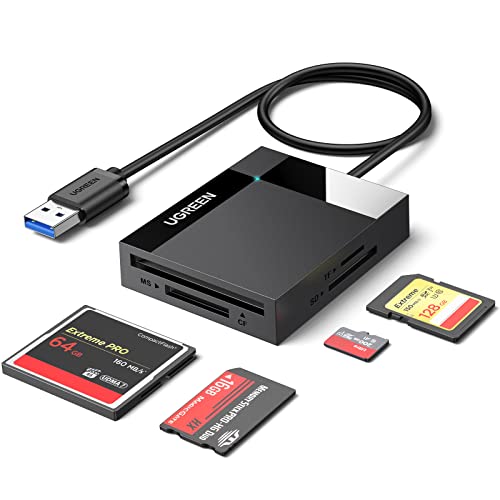
- Supports SD, microSD, CF, and MS cards
- Reads and writes four cards simultaneously
- Up to 5Gbps transfers and 2TB card support
Best For: Photographers and multi-format card users
Best for USB-C Devices
5-in-1 USB-C and USB Card Reader
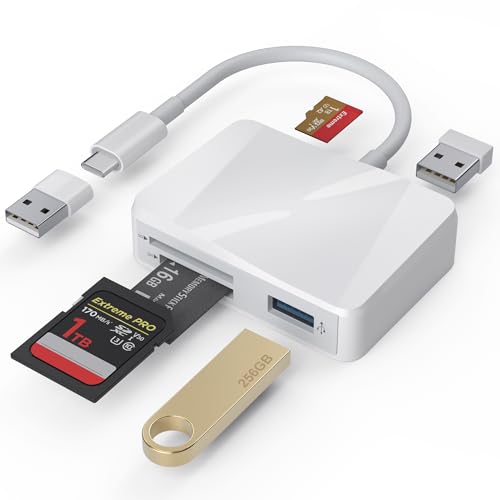
- Connects to USB-C and USB-A devices
- Supports SD, microSD, and MS cards
- Adds two USB-A ports and plug-and-play use
Best For: Cross-platform photo and file transfers
Best Simple Workhorse
SmartQ C368 4-in-1 USB 3.0 Reader

- Supports microSD, SD, MS, and CF cards
- USB 3.0 speeds up to 5Gbps
- Plug-and-play with a status LED
Best For: USB-A computers and camera media
Best Dual-Card Option

- USB-C and USB 3.0 connectivity
- Simultaneous SD and microSD access
- Up to 5Gbps plug-and-play transfers
Best For: Creators moving footage from SD and microSD cards
Best Dual-Interface Pick

- USB-C and USB-A connectivity
- Reads SD and microSD simultaneously
- USB 3.0 speeds up to 5Gbps
Best For: Photographers and mobile content creators
Best Multi-Format Hub

- Seven slots cover major card formats
- Reads and writes up to five cards simultaneously
- USB-C and USB-A connectivity
Best For: Multi-format camera and media workflows
Best Compact Option
Anker USB-C 2-in-1 Card Reader
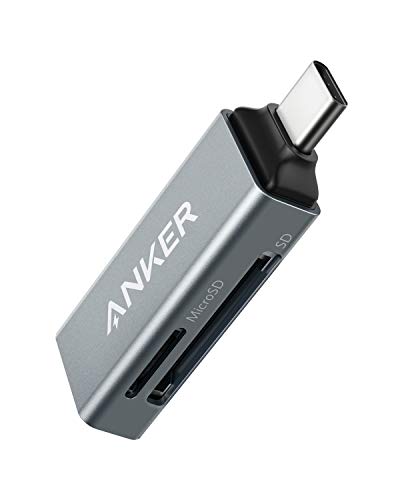
- Compact USB-C design
- Standard SD and microSD slots
- 18-month warranty included
Best For: Portable SD and microSD transfers
Simple USB 3.0 Pick
Wansurs Dual-Slot SD Card Reader

- USB 3.0 transfer rates up to 5Gbps
- SD and microSD slots
- Plug-and-play compatibility across major operating systems
Best For: Everyday computer and laptop file transfers
Cross-Device Choice
Acer USB-C and USB-A Card Reader

- USB-C and USB-A dual-header design
- Simultaneous SD and microSD card access
- Compact aluminum build with protective covers
Best For: Users moving media between modern and legacy devices
Portable Workflow Pick
UANTIN Keychain Dual-Card Reader

- USB-A and USB-C connectivity
- Simultaneous SD and microSD read/write
- Mini keychain design for travel
Best For: Mobile creators and photographers making quick card backups
Most Versatile – UGREEN 4-Slot USB 3.0 Card Reader
For photographers and anyone managing several card formats, this UGREEN model is a highly flexible choice among memory card readers. It combines SD, microSD, CompactFlash, and Memory Stick slots with USB 3.0 transfer speeds and simultaneous access to four cards.
Best For: Users who need broad format support and frequent multi-card transfers on Windows, Mac, Linux, or ChromeOS computers.
Pros:
- Supports SD, microSD, CF, and MS card formats.
- Reads and writes four different cards simultaneously.
- USB 3.0 transfer rates reach up to 5Gbps, with support for cards up to 2TB.
- Compact body and 1.7-foot cable are convenient for travel.
Cons:
- Uses a USB connection rather than USB-C.
- Designed for card transfers, not direct camera connection.
Choose this reader when format coverage and simultaneous card handling matter more than having a modern USB-C connector. Its four-slot layout makes it especially practical for photographers working with multiple media types.
Best for USB-C Devices – 5-in-1 USB-C and USB Card Reader
This 5-in-1 adapter is built for newer phones, tablets, and computers while retaining compatibility with older USB devices. Among memory card readers, it stands out for combining SD, microSD, and MS slots with dual USB-A ports and detachable USB-C connectivity.
Best For: Users transferring photos and files between USB-C phones, iPads, MacBooks, Android devices, and older USB-equipped computers.
Pros:
- Works with USB-C and USB-A devices through its detachable adapter.
- Supports SD, microSD, and MS cards up to 2TB.
- Includes two USB-A ports for peripherals or storage devices.
- Plug-and-play operation requires no additional power or drivers.
Cons:
- Its listed transfer rate is up to 480MBps, below the 5Gbps rating of some alternatives.
- Compatibility and connector details should be checked for a specific device.
This is a strong all-around pick for mixed-device households or mobile workflows. The dual-connector design and extra USB ports add flexibility, though users focused purely on maximum card-reader speed may prefer a faster-rated model.
Best Simple Workhorse – SmartQ C368 4-in-1 USB 3.0 Reader
The SmartQ C368 keeps card access straightforward with four dedicated slots for microSD, SD, MS, and CF media. It is a practical option among memory card readers for users who want USB 3.0 performance, independent card reading, and plug-and-play compatibility across common computer operating systems.
Best For: Camera owners and desktop or laptop users who need a simple USB-A reader for several card formats.
Pros:
- Supports microSD, SD, MS, and CompactFlash cards.
- USB 3.0 transfer speeds reach up to 5Gbps.
- Reads cards independently and requires no driver installation.
- Blue LED indicates the reader’s working status.
Cons:
- Uses USB-A rather than USB-C.
- Memory cards are not included.
- Does not emphasize simultaneous multi-card operation.
For a conventional computer setup, the C368 offers useful format coverage without complicated setup. Its USB-A connection and included cable organizer make it best suited to established desktops, laptops, and travel kits that still use standard USB ports.
Best Dual-Card Option – uni USB-C and USB 3.0 Reader
The uni reader is a compact choice for moving footage from SD and microSD cards to USB-C or USB-equipped devices. It is one of the more convenient memory card readers for users who want simultaneous two-card access, 5Gbps transfers, and compatibility with computers, tablets, and Android phones.
Best For: Mobile creators, GoPro users, and anyone who regularly transfers between SD and microSD cards.
Pros:
- Supports both USB-C and USB 3.0 connections.
- Can read and write SD and microSD cards simultaneously.
- Supports SD, SDHC, SDXC, MMC, and microSD formats.
- Plug-and-play design needs no driver or extra power.
Cons:
- Supports only two card slots.
- Does not support CF Express, XQD, MS, or Memory Stick cards.
- Not compatible with Lightning-port devices.
This reader is a focused alternative to larger multi-format hubs. Its dual-slot layout is useful when copying between SD and microSD media, while the USB-C and USB 3.0 interfaces make it adaptable across newer and older devices.
Best Dual-Interface Pick – UGREEN USB-C SD Card Reader
If you need versatile memory card readers for a laptop, phone, or tablet, the UGREEN reader combines USB-C and USB-A connectivity in a compact design. It supports simultaneous SD and microSD transfers and USB 3.0 speeds up to 5Gbps.
Best For: Photographers, videographers, and content creators who use both SD and microSD cards.
Pros:
- USB-C and USB-A connectors support a wide range of devices.
- Reads SD and microSD cards simultaneously.
- Plug-and-play operation requires no drivers or external power.
- Supports SD, microSD, MMC, and related card formats.
Cons:
- It is focused on SD and microSD formats rather than specialty cards such as CF or XD.
- Transfer speeds depend on the connected device and card.
This is a practical choice for mobile workflows where portability, dual-interface compatibility, and simultaneous card access matter most.
Best Multi-Format Hub – Rocketek 7-in-1 Card Reader
For users comparing memory card readers across older and newer formats, this Rocketek 7-in-1 adapter offers slots for CF, SD, microSD, XD, and MS cards. Its USB-C and USB-A connectors and 5Gbps transfer rate add flexibility for computers, tablets, and phones.
Best For: Users who regularly handle multiple card formats, including CF, XD, MS, SD, and microSD.
Pros:
- Supports a broad selection of card types through seven slots.
- Can read and write up to five different cards at the same time.
- USB-C and USB-A connectors work with many operating systems.
- Includes plug-and-play setup and a 12-month warranty.
Cons:
- The multi-slot design is less minimal than a basic SD-only reader.
- It may be more capability than needed for users who only use SD or microSD cards.
This is the strongest fit for broad format coverage and batch workflows, especially when a single reader needs to handle cards from varied cameras and devices.
Best Compact Option – Anker USB-C 2-in-1 Card Reader
If portability is your priority, this Anker model is a compact choice among memory card readers. It provides one standard SD slot and one microSD slot for swapping and sharing files through a USB-C connection.
Best For: USB-C phone, tablet, and laptop users who need a small SD and microSD reader.
Pros:
- Ultra-compact design fits conveniently beside other peripherals.
- Includes both standard SD and microSD slots.
- Works with a broad range of USB-C devices.
- Backed by an 18-month warranty and customer service.
Cons:
- It uses USB-C only, without a USB-A connector.
- Its two-slot design does not support specialty formats such as CF or XD.
- A device case may need to be removed for connection.
This reader keeps the essentials simple: two common card slots, USB-C compatibility, and a travel-friendly footprint for everyday file transfers.
Simple USB 3.0 Pick – Wansurs Dual-Slot SD Card Reader
For shoppers seeking practical memory card readers, the Wansurs model offers a straightforward USB 3.0 connection and two card slots. It supports common SD and microSD formats, making it useful for moving photos, videos, and other files without installing drivers.
Best For: Computer and laptop users who need an affordable, compact reader for SD and microSD cards.
Pros:
- USB 3.0 supports transfer speeds up to 5Gbps.
- Includes separate SD and microSD slots for convenient card access.
- Works with Windows, macOS, Linux, and Android devices.
- Compact, lightweight design backed by a 2-year warranty.
Cons:
- SD and microSD cards cannot be used simultaneously.
- Uses a USB connection rather than USB-C.
This is a sensible choice when you want a simple plug-and-play reader for everyday file transfers. Its main limitation is the lack of simultaneous card use and USB-C connectivity, but the compact design and broad format support keep it versatile.
Cross-Device Choice – Acer USB-C and USB-A Card Reader
The Acer reader is one of the more flexible memory card readers for households using both newer USB-C devices and older USB-A computers. Its dual-header design, two card slots, and 5Gbps USB 3.0 performance suit photographers and mobile users transferring media across different devices.
Best For: Users who switch between USB-C phones, tablets, and laptops and traditional USB-A computers.
Pros:
- USB-C and USB-A connectors support a wide range of devices.
- Supports simultaneous reading and writing of SD and microSD cards.
- USB 3.0 provides transfer rates up to 5Gbps and is backward-compatible with USB 2.0.
- Compact aluminum body includes protective covers and an attached cord.
Cons:
- Thick device cases may interfere with full connector insertion.
- Not compatible with Lightning-port devices.
- Does not support CFexpress, SIM, XQD, or Memory Stick cards.
Choose this Acer model if connector flexibility is a priority. It is particularly convenient for moving files between phones, tablets, cameras, and computers, though buyers with specialized card formats or Lightning devices will need another solution.
Portable Workflow Pick – UANTIN Keychain Dual-Card Reader
For creators who need memory card readers on the go, this UANTIN adapter combines USB-A and USB-C connectivity with a miniature keychain design. It is built for high-speed transfers and supports simultaneous SD and microSD read/write operations, including direct transfers between cards.
Best For: Photographers and travelers who want a highly portable reader for USB-C and USB-A devices.
Pros:
- USB 3.0 supports transfer speeds up to 5Gbps under suitable conditions.
- USB-A and USB-C connectors work with newer and older devices.
- Supports simultaneous SD and microSD reading and writing.
- Integrated keychain makes it easy to carry on a camera bag or lanyard.
Cons:
- Actual speeds depend on the device, port, and memory card rating.
- May become slightly warm during prolonged high-speed transfers.
- Memory cards are not included.
This is the most travel-oriented option in the group, with useful dual-card functionality and an exceptionally compact form. Its performance depends on the rest of your setup, but the safety chip, reinforced connectors, and keychain format make it well suited to mobile backups and field editing.
How We Picked the Best Memory Card Readers
We focused on practical differences that affect everyday use: supported card formats, USB connection type, transfer speed, simultaneous-card support, build quality, portability, and compatibility with current computers, tablets, and phones. The selection includes simple MicroSD adapters, dual-slot readers, multi-format hubs, and models with both USB-A and USB-C connections.
Advertised speeds depend on the reader, card, host device, file system, and card class. A USB 3.0 or 5Gbps label indicates interface potential, not a guaranteed transfer rate with every memory card.
Quick Comparison
- Best for broad format support: Choose a multi-card hub that supports SD, MicroSD, CF, MS, or XD when you regularly use several camera systems.
- Best for phones and newer laptops: USB-C readers offer direct compatibility with many current iPhone, iPad, Android, Mac, and Windows devices.
- Best for older computers: A reader with USB-A avoids needing a separate dongle.
- Best for simple transfers: A compact single-slot MicroSD or SD reader is easier to carry and usually costs less.
- Best for simultaneous workflows: Multi-slot models can reduce cable swapping, but check whether they support concurrent reading or only one card at a time.
Key Buying Factors for Memory Card Readers
Card Compatibility
Check the exact cards you use before buying. SD, SDHC, SDXC, MicroSD, CompactFlash, Memory Stick, and xD are different formats. A reader that handles SD and MicroSD may not support CF or older Memory Stick cards. Also confirm the maximum capacity and UHS support when working with high-capacity camera cards.
Connector and Device Compatibility
USB-C is the most versatile choice for newer laptops, tablets, and phones, while USB-A remains common on desktops and older notebooks. Dual-connector readers are useful if you move files across several devices. For iPhone or iPad use, confirm that the reader and operating system support the intended file-management workflow.
Speed and Power
USB 3.0 and 5Gbps readers are generally preferable for large photo or video transfers. However, the memory card itself may be the limiting factor. Bus-powered readers are convenient, while unusually power-hungry setups may work more reliably with a powered hub or direct connection.
Design and Reliability
Look for a compact enclosure, protected slots, a durable cable or integrated plug, and clear slot labeling. A short attached cable can be easier to replace than a permanently fixed connector, while a low-profile design packs better for travel.
Who Should Buy Which Memory Card Readers?
Photographers and videographers should prioritize fast USB 3.0 connectivity and support for every card format in their kit. Phone and tablet users will usually benefit most from a USB-C reader, especially one with dual slots or extra USB ports. Office and home users can save money with a compact SD or MicroSD model if they only transfer occasional files. Mixed-device households should consider USB-A/USB-C compatibility to avoid carrying extra adapters. Finally, travelers should favor a small reader with the exact slots they need rather than a bulky hub with unused features.