The best portable memory card readers make it easier to move photos, videos, and other files between cameras, phones, tablets, and computers. The right model can save time while keeping your travel kit compact.
We selected 10 options covering USB-C, USB-A, Lightning, SD, microSD, CompactFlash, and Memory Stick compatibility, so you can match a reader to your devices and workflow.
Best 10 Portable Memory Card Readers Picks for 2026
Four-Format Powerhouse

- Reads SD, microSD, MS, and CF cards
- USB-C and USB-A connectivity
- Handles four cards simultaneously
Best For: Multi-format photographers and mixed-device users
Travel-Friendly Speed
UGREEN Dual-Interface Card Reader

- USB 3.0 speeds up to 5Gbps
- USB-C and USB-A connectors
- Reads SD and microSD simultaneously
Best For: On-the-go SD and microSD transfers
Simple Four-Slot Value

- Supports four common card formats
- Plug-and-play on Windows, Mac, and Linux
- Includes a power-status LED
Best For: Straightforward multi-format desktop use
Most Versatile

- SD, microSD, and Memory Stick support
- USB-C plus detachable USB-A connector
- Two USB-A ports for peripherals or storage
Best For: Photographers and users with mixed device connections
Fastest Dual-Slot Pick

- USB 3.0 and USB-C interfaces
- Simultaneous SD and microSD access
- Protective covers and tethered cord
Best For: Frequent photo, video, and surveillance-file transfers
Simple Travel Pick
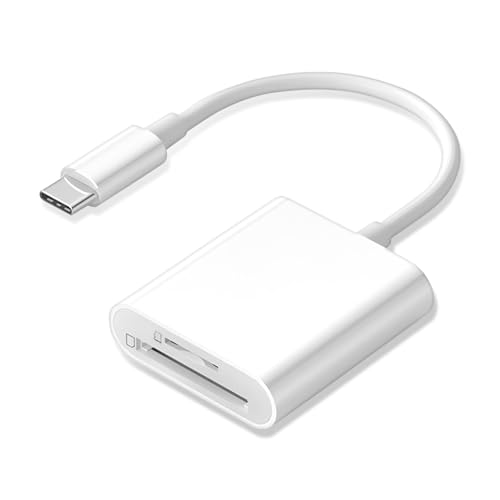
- Two slots for SD and microSD cards
- Bi-directional photo and video transfers
- Built-in USB-C cable and plug-and-play setup
Best For: USB-C users needing basic mobile file transfers
Best Compact USB-C Pick
Anker PowerExpand Dual-Slot Reader
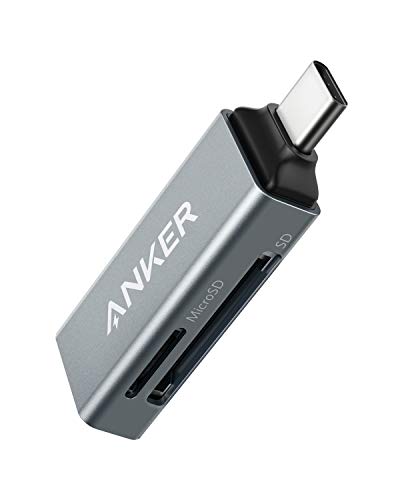
- Dual SD and microSD slots
- Compact 9-gram USB-C design
- 18-month warranty included
Best For: USB-C phones and laptops needing a portable dual-slot reader
Best Multi-Device Value
SUNTRSI Dual-Connector Card Reader

- iPhone and USB-C connectors
- SD and microSD card slots
- Plug-and-play photo transfers
Best For: Users transferring camera media across Apple and USB-C devices
Best for Mobile Creators
AkHolz Three-Port Card Adapter

- Lightning and USB-C connectivity
- Reads SD and microSD cards
- USB-A port and two-way transfer
Best For: Photographers transferring media between cameras, phones, and computers
Four-Format Powerhouse – BENFEI 4-in-1 Card Reader
For shoppers comparing portable memory card readers, the BENFEI 4-in-1 stands out for broad format support and flexible connectivity. Its integrated USB-C and USB-A design supports SD, microSD, Memory Stick, and CompactFlash cards, with all four slots able to read and write simultaneously.
Best For: Photographers and users who regularly work with several card formats or transfer files between USB-C and USB-A devices.
Pros:
- Supports SD, microSD, Memory Stick, and CompactFlash cards.
- USB-C and USB 3.0 connectors work with newer and older computers.
- Can read and write four cards at the same time.
- Includes an 18-month warranty.
Cons:
- Not compatible with standard Memory Stick, Memory Stick Micro, or CF Type I cards.
- Actual transfer speeds depend on the card and USB port.
- Some older operating systems may not support exFAT SDXC cards.
This is a versatile choice when format coverage and simultaneous transfers matter more than the smallest possible footprint. Its dual-interface design also makes it practical for mixed-device setups.
Travel-Friendly Speed – UGREEN Dual-Interface Card Reader
The UGREEN is one of the more travel-ready portable memory card readers, combining USB-C and USB-A connectivity in a slim, lightweight body. It supports SD and microSD formats and can access both cards simultaneously, making routine transfers from cameras, action cameras, and other devices more convenient.
Best For: Photographers, videographers, and travelers who need a compact reader for SD and microSD cards.
Pros:
- USB 3.0 supports transfer speeds up to 5Gbps.
- USB-C and USB-A connectors support a wide range of devices.
- Reads SD and microSD cards at the same time.
- Plug-and-play compatibility across Windows, macOS, Android, Chrome OS, Linux, and more.
Cons:
- Supports SD and microSD formats but not Memory Stick or CompactFlash.
- Transfer performance depends on the connected card and device.
Choose this reader if your workflow centers on SD and microSD cards and you want easy compatibility across USB-C and USB-A hardware. Its compact build is especially useful for camera bags and laptop sleeves.
Mobile Transfer Companion – SUNTRSI 4-in-1 Reader
This SUNTRSI adapter is designed for users who move files among phones, tablets, computers, and cameras. Among portable memory card readers, it is notable for combining USB, USB-C, micro-USB, SD, and microSD connectivity with an iPhone/iPad charging port and a keychain-friendly design.
Best For: iPhone, iPad, and Android users who need a compact reader for mobile file management and on-the-go transfers.
Pros:
- Supports SD and microSD cards with multiple device interfaces.
- Includes a charging port for simultaneous charging and file transfers on supported iPhones and iPads.
- Compatible with iOS, Android OTG devices, Mac computers, and other USB devices.
- Slim keychain design is easy to carry.
Cons:
- Listed transfer speed is up to 25MB/s.
- Charging support is limited to iPhone 15 and earlier models with supported iOS versions.
- Memory cards are not included.
This reader makes the most sense for mobile-first workflows where portability and device variety are priorities. It offers useful charging functionality, but buyers focused on maximum transfer speed may prefer a USB 3.0 model.
Simple Four-Slot Value – SmartQ C368 USB 3.0 Reader
The SmartQ C368 keeps portable memory card readers straightforward with a four-in-one design for SD, microSD, Memory Stick, and CompactFlash cards. It offers plug-and-play operation across major desktop operating systems, while an LED indicator shows when the reader is powered.
Best For: Users who want a simple multi-format card reader for Windows, Mac, Linux, and travel use.
Pros:
- Supports SD, microSD, Memory Stick, and CompactFlash cards.
- USB 3.0 connectivity is compatible with USB 2.0.
- Reads cards independently for flexible file access.
- Plug-and-play design requires no driver installation.
Cons:
- Uses a USB connection rather than an integrated USB-C interface.
- Memory cards are not included.
- Supplied notes do not specify a warranty period or exact connector cable details.
This is a practical pick for broad card-format support without complicated setup. The included cable organizer and blue status light add convenience for users who want a basic reader for home, office, or travel.
Most Versatile – 5-in-1 USB-C/USB Card Reader
For shoppers comparing portable memory card readers, this 5-in-1 model stands out for its broad connectivity. It combines USB-C and USB compatibility with SD, microSD, and Memory Stick support, plus two USB-A ports for moving files among phones, tablets, computers, cameras, and flash drives.
Best For: Photographers and multi-device households that need card access plus extra USB ports.
Pros:
- Supports SD, microSD, and Memory Stick cards, with claimed capacities up to 2TB.
- Includes USB-C and detachable USB-A connectivity for newer and older devices.
- Can read and write one card alongside the two USB ports.
- Plug-and-play operation with Windows, macOS, Chrome, Linux, and compatible mobile devices.
Cons:
- Its listed transfer rate is 480 MB/s, lower than the USB 3.0 reader in this roundup.
- Compatibility depends on the device having a supported USB-C or USB connection and OTG support where applicable.
This is the most flexible choice when you want one compact adapter for several card formats and peripherals. Its combination of ports makes it especially useful for photographers who work across phones, tablets, laptops, and cameras.
Fastest Dual-Slot Pick – uni USB 3.0 Card Reader
This uni model is a strong option among portable memory card readers for users who prioritize speed and simultaneous card access. Its USB 3.0 and USB-C interfaces support transfers up to 5 Gbps, while the two slots let you work with an SD card and a microSD card without repeatedly swapping connections.
Best For: Camera, action-camera, surveillance, and 3D-printer users transferring files frequently.
Pros:
- USB 3.0 and USB-C interfaces support claimed speeds up to 5 Gbps.
- Reads and writes SD and microSD cards simultaneously.
- Works with SDXC, SDHC, SD, MMC, RS-MMC, microSDXC, microSD, and microSDHC cards.
- Compact design includes protective covers and a tethered cord.
Cons:
- It does not support Lightning devices, CFexpress, XQD, SIM, or Memory Stick cards.
- The reader transfers card data but does not connect directly to a camera.
- Cards are not included.
Choose this reader if fast transfers and dual-card workflows matter more than broad format support. It is particularly practical for downloading footage from cameras, GoPros, dash cams, or surveillance equipment.
Simple Travel Pick – Compact USB-C SD Reader
For a straightforward portable memory card reader, this compact USB-C model provides two card slots in a travel-friendly design. It supports SD and microSD formats, offers bi-directional transfers, and works with compatible iPhone, iPad, Mac, Windows, Linux, and Chrome devices without extra drivers or software.
Best For: USB-C phone, tablet, and laptop users who need simple photo and video transfers on the go.
Pros:
- Dual slots support SD, SDHC, SDXC, microSD, microSDHC, and microSDXC cards.
- Supports transfers to and from compatible phones, tablets, computers, and cards.
- Plug-and-play operation works with the iPadOS Files app and listed desktop systems.
- Built-in USB-C cable helps save space and keeps the connection ready for use.
Cons:
- It is designed for USB-C devices and does not offer a USB-A connector.
- The listed data transfer rate is 68 Mbps, below the claimed rate of the uni reader.
- Compatibility requires a USB-C device with OTG support where applicable.
This reader is a sensible pick for travelers who want a small, uncomplicated way to view, back up, and share camera or trail-camera files. Its built-in cable and two-slot layout add convenience without extra software.
Best Compact USB-C Pick – Anker PowerExpand Dual-Slot Reader
For shoppers seeking portable memory card readers for USB-C devices, the Anker PowerExpand offers a compact way to access both full-size SD and microSD cards. Its small design suits laptops and phones, though a bulky device case may need to be removed.
Best For: USB-C laptop and smartphone users who want dual-slot card access in a lightweight reader.
Pros:
- Includes separate SD and microSD slots for convenient file transfers.
- Works with a broad range of USB-C devices, including MacBook and Galaxy models.
- Compact 9-gram design is easy to carry.
- Includes an 18-month warranty.
Cons:
- May require removing a phone or tablet case before connection.
- USB-C connectivity is less suitable for devices without a USB-C port.
This is a straightforward choice when portability and dual-card compatibility matter most. Its USB-C-only connection keeps the design small, but shoppers should confirm their device port and case fit first.
Best Multi-Device Value – SUNTRSI Dual-Connector Card Reader
This portable memory card reader is designed for moving photos and videos directly from SD or microSD cards to compatible Apple and USB-C devices. Its dual connector design supports older iPhones and newer USB-C hardware without requiring a computer or separate app.
Best For: iPhone, iPad, Android, and computer users who need a reader with both an iPhone connector and USB-C connector.
Pros:
- Provides both iPhone and USB-C connectors in one reader.
- Separate SD and microSD slots support common card types.
- Plug-and-play operation requires no additional application.
- Supports photo formats including JPEG and RAW, plus H.264 and MPEG 4 video.
Cons:
- Listed transfer speeds are up to 20–30 MB/s, slower than some higher-speed readers.
- The listed dimensions are relatively large for a pocketable reader.
- Compatibility depends on the device’s operating system and connector.
Its main advantage is connector flexibility, making it useful across a mixed-device household. It is a practical option for simple photo and video transfers, especially when broad device support is more important than maximum speed.
Best for Mobile Creators – AkHolz Three-Port Card Adapter
For photographers who need portable memory card readers in the field, the AkHolz adapter combines Lightning and USB-C connectivity with SD, microSD, and USB-A support. It is built for direct photo and video importing through Apple’s Photos or Files apps, without a third-party app.
Best For: Mobile photographers and trail-camera users moving photos, videos, and files between cards, iPhones, iPads, and computers.
Pros:
- Supports both Lightning and USB-C devices through its dual-connector design.
- Reads full-size SD and microSD cards.
- Includes a USB-A female port for compatible flash drives and peripherals.
- Supports two-way file transfer through iOS Files.
Cons:
- Does not support less common formats such as XD-MS cards.
- Printers are not supported through the USB-A port.
- Users must account for the included USB-C-to-Lightning adapter when using certain connections.
This is the most versatile option of the three for creators working across Apple, Android, Windows, and camera equipment. Its broader port selection adds flexibility, while the format and printer limitations are worth checking before purchase.
How We Picked These Portable Memory Card Readers
We focused on readers that balance broad compatibility, practical portability, and straightforward file transfers. Key considerations included supported card formats, connector types, simultaneous card access, USB speed, plug-and-play operation, and compatibility with current phones, tablets, Macs, Windows PCs, and cameras.
Because product specifications can vary by device and card, buyers should confirm the reader’s listed support before purchasing. In particular, check whether your phone or tablet supports external storage and whether the included connector matches your charging or data port.
Quick Comparison
| Reader Type | Best For | What to Check |
|---|---|---|
| USB-C SD/microSD | Modern phones, tablets, and laptops | USB-C compatibility and transfer speed |
| USB-A and USB-C | Mixed-device households | Connector design and included adapters |
| Multi-format reader | Photographers with varied cards | SD, microSD, CF, and MS support |
| Lightning and USB-C | Older and newer iPhones or iPads | iOS support and required permissions |
| Dual-slot reader | Copying between card types | Whether both slots can be used simultaneously |
Key Buying Factors for Portable Memory Card Readers
Card and Device Compatibility
Start with the cards you actually use. Full-size SD and microSD are common, while CF and Memory Stick support matters mainly for specific cameras and older equipment. Also verify whether you need USB-C, USB-A, Lightning, or multiple connectors.
Transfer Speed
USB 3.0 or faster readers are generally preferable for large photo libraries and video files. Actual performance depends on the memory card, host device, cable, and file system, so advertised maximum speeds are not guaranteed in every setup.
Portability and Construction
A compact reader is easier to keep in a camera bag or travel pouch. Look for protected slots, a short integrated cable or secure connector, and a design that will not block neighboring ports. A removable cap can also help protect connectors when the reader is stored.
Ease of Use
Most readers are plug and play, but mobile devices may require a file-management app or permission prompt. If you frequently transfer files on location, choose a model with simple access to both the card and your device’s storage.
Who Should Buy Which Portable Memory Card Readers?
- For modern phones and laptops: Choose a USB-C SD and microSD reader with USB 3.0 support.
- For mixed USB-A and USB-C devices: Pick a dual-connector model to avoid carrying extra adapters.
- For photographers with older cameras: A multi-format reader with CF or Memory Stick support is the safer choice.
- For iPhone or iPad users: Select a reader specifically listing your connector type and operating-system compatibility, especially when Lightning is involved.
- For trail-camera users: Prioritize microSD or SD support, a durable compact body, and a connector that works directly with your phone or tablet.
- For frequent card-to-card transfers: Consider a dual-slot reader, but confirm whether simultaneous reading and writing is supported.
For most buyers, the best Portable Memory Card Readers are the ones that support every card and device already in your kit. Prioritize compatibility first, then choose the fastest and most compact design that fits your routine.