The best multitrack recorder with MIDI sync gives musicians a practical way to capture audio, coordinate instruments, and build arrangements without relying entirely on a computer. The models in this roundup range from portable songwriting tools to mixer-style recorders and full-featured studio workstations.
When choosing, consider track count, MIDI connectivity, input capacity, portability, monitoring, and how easily the recorder fits into your existing setup. The right option depends on whether you record alone, rehearse with a band, perform live, or integrate hardware instruments with a DAW.
Best 10 Multitrack Recorder with Midi Sync Picks for 2026
Best Studio Bridge
TASCAM Studio Bridge 24-Channel Recorder

- 24-track SDXC recording with punch-in/out
- 24-in/24-out USB and 24 DB25 I/O
- MIDI in/out with MIDI sync support
Best For: Hybrid analog-digital studios needing extensive I/O
Best Touchscreen Workflow
Zoom R20 16-Track Tabletop Recorder
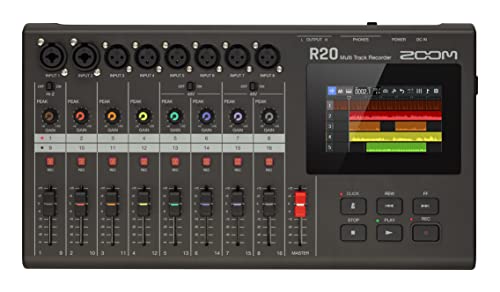
- Up to 16 tracks and eight simultaneous inputs
- Six XLR inputs for larger recording setups
- Touchscreen editing plus rhythms and synth sounds
Best For: Computer-free demos and hands-on music production
Best Mixer-Recorder Hybrid
TASCAM Model 12 Digital Multitrack Studio

- 12-track recorder with 12-in/10-out USB
- Onboard MIDI and click output with tap tempo
- Compressor, EQ, and dual headphone outputs
Best For: Mixer-centered project studios and band recording
Best Portable Option

- Eight-track recording with two XLR/TRS inputs
- MIDI-playable synths and 150 drum loops
- USB-C DAW control and up to five hours on batteries
Best For: Portable songwriting and computer-free idea capture
Best Stage Playback System

- Up to 16 mono or 8 stereo playback tracks
- MIDI control for compatible guitar modelers
- HDMI sync, loops, markers, and 256GB storage
Best For: Live performers replacing a laptop playback rig
Best Mixer-Recorder Combo

- 14-track recording at 24-bit/96kHz
- 12-channel mixer with physical faders
- 32-bit float mixing and wireless app option
Best For: Bands and project studios needing hands-on recording
Best Traditional Portastudio

- 24-track digital audio recording
- Eight XLR inputs for multi-mic sessions
- Built-in effects, mastering, and color screen
Best For: Standalone recording with many audio inputs
Best Portable 4-Track Pick

- Four-track recording with 32-bit float audio
- Stereo mics and two XLR/TRS inputs
- USB-C recording plus SD-card backup
Best For: Portable music, podcast, and video audio capture
Best Large-Project Workstation

- Up to 24 tracks with eight XLR combo inputs
- Built-in stereo mics and phantom power
- USB interface with overdubbing and pad sampler
Best For: Tabletop recording with multiple microphones and instruments
Best Compact Bundle
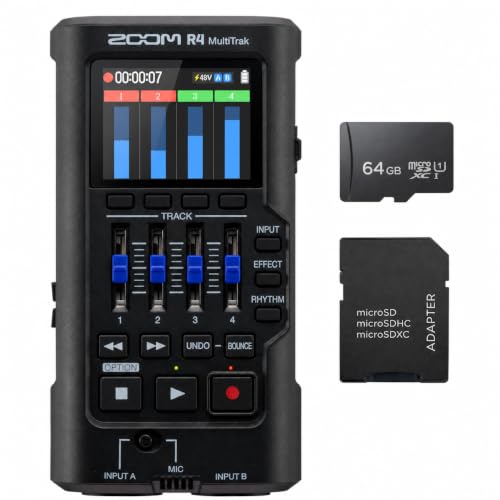
- 32-bit float multitrack recorder
- Includes 64GB microSD card and adapter
- Built-in stereo mics with USB connectivity
Best For: Portable recording with included storage
Best Studio Bridge – TASCAM Studio Bridge 24-Channel Recorder
For a studio built around an analog mixer, the TASCAM Studio Bridge is a strong multitrack recorder with MIDI sync. It records 24 tracks to an SDXC card, works as a 24-in/24-out USB audio interface, and can route recordings back through an analog console for mix summing.
Best For: Analog-console users who need extensive I/O, onboard multitrack recording, and MIDI-connected studio integration.
Pros:
- Records up to 24 tracks to an SDXC card with punch-in/out support.
- Provides 24 DB25 analog inputs and outputs plus 24-in/24-out USB connectivity.
- Includes MIDI in/out for USB MIDI interface use and MIDI sync.
- Supports DAW transport and record-ready control through HUI/MCU.
Cons:
- Its 24-channel DB25 setup is more specialized than a compact musician-focused recorder.
- At 5.74 kg, it is less portable than tabletop or battery-powered options.
The Studio Bridge is the most capable choice here for a hybrid analog-digital setup. Its large I/O count and MIDI facilities suit permanent studios, while its onboard recorder also supports computer-free tracking.
Best Touchscreen Workflow – Zoom R20 16-Track Tabletop Recorder
The Zoom R20 is a practical multitrack recorder with MIDI sync potential for musicians who want a computer-free workflow. Its touchscreen handles recording, editing, and mixing, while six XLR inputs and up to 16 tracks accommodate full project demos and band sessions.
Best For: Musicians who want hands-on multitrack recording, onboard editing, and built-in creative sounds without relying on a computer.
Pros:
- Records up to 16 tracks, with up to eight tracks simultaneously.
- Offers six XLR inputs and two XLR/TRS combo inputs.
- Touchscreen controls make arranging and editing direct and intuitive.
- Includes 150 rhythm patterns, an onboard synth, and built-in effects.
Cons:
- The supplied specifications list USB connectivity but do not detail dedicated MIDI sync connections.
- Its maximum sample rate is 44.1 kHz.
The R20 emphasizes ease of use over extensive synchronization and routing features. It is a good fit when fast, self-contained recording matters more than a large studio I/O system.
Best Mixer-Recorder Hybrid – TASCAM Model 12 Digital Multitrack Studio
The TASCAM Model 12 combines a 12-track digital recorder, mixer, USB audio interface, and DAW controller. For buyers seeking a multitrack recorder with MIDI sync-related studio features, its onboard MIDI functionality, click output, and tap tempo make it useful for organized tracking and rhythm-based sessions.
Best For: Project studios and bands needing a mixer-centered recorder with USB DAW connectivity and practical timing tools.
Pros:
- Combines 12-track recording with a 12-in/10-out USB audio interface.
- Includes onboard MIDI functionality and a click output with tap tempo.
- Provides a one-knob compressor and three-band EQ on all input modules.
- Offers dual headphone outputs with individual volume and source selection.
Cons:
- The supplied notes do not specify dedicated MIDI sync input/output connections.
- At 13.3 pounds, it is less convenient for highly portable recording.
The Model 12 is a balanced option for users who want physical mixer controls alongside recording and DAW functions. It offers useful timing and MIDI features, though buyers seeking explicit MIDI sync ports may prefer the Studio Bridge.
Best Portable Option – Zoom R12 8-Track Recorder
The Zoom R12 is a compact multitrack recorder with MIDI sync-friendly creative features for musicians working away from a desk. It records up to eight tracks, includes MIDI-playable synth sounds and drum loops, and can operate for up to five hours on four AA batteries.
Best For: Mobile songwriters and performers who want touchscreen recording, built-in rhythms, MIDI-playable sounds, and battery operation.
Pros:
- Records up to eight tracks with two XLR/TRS combo inputs.
- Includes 150 drum loops and 18 FM synth instruments playable via MIDI keyboard.
- Provides touchscreen editing, effects, and DAW control through USB-C.
- Runs for up to five hours on four AA batteries.
Cons:
- Its two inputs and eight-track capacity are more limited than larger recorders.
- The supplied notes do not specify dedicated MIDI sync input/output ports.
The R12 prioritizes portability and idea capture. It is especially appealing when built-in rhythm tools and MIDI-playable sounds are more important than high channel counts or extensive studio routing.
Best Stage Playback System – B.Beat Plus 256GB
The B.Beat Plus is a strong choice if you need a multitrack recorder with midi sync for live playback, video, and show control. It supports up to 16 mono or 8 stereo tracks, six balanced outputs, HDMI video or image sync, and MIDI control for compatible guitar modelers.
Best For: Bands, solo performers, and professional live acts replacing a laptop-based playback rig.
Pros:
- Plays up to 16 mono or 8 stereo tracks with real-time mixing.
- Supports MIDI-synced preset and scene changes for compatible Kemper and Fractal Axe-FX III units.
- Includes HDMI video sync, live loops, markers, stem removal, EQ, transpose, and 256GB storage.
Cons:
- Its feature set is focused on live playback and show management rather than multitrack recording.
- MIDI amp control is limited to compatible modelers.
Choose this model when streamlined stage automation matters more than traditional recording inputs. Its compact design and integrated storage can simplify a complex live setup.
Best Mixer-Recorder Combo – Zoom LiveTrak L12next
The Zoom LiveTrak L12next combines a digital mixer and recorder for musicians who want a multitrack recorder with midi sync in a hands-on live or studio workflow. It records up to 14 tracks at 24-bit/96kHz and provides physical faders for direct control over channel processing and balance.
Best For: Bands, rehearsal rooms, and project studios that need live mixing plus high-resolution multitrack recording.
Pros:
- Records up to 14 tracks at 96kHz and mixes in 32-bit float.
- Provides 12 channels with high-gain preamps, Hi-Z, PAD, and phantom power.
- Offers scenes, personal monitoring, effects, wireless app control with the optional BTA-1 adapter, and footswitch support.
Cons:
- The supplied notes do not specify dedicated MIDI sync capabilities.
- Wireless control requires the separately mentioned BTA-1 adapter.
This is the more practical pick for capturing several performers while retaining physical mixer control. Consider it primarily for multitrack recording and mixing rather than MIDI-based show automation.
Best Traditional Portastudio – Tascam DP-24SD
The Tascam DP-24SD is a conventional digital portastudio for musicians who want extensive multitrack audio recording without relying on a computer. It offers 24-track recording, eight XLR inputs, onboard effects, mastering tools, and a color screen, though the supplied details do not confirm MIDI sync functionality.
Best For: Songwriters and recording projects that need many audio tracks and multiple microphone inputs in a standalone format.
Pros:
- Supports up to 24 tracks for larger recording arrangements.
- Includes eight XLR inputs for connecting multiple microphones or instruments.
- Provides onboard effects, mastering features, and a color display.
Cons:
- The supplied notes do not list MIDI sync or MIDI connectivity.
- Its listed package weight is 15.74 pounds, making it less portable than compact alternatives.
Select this portastudio when track count and physical audio inputs are more important than confirmed MIDI integration. It is better suited to standalone recording projects than synchronized live playback.
Best Portable 4-Track Pick – H4 Essential
The Zoom H4 Essential is a practical choice when you need a multitrack recorder with MIDI sync alternatives kept simple. Its four-track recording, built-in stereo microphones, and two XLR/TRS inputs support music, interviews, podcasts, video audio, and live performances.
Best For: Musicians, podcasters, filmmakers, and field recordists who want a compact recorder with flexible inputs and USB-C connectivity.
Pros:
- Records four tracks with clip-free 32-bit float audio.
- Built-in stereo microphones plus two XLR/TRS inputs accommodate varied sources.
- Can record to a connected device while saving a backup to an SD card.
- Spoken menu guidance can make operation easier for visually impaired users.
Cons:
- Its supplied feature set does not list MIDI connectivity or MIDI sync.
- Uses two AA batteries for portable operation.
The H4 Essential prioritizes straightforward portable recording rather than dedicated MIDI-based synchronization. Choose it for flexible audio capture, USB-C use, and 32-bit float recording when MIDI sync is not a core requirement.
Best Large-Project Workstation – R24 Multi-Track Recorder
The Zoom R24 is the strongest fit here for larger multitrack projects, with up to 24 tracks, eight XLR combo inputs, onboard phantom power, and USB audio-interface functionality. However, the supplied specifications do not identify MIDI sync, so verify compatibility if synchronized MIDI hardware is essential.
Best For: Bands, production teams, and creators who need many inputs, overdubbing, built-in microphones, and hands-on tabletop control.
Pros:
- Supports up to 24 tracks and eight XLR combo inputs.
- Built-in stereo condenser microphones capture effects, speeches, and dialogue.
- Includes phantom power, microphone preamps, vocal effects, and a pad sampler.
- Can connect two R24 units by USB for 16 simultaneous tracks.
Cons:
- Its maximum sample rate is 48 kHz.
- Records to SD or SDHC cards up to 32GB according to the supplied compatibility details.
- MIDI sync is not listed among the supplied features.
The R24 offers the most substantial input and track capacity in this roundup. It is a compelling tabletop recorder for multitrack audio production, but buyers specifically seeking a multitrack recorder with MIDI sync should confirm the required MIDI workflow before choosing it.
Best Compact Bundle – R4 Multi-Track Recorder
The Zoom R4 bundle is a compact option for basic multitrack recording, pairing the R4 32-bit float recorder with a 64GB microSD card and adapter. It is worth considering for portable music work, though the supplied notes do not list MIDI input, output, or sync functions.
Best For: Musicians and mobile creators who want a small recorder bundled with additional storage and support for built-in stereo microphones.
Pros:
- Includes the R4 32-bit float multitrack recorder and a 64GB microSD card.
- Built-in stereo microphones support quick recording without extra microphones.
- Compact design measures approximately 5.38 by 2.12 by 1.14 inches.
- Offers USB connectivity and a 3.5mm headphone jack.
Cons:
- Only two XLR/TRS combo inputs are identified in the product title.
- Uses two AAA batteries.
- MIDI sync is not specified in the supplied details.
The R4 bundle keeps the setup small and adds useful storage out of the box. Select it when portability and a ready-to-record package matter more than extensive inputs or confirmed MIDI synchronization.
How We Picked the Best Multitrack Recorder with Midi Sync
We focused on workflow, connectivity, recording flexibility, and value rather than simply choosing the devices with the largest track counts. The selection includes dedicated Portastudios, tabletop recorders, mixer/recorders, portable units, and backing-track systems so different types of musicians can find a suitable match.
For this roundup, we considered the number and type of inputs, simultaneous recording capability, MIDI or synchronization support, onboard effects, USB audio functionality, portability, storage, monitoring, and ease of use. We also looked at whether each recorder is best suited to overdubbing, live band recording, electronic music, rehearsal capture, or computer-assisted production.
Quick Comparison
| Best For | Look For |
|---|---|
| Solo songwriting | Portable operation, built-in effects, and simple overdubbing |
| Full-band recording | Multiple XLR inputs and enough simultaneous recording channels |
| Hybrid hardware setups | MIDI connectivity, clock or synchronization options, and USB audio |
| Live mixing and recording | Physical controls, monitor outputs, and mixer-style routing |
| Backing tracks and performance | Reliable playback, multitrack stems, and video or MIDI sync |
Key Buying Factors for a Multitrack Recorder with Midi Sync
MIDI and Synchronization
Check which MIDI functions are supported. MIDI input and output can coordinate drum machines, synthesizers, sequencers, and controllers, while clock or timecode features may be important for keeping external devices aligned. If you plan to connect a DAW, confirm whether the recorder sends, receives, or only passes MIDI data.
Inputs and Simultaneous Tracks
Track count and input count are not the same. A recorder may support many playback tracks but record only a smaller number at once. Count the microphones, instruments, stereo sources, and headphone mixes you need for your typical session, then leave room for expansion.
Standalone Features and Computer Integration
Standalone recorders are valuable when you want tactile control and fewer distractions. USB audio interfaces, DAW control, onboard effects, editing tools, and built-in rhythm functions add flexibility, but they can also increase menu complexity. Choose the feature set that matches your workflow instead of paying for functions you will not use.
Portability, Storage, and Monitoring
For mobile recording, evaluate battery operation, weight, screen visibility, storage media, and durability. For studio or live use, prioritize dedicated monitor outputs, headphone routing, reliable power, and fast access to gain and transport controls.
Who Should Buy Which Multitrack Recorder with Midi Sync?
Solo musicians and traveling songwriters should prioritize compact recorders with effects, rhythm tools, and straightforward overdubbing. Bands should look for multiple XLR inputs, physical faders, and sufficient simultaneous recording capacity. Producers using synthesizers or drum machines should choose a Multitrack Recorder with Midi Sync and dependable USB connectivity. Live performers may prefer mixer/recorders with hands-on routing and multichannel capture, while users focused on backing tracks should select a system designed for dependable stem playback and synchronization.