Hands-on science works best when students can see real environmental concepts in action. The right kit can turn water testing, composting, erosion, and soil studies into memorable lessons.
This roundup focuses on classroom-friendly environmental science kits for students that support STEM learning, observation, and practical environmental literacy.
Best 10 Environmental Science Kits for Students Picks for 2026
Classroom Environmental Lab
Environmental Testing Kit for 30 Students

- Materials for 30 students working in groups
- Covers nine different environmental tests
- Includes instructions and safety data sheets
Best For: Teacher-led group labs focused on pollution testing
Water Purification Starter

- Shows desalination and water purification basics
- Includes filter system, carbon, sand, rock, and paper
- Good for kids and teens ages 8+
Best For: Introductory clean-water experiments at home or in class
Freshwater Chemistry Study
Nitrates, Phosphates & Eutrophication Kit

- Explores nitrates, phosphates, and eutrophication
- Includes materials for 3 complete set ups
- Useful for distance learning and homeschooling
Best For: Small-group lessons on freshwater pollution and water conservation
Compost Observation Center

- Three clear compartments show decomposition over time
- Includes thermometers and a teacher’s guide
- Designed for ages 4+ and early STEM learning
Best For: Young students learning composting through observation
Water Treatment Lab Pick
Water Treatment and Filtration Kit
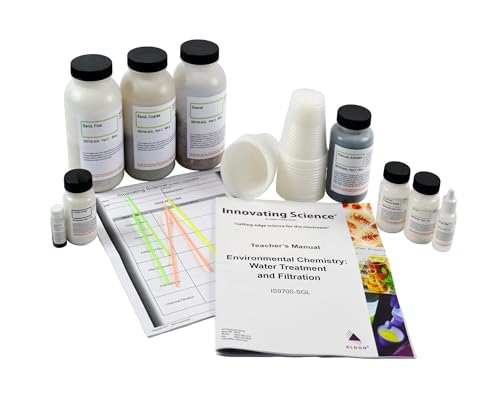
- Shows each stage of water treatment clearly
- Uses polluted water for before-and-after comparisons
- Built for 15 student groups with teacher materials
Best For: Classroom labs focused on water treatment and filtration
Tree Science Classroom Pick
Tree Ring Dating Classroom Kit
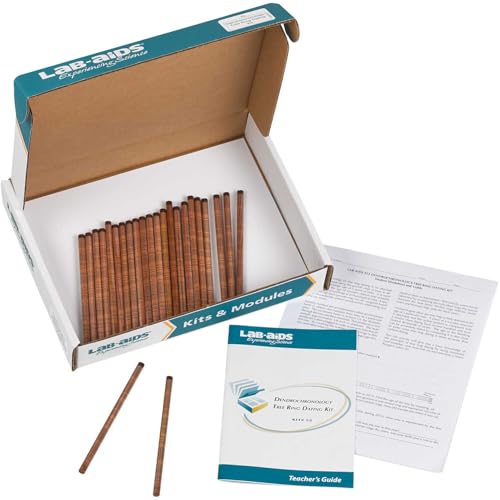
- Teaches dendrochronology with simulated tree core samples
- Links tree growth to weather and climate conditions
- Sized for up to 24 students with reusable materials
Best For: Older students studying forestry, ecology, and climate science
Soil Ecosystem Observation Pick

- Clear habitat shows tunneling and soil movement
- Includes worms by voucher redemption
- Useful for composting and ecosystem observation
Best For: Older students studying soil layers, composting, and live worms
At-Home Earth Science Lab
National Geographic Earth Science Kit

- 100+ earth science activities
- Full-color learning guide included
- Good for sharing at home or school groups
Best For: Students ages 8-12 needing a broad hands-on earth science starter kit
Classroom Stream Model
Stream Erosion & Deposition Science Kit
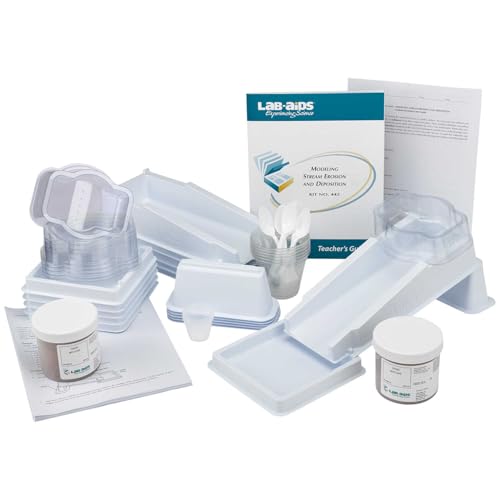
- Built for up to 24 students
- Demonstrates erosion and deposition visually
- Includes 6 stream tables and rainmakers
Best For: Middle and high school group lessons on landforms and sediment transport
All-in-One Earth Lab
Discovery Planet Earth Science Kit
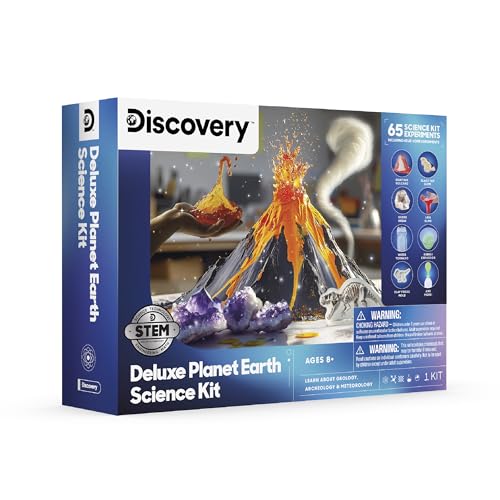
- 65 earth science experiments and DIY activities
- Covers volcanoes, fossils, crystals, and weather
- Includes real tools and ingredients
Best For: Curious kids ages 8+ who want a wide-ranging earth science kit
Classroom Environmental Lab – Environmental Testing Kit for 30 Students
If you need environmental science kits for students that focus on hands-on pollution testing, this classroom lab kit is built for group work. It gives students a structured way to learn how environmental scientists test air and water for contaminants, with enough materials for nine different environmental tests in a local-area setting.
Best For: Classroom groups, lab rotations, and teacher-led environmental testing activities for older students.
Pros:
- Materials for 30 students working in groups
- Includes supplies for nine different environmental tests
- Designed around environmental testing for pollution
- Instructions and safety data sheets are included
Cons:
- Listed as adult age range, so it is better suited to older learners
- Focused on testing activities rather than broad environmental science topics
- Requires local-area investigation and classroom coordination
This is a practical pick when your priority is a ready-to-run environmental testing lesson rather than a general STEM novelty kit. It is especially useful for teachers who want students working collaboratively and comparing real-world samples or conditions.
Water Purification Starter – Clean Water Science Kit
For environmental science kits for students that introduce water treatment in a simple, visual way, this clean water kit is a compact option. It demonstrates desalination and water purification using a plastic filter system plus sand, rock, active carbon, and filter paper, making it a straightforward experiment for kids and teens.
Best For: Younger students, home science projects, and introductory lessons on clean water and desalination.
Pros:
- Demonstrates how salt can be extracted from seawater
- Includes plastic filter system, active carbon, sand, rock, and filter paper
- Supports water purification and reusing dirty water experiments
- Instructions for use and care are included
Cons:
- Single-project kit, so it is narrower than larger classroom sets
- Best suited to introductory exploration rather than advanced study
- Requires a water glass and some adult guidance for younger learners
This kit works well when you want a simple environmental lesson that connects chemistry and water conservation. It is a good low-friction choice for sparking interest in clean water topics without needing a full lab setup.
Freshwater Chemistry Study – Nitrates, Phosphates & Eutrophication Kit
Among environmental science kits for students, this freshwater chemistry set stands out for moving beyond general ecology into the chemistry behind water pollution. It lets learners investigate nitrates, phosphates, and eutrophication using solutions, cups, microscope slides, and coverslips, with enough materials for three complete set ups.
Best For: Small-group learning, distance learning, and homeschooling lessons on freshwater pollution.
Pros:
- Focuses on nitrates, phosphates, and eutrophication
- Includes enough materials for 3 complete set ups
- Comes with instruction manual and worksheets
- Works well for remote learning or home science projects
Cons:
- Designed for a smaller audience than large classroom kits
- More specialized than broad introductory environmental sets
- Best suited to learners ready for chemistry-heavy content
This is a strong pick if you want a focused lesson on the causes and effects of water pollution. It gives students a clear, structured way to connect nutrient runoff with eutrophication in fresh water.
Compost Observation Center – See-Through Compost Container
If you want environmental science kits for students that emphasize observation, this compost container is a strong earth science choice. Kids can watch decomposition across three clear, aerated compartments, compare materials side by side, and track temperature changes with the included thermometers.
Best For: Early learners, homeschool science, and classroom observation activities about composting and decomposition.
Pros:
- Three clear compartments make decomposition easy to observe
- Includes thermometers for tracking temperature changes
- Comes with a teacher’s guide and science project ideas
- Suitable for ages 4+ and designed for early STEM learning
Cons:
- More of an observation tool than a hands-on experiment kit
- Requires time for decomposition to develop meaningful results
- Better for younger learners than advanced environmental science study
This kit is best when you want students to repeatedly observe a real process over time. It is a simple way to introduce ecology, composting, and the life cycle of organic materials.
Water Treatment Lab Pick – Water Treatment and Filtration Kit
For environmental science kits for students, this water treatment and filtration kit gives classrooms a concrete way to explore how polluted water is cleaned step by step. It is designed around the processes used in a water treatment plant, so students can see how each stage changes the water and why each process matters.
Best For: Classroom labs that need a hands-on water treatment demonstration for multiple student groups.
Pros:
- Teaches the processes performed at a water treatment plant and the reasons behind each step.
- Includes activities using “polluted” water so students can observe changes after each treatment stage.
- Provides materials for 15 groups of students, making it practical for larger classes.
- Includes a teacher’s manual and student study guide copymasters for instructional support.
Cons:
- Focused specifically on water treatment and filtration rather than a broad environmental science overview.
- Designed for group instruction, so it may be more than a small homeschool setup needs.
This kit is a strong pick when you want students to connect environmental science with a real-world utility process. Its strength is the step-by-step comparison of water before and after treatment, which makes the learning practical and easy to discuss.
Tree Science Classroom Pick – Tree Ring Dating Classroom Kit
Among environmental science kits for students, this tree ring dating kit is a strong option for teaching how scientists read environmental history from annual growth rings. The hands-on investigation uses simulated tree core samples to connect forestry, climate, ecology, and biology in a classroom-friendly activity.
Best For: Grades 5 through college classes that want a reusable tree-ring and climate science investigation.
Pros:
- Introduces dendrochronology through simulated tree core samples.
- Connects tree growth to rainfall, drought, and environmental conditions.
- Supports critical thinking, observation, pattern recognition, and data analysis.
- Includes enough materials for up to 24 students in 12 pairs.
Cons:
- Uses printed educational materials rather than live specimens.
- Best suited to older students, starting at age 10 and up.
This kit works well when the goal is to show how environmental conditions leave evidence in natural systems. It offers a useful bridge between science skills and real climate-related analysis, with durable materials meant for repeated classroom use.
Soil Ecosystem Observation Pick – Worm Habitat Kit
For environmental science kits for students who learn best by observing living systems, this worm habitat kit creates a visible soil ecosystem in the classroom. The clear container is meant for watching tunneling and soil movement, while the layered setup helps students study how worms interact with different soil types.
Best For: Older students exploring composting, soil layers, and live ecosystem observation.
Pros:
- Clear habitat makes worm tunnels and soil movement easy to observe.
- Includes live composting worms via voucher redemption to bring the habitat to life.
- Supports soil-layer demonstrations with sand and soil cross-sections.
- Designed for environmental observation and ecosystem education for ages 15 and up.
Cons:
- Requires redeeming worms separately after purchase.
- Intended for older students, so it is not a general-purpose elementary kit.
- The optional LED light is for display, not for illuminating the soil layers.
This is a good choice if you want a live model of soil ecology rather than a purely demonstration-based kit. Its value comes from making underground processes visible, which can support discussions about composting and environmental observation.
At-Home Earth Science Lab – National Geographic Earth Science Kit
If you want environmental science kits for students that feel more like a real lab than a toy, this National Geographic Earth Science Kit is a strong pick. It bundles 100+ activities across crystals, volcanoes, rock collecting, and other earth science projects, with clear instructions that help kids work through experiments confidently.
Best For: Students ages 8-12 who want a broad, hands-on introduction to earth science at home or in small groups.
Pros:
- Includes 100+ science experiments and activities, including volcanoes, crystal growing, and geology digs
- Full-color learning guide explains the science behind the activities
- Designed to be shared with family, friends, or classmates
- Clear instructions make the experiments easy to follow
Cons:
- Focused on home-style activities rather than a classroom lab setup
- Best suited to younger students, ages 8-12
This is a well-rounded starter kit for students who want variety and guided exploration. It covers several earth science topics in one box, making it a practical choice for building curiosity through repeatable, hands-on experiments.
Classroom Stream Model – Stream Erosion & Deposition Science Kit
For environmental science kits for students that directly demonstrate how water shapes land, this stream erosion and deposition model is built for classroom use. It helps students observe erosion, transport, and deposition through hands-on investigations, making hydrology and landform development easier to understand.
Best For: Middle and high school classrooms running group-based earth science or hydrology lessons.
Pros:
- Designed for up to 24 students working in 6 groups
- Shows stream erosion, sediment transport, and deposition in a visual model
- Includes 6 mini stream tables, 6 rainmakers, measuring tools, and safety documentation
- Supports inquiry, observation, and critical thinking skills
Cons:
- More classroom-focused than a simple individual student kit
- Requires group coordination and setup space
- Best for students 12 and up
This kit stands out when the goal is to teach process, not just facts. Its biggest strength is the way it turns erosion and deposition into something students can see and test together in a lab setting.
All-in-One Earth Lab – Discovery Planet Earth Science Kit
This Discovery Planet Earth kit is a versatile choice for environmental science kits for students who like lots of variety in one package. With 65 experiments and activities covering volcanoes, fossils, geology, weather, crystals, and erosion, it gives kids a wide entry point into earth science with real tools and ingredients.
Best For: Curious kids ages 8+ who want a broad mix of earth science, chemistry, and archaeology activities.
Pros:
- Offers 65 total experiments and DIY activities
- Covers geology, meteorology, archaeology, fossils, crystals, and volcanoes
- Includes real tools, molds, excavation bricks, and crystal-growing materials
- Clear instructions support home labs, science fairs, and family use
Cons:
- Some activities still need adult supervision
- Broader focus may not suit students wanting a single-topic kit
- Plastic-based components may feel less specialized than classroom lab equipment
As a general-purpose earth science set, this kit offers strong range and plenty of hands-on value. It is especially useful when you want one purchase that can keep students engaged across several science topics.
How We Picked the Best Environmental Science Kits for Students
We focused on kits that support active learning, age-appropriate instruction, and classroom or homeschool use. Priority went to options with clear educational value, repeatable experiments, and topics that connect directly to environmental science, including water quality, ecosystems, decomposition, and land processes.
Quick Comparison
The strongest choices in Environmental Science Kits for Students tend to fall into a few groups: water testing and treatment, ecology and decomposition, earth systems and erosion, and broad science samplers with multiple experiments. If you need one focused lesson, choose a topic-specific kit. If you want flexibility, a multi-activity science kit may be the better fit.
Key Buying Factors for Environmental Science Kits for Students
Age Range and Skill Level
Match the kit to your students’ reading level, lab skills, and attention span. Younger learners usually do better with visual, hands-on models, while older students can handle measurement, data collection, and more detailed analysis.
Curriculum Fit
Look for kits that reinforce units on ecosystems, pollution, climate, soil, decomposition, geology, or conservation. The best kits make it easy to connect a classroom activity to a broader science standard.
Hands-On Depth
Some kits are built for observation and discussion, while others include testing, recording, and comparison activities. If you want stronger science practice, choose kits that include variables, worksheets, or repeatable experiments.
Class Size and Reusability
For group settings, check whether the kit supports one student, a small group, or an entire class. Reusable components and refill-friendly materials can make a big difference in value over the school year.
Safety and Cleanup
Environmental science often involves water, soil, compost, or outdoor materials, so consider mess level and cleanup time. Clear instructions and durable containers are especially helpful in busy classrooms.
Who Should Buy Which Environmental Science Kits for Students?
Choose a water testing or filtration kit if your goal is pollution, freshwater quality, or human impact lessons. Pick compost, worm, or ecosystem kits for lessons on decomposition and nutrient cycling. Go with erosion, tree ring, or geology-focused kits if you want earth systems and landform science. For teachers who need broader coverage, a multi-experiment STEM kit can be the most flexible option.
In short, the best Environmental Science Kits for Students are the ones that fit your lesson goals, student age, and available classroom time. A focused kit is usually best for depth; a multi-topic kit is better for variety.