Finding the right circuit kits for middle school means balancing hands-on fun with real learning value. The best options teach core concepts clearly, stay beginner-friendly, and keep students engaged without overwhelming them.
Whether you want a classroom set, a homeschool-friendly curriculum, or a kit for independent exploration, the picks in this roundup focus on safe, practical, and age-appropriate STEM learning.
Best 10 Circuit Kits for Middle School Picks for 2026
Classic Hands-On Pick
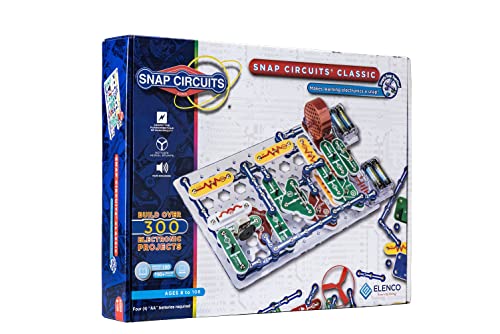
- 300+ guided projects
- No tools or soldering needed
- Color-coded snap parts simplify builds
Best For: Beginner middle school builders who want plenty of project variety
Lab-Style Exploration
EUDAX Electricity and Magnetism Kit
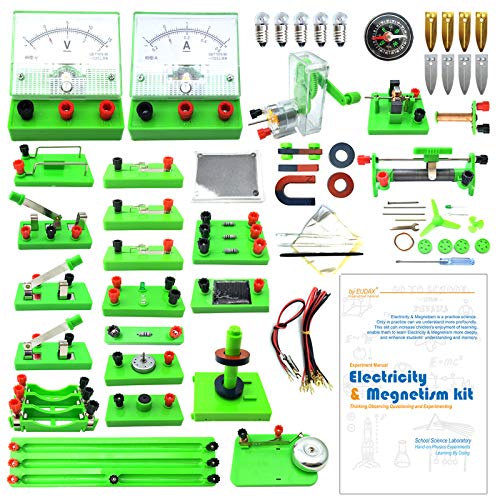
- Electricity and magnetism experiments
- Full-color manual included
- Covers Ohm's law, circuits, and generators
Best For: Older middle schoolers who want a science-lab approach
Compact Starter Kit

- 100+ guided projects
- No soldering or tools needed
- Smaller, easy-to-manage parts set
Best For: Middle school beginners who want a simpler first electronics kit
Budget Intro Choice
EUDAX Basic Electricity Circuit Kit

- Basic series and parallel circuit builds
- English instructions included
- Storage box keeps parts organized
Best For: Students who want a simple, low-frills electricity starter kit
Hands-On Coding Starter

- Guided Arduino projects with sensors and breadboard parts
- Interactive curriculum with written, video, and online lessons
- Good for classroom STEM use and self-paced learning
Best For: Middle school beginners learning electronics and coding
Physics Explorer Set
Teenii Electricity & Magnetism Kit

- 50-piece set with 18 guided experiments
- Covers circuits, motors, generators, and magnets
- Includes a 40-page full-color manual
Best For: Students who like experiment-based circuit learning
Curriculum Builder

- 40-project electronics curriculum with hands-on labs
- Includes manual, parts kit, circuit board, and battery
- Built for middle school, high school, and homeschool
Best For: Students needing a course-style electronics curriculum
Interactive Circuit Starter

- 8 guided circuit experiments
- Includes circuit book for learning
- AA batteries not included
Best For: guided middle school circuit learning
Hands-On Motor Build Kit
Sntieecr Electric Circuit Motor Kit
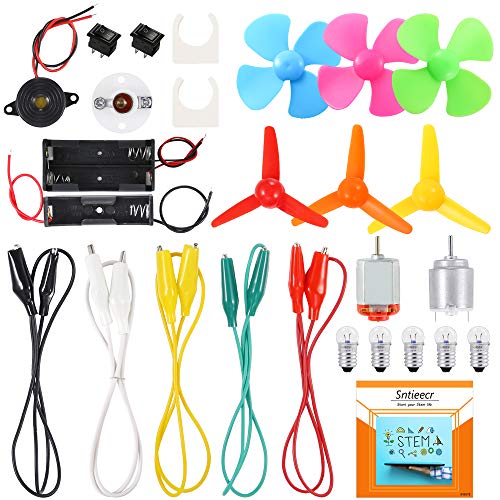
- Includes motors, bulbs, switches, and propellers
- Made for STEM and school projects
- Requires adult supervision
Best For: motor-based middle school circuit projects
Classroom Bulk Circuit Pack

- 12 individual beginner circuit kits
- Simple setup with clear instructions
- AA batteries not included
Best For: classroom or group circuit activities
Classic Hands-On Pick – Snap Circuits Classic SC-300
If you want circuit kits for middle school that feel fun right away, the Snap Circuits Classic SC-300 is a strong place to start. It includes color-coded snap pieces, a full-color manual, and more than 300 projects, so students can move from simple builds to more involved electronics without needing soldering or tools.
Best For: Middle schoolers who want a broad, beginner-friendly electronics kit with lots of project variety.
Pros:
- Over 300 projects for long-term use and repeat play
- No soldering or tools required, which keeps setup simple
- Includes 60+ pieces and color-coded snap-together parts
- Covers projects like AM radios, burglar alarms, and doorbells
Cons:
- Requires batteries, which are not included
- Best suited to basic electronics rather than advanced theory
- Some students may outgrow the entry-level build style over time
The SC-300 stands out for giving middle school students a large number of guided builds in one kit. If your goal is to introduce circuitry in a hands-on way without extra tools, it offers a practical balance of fun and learning.
Lab-Style Exploration – EUDAX Electricity and Magnetism Kit
For circuit kits for middle school students who are ready for a more lab-style experience, this EUDAX set leans into electricity and magnetism experiments. The kit includes a full-color manual, a storage bag, and parts for projects like series and parallel circuits, fruit battery tests, and an electric bell build, making it more classroom-like than toy-like.
Best For: Students who want a structured electricity and magnetism experiment kit with a stronger science-lab feel.
Pros:
- Includes both electricity and magnetism components
- Covers experiments such as Ohm’s law, electromagnets, and generators
- Full-color manual helps guide the builds
- Comes with a storage bag for keeping parts together
Cons:
- Batteries are not included
- Designed with grades 9-11 in mind, so it may be more challenging for some middle schoolers
- Less focused on playful gadget-style projects
This kit is a better fit when the goal is concept learning instead of simple snap-together entertainment. It gives students a hands-on way to explore core electricity and magnetism ideas through defined experiments.
Compact Starter Kit – Snap Circuits Jr. SC-100
If you are comparing circuit kits for middle school and want a smaller, simpler option, the Snap Circuits Jr. SC-100 is an easy entry point. It includes more than 100 projects, a full-color project manual, and snap-together parts that require no soldering or extra tools, so students can get building quickly.
Best For: Beginners who want an approachable electronics kit with a smaller parts count and lots of guided projects.
Pros:
- 100+ projects keep the kit useful beyond the first few builds
- No soldering or tools required
- Color-coded, snap-on parts make assembly simple
- Includes a full-color manual for step-by-step guidance
Cons:
- Fewer parts than the larger Snap Circuits Classic kit
- Batteries are required
- May feel basic for students already comfortable with circuitry
The SC-100 is a sensible choice if you want a smaller kit that still offers a lot to do. It works well for students who need an easy introduction before moving on to a larger electronics set.
Budget Intro Choice – EUDAX Basic Electricity Circuit Kit
For shoppers looking at circuit kits for middle school on a simpler budget-friendly scale, this EUDAX basic electricity set focuses on core circuit concepts. It is built around series and parallel circuits, includes English instructions, and comes packed in a plastic storage box for easy cleanup and reuse.
Best For: Middle school students who need a straightforward introductory electricity kit for classroom or home use.
Pros:
- Safe introductory kit for basic electricity learning
- Covers series and parallel circuits with English instructions
- Includes a storage box for organizing the parts
- Good fit for science projects, homeschool, and STEM activities
Cons:
- Batteries are not included
- Smaller 17-piece set than more advanced kits
- Focuses on fundamentals rather than a wide range of projects
This set is best when the priority is learning basic current and circuit rules in a clear, hands-on way. It is less flashy than some electronics kits, but it stays focused on the essentials students need first.
Hands-On Coding Starter – Arduino Student Kit
If you’re comparing circuit kits for middle school, the Arduino Student Kit is a strong hands-on option for beginners who want to learn electronics and programming together. It combines guided projects, sensors, and a breadboard-based parts set so students can build real circuits while following a step-by-step curriculum.
Best For: Middle school students, classroom STEM programs, and beginners who want a guided path into Arduino, circuit design, and basic coding.
Pros:
- Includes beginner-friendly projects like a traffic light system, light-sensitive lamp, and motion-activated alarm.
- Comes with an interactive curriculum plus written tutorials, video help, and online resources.
- Offers a broad mix of components such as LEDs, resistors, capacitors, motors, sensors, and a breadboard.
- Useful for classroom use, self-paced learning, and maker-style experimentation.
Cons:
- Focuses on Arduino programming, so it may feel more advanced than simple snap-together circuit kits.
- Designed for guided learning, which may not suit kids looking for open-ended free play.
Overall, this kit stands out as a structured learning tool for students ready to move beyond basic circuit play. It is a practical choice when you want circuit kits for middle school that teach real electronics skills through projects and curriculum support.
Physics Explorer Set – Teenii Electricity & Magnetism Kit
For families and teachers shopping circuit kits for middle school, this Teenii set leans into electricity and magnetism with a very hands-on science fair style. The 50-piece kit and 40-page color manual support 18 experiments that help students see circuits, motors, generators, and magnetism in action.
Best For: Middle school students who want an experiment-focused introduction to circuits, electricity, and magnetism with plenty of guided activities.
Pros:
- Includes 18 experiments such as a fruit battery, electric bell, and hand crank generator.
- Comes with a full-color 40-page manual for step-by-step exploration.
- Contains a wide range of parts, including meters, lightbulbs, switches, magnets, a solenoid, and an electric motor model.
- Works well for parent-child discovery and school projects.
Cons:
- Centered on electricity and magnetism rather than broader electronics or coding.
- Best suited to guided experiments, so it is less open-ended than a maker-style kit.
This is a solid pick if you want a science-first kit that makes core circuit concepts visual and interactive. It is especially appealing for learners who enjoy experiment-based STEM activities more than programming.
Curriculum Builder – Electronics Intro STEM Kit
If you want circuit kits for middle school that feel more like a real curriculum, this Electronics Intro STEM Book & Component Kit is built for structured learning. The package pairs an interactive manual with a parts kit, a solderless circuit board, and a 9-volt battery so students can work through 40 projects and learn how components interact.
Best For: Middle school and homeschool students who need a course-style electronics kit with a clear progression from basics to more advanced labs.
Pros:
- Includes 40 projects, making it one of the more curriculum-driven options in this group.
- Teaches electronic basics before moving into more complex labs and projects.
- Comes with the manual, parts kit, solderless circuit board, and 9-volt battery needed to get started.
- Designed for middle school, high school, and homeschool use.
Cons:
- Less toy-like than beginner science kits, so it may suit motivated learners best.
- Focuses on electronics education rather than broad all-in-one STEM play.
This kit is a smart fit when your goal is a more formal electronics learning path instead of a casual experiment set. It offers a clear sequence of projects that can help middle school students build confidence with real circuit concepts.
Interactive Circuit Starter – STEM Electric Circuit Kit
If you’re comparing circuit kits for middle school, this STEM electric circuit kit is a hands-on way to introduce basic electricity concepts. It includes 8 guided experiments, from series and parallel circuits to saltwater power generation and a fruit battery, making it a practical fit for beginners who learn best by building.
Best For: Middle school students who want a guided introduction to circuits, conductivity, and energy.
Pros:
- Includes 8 experiments across 7 packs for varied practice
- Comes with a detailed circuit book and easy-to-follow instructions
- Covers core topics like series circuits, parallel circuits, and fruit battery projects
- Suitable for home use, classroom learning, and science fair projects
Cons:
- AA batteries are required but not included
- Best suited for guided learning rather than advanced electronics
Overall, this kit works well as a beginner-friendly science project set for students who need structure and variety. Its focus on visible, simple experiments makes it a strong choice for learning the basics of electrical engineering.
Hands-On Motor Build Kit – Sntieecr Electric Circuit Motor Kit
For buyers shopping circuit kits for middle school, this motor-focused set adds more moving parts than a basic bulb kit. It comes with bulbs, motors, switches, propellers, clip leads, and battery holders, so students can experiment with simple circuits and see how different components behave in real projects.
Best For: Students who want a more hands-on STEM kit with motors, switches, and buildable circuit experiments.
Pros:
- Includes motors, bulbs, switches, propellers, and clip leads
- Designed for science, STEM, technology, and design courses
- Good for curiosity-driven experiments and school projects
- Comes with enough accessories for multiple circuit builds
Cons:
- Requires adult supervision for safe use
- Voltage guidance is limited to 1.5V-3V, with short run times at 3V
- Small parts and heat concerns mean it needs careful handling
Overall, this is a strong pick if you want a circuit kit that goes beyond lighting a bulb and into motion-based experiments. It’s especially useful for learners who enjoy testing, adjusting, and seeing immediate mechanical results.
Classroom Bulk Circuit Pack – 12 Bulk Electric Circuit Kit
If you’re looking at circuit kits for middle school in a classroom or group setting, this bulk pack is built for repeat use. It includes 12 individual kits with circuit cards, bulbs, switches, and battery holders, giving beginners a straightforward way to practice basic electrical assembly without extra tools.
Best For: Teachers, homeschool groups, or families who need multiple beginner circuit kits for hands-on practice.
Pros:
- Includes 12 packs, making it ideal for groups or classrooms
- Designed for ages 8+ with clear instructions and simple setup
- Covers basic electrical circuits with bulbs, switches, and battery holders
- No complex tools needed for assembly
Cons:
- AA batteries are required but not included
- Focuses on basic circuits rather than advanced experiments
- Adult supervision is required
Overall, this bulk set is a practical option when you need enough kits for a whole class or multiple students at once. Its simple, beginner-oriented design makes it easy to use for introductory STEM activities.
How We Picked the Best Circuit Kits for Middle School
We focused on kits that help middle school students build confidence with basic electronics while still offering enough depth to grow with them. Priority went to clear instructions, age-appropriate parts, strong educational value, and project variety. We also looked for options that support independent use, group learning, or classroom settings.
Quick Comparison
Some kits are better for first-time learners who need simple snap-together projects, while others lean toward experiments, magnetism, or more advanced STEM pathways. A few are ideal for homeschool or curriculum use, and others work better for classrooms where multiple students need the same materials.
Key Buying Factors for Circuit Kits for Middle School
Project Difficulty
Choose a kit that matches the learner’s experience. Beginners usually do best with visual, low-friction builds and step-by-step manuals, while more confident students may benefit from kits that introduce sensors, motors, or programmable components.
Educational Depth
The strongest Circuit Kits for Middle School go beyond simple light-up demos. Look for kits that explain how current flows, how switches work, and how components interact. Extra lessons in magnetism, engineering, or problem-solving can make the kit more valuable over time.
Part Quality and Instructions
Middle school students need parts that are durable, easy to connect, and clearly labeled. A full-color manual, guided experiments, or curriculum-based lessons can make a big difference in keeping frustration low and learning high.
Classroom or Home Use
If you’re buying for one student, a compact kit with plenty of guided projects may be enough. For classrooms or groups, look for bulk packs or kits with repeatable components so several students can build at once.
Who Should Buy Which Circuit Kits for Middle School?
Choose a beginner snap-style kit if the student is new to electronics and needs fast wins. Pick a larger project kit if you want more long-term use and broader STEM exploration. Go with an experiment-focused set if you want more science-lab style learning, or a curriculum-driven kit if you’re building a structured homeschool or classroom program. For students ready to move beyond basics, an Arduino-based option can be a strong next step.
In short, the best choice depends on how much guidance, complexity, and repeat use you want from the kit. Matching the kit to the student’s skill level is the easiest way to get real learning results.