Choosing the right anatomy model can make study sessions more effective, especially when you need to visualize structures from every angle.
This roundup of the best anatomy models for medical students focuses on hands-on learning value, realism, durability, and classroom-friendly design.
Best 10 Anatomy Models for Medical Students Picks for 2026
Deluxe Torso Pick
2026 New Human Body Deluxe Musculature Model
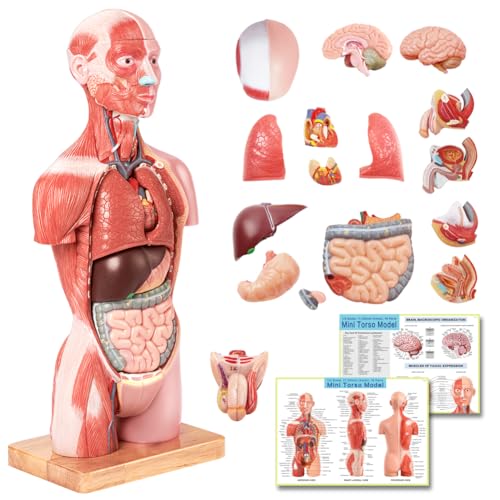
- 16 removable parts for organ study
- Non-toxic PVC with hand-painted detail
- Portable half-size build for class use
Best For: Medical students and nursing learners needing a compact torso model
Full-Size Skeleton Choice
70.8" Human Skeleton Model with Charts

- Life-size skeleton with nervous system detail
- Rolling stand and dust cover included
- Movable jaw and removable skull cap
Best For: Classrooms, clinics, and students needing a life-size reference
Compact Study Torso
11" Human Body Model for Anatomy Study

- 15 detachable parts for hands-on learning
- 11-inch size fits desks and small spaces
- Includes a colorful educational manual
Best For: Desk study and beginners who want a compact torso model
Mini Skeleton Starter
breesky 17" Human Skeleton Model

- Portable 17.7-inch skeleton for small spaces
- Movable arms and legs add flexibility
- Basic anatomy focus for beginner study
Best For: Beginners and small-space setups needing a simple skeleton model
Detailed Torso Pick
16-Piece Human Torso with Skeleton & Brain

- 16 removable parts
- Non-toxic PVC, easy to clean
- Oak-wood base display
Best For: Students who want a detailed torso model for hands-on anatomy review
Best for Everyday Use
70.8-Inch Skeleton with Rolling Stand

- 206 articulated bones
- Detachable skull and joints
- Rolling stand with wheels
Best For: Learners who need a full-size skeleton for teaching and easy movement
Study-Focused Torso
19-Part Life-Size Torso with Manual

- 19 removable parts
- 200+ numerical markers
- Includes manual and brochure
Best For: Students and instructors who want a clearly labeled torso for structured learning
Best with Extra Features
breesky Life-Size Human Skeleton Model

- 70.8-inch skeleton with 206 articulated bones
- Includes three posters and a rolling stand
- Detachable parts for interactive study
Best For: Hands-on skeletal anatomy study and classroom display
Compact Multi-System Bundle
EVOTECH Scientific Anatomy Model Bundle of 5

- Five-model set includes skeleton, torso, heart, skull, and cubes
- Portable case plus brochures, charts, and manuals
- Hand-painted models with sturdy bases
Best For: Broad introductory anatomy study in a portable format
Focused Core Anatomy Set
EVOTECH Scientific Anatomy Model Bundle of 4

- Includes body, skeleton, heart, and skull with brain
- Carrying case and study guides included
- Hand-painted, portable, and display-friendly
Best For: Core anatomy review for students and teachers
Deluxe Torso Pick – 2026 New Human Body Deluxe Musculature Model
If you’re comparing anatomy models for medical students, this 16-piece torso is a practical way to study major organs and body regions in a compact format. It focuses on core structures like the heart, lungs, brain, skull cap, liver, stomach, intestines, and both male and female parts, making it useful for basic organ identification and relative positioning.
Best For: Medical students, nursing learners, and classroom demonstrations that need a portable torso model.
Pros:
- 16 detachable parts cover a broad set of major organs and structures.
- Made from non-toxic PVC with hand-painted detail and an oak-wood base.
- Compact, portable size is easy to carry to class or display on a shelf.
- Includes a colorful educational brochure for guided study.
Cons:
- Some organ pieces are small and should be kept away from young children.
- Half-size format is less suited to full-scale anatomical reference.
This model is a solid choice if you want a teaching aid that balances detail, portability, and broad organ coverage. It works best for foundational anatomy learning rather than advanced structural study.
Full-Size Skeleton Choice – 70.8" Human Skeleton Model with Charts
For anatomy models for medical students, a full-size skeleton is often the clearest way to study bone structure, alignment, and major landmarks. This 70.8-inch model adds nervous system and carotid artery details, plus teaching charts, so it can support both visual learning and more advanced reference work.
Best For: Learners and professionals who want a life-size skeleton with extra anatomical detail and easy mobility.
Pros:
- Life-size 70.8-inch frame gives a realistic study reference.
- Includes nervous system and carotid artery details for added anatomy coverage.
- Rolling stand and dust-proof cover make it easier to move and store.
- Removable skull cap, movable jaw, and detachable teeth support closer inspection.
Cons:
- Large size and 23.3-pound weight take up more space than desktop models.
- Better suited to labs, clinics, or classrooms than small study desks.
This is the most presentation-ready option in the group if you need a realistic skeleton for teaching or demonstration. The included charts and movable parts make it especially useful for structured study sessions.
Compact Study Torso – 11" Human Body Model for Anatomy Study
If you need anatomy models for medical students that fit on a desk, this 11-inch torso offers a focused look at the core systems without taking much space. Its 15-part detachable design highlights the brain, heart, lungs, esophagus and aorta, and skull, making it a straightforward study aid for basic organ and system recognition.
Best For: Desk study, small lab spaces, and beginners who want a compact torso model.
Pros:
- 15 detachable components support hands-on exploration.
- Compact 11-inch size is easy to place on a desk or shelf.
- Covers key structures for respiratory, circulatory, and nervous system basics.
- Includes a colorful educational manual for identifying parts.
Cons:
- Smaller size means less overall anatomical detail than larger torso models.
- Limited to core structures rather than a broader full-body layout.
This model is a smart pick when portability and simplicity matter more than maximum detail. It gives students a clean, manageable way to learn the major organs and their relationships.
Mini Skeleton Starter – breesky 17" Human Skeleton Model
For anatomy models for medical students on a tight budget or with limited space, this 17-inch skeleton keeps things simple and portable. It focuses on the basics—spine, ribs, skull, movable arms and legs, plus a removable skull cap—so it works well as an entry-level teaching or display piece.
Best For: Beginners, small spaces, and quick visual reference to basic skeletal structure.
Pros:
- Compact 17.7-inch size is easy to place on a desk or carry around.
- Movable arms and legs make it more interactive for observation.
- Basic skeletal detail is useful for early-stage anatomy learning.
- Removable skull cap adds a little extra hands-on exploration.
Cons:
- Very basic detail compared with full-size, more advanced skeleton models.
- Jaw moves but does not remove, which limits skull exploration.
- Entry-level design may not satisfy students needing deeper anatomical study.
This is the simplest skeleton in the lineup, and that makes it useful if your goal is portability and basic structure recognition. It’s best treated as a starter model rather than a comprehensive reference.
Detailed Torso Pick – 16-Piece Human Torso with Skeleton & Brain
If you want anatomy models for medical students that show more than just the basics, this 16-piece human torso gives a practical look at major structures in one compact display. The removable parts, hand-painted details, and oak-wood base make it useful for classroom explanation, lab review, or individual study.
Best For: Medical students who want a detailed torso model with removable organs and skeletal elements for hands-on anatomy review.
Pros:
- 16 removable pieces provide a fuller look at torso anatomy, including heart, head, skull, brain, and skeleton.
- Made from non-toxic PVC and designed to be easy to clean.
- Hand-painted finish and oak-wood base add a polished display for classroom or lab use.
- Portable, free-standing design is convenient for study tables and teaching setups.
Cons:
- More suited to torso anatomy than full-body skeletal study.
- Compact size may not suit users looking for a life-size model.
Overall, this is a strong choice if you need a torso model that balances detail, portability, and display quality. It is especially practical for students who want a hands-on anatomy reference without moving to a larger full-body skeleton.
Best for Everyday Use – 70.8-Inch Skeleton with Rolling Stand
For anatomy models for medical students that need full-body skeletal study, this life-size skeleton focuses on articulation and visibility. It includes 206 articulated bones, a detachable skull, three posters, and a rolling stand, which makes it practical for classroom teaching, office display, and closer inspection.
Best For: Medical and healthcare learners who need a full-size skeleton for study, demonstration, and easy movement between rooms.
Pros:
- Life-size 70.8-inch build with 206 articulated bones for detailed skeletal study.
- Detachable skull and fully articulated joints support movement and closer examination.
- Rolling bracket with five wheels makes it easy to move in classrooms or offices.
- Includes three posters for added visual reference.
Cons:
- Focused on the skeleton rather than soft-tissue or organ anatomy.
- Bulkier and heavier than tabletop models.
This model stands out if your main priority is a realistic, full-size skeleton for teaching or reference. The movable stand and disarticulated details make it especially useful where access and repositioning matter.
Study-Focused Torso – 19-Part Life-Size Torso with Manual
This life-size torso is a solid option among anatomy models for medical students who want a broad look at internal structures. With 19 removable parts, more than 200 numerical markers, and a product manual, it is built for step-by-step study of major organs, muscular layers, vessels, and nerves.
Best For: Medical students and instructors who want a detailed torso model with clear labeling for structured anatomy learning.
Pros:
- 19 removable parts expose many core structures, including heart, lungs, liver, stomach, kidneys, and bladder.
- More than 200 numerical markers help identify anatomical structures more precisely.
- Non-toxic eco-friendly PVC and sturdy base make it suitable for repeated use and easy cleaning.
- Includes a brochure/manual to support learning and reassembly.
Cons:
- It is a torso model, so it does not cover the full body.
- Detailed assembly may take more time than simpler models.
For study-focused users, this torso offers a useful mix of detail, labeling, and reusability. It is a strong pick when you want a classroom-ready anatomy aid that supports both demonstration and independent review.
Best with Extra Features – breesky Life-Size Human Skeleton Model
If you need anatomy models for medical students that make the skeletal system easy to study from a distance, this life-size breesky figure is a practical choice. It includes 206 articulated bones, a detachable skull cap, movable joints, three reference posters, and a rolling stand for flexible use in classrooms, offices, or labs.
Best For: Students and instructors who want a full-size skeleton model for hands-on anatomy study and display.
Pros:
- Life-size 70.8-inch build with 206 articulated bones from a real human specimen.
- Detachable parts and articulated joints support interactive study.
- Includes three color posters for quick visual reference.
- Rolling stand makes it easier to move between rooms.
Cons:
- Focused on skeletal anatomy rather than multiple body systems.
- Larger footprint than tabletop models.
This model is a solid fit if you want a durable, full-scale anatomy aid that can be moved around easily. The PVC construction and included charts make it especially useful for repeat study sessions and teaching demonstrations.
Compact Multi-System Bundle – EVOTECH Scientific Anatomy Model Bundle of 5
For anatomy models for medical students who want more than a single skeleton, this EVOTECH bundle packs several body-system models into one portable kit. It combines a skeleton, torso, heart, mini skull with brain, and anatomical cubes, plus guides and a carrying case for organized study.
Best For: Students who want a compact, multi-model anatomy set for broad introductory learning.
Pros:
- Includes five hands-on models covering multiple anatomy topics.
- Comes with a carrying case for storage and portability.
- Detailed brochures, charts, and manuals are included.
- Hand-painted models with sturdy bases add a polished look.
Cons:
- Smaller sizes are less immersive than life-size teaching models.
- Some learning materials are bundled across multiple model types, so setup may take a little sorting.
This set works well when you want breadth and portability in one purchase. It is especially useful for students who prefer a compact study kit that covers bones, organs, and the brain without taking up much space.
Focused Core Anatomy Set – EVOTECH Scientific Anatomy Model Bundle of 4
If you are comparing anatomy models for medical students and want a smaller bundle than a five-piece kit, this EVOTECH set covers the essentials. It includes a human body model, skeleton, heart, and half-size skull with brain, along with a carrying case and study guides for each major component.
Best For: Medical students and teachers who want a focused multi-model set for core anatomy topics.
Pros:
- Four-model bundle covers skeletal, cardiovascular, nervous, and general body anatomy.
- Includes a carrying case for easier storage and transport.
- Charts and manuals help guide study sessions.
- Hand-painted models with sturdy bases are built for display and review.
Cons:
- Not as comprehensive as the five-model EVOTECH bundle.
- Smaller models are less suited to large classroom viewing.
This is a practical middle-ground option if you want a focused set without extra pieces. It offers a good balance of portability, detail, and coverage for core anatomy review.
How We Picked These Anatomy Models for Medical Students
We prioritized models that help with core anatomy study needs: clear labeling potential, removable parts, accurate proportions, and enough detail to reinforce memory without becoming distracting. We also favored options that suit different budgets and study styles, from compact desk models to full-size skeletons.
Quick Comparison
In general, torso models are best for organ and musculature study, while skeleton models are better for bone landmarks, posture, and movement. Full-size models are ideal for anatomy labs and tutoring spaces, while smaller versions are easier to keep on a desk or shelf.
Key Buying Factors for Anatomy Models for Medical Students
Level of Detail
Look for models that match your course goals. If you are early in anatomy, a basic torso or skeleton may be enough. If you need exam-level study support, choose models with removable organs, muscle layers, nerves, or vascular features.
Size and Storage
Life-size models offer better realism, but they take up more room. Smaller Anatomy Models for Medical Students are often easier to transport and use in dorms, libraries, or shared study spaces.
Removable Components
Parts that detach and reassemble can improve active recall. This is especially useful for learning organ placement, skeletal landmarks, and spatial relationships between structures.
Durability and Stand Quality
Medical students often handle models frequently, so sturdy materials and stable stands matter. A well-balanced base is important for tall skeletons and large torso models.
Who Should Buy Which Anatomy Models for Medical Students?
If you want a broad intro to gross anatomy, a torso model is usually the best starting point. If your course emphasizes musculoskeletal anatomy, choose a full-size skeleton. For students studying both organ systems and body structure, a deluxe musculature torso or bundle set can be the most efficient option.
For limited space or a lower budget, mini bundles and half-size models are practical choices that still support active learning. For lab groups, tutors, and visual learners, larger Anatomy Models for Medical Students tend to deliver the strongest long-term value.