Choosing the right anatomy model comes down to size, durability, and how easily the parts come apart and go back together. The best skeleton models with removable parts make it easier to learn bone structure, identify landmarks, and teach anatomy clearly.
Below, we focus on models that balance realism, portability, and practical classroom value so you can pick the right one for study, demonstration, or display.
Best 10 Skeleton Models with Removable Parts Picks for 2026
Portable Study Skeleton
Mini Human Skeleton Model with Removable Limbs

- 31-inch size for desktop or lab use
- Removable arms, legs, and skull cap
- Articulated joints with included study manual
Best For: portable anatomy teaching and hands-on study
Osteology Lab Set
Complete Disarticulated Human Skeleton

- Every bone is fully separated for study
- 3-part skull with removable calvarium and mandible
- Includes articulated hand, foot, and photo manual
Best For: bone-by-bone osteology and anatomy labs
Numbered Anatomy Display
TYRRDE 33.4 Inch Skeleton Model

- Detachable skull, chin, arms, and legs
- Numbered muscle insertion and origin points
- Pre-assembled PVC model with metal hardware
Best For: durable classroom or clinic anatomy teaching
Life-Size Disarticulated Skeleton

- Life-size model with 200+ bones and structures
- 3-part skull with removable skull cap
- Jointed right hand and foot, no stand included
Best For: advanced anatomy and medical-quality bone study
Compact Teaching Skeleton
17.7Inch Human Anatomy Skeleton

- 17.7-inch compact design for desks and shelves
- Detachable limbs and skull for hands-on study
- Durable build with clear anatomical details
Best For: Students and educators needing a compact anatomy display
Life-Size Medical Skeleton
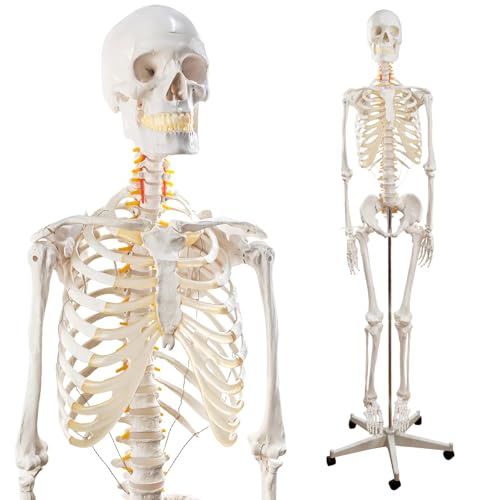
- Life-size 70-inch adult anatomy reference
- Removable arms and legs with movable joints
- Color-coded spinal nerves and rolling stand
Best For: Medical teaching, classroom demos, and clinical study
DIY Kids Skeleton Kit

- DIY assembly encourages hands-on learning
- Detachable structure for basic anatomy exploration
- Mini tabletop format for classrooms and kids
Best For: Young learners and beginner biology activities
Full-Size Teaching Standout
Giantex 70.8" Life Size Skeleton Model

- Life-size 70.8-inch skeleton for detailed study
- Removable arms, legs, and movable jaw/joints
- Rolling stand with brakes plus poster and dust cover
Best For: Classrooms and anatomy learners needing a full-size, mobile skeleton model
Painted Mini Study Model
TYRRDE 33.4-Inch Human Skeleton Model

- 33.4-inch mini skeleton with painted anatomical detail
- Removable arms, legs, and detachable skull
- Includes cardiovascular system details and display base
Best For: Compact anatomy study with clear painted details and vascular features
Compact Classroom Pick
33.4-Inch Human Skeleton Model

- Compact 33.4-inch size for study or display
- Removable arms, legs, and detachable skull
- Durable build with stable base and quick setup
Best For: Classroom, home study, or office display when space is limited
Portable Study Skeleton – Mini Human Skeleton Model with Removable Limbs
If you want skeleton models with removable parts for hands-on anatomy study, this 31-inch model is a practical desktop option. It keeps the major joints articulated while letting you detach the arms, legs, and skull cap for closer inspection of specific regions.
Best For: Instructors, students, and lab spaces that need a compact, portable skeleton for interactive study.
Pros:
- Removable arms, legs, and skull cap for focused study
- Fully articulated major joints for natural movement demonstrations
- Metal stand keeps the model stable on a desk or lab bench
- Includes a full-color manual with labeled anatomical landmarks
Cons:
- Less-than-life-size format may not suit those wanting a full classroom skeleton
- Designed as a study model, not a high-detail medical display piece
This is a strong choice if you need a smaller model that is easy to move, easy to assemble, and useful for showing anatomy one section at a time.
Osteology Lab Set – Complete Disarticulated Human Skeleton
For buyers comparing skeleton models with removable parts, this life-size disarticulated set goes the farthest because every bone is separated for direct handling. It is aimed at osteology study, letting students examine individual bones rather than working around an assembled frame.
Best For: Osteology labs, anatomy courses, and physical anthropology programs that need full bone-by-bone study.
Pros:
- Every bone is fully separated for hands-on identification
- 3-part skull includes removable calvarium and mandible
- Articulated hand and foot help preserve natural bone relationships
- Full-color manual uses real photos of the bones
Cons:
- Not intended to be assembled like a standard skeleton model
- No stand is included
- More specialized than a typical classroom display skeleton
This set is the most study-focused option here, especially if you need removable parts for close inspection of each bone and cranial surface.
Numbered Anatomy Display – TYRRDE 33.4 Inch Skeleton Model
This compact entry belongs on any shortlist of skeleton models with removable parts if you want a teaching aid that is easy to move and quick to set up. It includes detachable skull, chin, arms, and legs, plus painted muscle markings with numbered insertion and origin points for study.
Best For: Teachers, students, and clinics that want a durable mini skeleton with numbered anatomy details.
Pros:
- Detachable skull, chin, arms, and legs for flexible demos
- Numbered muscle markings add extra study value
- Pre-assembled on a stand for fast display
- PVC construction with metal hardware for durability
Cons:
- Smaller half-size format may not suit users wanting a life-size model
- Painted anatomy details may be more than needed for casual display
If you want a ready-to-use model with removable sections and extra labeling, this one balances convenience, durability, and teaching detail well.
Life-Size Disarticulated Skeleton – hBARSCI Medical Quality Model
If your search for skeleton models with removable parts calls for a life-size, medical-style option, this disarticulated model is built for detailed anatomical study. It includes 200+ bones and structures, a 3-part skull, and jointed extremities for examining relationships between bones.
Best For: Advanced anatomy study and users who want a life-size disarticulated bone set with medical detail.
Pros:
- Life-size format with 200+ bones and structures
- 3-part skull with removable skull cap
- Right hand and foot are jointed; left side is fully disarticulated
- Medical-quality detail with bony landmarks
Cons:
- Not meant to be assembled
- No stand is included
- Heavier and less portable than smaller study models
This is the most advanced study pick in the group, especially if you want a realistic, bone-by-bone teaching model without the constraints of an assembled skeleton.
Compact Teaching Skeleton – 17.7Inch Human Anatomy Skeleton
If you want a manageable skeleton models with removable parts option for desk study or classroom demos, this 17.7-inch figure keeps the focus on clear anatomy without taking up much space. It offers anatomically accurate proportions, detachable limbs, and a detachable skull, making it useful for hands-on learning and quick demonstrations.
Best For: Students, home learners, and educators who need a compact skeleton for study or display.
Pros:
- 17.7-inch size is easy to place on a desk, shelf, or demonstration table.
- Removable arms, legs, and skull support interactive study of bone connections.
- Durable build and solid hardware are made for frequent handling.
- Clear skeletal details help learners identify major anatomical structures.
Cons:
- Compact size is less suitable if you need a life-size teaching model.
- Focused on basic skeletal structure rather than added systems or accessories.
This is a practical choice when portability and hands-on anatomy learning matter more than full-scale display. The mostly assembled setup and included base also make it straightforward to use right away.
Life-Size Medical Skeleton – 70 Inch Human Skeleton Model
For buyers comparing skeleton models with removable parts for serious training or classroom use, this life-size 70-inch model offers the most immersive anatomy reference in the group. It includes removable arms and legs, a movable jaw, flexible shoulder joints, and an articulated pelvis, plus color-coded spinal nerves for added teaching value.
Best For: Medical study, classroom instruction, and clinical demonstration where full-scale anatomy matters.
Pros:
- Life-size 70-inch proportions provide a realistic adult body reference.
- Removable arms and legs support interactive skeletal demonstration.
- Color-coded spinal nerves help show the skeletal and nervous system relationship.
- Rolling metal stand makes it easier to move between rooms.
Cons:
- Full-size design needs considerably more floor space than compact models.
- Better suited to professional or classroom settings than casual display.
This model stands out for teaching anatomy at scale, especially when motion and system relationships need to be shown clearly. Its PVC construction and stable rolling base also make it a strong long-term option for repeated use.
DIY Kids Skeleton Kit – Mini Human Body Science Model
If you need skeleton models with removable parts for basic biology learning or a fun DIY activity, this mini assemble-yourself kit is built around hands-on exploration. Its detachable human body structure design is aimed at helping children observe bones, build the model, and learn human anatomy in a simple tabletop format.
Best For: Kids, classrooms, and beginner anatomy activities that emphasize assembly and observation.
Pros:
- DIY assembly format encourages hands-on learning and observation.
- Detachable structure helps children explore the human body model.
- Mini tabletop size works well for desks and small display areas.
- Designed for educational use in primary and secondary school biology lessons.
Cons:
- Mini size is not intended for detailed professional anatomy teaching.
- Material is plastic, so it is more of a learning tool than a realistic display model.
This is a straightforward educational pick when the goal is to make anatomy approachable and interactive for younger learners. It is especially appealing as a classroom prop or giftable science toy rather than a clinical-grade model.
Full-Size Teaching Standout – Giantex 70.8" Life Size Skeleton Model
If you want skeleton models with removable parts for classroom demos or detailed self-study, this 70.8-inch Giantex model offers a full-size frame with easy mobility and multiple detachable sections. Its rolling stand makes it simple to move between rooms, while the included poster and dust cover add value for teaching and storage.
Best For: Teachers, medical students, and professionals who want a full-size anatomy skeleton with mobility and included extras.
Pros:
- 70.8-inch life-size build modeled from an original male human specimen
- Removable arms and legs, plus movable skull cap, jaw, shoulder, elbow, wrist, and joints
- Rolling stand with five casters, including two with brakes, for easy room-to-room movement
- Includes an anatomical poster and dust cover
Cons:
- Large floor-mounted model may be more than needed for casual home display
- Designed for teaching and study, so it is less compact than mini models
As a full-size option, this model is geared toward hands-on anatomy learning and repeated demonstrations. The combination of removable parts, articulated joints, and a movable stand makes it a practical pick when detail and accessibility matter.
Painted Mini Study Model – TYRRDE 33.4-Inch Human Skeleton Model
Among skeleton models with removable parts, this 33.4-inch TYRRDE version is built for compact study spaces where clear details matter. The scientific-study paint highlights bone structures and vascular features, and the included cardiovascular details help connect skeletal and circulatory learning in one model.
Best For: Classroom, clinic, or home study users who want a compact skeleton with painted anatomical detail.
Pros:
- 33.4-inch size fits smaller teaching and study spaces
- Scientific-study paint emphasizes bone structures and vascular features
- Removable arms and legs with a detachable skull for hands-on learning
- Stable display base and mostly assembled setup
Cons:
- Mini format provides less full-body presence than life-size models
- Best suited to tabletop display rather than mobile floor use
This is a solid choice when you want detailed anatomy without the footprint of a full-size skeleton. The painted finish and cardiovascular details make it especially useful for visual learners who want more than a basic bone-only model.
Compact Classroom Pick – 33.4-Inch Human Skeleton Model
If you’re comparing skeleton models with removable parts for study or display, this 33.4-inch TYRRDE model focuses on straightforward anatomy teaching in a compact footprint. It offers clear anatomical details, realistic joint articulation, and a stable base, making it easy to set up for demonstrations or desk-side learning.
Best For: Students, instructors, and office displays that need a compact skeleton model with removable limbs.
Pros:
- 33.4-inch size is manageable for classrooms and home study
- Removable arms, legs, and detachable skull support interactive learning
- Durable reinforced construction for repeated handling
- Stable display base with mostly pre-assembled setup
Cons:
- No painted cardiovascular system details like some competing study models
- Smaller format is less immersive than full-size anatomy skeletons
This model keeps the focus on practical anatomy basics rather than extra visual features. It’s a sensible pick if you want removable parts, durable construction, and an easy setup for routine teaching or display.
How We Picked the Best Skeleton Models with Removable Parts
We prioritized models that are useful for real learning, not just display. Key factors included anatomical detail, quality of removable joints or limbs, stability of the stand, clarity of labeling or manual support, and whether the size fits the intended use case. We also looked for options that make Skeleton Models with Removable Parts easier to handle for repeated demonstrations.
Quick Comparison
Smaller models are better for desks, travel, and younger learners, while life-size versions are stronger choices for classrooms, clinics, and higher-level anatomy study. Mini skeletons tend to be easier to store and move, but full-size models usually provide better spatial understanding of proportions and joint relationships. If you need frequent setup and teardown, look for smooth-fitting removable parts and a sturdy base.
Key Buying Factors for Skeleton Models with Removable Parts
Size and Learning Goals
Choose a compact model for personal study or limited space, and a life-size model if you want more realistic anatomy practice. The right scale can make a big difference in how well students understand bone relationships.
Removable Part Design
Check whether the arms, legs, skull sections, and smaller bones are truly easy to detach without feeling loose. Good Skeleton Models with Removable Parts should assemble securely and stay aligned during use.
Build Quality and Stability
Durable plastic, clean molding, and a solid stand matter if the model will be handled often. For classroom use, look for models with stable support and parts that can withstand repeated assembly.
Educational Detail
Some models emphasize broad structure, while others include more detailed articulation or bone-by-bone separation. Match the detail level to the learner: beginners usually need clear structure, while advanced users benefit from more complete disarticulation.
Who Should Buy Which Skeleton Models with Removable Parts?
Teachers and trainers should lean toward life-size models with strong stands and clear anatomy. Students and home learners often do best with smaller, easier-to-store options that still include removable limbs and a straightforward manual. If your main goal is hands-on study, choose a model with secure fit and clear assembly steps; if your main goal is demonstration, prioritize visibility and realism.
For most buyers, the best choice is the model that balances detail, durability, and convenience for how often it will be handled.