Finding educational games for teenagers that feel genuinely fun can be tricky. The best options keep teens engaged while building skills like critical thinking, memory, vocabulary, math, and conversation.
Below, we’ve rounded up 10 smart picks that work for family game night, classrooms, road trips, and low-pressure learning at home.
Best 10 Educational Games for Teenagers Picks for 2026
Geography Challenge Pick
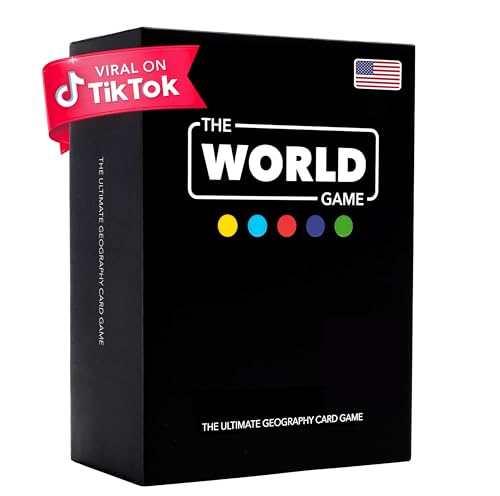
- 194 countries with flags, capitals, and map location
- Competitive family gameplay for 2 to 5 players
- Portable and can double as flash cards
Best For: Teens who enjoy geography trivia and travel-friendly play
Head-to-Head Logic Pick

- Two-player race version of the classic 3D puzzle
- 80 puzzles across 40 double-sided challenge cards
- Screen-free and portable with no battery required
Best For: Teens who want a competitive logic puzzle for two
Family Trivia Pick
Do You Really Know Your Family?
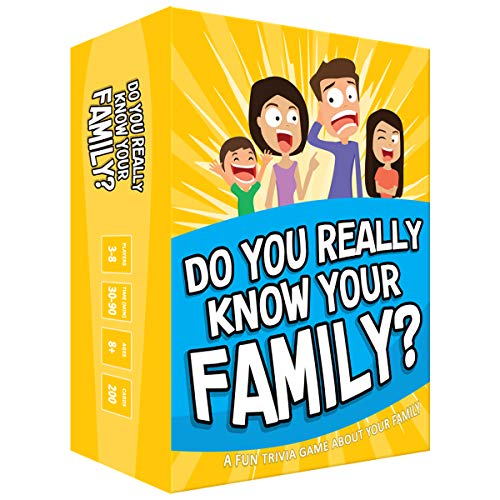
- Conversation-based trivia for kids, teens, and adults
- Easy to learn and built for game night
- Includes silly challenges to keep rounds lively
Best For: Families with teens who want an easy, social game
Teen Brain Teaser Pick

- 200 riddles, puzzles, and logic games with solutions
- Designed for ages 12 to 17
- Includes math puzzles, quizzes, and investigations
Best For: Teens who prefer solo puzzle-solving and brainteasers
Geography Pick

- 194 country cards with flags, capitals, and facts
- Simple rules for beginners and mixed-age groups
- 40-minute race-around-the-world format
Best For: Teens, families, and classrooms wanting geography practice
Conversation Pick

- 200 teen-focused conversation starters
- Built for family, counseling, and classroom use
- Portable deck for travel and downtime
Best For: Adults and teens looking to spark meaningful conversation
Trivia Pick

- 110 cards and 400+ questions
- Penalty-based scoring changes the trivia format
- Casual game for teens and adults
Best For: Trivia fans who enjoy a playful scoring twist
Mental Math Game

- Teacher’s Choice Gold Award winner
- 15-minute fast-paced math gameplay
- 2-6 players with solo option
Best For: teens and families who want quick STEM math practice
Word Strategy Game

- Stack letters to change words
- Lazy Susan board for easy turns
- Playable solo or with up to 4
Best For: teens who like strategic word games
Trivia Guessing Game
QUOKKA Higher or Lower Trivia Cards

- 500+ questions for replay value
- Portable and travel-friendly card format
- Builds logic and critical thinking
Best For: teens and families who want a portable trivia challenge
Geography Challenge Pick – The World Game
If you want educational games for teenagers that feel more like a challenge than a lesson, The World Game is a strong fit. It covers all 194 countries with flags, capitals, and map location cues, so players can test real geography knowledge while still keeping the pace fast and social.
Best For: Teens who like competitive trivia, geography practice, and a portable game for family play or travel.
Pros:
- Includes all 194 countries plus a world map.
- Lets players identify flags, capitals, and country locations.
- Works for 2 to 5 players and can be used as flash cards or trivia.
- Portable format makes it easy to bring on trips.
Cons:
- Focused specifically on geography, so it may not suit teens who want broader subjects.
- Best with players who enjoy fact-based competition.
This is a practical pick for teens who learn best by playing rounds of quick, repeatable questions. The updated country data and flexible use as a card game or flash cards add extra value for home or travel.
Head-to-Head Logic Pick – Kanoodle Head-to-Head
Among educational games for teenagers, Kanoodle Head-to-Head stands out if you want a screen-free logic challenge for two players. It turns the original 3D puzzle concept into a race, using challenge cards and puzzle pieces to push critical thinking and problem solving in a fast, competitive format.
Best For: Teens who like two-player puzzle races, portable brain teasers, and screen-free challenges.
Pros:
- Competitive two-player version of a well-known brain teaser.
- Includes 80 puzzles from 40 double-sided challenge cards.
- Supports critical thinking and problem solving.
- No battery required and easy to take on the go.
Cons:
- Designed for only two players.
- More puzzle-focused than party-game style.
This is a smart choice for teens who want something quick, portable, and mentally engaging without a screen. The head-to-head format adds urgency, while the puzzle variety helps keep repeated play interesting.
Family Trivia Pick – Do You Really Know Your Family?
If you’re browsing educational games for teenagers that are built around conversation and recall, this family trivia card game is an easy option. It is designed to get kids, teens, and adults answering questions about each other, which makes it less about facts and more about listening, memory, and shared laughs.
Best For: Families with teens who want a simple game night choice that sparks conversation and playful competition.
Pros:
- Easy to learn and play for ages 8 and up.
- Encourages conversation and helps family members learn about each other.
- Includes silly challenges for added variety.
- Suitable for kids, teens, and adults together.
Cons:
- More conversation-based than subject-specific academic learning.
- May appeal most to families rather than solo teen players.
This game works well when you want a relaxed option that still feels interactive and engaging. It is a good fit for mixed-age groups, especially if your goal is to turn game night into an easy conversation starter.
Teen Brain Teaser Pick – Riddles for Smart Teens
For educational games for teenagers that lean toward solo practice, this riddle book offers a straightforward mix of puzzles and logic games. It includes 200 riddles, investigations, quizzes, and mathematical puzzles, making it a solid low-cost option for teens who like to solve problems on their own.
Best For: Teens ages 12 to 17 who enjoy books of riddles, logic exercises, and detective-style puzzles.
Pros:
- Contains 200 puzzles, riddles, and brainteasers.
- Covers a mix of logic games, math puzzles, quizzes, and investigations.
- Includes solutions for self-checking.
- Designed specifically for ages 12 to 17.
Cons:
- Book format may feel less social than board or card games.
- Best suited to readers who enjoy working through puzzles independently.
This is a good pick if you want a teen-friendly puzzle book instead of a tabletop game. The variety of question types and included answers make it easy to use for quick challenges or longer problem-solving sessions.
Geography Pick – World Game
If you want educational games for teenagers that feel more like a real game night than a lesson, this geography board game is a strong fit. It uses a race-around-the-world format to introduce flags, capitals, continents, map locations, and country facts in a way that stays accessible for mixed-knowledge groups.
Best For: Teens, families, and classrooms that want a fun way to practice world geography together.
Pros:
- Includes 194 country cards with flags, capitals, population, GDP per capita, and more.
- Simple rules and adjustable challenges make it easy for beginners and mixed-age groups.
- 40-minute playtime works well for family nights, trivia sessions, or classroom use.
- Comes with a full set of board, cards, pawns, dice, and action cards.
Cons:
- Geography and country knowledge are the main focus, so it may not suit teens who want a broader trivia mix.
- Contains small parts, so it is not ideal for very young children.
Overall, this is a practical pick if you want an educational game that teaches world facts without feeling overly academic. It is especially useful for teens who enjoy strategy, trivia, or light competition.
Conversation Pick – Teens Cards
For educational games for teenagers that support real conversation, this card deck is a low-pressure option built around teen-relevant prompts. It focuses on relationships, personal well-being, tough topics, the future, and random discussion starters, making it useful for family time, counseling, or road trips.
Best For: Parents, counselors, and teens who need an easy way to start meaningful conversations.
Pros:
- Includes 200 questions written specifically for teenagers.
- Created with input from family therapists, psychologists, psychotherapists, and communication experts.
- Works in family bonding, school counseling, therapy, and classroom SEL settings.
- Portable deck box makes it easy to bring on trips or keep in the car.
Cons:
- It is a conversation tool rather than a competitive game, so it may not suit teens looking for fast-paced play.
- Designed for 2 players, which can limit group use without taking turns.
This is a smart choice if your goal is connection, not scorekeeping. It stands out as a teen-friendly educational tool when you want structured discussion that still feels relaxed and natural.
Trivia Pick – I Should Have Known That!
If you want educational games for teenagers that lean into fast trivia and surprising facts, this one stands out with a twist on traditional scoring. Instead of rewarding correct answers, it subtracts points for mistakes, which makes every question feel a little more tense and memorable.
Best For: Teens and adults who enjoy trivia games with a playful penalty system.
Pros:
- Includes 110 cards with more than 400 questions about everyday knowledge and common facts.
- Nontraditional scoring keeps the game unpredictable and entertaining.
- Easy to pick up for casual game nights.
Cons:
- The rule twist may frustrate players who prefer standard trivia scoring.
- It is knowledge-based, so it may feel tough for teens who do not enjoy trivia.
This is a good fit for players who like quick-thinking trivia and do not mind a little pressure. It works best as a casual group game where the fun comes from seeing which facts you really should have known.
Mental Math Game – Evermade Proof Math Game
If you want educational games for teenagers that feel more like a challenge than a lesson, Proof! is a smart pick. This fast-paced math card game pushes players to find equations using addition, subtraction, multiplication, division, and square roots, making it a strong fit for quick brain-training sessions at home, in class, or during homeschool time.
Best For: Teens, tweens, and families who want a quick mental math game with replay value.
Pros:
- Teacher’s Choice Gold Award winner with educator-approved credibility
- Supports 2-6 players and includes solo play options
- Plays in about 15 minutes, so it’s easy to fit into a busy schedule
- Uses 100 number cards for fast, repeatable gameplay across skill levels
Cons:
- Focused specifically on math, so it won’t appeal to every teen
- Fast action may feel intense for players who prefer slower strategy games
Overall, this is a practical pick if you want a compact STEM game that reinforces mental math without feeling like worksheet practice. Its quick rounds and flexible player count make it especially useful for mixed-age groups and teen-friendly game nights.
Word Strategy Game – Spin Master Upwords
Upwords is a solid choice for educational games for teenagers who like wordplay with a strategic twist. Instead of just laying tiles, players can stack letters to change existing words, which adds a more tactical layer to classic crossword-style play and keeps older kids engaged.
Best For: Teens who enjoy competitive word games and layered strategy.
Pros:
- Stackable letter tiles create a unique word-building mechanic
- Rotating lazy Susan board makes turns easier from any seat
- Works for 1-4 players, including solo play
- Simple to pick up, but still strategic enough for repeat play
Cons:
- Small parts mean it needs a careful playing setup
- Best fit is for players who already enjoy word games
For families or teens looking for a familiar game format with extra depth, Upwords offers a nice balance of accessibility and strategy. The stacking mechanic gives it enough novelty to stand out on a shelf of classic board games.
Trivia Guessing Game – QUOKKA Higher or Lower Trivia Cards
This trivia pick works well as one of the more flexible educational games for teenagers because it blends guessing, logic, and general knowledge. The higher-or-lower format keeps play moving, while the 500+ questions give it enough variety for family nights, travel, or quick rounds with friends.
Best For: Teens and families who want a portable trivia game with lots of variety.
Pros:
- Over 500 questions for strong replay value
- Portable card format makes it easy to pack for trips
- Encourages logical thinking and critical decision-making
- Easy-to-learn rules work well for mixed ages
Cons:
- Relies more on intuition and general knowledge than deep strategy
- Question style may feel repetitive if you prefer more complex gameplay
As a quick, travel-friendly option, this game is a good fit when you want conversation and competition without a big setup. It’s especially useful for families looking for a simple trivia game that still feels educational and engaging for teens.
How We Picked These Educational Games for Teenagers
We focused on games and activities that are age-appropriate, replayable, and easy to bring into real life. Strong picks had clear learning value, simple setup, and enough challenge to hold teen interest without feeling childish.
We also favored options that support different play styles, including trivia, logic, word-building, math, conversation, and geography. That mix matters because the best Educational Games for Teenagers should match both the teen’s interests and the setting.
Quick Comparison
If you want fast-paced competition, look for math, word, or puzzle games. If your goal is family connection, conversation cards and family trivia are better choices. For solo or two-player play, logic puzzles and head-to-head strategy games usually offer the most value.
Think about player count, session length, and whether the game is best for casual play or repeated skill-building.
Key Buying Factors for Educational Games for Teenagers
Skill Focus
Choose a game that reinforces the skill you want to build. Geography games support world knowledge, trivia games strengthen recall, logic games build reasoning, and word or math games encourage academic confidence.
Age Fit and Challenge Level
Teens usually prefer games that feel respectful of their intelligence. Look for rules and content that are challenging without being overly simplified. If the game is too easy, replay value drops quickly.
Replayability
For Educational Games for Teenagers, replayability is key. Games with variable questions, fast rounds, or multiple strategies tend to stay interesting longer than one-and-done activities.
Group Size and Setting
Some games are ideal for family game night, while others work better one-on-one or in small groups. Consider whether you need a portable game for travel, a table game for home, or something that works well in a classroom or youth group.
Conversation and Engagement
The best games do more than test facts. They get teens talking, thinking, and participating without feeling forced. That’s especially helpful for family bonding and screen-free downtime.
Who Should Buy Which Educational Games for Teenagers?
Choose trivia or geography titles if you want broad knowledge and group play. Pick logic and puzzle games for independent thinkers who enjoy solving problems. Word and math games suit teens who like academic competition, while conversation-based games are best for families who want connection as much as learning.
If you’re shopping for a mixed-age household, look for flexible games that are easy to teach and quick to reset. That usually gives you the best balance of fun, learning, and repeat use.