Choosing a 3d scanner for miniatures is all about capturing tiny details without losing edges, texture, or scale. The best models balance accuracy, stability, and ease of use for small parts.
Below, we focus on scanners that make sense for tabletop figures, collectibles, and other compact objects where fine detail matters most.
Best 10 3d Scanner for Miniatures Picks for 2026
Miniature Detail Specialist
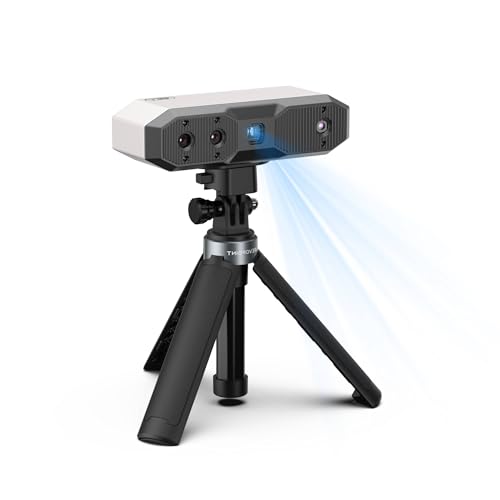
- 0.02 mm precision for fine miniature detail
- USB and Wi-Fi 6 for flexible scanning setups
- Revo Scan exports to common 3D file formats
Best For: Hobbyists scanning miniatures and small parts for 3D printing
Portable Hybrid Pick
Creality Pika Portable 3D Scanner

- 0.03 mm accuracy for detailed small-object scans
- Blue laser and NIR modes for mixed scanning needs
- Wireless design with touchscreen and swappable batteries
Best For: Users wanting one portable scanner for miniatures and larger projects
Precision Miniature Scanner

- 0.02 mm precision for tiny details
- IMU and tactile buttons improve scan stability
- USB and Wi-Fi 6 for flexible connections
Best For: Windows users scanning miniatures and other small objects
Value Detail Scanner
3DMakerpro Moose Lite Standard
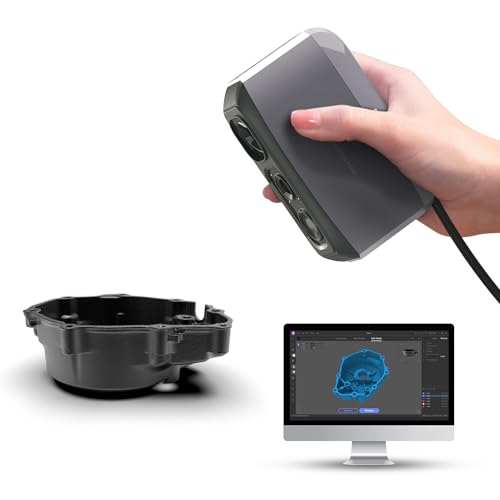
- 0.05 mm accuracy for detailed miniature models
- AI tracking and JMStudio streamline scanning
- Supports dark-scene scanning with adjustable lighting
Best For: Makers seeking a lightweight scanner for miniatures and small parts
Portable Detail Scanner

- 0.03mm claimed accuracy with blue laser detail capture
- Wireless 260g design with Wi‑Fi 6 and hot-swappable batteries
- AI hole-filling, body completion, and color retexturing
Best For: Portable scanning of miniatures, small parts, and larger mixed-material objects
All-in-One Metrology Scanner

- Near mode for tiny details and Far mode for larger objects
- Photogrammetric metrology kit supports high-accuracy measurement
- 48MP RGB camera, Wi‑Fi 6, and onboard AMOLED screen
Best For: Users who want miniature detail capture plus metrology and broader scanning versatility
Small-Format Precision Scanner

- 0.02mm claimed accuracy for miniature-level detail
- Built for small objects from 10 to 300mm
- Anti-shake, scan-back, and JMStudio export tools
Best For: Indoor scanning of miniatures and other small-format objects with fine surface detail
Wireless Handheld Pick

- 0.1mm accuracy with 30FPS scanning
- WiFi 6 wireless plus USB support
- Anti-shake tracking for easier handheld use
Best For: Beginners and hobbyists scanning miniatures and small objects
Precision Turntable Pick

- Up to 0.01 mm precision for fine detail
- Auto turntable for repeatable scans
- Multiple modes for shiny, dark, or detailed objects
Best For: Users who want highly precise miniature scans with a desktop workflow
Versatile Detail Pick

- 0.02mm accuracy with 60fps blue laser capture
- Blue laser and NIR support for many object sizes
- 24-bit color scanning with built-in texture lighting
Best For: Makers who want one scanner for miniatures and larger objects
Miniature Detail Specialist – Revopoint MINI 2 Standard
If you want a 3d scanner for miniatures that prioritizes tiny surface detail, the Revopoint MINI 2 is built around high-precision blue light capture. It’s aimed at small objects, with fast scanning, flexible connection options, and software that handles both scanning and post-processing.
Best For: Hobbyists and makers scanning miniatures, small prints, and intricate parts for 3D printing or modeling.
Pros:
- Up to 0.02 mm single-frame precision for fine miniature detail.
- Blue light helps filter ambient light for cleaner scans.
- USB and Wi-Fi 6 connectivity for plug-and-play or mobile use.
- Revo Scan exports to common 3D formats like STL, OBJ, and PLY.
Cons:
- Scanning results can vary by material and color.
- Scanning spray is recommended for better results on some surfaces.
- Best suited to small items within its stated scan volume.
For detailed small-scale work, this model is a strong fit if you value precision over broad object flexibility. Its hardware and software combination makes it a practical choice for miniature scanning workflows.
Portable Hybrid Pick – Creality Pika Portable 3D Scanner
The Creality Pika is a versatile 3d scanner for miniatures if you also want a device that can handle larger subjects later. Its dual-mode design combines blue laser detail scanning with NIR structured light, while the wireless build and touchscreen make it easy to move between setups.
Best For: Users who want one scanner for miniatures, collectibles, and larger objects without being tied to cables.
Pros:
- 0.03 mm accuracy and 0.1 mm resolution for detailed small-object scans.
- Dual-mode scanning supports both tiny items and larger subjects.
- Can scan dark and metallic surfaces without spray.
- Wi-Fi 6, touchscreen, and swappable batteries improve portability.
Cons:
- Heavier than the most compact handheld scanners at 260 g.
- For best workflow, you may need to manage multiple modes and accessories.
If your priority is flexibility as much as miniature detail, the Pika stands out. It’s especially appealing for users who want a mobile scanner that can grow with different project sizes.
Precision Miniature Scanner – Revopoint MINI 2 Advanced
If you need a 3d scanner for miniatures and want the same core MINI 2 hardware with a more limited software requirement, this version keeps the emphasis on fine detail, stable tracking, and small-object performance. It uses blue light capture, supports common export formats, and is designed for compact scanning work.
Best For: Windows users who want a precision-focused scanner for miniatures and other small objects.
Pros:
- Up to 0.02 mm single-frame precision for tiny details.
- Large single capture range helps improve tracking on small objects.
- IMU and tactile buttons make scanning easier and steadier.
- USB and Wi-Fi 6 support flexible connection options.
Cons:
- Scanning spray may still be helpful on challenging surfaces.
- Best suited to small items within its stated scan volume.
- Software support is limited to Windows in the supplied notes.
This is a focused choice if your workflow is Windows-based and centered on miniature scanning. It brings the same detail-first hardware profile as the other MINI 2 listing, while staying practical for small-model capture.
Value Detail Scanner – 3DMakerpro Moose Lite Standard
The 3DMakerpro Moose Lite is a practical 3d scanner for miniatures if you want solid detail capture and a lightweight handheld design. Its blue light system, AI tracking, and integrated JMStudio workflow are aimed at making small-object scanning smoother and more manageable.
Best For: Makers who want an affordable-feeling handheld scanner for miniatures, display pieces, and small printed parts.
Pros:
- 0.05 mm accuracy and 0.1 mm resolution for detailed models.
- AI tracking and point cloud processing help improve scanning workflow.
- Supports scanning in the dark with 9 levels of light adjustment.
- Exports OBJ, STL, PLY, and ASC for common software pipelines.
Cons:
- Lower accuracy than the highest-end miniature-focused scanners here.
- Smart Grip for phone scanning is optional, not included.
- Plastic build is lighter, but less premium than the aluminum-alloy Moose model.
For users who want a simpler path into miniature scanning, Moose Lite balances portability and detail well. It’s especially appealing if you value guided software and broad file compatibility over maximum precision.
Portable Detail Scanner – Creality Pika 3D Scanner
If you want a 3d scanner for miniatures that can also handle larger prints and mixed materials, the Creality Pika brings a lot of flexibility in a very compact body. Its 7-parallel blue laser setup is aimed at fine detail capture, while the NIR mode helps speed up broader scans without sprays for black or metal surfaces.
Best For: Users who need a lightweight, wireless scanner for small detailed parts, miniatures, and occasional larger objects.
Pros:
- 0.03mm claimed accuracy with a blue laser system for fine-detail work
- Scans tiny items from 5mm up to large objects with dual-light source support
- Wireless Wi‑Fi 6 design and 260g body make it easy to move around
- AI hole-filling and body completion can reduce cleanup time
Cons:
- Best results may require learning the workflow for different scan modes
- Entry-level phones are supported, but stronger devices should still help with smoother scanning
- Hot-swappable batteries add convenience, but also mean managing two packs
For miniature-focused scanning, the Pika stands out for combining close-range detail capture with broader versatility. It is a practical pick if you want a portable scanner that can move from small collectible parts to bigger projects without needing spray in many cases.
All-in-One Metrology Scanner – Revopoint MIRACO Plus
The Revopoint MIRACO Plus is a strong 3d scanner for miniatures if you also need metrology-style measurement and a more complete all-in-one workflow. Its near-mode capture, photogrammetric kit, and high-resolution color hardware are built for detailed work on small items while still scaling up to larger objects.
Best For: Makers and professionals who want detailed miniature scanning plus measurement tools and broader object coverage.
Pros:
- Near mode can capture tiny details, while Far mode handles larger surfaces
- Photogrammetric metrology kit adds high-accuracy measurement support
- 48MP RGB camera and flash LEDs help produce more lifelike color scans
- Built-in 6-inch AMOLED screen, 32GB RAM, and 256GB storage support an all-in-one workflow
Cons:
- Heavier than compact handheld options at 750g
- Photogrammetric kit and Revo Design software add complexity to the workflow
- The software note indicates compatibility limits, so system matching matters
For miniature scanning, the MIRACO Plus is less about pure simplicity and more about precision, workflow depth, and flexibility. It makes sense if your projects range from small detailed parts to larger items and you want measurement-focused tools in the same package.
Small-Format Precision Scanner – 3DMakerpro Seal Lite
If your priority is a 3d scanner for miniatures and other small objects, the 3DMakerpro Seal Lite is built around that use case. Its blue LED structured-light system targets fine surface detail, and the small-format scanning range is aimed at objects from 10 to 300mm.
Best For: Indoor scanning of miniatures, figurines, and other small-format objects where fine detail matters.
Pros:
- 0.02mm claimed accuracy for tiny dents, edges, and surface texture
- Designed specifically for small objects from 10 to 300mm
- Includes scan-back and anti-shake features for steadier handheld use
- JMStudio software supports alignment, error correction, and export for 3D printing
Cons:
- Indoor use is suggested, so it is less flexible for outdoor scanning
- Monochrome texture only, with no full color capture noted
- Handheld operation has a learning curve and wants a relatively powerful PC
For miniature work, the Seal Lite is the most specialized of the three. It focuses on small-format accuracy rather than broad all-purpose scanning, which makes it a very practical choice if your main goal is detailed prints and indoor capture.
Wireless Handheld Pick – Creality CR-Scan Ferret Pro
If you want a 3d scanner for miniatures that balances portability with solid detail capture, the Creality CR-Scan Ferret Pro is built for an easier handheld workflow. Its 0.1mm accuracy, 30FPS scanning, and anti-shake tracking make it a practical option for small models, while WiFi 6 support adds flexibility when you do not want to stay tethered to a desk.
Best For: Hobbyists and beginners who want a wireless handheld scanner for miniatures, figurines, and other small-to-medium objects.
Pros:
- Up to 0.1mm accuracy and 0.16mm resolution for detailed scans
- 30FPS capture with anti-shake tracking for smoother handheld use
- WiFi 6 wireless transmission plus USB support for flexible workflows
- Exports OBJ, STL, and PLY for 3D printing and design work
Cons:
- Not ideal for highly reflective, transparent, or extremely dark surfaces
- Performance depends on device compatibility and system requirements
- Best results may take some practice with handheld scanning technique
Overall, the Ferret Pro is a well-rounded choice if you want mobility and easy setup more than industrial-grade precision. It is especially appealing for casual miniature scanning where speed, convenience, and compatibility matter.
Precision Turntable Pick – Revopoint MetroX Pro
For a 3d scanner for miniatures where fine detail matters, the Revopoint MetroX Pro leans into precision and controlled scanning modes. Its industrial-grade blue laser system, up to 0.01 mm single-frame precision, and automatic turntable support make it a strong fit when you want highly detailed results and a more repeatable workflow.
Best For: Users who want high-precision miniature scans with turntable automation and advanced surface-handling options.
Pros:
- Up to 0.01 mm single-frame precision and 0.02 mm accuracy
- Multiple scanning modes, including cross-line lasers and full-field structured light
- Auto turntable scanning for one-click, more repeatable capture
- Handles shiny or dark surfaces in laser modes without scanning spray
Cons:
- Heavier and more desktop-oriented than handheld consumer scanners
- Some software tools are paid and sold separately
- Best experience may require a more structured scanning setup
The MetroX Pro is the strongest fit here if your priority is precision over portability. For miniature scanning, its fine-detail capture and automated workflow can be a major advantage when you want consistent, high-quality output.
Versatile Detail Pick – Creality CR-Scan Raptor
If you want a 3d scanner for miniatures that can also handle larger models, the Creality CR-Scan Raptor stands out for flexibility. It combines blue laser and NIR scanning, up to 0.02mm accuracy, and 60fps blue laser capture, giving you a broad mix of speed, detail, and object-size coverage in one handheld device.
Best For: Makers who need a versatile scanner for miniatures, figurines, and a wide range of object sizes.
Pros:
- Dual blue light and NIR scanning for small, medium, and large objects
- Up to 0.02mm accuracy with 0.1mm fine-detail resolution
- 60fps blue laser scanning for faster capture
- 24-bit full-color scanning with built-in lighting for more realistic textures
Cons:
- Some system requirements are fairly demanding for best performance
- Android use requires compatible hardware and Wi-Fi 6 support
- Handheld scanning still benefits from practice and stable movement
The Raptor is the most flexible option in this group if you want one scanner that can do miniatures and much more. It is a strong pick for users who value color capture, speed, and broad object-size compatibility in a single package.
How We Picked the Best 3d Scanner for Miniatures
For miniatures, we prioritized accuracy, close-range performance, consistent tracking on small surfaces, and scan workflows that reduce cleanup time. We also favored scanners with strong software support, stable handheld operation, and features that help with hard-to-capture details such as glossy paint, thin parts, and deep recesses.
Quick Comparison
In this category, the best choice usually depends on what you scan most often. Blue laser scanners tend to excel at sharp edges and small geometry, while structured-light and hybrid systems can be more convenient for faster capture and broader object handling. If you want the cleanest miniature detail, look closely at high-accuracy models with short working distances. If you want speed and flexibility, a hybrid handheld scanner may be a better fit.
Key Buying Factors for a 3d Scanner for Miniatures
Accuracy and Detail
Miniatures expose weaknesses quickly, so nominal accuracy matters. Look for scanners with tight stated accuracy and resolution, but remember real-world results also depend on lighting, software, and the object’s finish. Small features like weapons, facial details, and bas-relief often benefit from laser-based capture.
Tracking and Stability
Good tracking reduces duplicate surfaces and missing sections. Anti-shake tools, faster frame rates, and dependable markers or texture tracking can make a big difference when scanning tiny models by hand.
Surface Type
Painted, matte miniatures are usually easier to scan than shiny resin or translucent parts. If your collection includes reflective pieces, choose a scanner with better surface handling and expect to use scanning spray or matte prep when needed.
Software and Export Workflow
A strong 3d Scanner for Miniatures should produce usable meshes with minimal cleanup. Check whether the software supports alignment, hole filling, texture capture, and common export formats for editing or 3D printing.
Size and Ease of Use
For tabletop figures and small collectibles, compact scanners and all-in-one designs can simplify setup. If you scan often, comfort and workflow speed matter almost as much as raw specs.
Who Should Buy Which 3d Scanner for Miniatures?
If you want maximum fine-detail capture for small figures, choose a high-accuracy scanner with laser-based or close-range structured-light scanning. If you need a more versatile tool for both miniatures and larger objects, a hybrid model is the safer pick. Beginners should look for simple software and stable tracking, while advanced users may prefer the fastest, most precise models even if they require more careful setup.
For most buyers, the best option is the one that matches your object size, surface finish, and tolerance for post-processing. A well-chosen miniature scanner should save time, preserve detail, and fit smoothly into your printing or modeling workflow.