Choosing the right 3D scanner for reverse engineering can save hours of cleanup and help you capture parts with the precision your workflow demands.
Below, we focus on scanners that balance accuracy, ease of use, scan speed, and software support for real-world engineering, product design, and 3D printing tasks.
Best 10 3d Scanner for Reverse Engineering Picks for 2026
Wireless Pro Reverse Engineering Scanner
Shining3D EinScan Rigil Wireless 3D Scanner

- True wireless standalone, Wi‑Fi 6, and wired PC modes
- 0.04mm accuracy with 50 laser lines
- Marker-free scanning for dark or reflective parts
Best For: Teams needing a portable, high-accuracy scanner for reverse engineering and field use
Metrology-Grade Automotive Scanner
Creality Raptor Pro 3D Scanner

- 22 cross lines plus 7 parallel blue laser lines
- Up to 0.02mm accuracy in fine-detail mode
- Fast handheld capture with anti-shaking design
Best For: Automotive and engineering projects that need fast, accurate reverse engineering scans
Industrial Accuracy Scanner
Revopoint MetroY Ultra 3D Scanner

- Up to 0.01 mm single-frame precision
- Five scan modes for small to medium parts
- No-spray scanning and wireless Wi‑Fi 6 control
Best For: Industrial inspection and reverse engineering requiring tight tolerances and flexible scan modes
Portable Dual-Range Scanner
Creality Otter Lite Basic 3D Scanner

- 0.05mm resolution with close- and long-range modes
- Captures full-color texture with RGB and IR cameras
- Lightweight 235g body with included starter kit
Best For: Makers and hobbyists needing a portable, easy-to-use reverse engineering scanner
Editor’s Choice
Creality Sermoon S1 for Engineering Printing
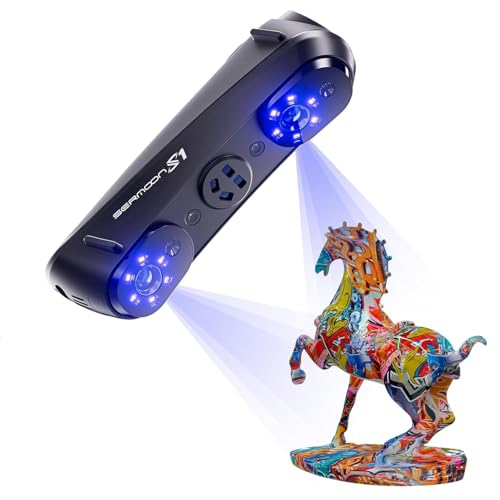
- 5 mm to 4 m scan range for tiny parts and large objects
- Triple blue-laser modes for speed, detail, and deep holes
- 0.02 mm accuracy with AI-assisted workflow tools
Best For: Mixed reverse-engineering projects that range from small precision parts to large assemblies
Premium Precision Pick
Revopoint MetroX Pro Blue Laser Scanner

- Up to 0.01 mm precision for detail-heavy reverse engineering
- Four scanning modes, including structured light and auto turntable
- Handles shiny or dark surfaces without spray in laser modes
Best For: Precision-driven inspection, modeling, and reverse engineering of detailed parts
Workflow Value Pick
Creality Sermoon S1 with NIR Structured Light

- 0.02 mm accuracy with 90 FPS capture speed
- Adds NIR structured light for large marker-free scans
- CrealityScan software supports guided processing and editing
Best For: Fast reverse-engineering workflows that also need large-object and body scanning
Industrial-Grade Wireless Scanner
Creality Sermoon S1 Wireless 3D Scanner
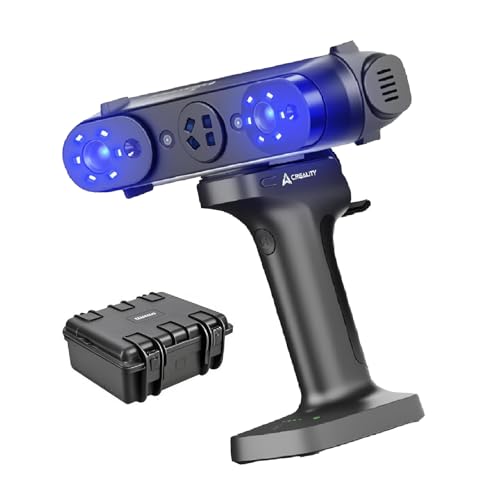
- 0.02mm accuracy for detailed reverse engineering
- Wireless scanning with Scan Bridge support
- Five modes for small parts and large objects
Best For: Precision reverse engineering and mixed indoor/outdoor scanning
Portable Standalone Scanner
Creality Sermoon P1 Handheld Wireless Scanner

- Standalone mode with built-in 6-inch touchscreen
- Blue laser and infrared options for different jobs
- 0.02mm accuracy for reverse engineering
Best For: Portable reverse engineering and modified vehicle scanning
Fast Full-Color Scanner
Creality CR-Scan Raptor Handheld 3D Scanner

- 0.02mm blue-laser accuracy for fine details
- 24-bit color scanning with enhanced lighting
- Anti-shake tracking for smoother handheld use
Best For: Reverse engineering and 3D printing prep across many object sizes
Wireless Pro Reverse Engineering Scanner – Shining3D EinScan Rigil Wireless 3D Scanner
If you need a 3d scanner for reverse engineering that can move between the lab, shop floor, and field, the Shining3D EinScan Rigil is built around flexibility. Its wireless, all-in-one design, hybrid laser plus infrared scanning, and marker-free operation make it a strong fit for detailed capture of parts, prototypes, and reflective surfaces.
Best For: Professionals who want a portable, wireless scanner for reverse engineering, manufacturing, and outdoor fieldwork.
Pros:
- Wireless standalone, wireless PC, and wired PC scanning modes
- 0.04mm accuracy with 50 laser lines and hybrid laser/VCSEL infrared scanning
- Can scan dark or shiny objects without spray, including reflective metal parts
- Includes onboard computing, 1TB SSD, and a 2K AMOLED touchscreen
Cons:
- Heavier than compact handheld scanners at 28 pounds listed weight
- More advanced feature set may be more than casual users need
Overall, the Rigil is a serious option if you want strong accuracy, marker-free workflow, and true wireless convenience in one system. It stands out most when reverse engineering demands speed, portability, and reliable capture on difficult surfaces.
Metrology-Grade Automotive Scanner – Creality Raptor Pro 3D Scanner
The Creality Raptor Pro is a 3d scanner for reverse engineering aimed at medium to large objects where speed and precision both matter. With blue laser lines, NIR mode, and one-shot 3D imaging, it is designed to capture automotive parts, modified components, and larger surfaces with less scanning downtime.
Best For: Automotive and engineering users who need fast, detailed scans of medium to large parts.
Pros:
- 22 cross laser lines and 7 parallel blue laser lines for different part sizes
- Up to 0.02mm accuracy in the 7-line blue laser mode
- Fast capture at up to 60 fps and 660,000 points per second
- Lightweight 405g body with software that includes tutorials and editing tools
Cons:
- Best fit is clearly centered on automotive and engineering workflows
- Feature list is broad, so setup may take some learning for first-time users
For users who want a handheld scanner that balances speed, stability, and detailed capture, the Raptor Pro is well positioned. Its laser setup and software tools make it especially useful for iterative reverse engineering work.
Industrial Accuracy Scanner – Revopoint MetroY Ultra 3D Scanner
If you are shopping for a 3d scanner for reverse engineering with industrial-level detail, the Revopoint MetroY Ultra is built for tight tolerances and flexible part capture. It combines multiple laser and structured-light modes with wireless control, making it practical for small parts, medium objects, and inspection-style workflows.
Best For: Users who need high-precision scanning for industrial inspection, reverse engineering, and detailed part reproduction.
Pros:
- Up to 0.01 mm single-frame precision and strong volumetric accuracy
- Five scanning modes, including cross-line, parallel-line, single-line, and structured light
- Up to 90 fps scanning speed with NVIDIA GPU support
- No-spray scanning for dark, shiny, and metallic surfaces
Cons:
- Higher system requirements than simpler consumer scanners
- Best performance depends on compatible GPU or strong PC hardware
The MetroY Ultra is a compelling choice when accuracy and workflow flexibility matter more than basic ease of use. Its combination of precision, speed, and wireless control makes it well suited to serious reverse engineering jobs.
Portable Dual-Range Scanner – Creality Otter Lite Basic 3D Scanner
The Creality Otter Lite Basic is a practical 3d scanner for reverse engineering when you want a lightweight handheld tool that can handle both small details and larger objects. Its dual-range scanning, color texture capture, and plug-and-play kit make it a flexible option for DIY work and everyday scanning tasks.
Best For: Makers and hobbyists who want a portable scanner for reverse engineering, 3D printing, and textured model capture.
Pros:
- 0.05mm resolution with close-range and long-range scanning modes
- Captures full-color texture with RGB and infrared cameras
- Very lightweight at 235g for easy portability
- Includes turntable, calibration board, markers, and carrying case
Cons:
- Less focused on industrial-grade specs than the higher-end options here
- Best for smaller to mid-size scanning tasks rather than heavy production workflows
As an entry-friendly handheld scanner, the Otter Lite Basic offers a useful mix of precision, portability, and accessories. It is a strong fit when you want a straightforward reverse engineering setup without a bulky system.
Editor’s Choice – Creality Sermoon S1 for Engineering Printing
If you want a 3d scanner for reverse engineering that can move from tiny parts to large assemblies, the Creality Sermoon S1 is built for exactly that kind of mixed workflow. Its 5 mm to 4 m scan range, triple blue-laser modes, and 0.02 mm accuracy make it a practical option for engineering, restoration, and production-focused scanning.
Best For: Users who need one scanner for small precision parts, deep features, and large reverse-engineering projects.
Pros:
- Wide scanning range covers everything from micro details to automotive or architectural-scale objects.
- Triple blue-laser setup includes 34-line, 7-line, and single-line modes for speed and detail.
- 0.02 mm accuracy and 0.08 mm/m volumetric precision suit reverse engineering and inspection.
- Marker-free scanning and AI-assisted software help streamline setup and cleanup.
Cons:
- Recommended Windows and macOS hardware requirements are fairly demanding.
- Best results may require a capable workstation for processing large scans.
Overall, the Sermoon S1 is a flexible engineering scanner when you need both range and precision in one handheld unit. It stands out for users who regularly switch between detailed part capture and bigger reverse-engineering jobs.
Premium Precision Pick – Revopoint MetroX Pro Blue Laser Scanner
For buyers seeking a 3d scanner for reverse engineering with a strong focus on measurement-grade detail, the Revopoint MetroX Pro is positioned as a precision-first option. Its blue laser system, multiple scan modes, and up to 0.01 mm single-frame precision make it a compelling fit for industrial measurement and high-detail modeling.
Best For: Precision-focused users who want industrial-style scanning for detailed parts, inspection, and modeling.
Pros:
- Up to 0.01 mm single-frame precision and 0.02 mm single-frame accuracy.
- Multiple scan modes include cross-line lasers, parallel lines, full-field structured light, and auto turntable scanning.
- Can scan shiny or dark surfaces without spray in cross-line or parallel-line modes.
- Revo Mirror streaming lets you monitor scans in real time on a phone or tablet.
Cons:
- Some reverse-engineering and measurement software is sold separately.
- Windows-only support applies to certain paid software tools.
The MetroX Pro is the strongest choice here if your priority is precision and controlled scanning modes. It is especially attractive for inspection-driven workflows where detail capture and measurement accuracy matter most.
Workflow Value Pick – Creality Sermoon S1 with NIR Structured Light
This version of the Sermoon S1 is a practical 3d scanner for reverse engineering if you want strong laser performance plus an added structured-light mode for larger subjects. It combines metrology-grade 0.02 mm accuracy, 90 FPS scanning, and software tools aimed at faster capture-to-model workflows.
Best For: Users who want fast scanning, deep-feature capture, and software that helps move into design or inspection tools.
Pros:
- Three blue-laser modes help scan deep holes, narrow gaps, and larger surfaces efficiently.
- 2 NIR structured light mode adds marker-free scanning for large objects and human bodies.
- Up to 90 FPS and 1,428,000 points per second support fast data capture.
- CrealityScan includes tutorials, one-click processing, point cloud editing, and advanced tools.
Cons:
- Requires a capable Windows or macOS system for the recommended workflow.
- Best integrations with Geomagic and Verisurf depend on compatible external software.
This Sermoon S1 variant is appealing if you value speed, software guidance, and flexibility across part sizes. It fits reverse-engineering users who want a scanner that can handle both technical parts and broader scanning tasks.
Industrial-Grade Wireless Scanner – Creality Sermoon S1 Wireless 3D Scanner
If you want a 3d scanner for reverse engineering that can also handle larger objects and color capture, the Creality Sermoon S1 is built for demanding workflows. It combines blue laser and structured light modes, wireless scanning via Scan Bridge, and strong outdoor performance for users who need detail and flexibility in one unit.
Best For: Precision reverse engineering, industrial design, and mixed indoor/outdoor scanning.
Pros:
- Up to 0.02mm detail accuracy and 0.02mm+0.08mm/m volume accuracy
- Five scanning modes, including 7-line, 34-line, and structured light options
- Wireless scanning support with the included Scan Bridge
- Color texture mapping and 12 white LED RGB fill lights
Cons:
- Requires a capable Windows or macOS system to run smoothly
- Heavier setup than a basic consumer scanner
- Best results depend on matching the right mode to the object
The Sermoon S1 stands out if you need a versatile scanner that can move from small parts to large scenes without giving up precision. Its mix of speed, outdoor tolerance, and multi-mode scanning makes it a strong fit for serious reverse engineering work.
Portable Standalone Scanner – Creality Sermoon P1 Handheld Wireless Scanner
The Creality Sermoon P1 is a practical 3d scanner for reverse engineering when you want high precision without being tied to a computer. Its dual blue laser and infrared system, built-in touchscreen, and standalone mode make it a flexible choice for field work, vehicle scanning, and on-the-go capture.
Best For: Portable reverse engineering, modified vehicles, and standalone scanning workflows.
Pros:
- Dual scanning tech with blue laser and infrared for different object types
- Standalone operation with a 6-inch touchscreen and onboard OS
- 0.02mm accuracy in blue laser mode for fine-detail capture
- Includes calibration board, spare battery, markers, and other accessories
Cons:
- More complex than entry-level scanners
- Advanced workflows may still benefit from PC-connected use
- Best suited to users who can take advantage of its pro-level features
If you need mobility and control, the Sermoon P1 is designed to shorten the path from scan to usable model. It is especially appealing for users who want a scanner that can work independently, then scale up to PC software when the job calls for it.
Fast Full-Color Scanner – Creality CR-Scan Raptor Handheld 3D Scanner
The Creality CR-Scan Raptor is a strong 3d scanner for reverse engineering if you want speed, color, and wide object support in a handheld format. With blue laser and NIR scanning, anti-shake tracking, and 24-bit color capture, it is aimed at users who need reliable geometry and practical workflow simplicity.
Best For: Reverse engineering, 3D printing prep, and scanning objects from small parts to large assemblies.
Pros:
- 7 parallel blue laser lines with up to 0.02mm accuracy
- Supports very small and very large objects, from 5×5×5mm to 2000×2000×2000mm
- Anti-shake tracking and autofocus help keep scans stable
- 24-bit full-color scanning with 12 circular LED texture lights
Cons:
- NIR mode is slower than blue laser scanning
- Best system performance requires capable hardware
- Advanced users may want to fine-tune workflow settings
The Raptor is a balanced option for users who want professional-looking scans without adding a lot of setup friction. Its combination of speed, color capture, and broad object-size support makes it especially useful for practical reverse engineering tasks.
How We Picked the Best 3d Scanner for Reverse Engineering
For a 3d Scanner for Reverse Engineering, the most important factors are repeatable accuracy, reliable tracking, workable scan volume, and software that makes mesh cleanup manageable. We prioritized models that are suitable for engineering parts, mechanical components, and detailed objects that need faithful dimensional capture.
We also looked at practical details such as handheld usability, wireless or standalone operation, blue laser or structured light performance, and whether the scanner is better suited to small precision parts or larger assemblies.
Quick Comparison
In general, high-accuracy laser scanners are the best fit when dimensional fidelity matters most. Portable wireless scanners are better for field use and larger objects, while hybrid systems with structured light or infrared can improve flexibility on mixed surfaces and different part sizes.
If you need a scanner mainly for CAD recreation and mechanical fitment, prioritize accuracy and scan stability. If you need speed and convenience for fast iteration, look for strong tracking, higher frame rates, and simpler setup.
Key Buying Factors for a 3d Scanner for Reverse Engineering
Accuracy and Resolution
Look for published accuracy specs that match your tolerance requirements. For reverse engineering, small differences can matter, so sub-0.1 mm performance is often a better starting point than general-purpose scanning claims.
Object Size and Scan Range
Some scanners are optimized for tiny precision parts, while others handle medium or large objects more comfortably. Make sure the scanner’s working distance and capture range fit the kinds of parts you reverse engineer most often.
Surface Handling and Tracking
Shiny, dark, and feature-poor surfaces can challenge any scanner. Blue laser systems often perform well on demanding surfaces, while anti-shake features and strong tracking help reduce missed data and rescans.
Software and Export Workflow
The best hardware still needs usable software. Check for mesh repair tools, alignment options, export formats, and CAD-friendly workflows, especially if you move scans into design or inspection software.
Portability and Setup
Wireless, handheld, and standalone modes can make a big difference if you scan on-site or move between jobs. For shop-based workflows, a more controlled setup may be worth it for consistency.
Who Should Buy Which 3d Scanner for Reverse Engineering?
Choose a premium high-accuracy scanner if you need the best dimensional results for engineering parts, fit checks, or professional reverse engineering. Pick a faster, more portable model if you value convenience for frequent scanning sessions or larger objects.
If you are a maker, small shop, or design enthusiast, a midrange scanner with solid accuracy and easy software may deliver the best balance of price and capability. For advanced users, higher-end laser systems are the strongest choice when scan quality is the priority over simplicity.