If you want to track what you’re actually breathing, an air monitor with particulate sensing is one of the most useful home upgrades you can buy. It can help you spot spikes from cooking, cleaning, pets, wildfire smoke, or poor ventilation before they become a bigger problem.
In this roundup, we focus on models that balance accuracy, visibility, and everyday usefulness so you can choose the right monitor for bedrooms, living spaces, offices, or whole-home awareness.
Best 10 Air Quality Monitors with Particulate Sensor Picks for 2026
Smart Home PM2.5 Monitor
GoveeLife Smart Air Quality Monitor with PM2.5

- PM2.5, temperature, and humidity readings
- Two-second data refresh with LED quality levels
- Wi-Fi/Bluetooth monitoring and data export
Best For: Smart-home users who want a compact PM2.5 monitor with automation
Outdoor Particle Sensor
Ambient Weather PM2.5 Wireless Monitor
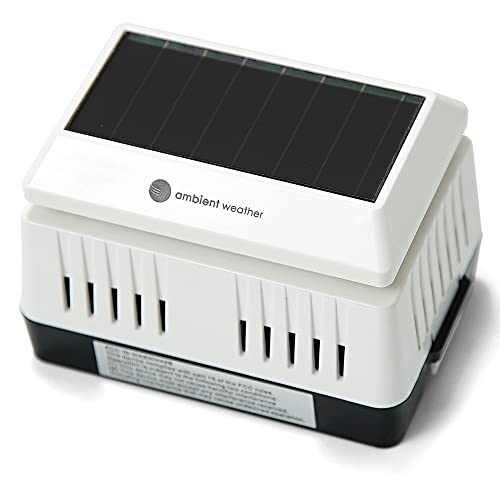
- Sensirion-based PM2.5 and pollution sensing
- Solar powered with battery backup
- IPX3 water resistance and connected alerts
Best For: Monitoring outdoor PM2.5 and local pollution around the home
Full-Readout Air Monitor

- Tracks PM1.0, PM2.5, PM10, CO2, HCHO, and TVOC
- Large 7-inch display with three brightness levels
- Seven AQI alert buzzers with mute control
Best For: Users who want a large-display indoor monitor with broad pollutant coverage
Portable Particle Counter

- PM2.5 and PM10 laser sensor readings
- Portable handheld design with back stand
- 12-hour histogram for trend tracking
Best For: Portable spot-checking of PM2.5 and PM10 indoors or outdoors
Portable All-in-One Air Tracker
16-in-1 Indoor Air Quality Monitor

- Tracks PM1.0, PM2.5, PM10, CO2, TVOC, and HCHO
- Real-time updates every 1.5 seconds with HD color screen
- Portable design with Type-C charging and 4-5 hour runtime
Best For: Portable indoor checks across rooms, cars, bedrooms, and offices
Smart Home Air Monitor
Amazon Smart Air Quality Monitor

- Measures PM2.5, VOCs, CO, humidity, and temperature
- Alexa alerts, announcements, and smart routines
- Plug-in setup with app score and color-coded LED
Best For: Alexa homes that want simple monitoring and automation
High-Alert Indoor Monitor
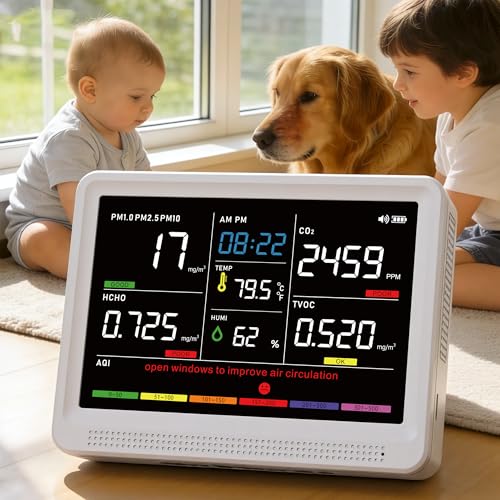
- Tracks PM1.0, PM2.5, PM10, CO2, HCHO, and TVOC
- Large 5.5-inch display with 7-AQI alerts
- Cordless operation with up to 10 hours battery life
Best For: People who want a display-heavy monitor with audible alerts and particulate tracking
Temtop LKC-1000S+
7-in-1 Portable Air Quality Monitor

- Measures PM2.5, PM10, HCHO, VOCs, temperature, humidity, and AQI.
- Includes 12-hour trend histogram and Excel data export.
- Portable battery mode plus continuous USB power.
Best For: Trend tracking and renovation monitoring without an app
BREATHE Gen 2 Airmonitor Plus

- Tracks CO₂, PM1, PM2.5, PM10, TVOC, HCHO, temp, and humidity.
- Free app with alerts, graphs, and 90-day history.
- Laser particle sensing with NDIR CO₂ measurement.
Best For: Connected indoor monitoring with long-term history
Smart Home PM2.5 Monitor – GoveeLife Smart Air Quality Monitor with PM2.5
If you want air quality monitors with particulate sensor support for a living room, bedroom, or office, the GoveeLife H5106 focuses on the basics that matter most: PM2.5, temperature, and humidity. It updates quickly, shows an easy-to-read LED quality indicator, and can tie into other GoveeLife devices for automated responses when air conditions change.
Best For: Smart-home users who want a compact PM2.5 monitor with app-based tracking and device automation.
Pros:
- Measures PM2.5 plus temperature and humidity in one compact display.
- Two-second refresh helps show recent changes quickly.
- Supports Bluetooth or Wi-Fi monitoring with 13-day graphs and up to 2 years of data export.
- Can connect with compatible GoveeLife purifiers, humidifiers, fans, and heaters for automation.
Cons:
- Requires constant power and has no built-in battery.
- 2.4G Wi-Fi is needed for time display features.
- Works only with compatible GoveeLife devices for automation.
This is a strong pick if you want a straightforward particulate monitor with smart-home integration and long-term data storage. It is less feature-heavy than a full indoor lab-style monitor, but it covers the most useful home readings well.
Outdoor Particle Sensor – Ambient Weather PM2.5 Wireless Monitor
Ambient Weather PM2.5 Wireless Outdoor Particulate Monitor | IPX3 water resistant, Solar powered
Check Price On AmazonThis Ambient Weather option is built for people who need air quality monitors with particulate sensor capability outside or around the home. It measures fine particulate pollution with a Sensirion particle sensor, sends data to the Ambient Weather Network, and supports alerts plus voice assistant integration through connected services.
Best For: Monitoring outdoor PM2.5 and local air pollution near a home or garden.
Pros:
- Uses a Sensirion particle sensor for PM2.5 and air pollution monitoring.
- Solar powered with battery backup for continuous outdoor use.
- IPX3 water resistance suits exposed placement.
- Can send data to Ambient Weather Network and connect with Google Home or Amazon Alexa.
Cons:
- Designed for outdoor use, so it is not the best fit for indoor room-by-room monitoring.
- Needs a compatible Ambient Weather setup to get the most from alerts and connected features.
If your main goal is tracking outdoor particulate levels instead of indoor comfort metrics, this is the more specialized choice. Its solar power and weather-ready design make it practical for long-term placement near patios, yards, or home exteriors.
Full-Readout Air Monitor – 16 in 1 Indoor 7" CO2 Monitor
For buyers comparing air quality monitors with particulate sensor features, this YNAK model goes far beyond PM2.5 alone. It tracks CO2, PM1.0, PM2.5, PM10, HCHO, TVOC, temperature, humidity, AQI, and time on a large 7-inch display, making it useful when you want a broad indoor snapshot at a glance.
Best For: Users who want a large-display indoor monitor with broad multi-pollutant coverage and audible alerts.
Pros:
- Measures PM1.0, PM2.5, and PM10 along with CO2, HCHO, TVOC, temperature, and humidity.
- Large 7-inch LED screen is easy to read and offers three brightness levels.
- Includes seven AQI alert buzzers plus a mute button.
- Uses external high-precision sensors and direct air sampling for responsive readings.
Cons:
- Larger and more feature-rich than a simple particulate-only monitor.
- Its many alert functions may be more than some buyers need.
This is a practical choice if you want one indoor unit to cover particles, gases, and general comfort readings. The big screen and alert system make it especially useful in busy homes or shared spaces.
Portable Particle Counter – Temtop P600 PM2.5 Monitor
The Temtop P600 is a focused option for shoppers who want air quality monitors with particulate sensor performance in a portable format. It uses a second-generation PM2.5 laser sensor and also displays PM10, with a histogram view that helps you spot trends over the past 12 hours.
Best For: Portable spot-checking of PM2.5 and PM10 indoors or outdoors.
Pros:
- Measures PM2.5 and PM10 with a second-generation laser sensor.
- Portable handheld design with a back stand for flexible use.
- Histogram display stores and shows the past 12 hours of data.
- Industrial-grade sensor is rated for more than 20,000 hours of lifespan.
Cons:
- Focuses on particulate readings rather than broader indoor air metrics.
- Does not include the app-connected smart-home features found on some alternatives.
If you mainly care about particle counts and want something easy to move from room to room, the P600 keeps the experience simple. Its trend chart and durable sensor design make it a strong pick for hands-on monitoring.
Portable All-in-One Air Tracker – 16-in-1 Indoor Air Quality Monitor
If you want air quality monitors with particulate sensor coverage in a compact package, this 16-in-1 model tracks PM1.0, PM2.5, PM10, CO2, TVOC, HCHO, temperature, and humidity in one device. It’s designed for users who want a broad indoor snapshot without juggling multiple meters, and the real-time sampling updates every 1.5 seconds.
Best For: Homes, bedrooms, offices, cars, and anyone who wants a portable multi-parameter air monitor.
Pros:
- Tracks PM1.0, PM2.5, and PM10 alongside gases, temperature, and humidity
- HD color screen with color-coded readings for quick at-a-glance checks
- Single-tap controls and adjustable audio prompt for simpler daily use
- Portable design works well across rooms, vehicles, and other indoor spaces
Cons:
- Battery life is listed at 4-5 hours, so it may need regular charging
- Not a smart app-connected monitor, so no phone alerts or automations
- Best suited to short-term portable use rather than always-on monitoring
This is a practical pick if you want broad pollutant coverage and a readable display in one unit. It focuses on hands-on monitoring and mobility rather than smart-home integration.
Smart Home Air Monitor – Amazon Smart Air Quality Monitor
Among air quality monitors with particulate sensor support, this Alexa-compatible unit focuses on easy indoor monitoring and smart notifications. It tracks PM2.5, VOCs, CO, humidity, and temperature, then turns that data into a color-coded LED indicator, app-based air quality score, and alerts when conditions drop.
Best For: Alexa users who want simple smart monitoring and automatic climate-control routines.
Pros:
- Tracks PM2.5, VOCs, carbon monoxide, humidity, and temperature
- Works with Alexa for notifications, announcements, and routines
- Color-coded LED plus detailed air quality score in the Alexa app
- Easy setup with a plug-in design and app-based setup flow
Cons:
- Only measures PM2.5, not PM1.0 or PM10
- Requires Alexa ecosystem for the strongest feature set
- Less portable than battery-powered monitors because it plugs in
This model is a strong fit if you want particulate tracking tied into a smart home setup. It is especially useful when you want the monitor to trigger fans, purifiers, or dehumidifiers automatically.
High-Alert Indoor Monitor – 16 in 1 Air Quality Monitor
If you’re comparing air quality monitors with particulate sensor readings and want a screen-first design, this 16-in-1 unit covers CO2, PM2.5, PM1.0, PM10, HCHO, TVOC, temperature, humidity, AQI, and time. It uses external high-precision sensors, a large 5.5-inch display, and real-time 7-AQI alerts to make ongoing indoor monitoring straightforward.
Best For: Users who want a display-heavy monitor with particulate readings and audible alerts.
Pros:
- Measures PM1.0, PM2.5, and PM10 plus CO2, HCHO, TVOC, and more
- External high-precision sensors for direct air sampling
- 5.5-inch LED display with three brightness settings
- 2500mAh battery supports up to 10 hours of cordless use
Cons:
- The 16-in-1 claim includes alert functions, not 16 measured gases/sensors
- Requires careful sensor handling to maintain accuracy
- Not a smart connected monitor with app-based controls
This is a good choice if you want visible readings, portable cordless use, and built-in alarms in one device. It leans more toward immediate on-device monitoring than app-based convenience.
Temtop LKC-1000S+ – 7-in-1 Portable Air Quality Monitor
If you want air quality monitors with particulate sensor support plus formaldehyde tracking, the Temtop LKC-1000S+ is built for detailed home, office, or renovation checks. It measures PM2.5, PM10, HCHO, VOCs, temperature, humidity, and AQI in one unit, so you can watch both particle spikes and chemical changes as conditions shift.
Best For: Users who want a portable, no-app monitor for trend spotting, renovation checks, and exporting data to Excel.
Pros:
- Tracks 7 parameters, including PM2.5, PM10, HCHO, VOCs, temperature, humidity, and AQI.
- Laser particle sensor and electrochemical HCHO sensor are designed for more accurate readings.
- 12-hour trend histogram helps identify pollution sources and ventilation impact.
- USB data export for 3 months of continuous logging without a subscription or app.
Cons:
- Battery life is limited to 6-8 hours for portable use.
- It does not detect gas or CO leaks.
- Needs a 10-minute warm-up after moving between temperature extremes for best stability.
This is a strong choice if you care most about seeing particulate and formaldehyde changes over time rather than just a single reading. Its mix of exportable data, clear display, and portable-plus-plug-in design makes it practical for hands-on air monitoring.
BREATHE Gen 2 Airmonitor Plus – CO₂, PM & App Monitoring
Among air quality monitors with particulate sensor features, the BREATHE Airmonitor Plus Gen 2 stands out for combining CO₂, particle sensing, and app-based history in one compact unit. It tracks PM1, PM2.5, PM10, TVOC, formaldehyde, temperature, and humidity, making it useful when you want to understand how ventilation, cooking, and occupancy affect indoor air.
Best For: Buyers who want a connected indoor monitor with CO₂, particulate data, and long-term app history.
Pros:
- 8-in-1 monitoring includes CO₂, PM1, PM2.5, PM10, TVOC, HCHO, temperature, and humidity.
- Free app support with Wi-Fi, alerts, graphs, and up to 90 days of history.
- Laser particle sensing plus NDIR CO₂ measurement for a fuller indoor air picture.
- Rechargeable design offers up to 6 hours of portable use and USB-C continuous power.
Cons:
- Portable battery runtime is limited to around 6 hours.
- Requires 2.4 GHz Wi-Fi for app connectivity.
- Setup is more involved than a basic standalone display-only monitor.
If you want ongoing visibility into both particles and gases, this model is especially useful for tracking patterns over time. The app history and export options make it easier to review changes instead of relying on one-off readings.
Sainlogic 16-in-1 Indoor Monitor – Large Display Air Tester
If you want air quality monitors with particulate sensor coverage and a large, easy-to-read screen, the Sainlogic indoor monitor is a straightforward option. It tracks CO2, PM1.0, PM2.5, PM10, HCHO, TVOC, temperature, humidity, and AQI, with quick-refresh readings that make it practical for checking rooms throughout the day.
Best For: Families or office users who want a large-display monitor with multiple alerts and no app required.
Pros:
- Monitors 9 key readings, including PM1.0, PM2.5, PM10, CO2, HCHO, and TVOC.
- 7 user-defined alert thresholds with tri-color status indicators.
- Large 7.2-inch display with adjustable brightness for easy viewing across a room.
- Rechargeable battery supports up to 8 hours of cordless use.
Cons:
- Does not offer app or Wi-Fi connectivity.
- Battery life is limited compared with plug-in-only monitors.
- Best suited to indoor use rather than advanced reporting workflows.
This model is a good fit if you want simple, visible air status without extra setup. Its strength is fast, room-to-room checking with clear alerts rather than deep data analysis or cloud features.
How We Picked the Best Air Quality Monitors with Particulate Sensor
We prioritized Air Quality Monitors with Particulate Sensor capabilities that deliver practical, readable data for daily use. Our shortlist emphasizes PM2.5 and related particle measurements, clear displays or app support, useful alert features, and a mix of indoor and portable use cases. We also looked for monitors that go beyond particle counts when it adds value, such as CO2, TVOC, temperature, humidity, and formaldehyde tracking.
Quick Comparison
Some monitors are best for simple at-a-glance room monitoring, while others are better suited to more detailed diagnostics. If you want easy viewing, choose a large-screen indoor unit. If you need app notifications and smart-home integration, a connected model may be the better fit. For outdoor smoke or ambient particle tracking, a wireless particulate monitor is the most relevant option.
Key Buying Factors for Air Quality Monitors with Particulate Sensor
Particle Metrics
Look for PM2.5 at minimum, since fine particles are the most useful everyday indicator for smoke, cooking, and dust. PM10 and PM1.0 can add context, especially if you want a broader view of airborne particles.
Accuracy and Response Time
A good monitor should react quickly to changes in air quality and provide stable readings without constant false swings. If you’re comparing models, check whether the device is meant for casual home awareness or higher-resolution measurement.
Display and Alerts
Large screens help if you want to see readings across a room. App alerts are better if you want notifications when air quality drops, especially overnight or while you’re away.
Extra Sensors
CO2, VOC, temperature, and humidity sensors can turn a basic particulate monitor into a more complete indoor air tool. These are useful if you’re trying to improve ventilation, manage comfort, or investigate lingering odors.
Placement and Power
Indoor monitors should sit where air circulates naturally, away from windows, vents, and direct cooking plumes. Portable battery-powered or wireless options are easier to move, while plug-in units are better for permanent monitoring.
Who Should Buy Which Air Quality Monitors with Particulate Sensor?
If you mainly want a simple, visible read on room air, choose a display-focused indoor model. If you care about alerts and remote checking, a smart-connected monitor is a better fit. If you’re focused on smoke, renovation dust, or outdoor air, pick a unit designed to track particulates more directly. For buyers who want the most complete picture, multi-parameter Air Quality Monitors with Particulate Sensor support offer the broadest coverage and the most actionable data.
In short, the best choice depends on whether you want quick reassurance, detailed diagnostics, or automated alerts. Match the monitor to how you’ll use it, and you’ll get far more value from the readings.