Choosing the right mount can make the difference between soft star trails and clean, detailed deep-sky images. For DSLR shooters, a stable tracking setup matters just as much as the camera and lens.
This roundup of the best astrophotography mounts for DSLR cameras in 2026 focuses on portability, tracking accuracy, and compatibility with common tripods, dovetails, and camera adapters.
Best 10 Astrophotography Mounts for Dslr Cameras Picks for 2026
Portable Polar-Align Tracker
iOptron SkyGuider Pro Full Package

- All-metal build helps reduce vibration
- Built-in polar scope simplifies alignment
- Up to 11 lb balanced payload capacity
Best For: Travel-friendly DSLR astrophotography and wide-field tracking
Arca-to-Vixen Bridge Adapter
Vixen Dovetail Bar with Arca Clamp

- Connects Arca plates to Vixen saddles
- Supports standard Arca Swiss plates and L plates
- Safety stop screws add connection security
Best For: Users combining Vixen dovetails with Arca Swiss camera gear
Portable Nightscape Tracker
Sky-Watcher Star Adventurer 2i Pro Pack
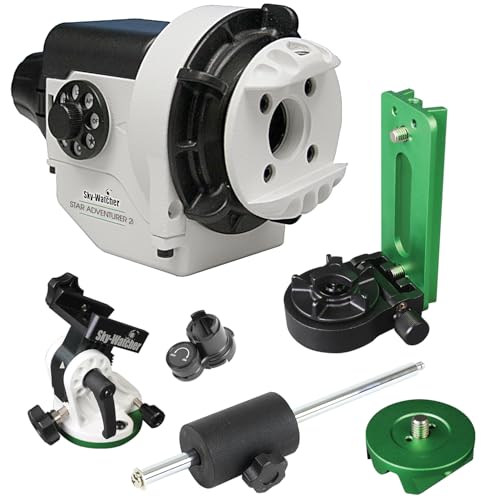
- Motorized tracker for wide-field astro work
- Wi-Fi app control via SAM Console
- Deluxe equatorial base aids polar alignment
Best For: Portable Milky Way, eclipse, and time-lapse tracking
Telescope Piggyback Camera Mount
Celestron Piggyback Mount for SCT & EdgeHD

- Turns a compatible telescope into a camera support
- Works with your own camera lenses
- Lightweight metal construction
Best For: SCT and EdgeHD owners adding a DSLR to their telescope setup
Vixen-Style Mounting Plate

- 230mm Vixen-style dovetail plate
- Long slots for balancing gear
- M6, 1/4", and 3/8" hole support
Best For: DSLR users needing a flexible Vixen-style accessory plate
Portable GoTo Tracker
Star Adventurer GTi Mount Head Kit

- Full GoTo EQ tracking mount
- Built-in Wi‑Fi and polar scope
- Includes counterweight bar and 5 lb weight
Best For: Travel-friendly DSLR and mirrorless imaging setups
Compact Vixen Plate

- Compact 80mm Vixen-style plate
- 1mm scale aids setup adjustments
- Supports 1/4" and 3/8" screws
Best For: Lightweight setups needing a short, adjustable mounting plate
Finder Dovetail Camera Mount
Solid aluminum adapter for finder-base camera mounting

- Solid aluminum and stainless steel construction
- Fits standard 33-36mm finder bases
- 1/4" screw with anti-slip rubber pads
Best For: Compact camera mounting on a standard finder dovetail base
Aluminum Dovetail Baseplate
108mm aluminum dovetail plate for EQ and tripod setups

- 108mm aluminum alloy plate with oxidized finish
- 2x 1/4in screw holes plus M62 stepped holes
- Tool-free clamp and standard 1/4in thread
Best For: Stable DSLR and telescope accessory mounting on EQ or tripod setups
Finder-to-Hot Shoe Adapter
Dovetail to camera flash shoe adapter with 1/4" thread

- Finder base on top and male flash shoe on bottom
- Knurled locking ring for hand tightening
- Rubber pad plus reserved 1/4" threaded hole
Best For: Linking a finder-style dovetail to a camera hotshoe or coldshoe
Portable Polar-Align Tracker – iOptron SkyGuider Pro Full Package
If you want one of the most capable astrophotography mounts for dslr cameras without dragging around a full equatorial setup, the iOptron SkyGuider Pro is built for that job. Its all-metal construction, compact size, and built-in polar scope make it a practical pick for portable wide-field imaging and long-exposure nights.
Best For: DSLR shooters who want a lightweight, battery-powered tracker with precise polar alignment and solid payload support.
Pros:
- All-metal body and precise machining are designed to minimize vibration for sharper images.
- Compact 2.2 lb design makes it easy to pack for travel and dark-site sessions.
- Supports up to 11 lb when balanced, giving you room for camera and lens combinations.
- Integrated illuminated polar scope and adjustable base help make alignment faster and more accurate.
Cons:
- Maximum load depends on balancing, so setup matters more than with heavier mounts.
- It is focused on camera use rather than larger telescope-style payloads.
Overall, the SkyGuider Pro is a strong choice if portability and alignment accuracy matter most. Its rechargeable battery and straightforward tracking design fit the needs of DSLR astrophotographers who want reliable results in the field.
Arca-to-Vixen Bridge Adapter – Vixen Dovetail Bar with Arca Clamp
For builders looking to connect gear in a flexible astrophotography mount workflow, this Vixen-to-Arca adapter is a simple bridge between common standards. It is mainly useful when you need to mount an Arca Swiss plate on a Vixen-style dovetail saddle, or use a Vixen base on an Arca-compatible platform.
Best For: Astrophotographers who need an adapter to move camera hardware between Vixen dovetails and Arca Swiss setups.
Pros:
- Lets you attach an Arca Swiss-type plate to a Vixen-style dovetail saddle.
- Top clamp supports standard Arca Swiss plates for broader compatibility.
- 90-degree design supports use with L plates.
- Safety stop screws help prevent accidental drop-in loading issues.
Cons:
- It is an adapter, not a tracking mount or full support system.
- One safety stop screw may need to be removed for some saddles.
This is a niche but useful accessory if your astrophotography setup mixes mount standards. It is best viewed as a convenience and compatibility tool rather than a standalone imaging solution.
Portable Nightscape Tracker – Sky-Watcher Star Adventurer 2i Pro Pack
The Sky-Watcher Star Adventurer 2i Pro Pack is aimed at photographers who want a compact tracking platform for astrophotography mounts for dslr cameras. Its modular design, equatorial base, and Wi-Fi control make it a practical option for wide-field nightscape work, time-lapse video, and even telescopic use.
Best For: DSLR shooters who want a portable motorized tracker with app control for Milky Way and eclipse imaging.
Pros:
- Motorized portable tracking platform is designed for nightscape and wide-field astrophotography.
- Modular design works with existing photographic tripods.
- Wi-Fi support lets you control it through Sky-Watcher’s SAM Console app.
- Deluxe equatorial base helps with polar alignment.
Cons:
- It is a specialized tracker, so it is not meant for heavy imaging rigs.
- Battery-powered operation depends on the included lithium metal batteries.
For portable imaging, this pack offers a balanced mix of convenience and capability. It makes sense for DSLR users who want to track the sky accurately without moving up to a larger mount system.
Telescope Piggyback Camera Mount – Celestron Piggyback Mount for SCT & EdgeHD
This Celestron piggyback mount is a simple way to use your telescope as the support platform for a DSLR or small camera setup. If you already own a compatible Schmidt Cassegrain or EdgeHD telescope, it can help you capture wide-angle sky images while keeping the camera mounted securely on top.
Best For: Telescope owners who want a lightweight piggyback solution for DSLR or small camera astrophotography.
Pros:
- Mounts to the top rear of compatible Schmidt Cassegrain telescopes in minutes.
- Lets your telescope handle tracking while the camera captures the image.
- Supports use with your own camera lenses for Milky Way, nebula, and Moon shots.
- Lightweight metal construction makes it easy to add to an existing setup.
Cons:
- Requires a compatible Schmidt Cassegrain or EdgeHD telescope.
- It is an accessory mount, not a standalone tracking platform.
This is a straightforward accessory for telescope-based imaging workflows. It is best suited to photographers who already have the right telescope and want a simple way to piggyback a camera for sky shooting.
Vixen-Style Mounting Plate – 230mm Telescope Rail Bar
If you’re building a compact setup for astrophotography mounts for dslr cameras, this 230mm Vixen-style rail bar is a flexible accessory plate for attaching and balancing gear. Its long slots, multiple hole patterns, and anti-slip pads make it useful when you need more mounting options on a compatible saddle or head.
Best For: DSLR users and telescope owners who need a longer Vixen-style plate with lots of mounting flexibility.
Pros:
- 230mm Vixen-style dovetail plate works with Vixen-style saddles.
- Two long 87.6mm slots help with mounting and balancing devices.
- Includes M6, 1/4″, and 3/8″ mounting hole options for broad compatibility.
- Anti-slip rubber pads and safety stop screws add security.
Cons:
- It is a mounting plate, not a complete astrophotography mount.
- Safety stop screws may need removal for saddles that do not support drop-in loading.
This is a practical adapter-style part for users who already have the rest of their tracking setup and want better adjustment options. It makes the most sense when you need a longer, multi-hole plate to fine-tune balance and attachment points.
Portable GoTo Tracker – Star Adventurer GTi Mount Head Kit
Among astrophotography mounts for dslr cameras, this Star Adventurer GTi kit stands out as a portable full GoTo EQ tracking mount for lightweight imaging setups. It includes a counterweight bar, built-in Wi‑Fi, and a built-in polar scope with illuminator, making it a strong choice for travelers who want guided tracking in a compact package.
Best For: Mobile DSLR and mirrorless astrophotographers who want a compact GoTo equatorial tracking mount.
Pros:
- Full GoTo mount head for tracking and object finding.
- Built-in Wi‑Fi for wireless control.
- Built-in polar scope with illuminator helps with alignment.
- Includes counterweight bar and 5 lb counterweight.
Cons:
- DSLR or mirrorless camera is not included.
- Heavier than a simple accessory plate at 6.9 kg.
This kit is the most complete option in this roundup for users who want actual tracking rather than just a mounting adapter. If portability and GoTo functionality matter more than minimal size, it is the most capable pick here.
Compact Vixen Plate – 80mm Rail Bar With Scale
If you need a smaller accessory plate for astrophotography mounts for dslr cameras, this 80mm Vixen-style rail bar is a simple, lightweight option for attaching compatible gear to a Vixen-style saddle. The built-in 1mm reference scale, long slot, and anti-slip pads make it useful for quick setup adjustments.
Best For: Users who want a lightweight, short Vixen-style plate with easy positioning marks.
Pros:
- Compact 80mm Vixen-style dovetail plate.
- 1mm reference scale on both sides for easier adjustment.
- Supports 1/4″ and 3/8″ mounting screws.
- Anti-slip rubber pads and a safety stop screw improve security.
Cons:
- Shorter length offers less balancing room than a longer rail.
- It is only a mounting plate, not a complete tracking mount.
This is a good fit when you want a basic, low-profile way to mount compatible equipment without adding bulk. Its scale markings and smaller footprint make it especially useful for quick adjustments on lightweight setups.
Finder Dovetail Camera Mount – Solid aluminum adapter for finder-base camera mounting
If you want a simple way to attach a DSLR or other 1/4″-threaded camera to a telescope finder dovetail base, this compact adapter keeps the setup straightforward. For astrophotography mounts for dslr cameras, it offers a light, metal connection with rubber padding to help protect the camera while holding it in place.
Best For: Mounting a camera to a standard finder dovetail base for compact astrophotography setups.
Pros:
- Solid aluminum body with stainless steel parts for a sturdy feel.
- Fits standard 33-36mm finder bases on the bottom.
- Includes a 1/4″ mounting screw for cameras and other compatible gear.
- Anti-slip rubber pads help improve grip and protect the camera.
Cons:
- Designed around finder dovetail compatibility, so it is not a universal camera mount.
- Best suited to lighter accessory-style camera mounting rather than larger rigs.
This is a practical pick if your priority is a compact, low-mass camera attachment point rather than a full-featured tracking platform. It makes the most sense for users who already have a matching finder dovetail base and want an easy add-on.
Aluminum Dovetail Baseplate – 108mm aluminum dovetail plate for EQ and tripod setups
For astrophotography mounts for dslr cameras, this 108mm dovetail plate is a straightforward baseplate that helps connect cameras, telescope rings, tripods, and equatorial gear. Its aluminum alloy construction and 1/4in thread interface make it a practical mounting piece when you want a stable, metal connection in the field.
Best For: Building a stable DSLR or telescope accessory connection on equatorial and tripod-based astrophotography setups.
Pros:
- 108mm aluminum alloy plate with an oxidized finish for field durability.
- Includes 2x 1/4in screw holes plus M62 stepped holes for broader compatibility.
- Tool-free clamp design simplifies setup and removal.
- Standard 1/4in threaded post supports photographic tripods and camera mounting.
Cons:
- It is a baseplate, so it does not function as a complete mount on its own.
- Best results depend on matching it with compatible EQ mounts, rings, or tripods.
This is the kind of accessory that fits into an existing astrophotography system rather than replacing it. If you need a metal dovetail platform to help stabilize camera and telescope hardware, it is a solid utility piece.
Finder-to-Hot Shoe Adapter – Dovetail to camera flash shoe adapter with 1/4" thread
This adapter is useful when you want to bridge a finder dovetail base and a camera hotshoe or coldshoe in a compact astrophotography setup. For astrophotography mounts for dslr cameras, it creates a simple metal connection with a hand-tightened locking ring and a 1/4″ threaded hole for added mounting flexibility.
Best For: Attaching a camera hotshoe or coldshoe to a finder-style dovetail base.
Pros:
- Top finder base is compatible with guide scope and finder dovetails.
- Bottom male flash shoe works with most camera hotshoe or coldshoe mounts.
- Knurled locking ring makes hand tightening easy.
- Rubber pad helps improve grip and protect the shoe mount.
Cons:
- It is mainly a shoe-and-dovetail adapter, not a full camera support system.
- The setup depends on having compatible hotshoe, coldshoe, or finder-style hardware.
This is a handy niche adapter for users who already know their mount format and just need a cleaner connection point. It is most appealing for lightweight accessory pairing rather than heavy-duty camera support.
How We Picked the Best Astrophotography Mounts for Dslr Cameras
We prioritized Astrophotography Mounts for Dslr Cameras that balance tracking performance, portability, and setup simplicity. Selection also favored models and accessories that fit common travel rigs, offer useful payload headroom for a DSLR plus lens, and support repeatable polar alignment or solid mechanical mounting.
Quick Comparison
Not every setup needs a full GoTo equatorial head. Some users want a lightweight star tracker for wide-field imaging, while others need a more complete tracking mount for longer focal lengths or more automated operation. We included full tracking mounts, camera mounts, dovetail plates, and adapter hardware because the right system often depends on how your rig is built.
Key Buying Factors for Astrophotography Mounts for Dslr Cameras
Tracking Type
Manual camera platforms, clock-drive trackers, and GoTo equatorial mounts each solve a different problem. For wide-field Milky Way work, a compact tracker can be enough. For longer exposures with telephoto lenses, more precise tracking and better alignment tools become more important.
Payload and Balance
Always check the mount’s real-world load capacity, not just the headline number. A DSLR, lens, ball head, guides, brackets, and counterweights can add up quickly. Good balance reduces strain on the drive and helps improve tracking consistency.
Portability
If you travel to dark-sky sites, compact weight and fast assembly matter. Many Astrophotography Mounts for Dslr Cameras are designed around grab-and-go use, but extra stability usually comes with more bulk. Choose the lightest setup that still supports your imaging goals.
Compatibility and Mounting Interfaces
Pay close attention to dovetail standards, Arca Swiss clamps, 1/4-inch tripod threads, and camera hotshoe or finder-scope adapter options. A mount that seems ideal can become frustrating if it needs multiple adapters to connect cleanly to your existing gear.
Who Should Buy Which Astrophotography Mounts for Dslr Cameras?
Wide-field beginners should look for a simple tracker or camera mount package that is easy to polar align and quick to pack. Intermediate users using longer lenses may prefer a sturdier star tracker or a GoTo mount with counterweight support. If you already own telescope hardware, dovetail plates and camera adapter mounts can be the most cost-effective way to turn a telescope setup into a DSLR imaging platform.
In short, the best choice depends on whether you value ultra-portability, longer tracking sessions, or maximum flexibility. Pick the mount that matches your lens, your typical exposure length, and how much setup time you are willing to spend under the stars.