Choosing the right audio mixer for church sound affects vocal clarity, music balance, livestream quality, and how easily volunteers can run services. The best option depends on your room size, input count, monitoring needs, and whether you prefer hands-on controls or remote digital mixing.
This roundup covers compact analog boards, powered mixers, USB-equipped consoles, and full-featured digital systems for worship services, rehearsals, events, and streaming.
Best 10 Audio Mixer for Church Sound Picks for 2026
Best Digital Flexibility
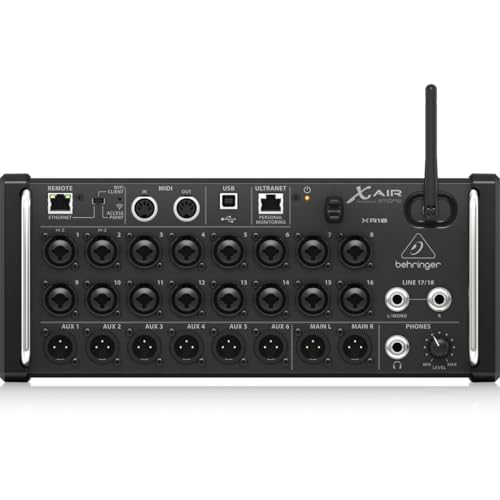
- Tablet-controlled 18-channel digital mixer
- 16 programmable MIDAS preamps
- Built-in Wi-Fi and 18 x 18 USB interface
Best For: Churches wanting wireless tablet-based control
Best Powered Simplicity
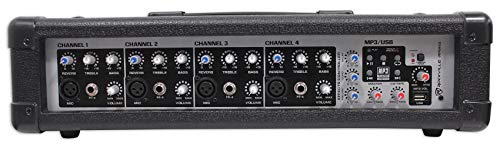
- Four-channel powered mixer
- 225 watts per channel at 8 ohms
- USB, effects, and phantom power
Best For: Small churches using compatible passive speakers
Best Analog Workflow
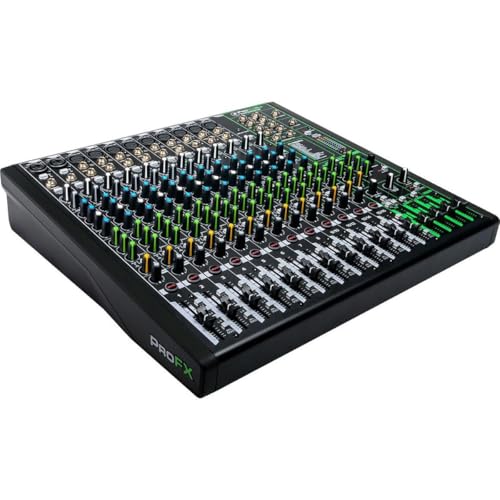
- 16-channel analog mixer
- 24 built-in GigFX effects
- USB multitrack recording while mixing
Best For: Churches wanting hands-on controls with recording
Best for Large Productions

- 40 inputs and 25 buses
- 32 programmable MIDAS preamps
- Motorized faders and extensive outputs
Best For: Large churches with complex live productions
Powerhouse Pick

- 6000W peak powered mixer for large systems
- 14 mic preamps with phantom power
- USB, Bluetooth, effects, EQ, and recording
Best For: Large worship services and live events
Simple Analog Choice

- Eight-channel analog mixer
- Two auxiliary buses and channel inserts
- RCA playback inputs and record outputs
Best For: Small to midsize systems with separate amplification
Maximum Channel Capacity
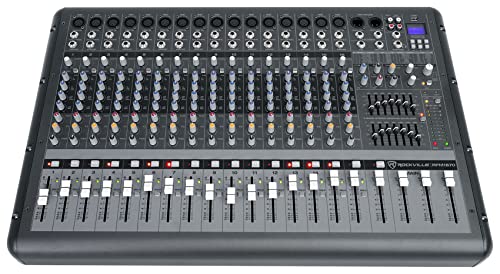
- 18 mic preamps for complex live setups
- 6000W peak powered amplification
- USB, Bluetooth, effects, EQ, and aux routing
Best For: Large worship teams and high-input-count venues
Flexible Church Mixing Hub

- 12 channels for multiple microphones and sources
- USB recording, Bluetooth, and +48V phantom power
- 16 DSP effects and detailed level metering
Best For: Churches needing broad connectivity and computer recording
Hands-On Service Mixer
8-Channel Professional Sound Board

- Eight XLR and 1/4-inch input channels
- USB, Bluetooth, and flash-drive recording options
- PFL monitoring, 3-band EQ, reverb, and delay
Best For: Small churches using simple, hands-on live mixing
Compact Worship Sound Option

- Slim 1.77-inch design for space-conscious setups
- Bluetooth 5.0, USB/MP3 playback, and LED display
- 48V phantom power, reverb, and eight channels
Best For: Small, portable church systems with limited space
Best Digital Flexibility – Behringer X AIR XR18
The Behringer X AIR XR18 is a strong choice when an audio mixer for church sound needs flexible tablet control, multiple microphone inputs, and built-in recording connectivity. Its 18-channel design and programmable MIDAS preamps suit live services and other sound applications.
Best For: Churches wanting wireless tablet-based control and a compact digital mixer.
Pros:
- Controlled from iPad or Android tablets
- 16 programmable MIDAS-designed microphone preamps
- Built-in tri-mode Wi-Fi router
- 18 x 18 bidirectional USB interface
Cons:
- Requires a tablet-based control workflow
- Only two main XLR outputs are specified
The XR18 offers substantial digital flexibility in a relatively light 7.1-pound chassis. It is particularly appealing for churches that want remote control and direct USB recording without adding an external router.
Best Powered Simplicity – Rockville RPM45 Powered Mixer
The Rockville RPM45 combines a four-channel mixer with built-in amplification, making it a straightforward audio mixer for church sound setups that use compatible passive speakers. USB, effects, and phantom power add useful flexibility for basic services and events.
Best For: Small churches or schools needing an integrated mixer-and-amplifier solution.
Pros:
- Built-in powered output rated at 225 watts per channel at 8 ohms
- USB connectivity and effects loop
- +15V phantom power
- Fan vent cooling system
Cons:
- Four-channel layout limits input expansion
- Heavier 18-pound design
- Speaker outputs are specified for 8-ohm connections
With amplification built in, the RPM45 can reduce the number of separate components in a modest sound system. Its four-channel format is best suited to smaller setups rather than large worship productions.
Best Analog Workflow – Mackie ProFX16v3
The Mackie ProFX16v3 is a practical audio mixer for church sound when operators prefer hands-on analog controls without giving up USB recording. Its 16-channel layout, built-in effects, and multitrack recording support make it suitable for services, rehearsals, and small venues.
Best For: Churches that want familiar analog operation with integrated USB multitrack recording.
Pros:
- 16-channel layout without a digital learning curve
- Onyx preamps provide up to 60 dB of gain
- 24 built-in GigFX effects
- USB interface supports recording while mixing
Cons:
- Analog design lacks the remote tablet control of a digital mixer
- Nearly 20 pounds, so it is less portable
The ProFX16v3 balances accessible physical controls with useful recording features. It is a sensible middle ground for church teams that value straightforward operation and need more inputs than a small four-channel board provides.
Best for Large Productions – Behringer X32 Digital Console
The Behringer X32 is designed for larger church sound systems that need extensive input capacity, bus routing, and scene management. With 40 inputs, 32 programmable MIDAS preamps, motorized faders, and numerous outputs, it provides a broad control platform for complex live productions.
Best For: Large churches with multi-microphone services and experienced audio operators.
Pros:
- 40-input, 25-bus digital mixing console
- 32 programmable MIDAS-designed microphone preamps
- 25 automated motorized 100 mm faders
- 16 XLR outputs plus additional line inputs and outputs
Cons:
- Large 45.4-pound console is not highly portable
- Its extensive controls may require more operator training
- Physical dimensions demand substantial installation space
The X32 offers the input count and routing depth needed for larger worship environments. Its motorized faders and scene-management features are especially useful when services require repeatable, complex configurations.
Powerhouse Pick – Rockville RPM1470
For churches needing an audio mixer for church sound that can handle multiple microphones and sizable speaker systems, the Rockville RPM1470 combines 14 mic preamps, powered outputs, USB/Bluetooth playback, and onboard effects. Its dual 7-band EQs also provide practical control for main and monitor mixes.
Best For: Large worship services, live events, and setups with more than 500 guests.
Pros:
- 6000W peak amplifier with 750W RMS per channel at 4 ohms
- 14 low-noise mic preamps with +48V phantom power
- USB and SD recording, USB playback, and Bluetooth streaming
- 16-presets, 24-bit effects and dual 7-band graphic EQs
Cons:
- Large and heavy at 28.9 pounds
- Its high-power design may exceed the needs of smaller churches
The RPM1470 is a feature-rich powered mixer for churches that need amplification and flexible source handling in one unit. It is especially compelling when microphone capacity, effects, and recording are priorities.
Simple Analog Choice – Soundcraft EPM8
The Soundcraft EPM8 is a straightforward audio mixer for church sound systems that need dependable analog control without built-in amplification. It offers eight channels, configurable auxiliary buses, insert connections, and practical playback and recording connections.
Best For: Small to midsize church setups using separate amplifiers or powered speakers.
Pros:
- Eight-channel layout for microphones and other sources
- Two configurable auxiliary buses
- 3-band EQ with swept mid on mono inputs
- RCA phono stereo playback inputs and record outputs
Cons:
- Does not include a built-in power amplifier
- Fewer channels than the two Rockville powered mixers
- No USB or Bluetooth features are listed
The EPM8 focuses on core analog mixing functions and flexible routing. It makes sense for churches that already have amplification and want a compact mixer with useful inserts, auxiliary buses, and recording connections.
Maximum Channel Capacity – Rockville RPM1870
For a church seeking an audio mixer for church sound with ample input capacity, the Rockville RPM1870 provides 18 mic preamps, powered outputs, USB/Bluetooth connectivity, effects, and separate main and monitor EQ control. It is built for complex live setups with many vocal and instrument sources.
Best For: Large worship teams, venues serving more than 500 guests, and live sound systems with many microphones.
Pros:
- 18 low-noise mic preamps with +48V phantom power
- 6000W peak amplification and 750W RMS per channel at 4 ohms
- USB playback and recording plus Bluetooth streaming
- 16 24-bit effects presets, dual 7-band EQs, and aux send/return
Cons:
- Heavier and larger than the RPM1470 at 37 pounds
- Its 18-channel capacity may be unnecessary for smaller congregations
- Only a one-year warranty is specified in the supplied details
The RPM1870 is the strongest fit here when channel count is the deciding factor. Its extensive routing and processing support larger, more involved worship productions, though the added size and capacity may be more than a compact church system requires.
Flexible Church Mixing Hub – Pyle PMXU128BT
For an audio mixer for church sound, the Pyle PMXU128BT offers 12 channels, multiple XLR/combo inputs, and practical connectivity for microphones, playback devices, and computers. Its USB interface, Bluetooth streaming, phantom power, and built-in effects make it adaptable for services, rehearsals, and recording.
Best For: Churches needing many input options plus computer recording and wireless music playback.
Pros:
- 12-channel layout with XLR/combo inputs and multiple output options
- USB audio interface supports recording and connection to Mac or PC
- Bluetooth streaming, +48V phantom power, and 16 DSP effects
- 12-segment stereo output meter helps monitor levels
Cons:
- Its 10.6-pound, console-style design may be more mixer than a small setup needs
- Supplied notes do not identify supported recording software
This is a feature-rich choice when a church wants room to connect several microphones and sources. The channel count and recording functions provide flexibility, while the larger footprint is worth considering for compact sound booths.
Hands-On Service Mixer – 8-Channel Professional Sound Board
This 8-channel board is a practical audio mixer for church sound when operators want straightforward channel controls and monitoring. It combines XLR and 1/4-inch inputs, USB and Bluetooth playback, phantom power, and onboard reverb and delay for services, meetings, and small live events.
Best For: Small churches seeking accessible controls for microphones, playback, monitoring, and basic effects.
Pros:
- Eight channels accept XLR and unbalanced 1/4-inch connections
- Independent gain, effects, PFL, EQ, and fader controls support hands-on mixing
- USB recording/playback and Bluetooth provide flexible source options
- Headphone monitoring and LED peak indicators aid level checking
Cons:
- It has fewer channels than the 12-channel option in this roundup
- The supplied notes do not specify individual channel phantom-power switching
Its clear control layout and monitoring features can help volunteers manage a live mix without relying on complicated menus. The eight-channel capacity suits smaller systems, while USB and Bluetooth add useful playback and recording flexibility.
Compact Worship Sound Option – CT-80S 8-Channel Mixer
The CT-80S is a compact audio mixer for church sound setups that need Bluetooth, USB playback, microphone or instrument connectivity, and a slim chassis. Its 8-channel design, 48V phantom power, reverb, MP3 player, and LED display suit smaller services, conferences, campus activities, and live music.
Best For: Space-conscious churches wanting wireless playback and basic effects in a portable mixer.
Pros:
- Ultra-thin design measures about 1.77 inches high
- Eight-channel layout supports wired, wireless, condenser microphone, and instrument connections
- Bluetooth 5.0, MP3/USB input, and LED song display simplify playback
- Includes 48V phantom power and reverb functionality
Cons:
- The supplied notes do not detail the available output connections
- Its listed 110V power specification requires attention to outlet compatibility
- At 8 channels, it offers less expansion room than larger consoles
The slim profile makes this mixer appealing where rack or tabletop space is limited. It covers common playback and microphone needs, but buyers should confirm output requirements and power compatibility before using it in a church installation.
How We Picked the Best Audio Mixer for Church Sound
We focused on the features that matter most in worship environments: microphone and instrument input capacity, preamp quality, phantom power, EQ and effects, monitor flexibility, recording or streaming connectivity, portability, and ease of use. We also considered whether each mixer suits a small chapel, volunteer-led service, mid-sized sanctuary, or larger production setup.
Because churches vary widely in size and technical experience, this list includes both straightforward analog consoles and more advanced digital mixers. Powered models are included for setups that need amplification built into the mixer, while USB and Bluetooth connectivity can simplify playback, recording, and online services.
Quick Comparison
- Best for remote control: Behringer X AIR XR18
- Best for larger digital systems: Behringer X32
- Best for hands-on mixing and USB recording: Mackie ProFX16v3
- Best for simple, reliable analog operation: Soundcraft EPM8
- Best for built-in amplification: Rockville RPM45, RPM1470, and RPM1870
- Best for compact streaming and playback features: Pyle 12-Channel Console and the compact 8-channel mixers
Key Buying Factors for an Audio Mixer for Church Sound
Input Count and Expansion
Count every wired and wireless microphone, worship vocal, instrument, playback device, and announcement source you may use at once. Leave spare channels for future additions. Larger teams may benefit from 16 or more channels, while a small service can often work with eight.
Analog or Digital Control
Analog mixers provide dedicated knobs and a quick learning curve, which can be valuable when volunteers rotate regularly. Digital mixers offer scene recall, deeper processing, flexible routing, and remote control from a tablet, but they require more setup and training.
Outputs, Monitors, and Streaming
Check for enough main, monitor, auxiliary, and subgroup outputs. Separate monitor mixes help musicians hear themselves without changing the congregation’s mix. USB connectivity is useful for livestreaming or recording, but confirm how the mixer handles USB input and output channels.
Phantom Power and Signal Processing
Condenser microphones and some active direct boxes require 48V phantom power. Built-in EQ, compression, reverb, and feedback-control tools can improve speech and vocals, but practical routing and easy access are just as important as the number of effects.
Power and Installation
A powered mixer can simplify a portable system by driving passive speakers directly. For permanent installations or larger venues, a separate amplifier and dedicated speaker management may provide more flexibility and easier upgrades.
Who Should Buy Which Audio Mixer for Church Sound?
Small churches and volunteer teams should prioritize simple controls, dependable preamps, and enough inputs for current services. A compact analog mixer or USB-equipped 8-channel model is often the easiest fit.
Growing congregations with worship bands, multiple monitors, or livestreaming needs should consider a 12- to 18-channel mixer with USB, effects, and multiple outputs. Powered Rockville models suit portable systems that need an integrated amplifier.
Larger sanctuaries, production teams, and churches that want saved settings for recurring services should look at a digital system such as the X AIR XR18 or X32. These mixers provide more routing and processing flexibility, especially when operators need to mix from different locations in the room.