Finding the right chemistry kit can turn curiosity into real lab confidence. The best sets balance safe, engaging experiments with tools and instructions that make learning feel exciting instead of overwhelming.
Below, you’ll see options for younger beginners, classroom-style learning, and more advanced students who want a fuller chemistry experience at home.
Best 10 Chemistry Lab Kits for Students Picks for 2026
Beginner Pick
National Geographic 100+ Experiment Chemistry Set

- 100+ experiment ideas with 15 included in the kit
- Real tools like beakers, test tubes, and pipettes
- Good starter range for ages 8-12
Best For: Younger students who want a fun first chemistry kit
Intermediate Lab
Thames & Kosmos Chem C2000 (V 2.0)

- 250 experiments across 18 themed chapters
- Real lab gear plus an alcohol burner
- Good bridge toward high school chemistry
Best For: Students 11+ ready for a more serious home lab
Fun Starter Set
National Geographic 45-Experiment Chemistry Kit

- 45 easy chemistry experiments with dramatic reactions
- Illustrated instructions make it beginner-friendly
- Simple option with no battery required
Best For: Beginners who want colorful, high-energy chemistry experiments
Advanced Lab

- 333 experiments across 27 chapters
- 192-page manual covers advanced chemistry topics
- Real lab equipment for a true home laboratory
Best For: Older students who want the deepest chemistry kit in this roundup
Starter Chemistry Lab
33-Piece Plastic Lab Set for Kids

- 33-piece starter kit with beakers, test tubes, rack, and more
- Colorful plastic tools are easy to clean and simple to use
- Good for classroom projects and beginner science exploration
Best For: Young students beginning hands-on science at home or in class
Lab Station Pick

- 57-piece chemistry station with experiment cards and manual
- Covers slime, chromatography, acids, bases, and more
- Non-hazardous chemicals included; no borax
Best For: Students who want a guided, station-style chemistry experience
Most Versatile Bundle
National Geographic Mega Science Lab
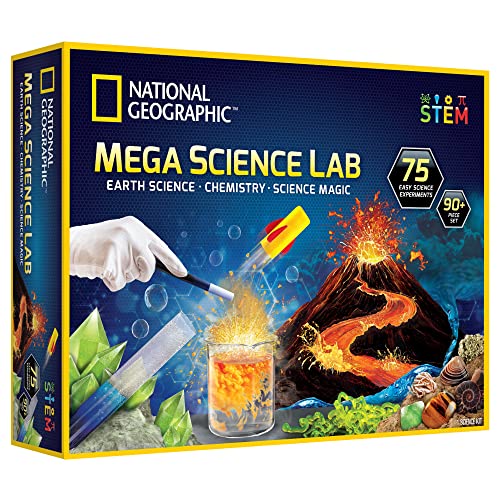
- 75 experiments across chemistry, earth science, and science magic
- Includes bonus activities plus rocks, minerals, and crystal specimens
- Great for ages 8 to 12 with plenty of variety
Best For: Kids ages 8 to 12 who want one large STEM kit with chemistry included
Intro Chemistry Kit
Thames & Kosmos Chem C500 Science Kit

- 28 guided beginner chemistry experiments
- Covers acids, bases, gases, and invisible ink
- 48-page color manual explains each result
Best For: Beginner students who need a simple guided introduction
Young Scientist Starter
National Geographic Junior Chemistry Set

- 50 easy chemistry experiments for young kids
- Includes 20+ child-safe lab tools
- Illustrated instructions use common household items
Best For: Ages 4 to 6 learning chemistry basics
Beginner Lab Build
Thames & Kosmos Chem C1000 (V 2.0)

- 125 hands-on experiments in 10 chapters
- Real lab equipment plus 7 chemicals included
- Designed for ages 10+ with adult supervision
Best For: Older beginners ready for a real chemistry lab
Beginner Pick – National Geographic 100+ Experiment Chemistry Set
If you want chemistry lab kits for students that feel fun right away, this National Geographic set is a strong starter choice. It mixes simple hands-on experiments with real tools like test tubes, beakers, and pipettes, making it easy for younger learners to explore reactions, crystals, and color changes.
Best For: Ages 8-12 who want a broad, beginner-friendly introduction to chemistry.
Pros:
- Includes 100+ experiment ideas, with 15 supplied in the kit and 85 more using household items.
- Uses real scientific tools such as beakers, test tubes, and pipettes.
- Covers engaging activities like crystal growing, bubbling reactions, and glowing test tubes.
- Backed by National Geographic / Blue Marble award-winning branding and U.S. support.
Cons:
- Many of the extra experiments require common household items, not included materials.
- Designed for younger students, so it is less advanced than intermediate lab-style sets.
This is a practical pick for families who want a high-interest starter kit that keeps kids busy without feeling too technical. It is best viewed as a fun chemistry sampler rather than a deep lab system.
Intermediate Lab – Thames & Kosmos Chem C2000 (V 2.0)
For chemistry lab kits for students who are ready for a more serious setup, Chem C2000 stands out with real lab equipment and a structured manual. It moves beyond simple demonstrations with 250 experiments, an alcohol burner, and a progression that helps build a foundation for high school chemistry.
Best For: Middle school students ages 11+ who want a true intermediate home chemistry lab.
Pros:
- Includes 250 real chemistry experiments organized across 18 themed chapters.
- Comes with a 128-page full-color manual with step-by-step instructions and explanations.
- Uses genuine lab equipment, including glass test tubes, beakers, tubing, and an alcohol burner.
- Covers a wide range of topics such as acids and bases, chromatography, soaps, and luminol.
Cons:
- Requires adult supervision throughout.
- More advanced and equipment-heavy than beginner chemistry sets.
This is a strong choice if you want a kit that feels closer to a real laboratory and offers clear growth beyond entry-level experiments. It is especially appealing for homeschoolers and students who want deeper chemistry exposure.
Fun Starter Set – National Geographic 45-Experiment Chemistry Kit
This National Geographic option is a practical entry point for chemistry lab kits for students who learn best through big, visual reactions. With 45 experiments like a volcano, geyser, and rocket activities, it focuses on easy-to-follow chemistry fun rather than complex lab work.
Best For: Ages 8-12 who want a simple, hands-on chemistry set with dramatic reactions.
Pros:
- Includes 45 experiments centered on exciting reactions and STEM play.
- Kid-friendly guide uses illustrations and clear step-by-step instructions.
- Good for learning chemistry fundamentals in a low-pressure format.
- No battery required, keeping setup simple.
Cons:
- Less comprehensive than larger chemistry kits with more tools and chemicals.
- More focused on fun reaction demos than advanced lab-style chemistry.
If you want a lighter kit that keeps attention on color, fizz, and motion, this one fits well. It is a good pick for beginners who need accessible instructions and fast payoff from each experiment.
Advanced Lab – Thames & Kosmos Chem C3000
Among chemistry lab kits for students, Chem C3000 is the most advanced option here and is aimed at serious young chemists. It includes 333 experiments, more equipment than the C2000, and a detailed manual that covers topics from atomic structure to organic chemistry and electrolysis.
Best For: Ages 12+ who want an advanced home chemistry lab with real equipment and deeper theory.
Pros:
- Offers more than 333 hands-on experiments across 27 chapters.
- Includes a 192-page full-color manual with clear procedures and scientific explanations.
- Provides real lab equipment such as beakers, test tubes, an Erlenmeyer flask, and an alcohol burner.
- Covers advanced topics including redox reactions, electrolysis, organic chemistry, and proteins.
Cons:
- Requires adult supervision throughout.
- More complex and equipment-intensive than beginner or intermediate sets.
This kit is best treated as a serious home lab rather than a casual science toy. It makes the most sense for students who are ready for a large, structured chemistry experience with real lab tools and challenging subject matter.
Starter Chemistry Lab – 33-Piece Plastic Lab Set for Kids
If you want chemistry lab kits for students that focus on hands-on basics, this 33-piece plastic set is a practical pick for classroom or home use. It gives young learners real lab-style tools for simple experiments, observation, and early science practice without making the setup feel overwhelming.
Best For: Young students who need an affordable, beginner-friendly lab kit for supervised experimenting at home or in class.
Pros:
- Includes a wide mix of tools: beakers, test tubes, rack, droppers, goggles, magnifier, funnel, gloves, and more.
- Colorful plastic materials are designed for easy observation and simple cleanup.
- Built for curiosity-driven learning and introductory science activities.
- Works well as a classroom project kit or a home learning starter set.
Cons:
- Plastic tools are better for learning and demonstration than advanced lab work.
- No chemical experiment guide is listed in the supplied notes.
- Best suited to younger beginners rather than older students needing more complex experiments.
This set is strongest as a low-friction introduction to lab skills and science vocabulary. It is less about packaged experiments and more about giving students the tools to explore safely and build confidence with basic chemistry equipment.
Lab Station Pick – Ooze Labs Chemistry Station
For chemistry lab kits for students that feel more like a real workstation, this Thames & Kosmos set stands out. It includes a large plastic chemistry station, 57 pieces, and non-hazardous experiments that cover slime, chromatography, acids, bases, and other colorful reactions.
Best For: Kids who enjoy a guided lab experience with lots of experiment variety and a workstation-style setup.
Pros:
- Large, colorful lab station makes the experience feel more like a real chemistry lab.
- Includes 57 pieces plus beakers, test tubes, flasks, pipettes, and other tools.
- Experiment cards clip onto the station for easy reference.
- Non-hazardous chemicals are included, and borax is not used.
Cons:
- More of a guided activity kit than an open-ended science tool set.
- The larger station may take up more space than simpler kits.
- Designed for ages 6 and up, so older students may want more advanced chemistry content.
This is a strong choice if you want structure, variety, and a more immersive lab feel. The included manual and experiment cards make it especially useful for families or students who benefit from step-by-step guidance.
Most Versatile Bundle – National Geographic Mega Science Lab
If you are comparing chemistry lab kits for students and want the broadest mix of activities, this National Geographic bundle is a standout. It combines earth science, chemistry, and science magic into one kit, with 75 experiments that range from bubbling reactions to volcanoes, crystals, and simple science tricks.
Best For: Students ages 8 to 12 who want one big kit with chemistry plus extra STEM activities.
Pros:
- Three science kits in one: earth science, chemistry, and science magic.
- Includes 75 total experiments, including 30 bonus activities with household items.
- Covers hands-on chemistry like gooey worms, bubbling reactions, and gas-powered rocket launch fun.
- Also includes rock, mineral, crystal specimens and a fossil-dig activity.
Cons:
- Because it covers multiple subjects, the chemistry portion is only part of the overall kit.
- The larger bundle may feel less focused if you want a dedicated chemistry-only set.
- More ambitious than basic starter kits, so it may be overkill for very young beginners.
This is the best option here if you want variety and long-lasting value from a single purchase. It gives students plenty to explore and is especially appealing when you want chemistry to be part of a broader STEM experience.
Intro Chemistry Kit – Thames & Kosmos Chem C500 Science Kit
If you’re comparing chemistry lab kits for students who are just starting out, this Thames & Kosmos set offers a clear, hands-on introduction with 28 guided experiments. It focuses on classic chemistry ideas like acids and bases, gases, invisible ink, and fizzy reactions, while the full-color manual explains what happened and why.
Best For: Kids who want a simple, guided first chemistry kit with real beginner-friendly experiments.
Pros:
- Includes 28 classic, guided chemistry experiments.
- Covers colorful acid-base reactions, invisible ink, and reactions between solids, liquids, and gases.
- 48-page full-color manual gives simple setup steps and clear explanations.
- Comes with core lab pieces such as beakers, test tubes, chemicals, stoppers, and pipettes.
Cons:
- Smaller experiment count than more advanced chemistry sets.
- Best suited to younger or beginning students rather than older science hobbyists.
Overall, this is a straightforward starter kit for students who benefit from structure and easy-to-follow instruction. It is a practical pick for introducing core chemistry concepts without overwhelming new learners.
Young Scientist Starter – National Geographic Junior Chemistry Set
For families shopping chemistry lab kits for students ages 4 to 6, this National Geographic junior set keeps things approachable with hands-on experiments built around common household items like baking soda and vinegar. It includes more than 20 kid-friendly lab tools and 50 illustrated experiments, making it easy for young children to explore science in a low-pressure way.
Best For: Preschool and early elementary kids who need a child-friendly chemistry kit with simple instructions.
Pros:
- Designed for ages 4 and up with a young-scientist focus.
- Includes 50 hands-on experiments using common household ingredients.
- Comes with 20+ durable, child-safe lab tools.
- Illustrated step-by-step instructions help kids follow along easily.
Cons:
- Geared toward younger learners, so older students may outgrow it quickly.
- Relies on household items for some activities.
This set makes chemistry feel accessible for little learners while still looking and feeling like a real science kit. It is a good choice when you want simple, engaging experiments instead of a more technical lab experience.
Beginner Lab Build – Thames & Kosmos Chem C1000 (V 2.0)
Among chemistry lab kits for students, this Thames & Kosmos C1000 stands out as a more serious beginner set with 125 experiments and real lab equipment. It is built for kids ready to move beyond kitchen-science projects, with themed chapters that cover lab safety, indicators, fluids, electrochemistry, surfactants, and food chemistry.
Best For: Ages 10+ students who want a true starter chemistry lab with more depth and variety.
Pros:
- Offers 125 hands-on experiments across 10 themed chapters.
- Includes real lab equipment such as glass test tubes, beakers, a funnel, pipettes, and safety goggles.
- 80-page full-color manual provides step-by-step guidance and science explanations.
- Covers advanced beginner topics like electrolysis, chromatography, surface tension, and crystals.
Cons:
- Requires adult supervision.
- More complex than a basic starter kit for younger children.
This kit is a strong fit for students who are ready for a deeper, more lab-like chemistry experience. It balances variety, real equipment, and thorough safety guidance in a way that supports more committed young scientists.
How We Picked These Chemistry Lab Kits for Students
We focused on kits that offer clear educational value, age-appropriate experiments, and a good mix of safety, durability, and hands-on learning. We also looked for sets that include useful lab gear, guided activities, and enough variety to keep students engaged beyond the first few experiments.
Quick Comparison
At a glance, the 10 kits break into a few groups: beginner-friendly starter sets for younger students, mid-range chemistry sets with more experiments and better manuals, and more advanced kits with real lab equipment for students ready to go deeper. Plastic tool sets and non-hazardous activity kits are best for early learners, while larger chemistry sets suit families or homeschoolers who want longer-term use.
Key Buying Factors for Chemistry Lab Kits for Students
Age and Experience Level
Choose a kit that matches the student’s reading level and attention span. Younger children usually do best with simple, visual experiments, while older students can handle measurement, reactions, and more detailed lab steps.
Experiment Count Versus Experiment Quality
More experiments can be a plus, but only if the instructions are clear and the activities are genuinely educational. A smaller kit with strong teaching materials may be more valuable than a larger set with repetitive projects.
Safety and Materials
For Chemistry Lab Kits for Students, non-hazardous ingredients, sturdy goggles, and age-appropriate supervision matter most. Check whether the kit uses household-safe materials, real lab components, or a mix of both.
Included Tools and Manual Quality
Good kits include beakers, test tubes, droppers, measuring tools, and a manual that explains not just what to do, but why it works. Strong guides help students build confidence and retain what they learn.
Who Should Buy Which Chemistry Lab Kits for Students?
If you want a first chemistry experience for younger kids, choose a simple, safe starter set or a junior kit with lots of visual reactions. If you’re shopping for homeschool, enrichment, or a student who already loves science, a larger set with real equipment and a detailed manual is usually the better investment.
For families wanting broader STEM value, mixed science kits can be a smart pick, while classroom or practice-focused buyers may prefer basic lab tool sets that support repeated experiments and skill-building. The best choice depends on the student’s age, confidence level, and how deeply they want to explore chemistry.