Choosing the right desktop computer for podcasting can make recording and editing feel seamless instead of stressful. The best systems handle multitrack audio, recording software, browser tabs, and light production work without lag.
In this roundup, we focused on dependable desktops that offer the performance, storage, and connectivity podcasters need for smooth sessions and efficient workflows.
Best 10 Desktop Computer for Podcasting Picks for 2026
Business-Ready Power for Podcasting
Dell Tower Desktop, Intel Core Ultra 7

- Core Ultra 7 CPU with built-in AI support
- 32GB DDR5 RAM and SSD storage
- Supports multiple monitors and easy upgrades
Best For: Podcasters needing a secure, multitasking tower
Compact All-in-One for Recording Calls

- 24-inch Full HD IPS display
- Dual noise-reducing microphones
- SSD storage with 16GB memory
Best For: Podcasters who want a neat all-in-one workspace
Refurbished Value Pick for Studio Basics
Dell Optiplex 7050 SFF Desktop PC

- 32GB RAM and 1TB SSD
- Dual-monitor support for workflow setup
- Renewed, tested, and includes accessories
Best For: Budget buyers who need solid podcasting basics
High-Performance Creator Tower

- 14th Gen Core i7 with strong speed
- 1TB PCIe SSD and 16GB DDR5 RAM
- Upgradable up to 64GB RAM
Best For: Creators wanting a fast, future-ready tower
Value Bundle
Dell OptiPlex 5050 24" Monitor Setup

- i7-6700 with 32GB RAM
- 512GB NVMe SSD for quick loading
- Includes new 24" FHD monitor
Best For: Podcasters who want a ready-to-use bundle with a monitor included
Creator-Ready Tower

- i7-8700 with 32GB DDR4 RAM
- 1TB SSD for large project storage
- Wi-Fi and Bluetooth built in
Best For: Podcasters who want a fast, expandable tower with lots of storage
Compact Workstation
Dell OptiPlex 7060 SFF Podcast PC

- i7-8700 with 32GB RAM
- 512GB NVMe SSD for fast access
- Built-in Wi-Fi, Bluetooth, and dual DisplayPorts
Best For: Podcasters who need a compact, reliable desktop with strong everyday performance
Reliable All-Rounder
Dell OptiPlex 5060 16GB/500GB SSD + 1TB HDD

- 16GB DDR4 RAM for smooth multitasking
- 500GB SSD + 1TB HDD for speed and storage
- WiFi, Bluetooth, and LAN included
Best For: Podcasters who want a dependable Windows 11 tower with flexible connectivity
Fast Boot Option
Dell Tower Desktop PC Core i7-7700
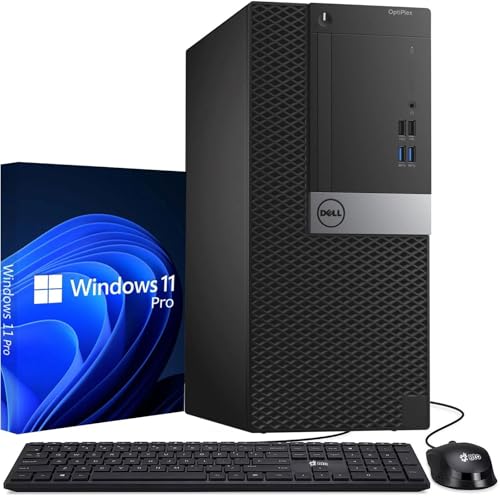
- Core i7-7700 for dependable everyday performance
- 512GB SSD for quick boot and load times
- 16GB DDR4 RAM and Wi-Fi included
Best For: Podcasters who want a responsive renewed tower with Windows 11 Pro
Big Storage Pick
Dell Optiplex 3060 32GB/1TB SSD

- 1TB SSD for roomy, fast storage
- 32GB RAM listed for multitasking headroom
- Built-in WiFi and Bluetooth for easy setup
Best For: Podcasters who need lots of fast storage and memory for bigger projects
Business-Ready Power for Podcasting – Dell Tower Desktop, Intel Core Ultra 7
If you want a desktop computer for podcasting that can handle recording, editing, and multitasking, this Dell tower is built with a lot of headroom. The Intel Core Ultra 7 processor, 32GB of DDR5 RAM, and SSD storage make it a strong fit for creators who keep audio tools, browser tabs, and guest-call apps open at the same time.
Best For: Podcasters who want a secure, expandable business desktop with strong multitasking.
Pros:
- Intel Core Ultra 7 processor with built-in AI support for productivity tasks
- 32GB DDR5 RAM and SSD storage for responsive editing and fast loading
- Supports multiple monitors, including up to four FHD displays
- Tool-less entry and removable side panel make upgrades easier
Cons:
- Integrated graphics only, so it is not aimed at heavy visual workloads
- Windows 11 Home may be less business-focused than Pro for some users
- Tower design takes more desk space than an all-in-one
This is a practical pick for a podcasting setup that also needs room to grow. It leans more toward dependable workstation use than flashy creator features, but the memory, storage, and monitor support make it a solid foundation for audio production.
Compact All-in-One for Recording Calls – HP 24“ OmniStudio All-in-One
This HP all-in-one is a sensible desktop computer for podcasting if you want a simple, tidy desk setup. The 24-inch Full HD IPS display, 16GB of memory, SSD storage, and noise-reducing dual microphones make it well suited to recording, remote interviews, and everyday editing tasks.
Best For: Podcasters who want an uncluttered all-in-one with built-in display and conferencing features.
Pros:
- 24-inch Full HD IPS screen with thin bezels for comfortable long sessions
- Dual microphones with noise reduction for clearer calls
- Pop-up privacy camera adds convenience for video interviews
- 16GB RAM and SSD storage support smooth general productivity
Cons:
- Integrated graphics keep it focused on everyday tasks rather than heavy creative work
- Memory maxes out at 16GB, so there is limited growth room
- All-in-one design offers less upgrade flexibility than a tower
For podcasters who value a clean workspace and built-in collaboration tools, this HP is easy to live with. It is not the most expandable option, but its screen, microphones, and privacy features make it a convenient choice for a home office studio.
Refurbished Value Pick for Studio Basics – Dell Optiplex 7050 SFF Desktop PC
If you are shopping for a desktop computer for podcasting on a tighter budget, this renewed Dell OptiPlex 7050 offers a lot of useful basics. It includes an Intel Core i7-7700, 32GB of RAM, a 1TB SSD, and dual-monitor support, which is a helpful combination for recording software, notes, and audio editing.
Best For: Budget-minded podcasters who want a tested, certified small-form-factor desktop.
Pros:
- 32GB RAM and 1TB SSD provide strong everyday responsiveness
- Dual monitor support is useful for editing and workflow organization
- Includes Wi-Fi, Bluetooth, keyboard, mouse, and power cord
- Professionally renewed and tested with a 90-day seller warranty
Cons:
- Older 7th Gen processor is less current than newer desktop options
- Renewed condition may not appeal to buyers wanting brand-new hardware
- Small form factor limits expansion compared with a tower
This is a practical value choice when you want capable specs without paying for a newer platform. It is especially appealing if your podcast workflow is mostly audio-focused and you want a compact machine that already includes the essentials.
High-Performance Creator Tower – ASUS S501MER Desktop PC
This ASUS tower is a strong desktop computer for podcasting if you want modern processing power and room to expand later. With a 14th Gen Intel Core i7-14700, 16GB of RAM, and a 1TB PCIe SSD, it is built for fast loading, smooth multitasking, and heavier creative workloads.
Best For: Podcasters who want a fast current-gen tower with upgrade potential.
Pros:
- 14th Gen Intel Core i7-14700 offers strong performance headroom
- 1TB PCIe SSD and 16GB DDR5 RAM support quick responsiveness
- Wi-Fi 6E and Bluetooth 5.3 improve modern wireless connectivity
- Expandable up to 64GB RAM for future growth
Cons:
- Comes with only 16GB RAM out of the box
- Integrated graphics mean it is not designed for graphics-intensive work
- Tower form factor needs more space than compact desktops
For podcasters who want a machine that feels ready for long-term use, this ASUS model makes a compelling case. It pairs current-generation speed with expandability, so it can serve as both a podcasting workstation and a broader home office PC.
Value Bundle – Dell OptiPlex 5050 24" Monitor Setup
If you want a desktop computer for podcasting with a simple out-of-the-box setup, this Dell OptiPlex 5050 bundle is built around speed and convenience. The renewed tower pairs an Intel Core i7, 32GB of RAM, and a 512GB M.2 NVMe SSD with a new 24-inch Full HD monitor, making it a practical pick for recording, editing, and everyday production work.
Best For: Podcasters who want a ready-to-use bundle with a monitor included and strong multitasking headroom.
Pros:
- Intel i7-6700 and 32GB DDR4 RAM support fast boot times and smooth app launching.
- 512GB M.2 NVMe SSD helps keep projects, software, and files loading quickly.
- Includes a new 24-inch 1080p monitor for a more complete workstation setup.
- Built-in Wi-Fi 6 and Bluetooth 5.2 add flexible wireless connectivity.
Cons:
- Uses integrated graphics, so it is not aimed at heavy visual production work.
- The system is renewed and includes a 90-day warranty.
Overall, this is a straightforward podcasting desktop for buyers who value speed, a bundled monitor, and easy setup over premium expansion or creative horsepower.
Creator-Ready Tower – HP ProDesk 600G4 i7 Desktop
This HP ProDesk 600G4 is a strong desktop computer for podcasting if you want a roomy tower with plenty of multitasking power. With an 8th-gen Core i7, 32GB of DDR4 RAM, and a 1TB SSD, it is built to handle recording software, browser tabs, file storage, and streaming-related tasks without feeling cramped.
Best For: Podcasters who want a fast, expandable tower with lots of storage and solid multitasking ability.
Pros:
- Intel i7-8700 and 32GB DDR4 RAM are well suited to heavy multitasking.
- 1TB SSD gives you generous fast storage for audio projects and media files.
- Includes Wi-Fi and Bluetooth for flexible home or office connectivity.
- Modern port selection includes USB-C and dual DisplayPorts.
Cons:
- Comes with integrated graphics, so it is not built for graphics-heavy workloads.
- Only 8GB is listed under one spec field, even though the product notes also state 32GB installed.
For podcasting setups that need more storage room and expansion potential, this HP tower offers a balanced mix of speed, connectivity, and workstation-friendly features.
Compact Workstation – Dell OptiPlex 7060 SFF Podcast PC
If desk space is tight, this Dell OptiPlex 7060 SFF is an efficient desktop computer for podcasting that still brings serious performance. It uses an Intel i7-8700, 32GB of DDR4 RAM, and a 512GB NVMe SSD, plus built-in Wi-Fi and Bluetooth, so it fits neatly into a small production setup without sacrificing core speed.
Best For: Podcasters who need a compact, reliable desktop with strong everyday performance and dual-monitor support.
Pros:
- 6-core i7-8700 and 32GB RAM handle multitasking well.
- 512GB M.2 NVMe SSD supports fast startup and quick file access.
- Built-in Wi-Fi and Bluetooth simplify wireless connectivity.
- Dual DisplayPorts make multi-monitor setups easier.
Cons:
- Small form factor means less room than a full tower for future expansion.
- Integrated graphics limit visual performance for demanding creative work.
This is a smart choice if you want a smaller podcasting PC that is still responsive, connected, and ready for a dual-screen workflow.
Reliable All-Rounder – Dell OptiPlex 5060 16GB/500GB SSD + 1TB HDD
If you want a practical desktop computer for podcasting, this renewed Dell OptiPlex 5060 gives you a solid mix of everyday speed and useful connectivity. The Core i5-8500, 16GB of DDR4 RAM, and dual-drive storage make it a comfortable choice for recording sessions, file management, and light multitasking.
Best For: Podcasters who want a dependable Windows 11 tower with WiFi, Bluetooth, and plenty of storage for audio projects.
Pros:
- 16GB DDR4 RAM helps keep recording and multitasking smooth.
- 500GB SSD plus 1TB HDD gives you fast booting and lots of room for audio files.
- Built-in WiFi, Bluetooth, and LAN make setup flexible.
- Includes a microphone feature and HDMI output for common desk setups.
Cons:
- Integrated graphics are fine for podcasting, but not for heavier visual work.
- Renewed unit means condition can vary versus a brand-new desktop.
Overall, this OptiPlex 5060 is a balanced pick if you need a straightforward desktop computer for podcasting without paying for extra power you may not use. Its storage and connectivity are the main reasons it stands out for home or office recording workflows.
Fast Boot Option – Dell Tower Desktop PC Core i7-7700
This Dell tower is a strong desktop computer for podcasting if you want quick startup times and solid day-to-day responsiveness. The Intel Core i7-7700, 16GB DDR4 RAM, and 512GB SSD are a practical combination for editing sessions, browser research, and handling recording tools on Windows 11 Pro.
Best For: Podcasters who want a faster-feeling renewed tower with Windows 11 Pro and included keyboard and mouse.
Pros:
- Core i7-7700 offers reliable processing for routine productivity.
- 512GB SSD supports fast boot times and responsive storage.
- 16GB DDR4 RAM is enough for smooth multitasking.
- Includes keyboard and mouse, plus Wi-Fi for easy setup.
Cons:
- Integrated Intel HD Graphics limit visual performance needs.
- Only 90 days warranty is shorter than many new PCs.
For creators who care more about speed and stability than flashy extras, this OptiPlex-based tower is an easy fit. It keeps the focus on the essentials you need for podcast production and general office use.
Big Storage Pick – Dell Optiplex 3060 32GB/1TB SSD
If storage and multitasking matter most, this desktop computer for podcasting is built to handle a busy workflow. The Optiplex 3060 pairs an Intel i5-8500 with 32GB of DDR4 RAM and a 1TB SSD, giving you generous space for recordings, edits, and project backups in one compact tower.
Best For: Podcasters who want lots of fast storage and extra memory for larger audio libraries and multitasking.
Pros:
- 32GB RAM is the largest memory capacity in this group for heavy multitasking.
- 1TB SSD provides plenty of fast storage for audio projects.
- Built-in WiFi and Bluetooth support simple wireless connections.
- Windows 11 Pro and included support add convenience for everyday use.
Cons:
- Listed RAM installed is 8GB in the details, so specs should be reviewed carefully.
- Integrated graphics are basic and not aimed at demanding visual tasks.
This is the most storage-forward option here, which can be valuable if you keep multiple episodes, raw recordings, and backups on the same machine. For podcasting workflows that benefit from room to grow, it offers a lot of headroom.
How We Picked the Best Desktop Computer for Podcasting
For a Desktop Computer for Podcasting, we prioritized practical performance over flashy specs. That means enough CPU headroom for editing and plugin use, at least 16GB of RAM for comfortable multitasking, fast SSD storage, and stable Wi-Fi or Bluetooth where useful. We also favored towers and small-form-factor systems with upgrade potential, since podcast workflows often grow over time.
Quick Comparison
Broadly, the 10 picks fall into three useful buckets: newer high-performance towers for creators who want more futureproofing; refurbished business desktops that deliver strong value for recording and editing; and all-in-one or bundle-style options for simpler setups. If you work with large projects, choose more RAM and faster storage. If you mainly record voice and edit single shows, a well-equipped midrange system may be enough.
Key Buying Factors for a Desktop Computer for Podcasting
Processor and Multitasking
A modern multi-core CPU helps when you’re running recording software, virtual instruments, noise reduction tools, and streaming apps at the same time. For a Desktop Computer for Podcasting, prioritize newer Intel Core i5/i7-class processors or better if you edit often.
RAM and Storage
16GB RAM is a sensible minimum, while 32GB is better for heavier editing or frequent multitasking. SSD storage is strongly preferred because it speeds up boot times, project loading, and file transfers. If you keep a large media library, look for 1TB or room to expand.
Ports, Connectivity, and Expansion
Make sure the desktop has enough USB ports for audio interfaces, microphones, external drives, and control surfaces. Built-in Wi-Fi and Bluetooth can be helpful, but wired Ethernet is often more reliable for uploads, cloud backups, and remote sessions. If you plan to upgrade later, a tower is usually the easiest format to work with.
Noise and Form Factor
Quiet operation matters in recording spaces. Business-style desktops often run cooler and quieter than bargain gaming systems, while towers usually offer better airflow than compact units. If your desk space is tight, a small-form-factor model or all-in-one can still work well for basic podcasting tasks.
Who Should Buy Which Desktop Computer for Podcasting?
If you want the best balance of power and longevity, pick a newer tower with a recent-generation processor and 32GB RAM. If you’re starting out or building a budget-friendly studio, a refurbished business desktop with an SSD is often the smartest value. If you want the simplest all-in-one setup, choose a model that includes enough memory and storage to avoid immediate upgrades. The right Desktop Computer for Podcasting is the one that fits your editing load, workspace, and upgrade plans without overspending on features you won’t use.