Earth science kits can turn rocks, weather, volcanoes, and ecosystems into hands-on lessons students actually remember. The best options make STEM feel active, visual, and fun.
Below, you’ll find a curated roundup of kits that support different ages, learning goals, and budgets—from simple model-based learning to experiment-heavy sets for classroom or homeschool use.
Best 10 Earth Science Kits for Students Picks for 2026
National Geographic Multi-Experiment Kit

- More than 15 experiment activities
- Full-color learning guide included
- Good for sharing with groups
Best For: Students ages 8-12 needing a broad, hands-on earth science set
Learning Resources Earth Layers Model

- Splits open to show Earth's layers
- Foam build handles classroom use
- Useful for geology and geography lessons
Best For: Visual learners and small groups studying Earth's structure
4M Weather Science Lab

- Weather, cloud, and water cycle activities
- Includes static electricity and greenhouse demos
- Good for kids 5+
Best For: Kids 5+ interested in weather, clouds, and climate concepts
Classroom Rock & Mineral Collection

- 75 labeled rock and mineral samples
- Includes magnifier, magnet, and streak plate
- Supports rock cycle and classification study
Best For: Older students and classrooms focused on geology identification
Three Kits in One Science Lab
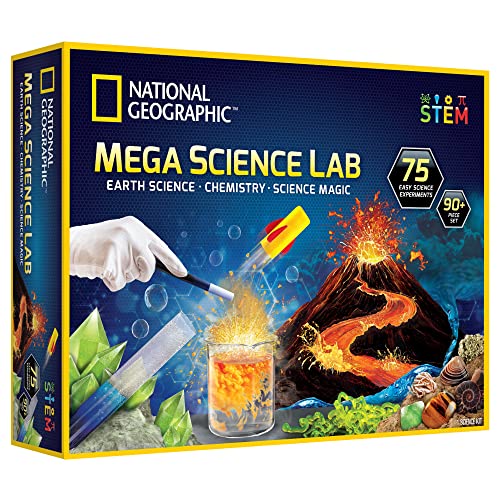
- 45 experiments plus 30 bonus activities
- Covers Earth science, chemistry, and science magic
- Includes real rocks, crystals, and a fossil dig
Best For: Students ages 8-12 who want a wide-ranging hands-on science kit
Classroom-Ready STEM Cards

- 30 challenge cards with directions and hints
- Uses common materials for low-prep activities
- Covers earth, space, physical, and life science
Best For: Grades 2-5 classrooms, centers, and homeschool lessons
Volcano Focused Earth Science Kit
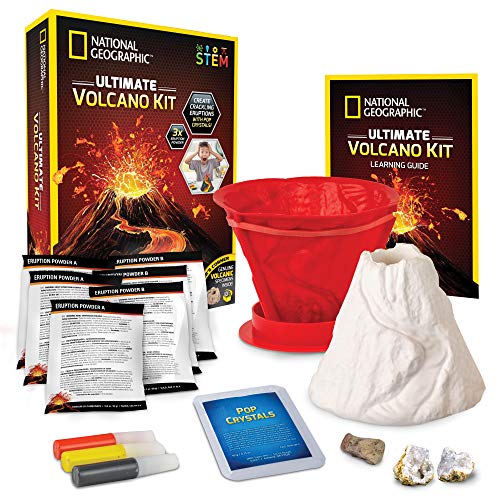
- 3x more eruption powder for repeat demos
- Includes pumice and geode specimens
- Reusable mold supports multiple eruptions
Best For: Students ages 8-12 who want a volcano-centered Earth science project
Observation-Focused Compost Kit

- Three clear compartments show decomposition in stages.
- Thermometers help track temperature changes.
- Teacher guide supports classroom or homeschool use.
Best For: young learners studying composting and early ecology
Multi-Topic Earth Science Lab
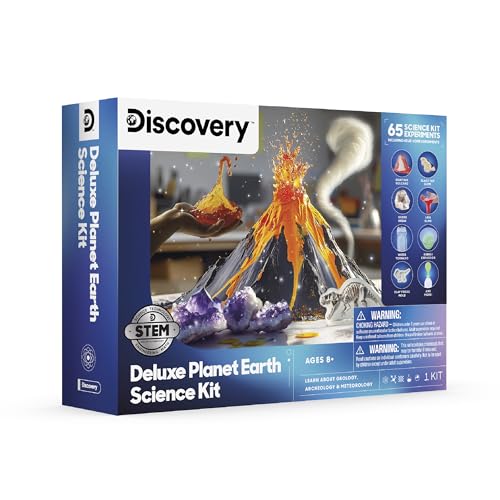
- 65 experiments span volcanoes, fossils, geology, and weather.
- Includes tools, molds, and ingredients for hands-on use.
- Built for ages 8+ with clear instructions.
Best For: older kids who want a broad earth science lab
Frozen-Themed STEM Experiment Kit

- 67 experiments focus on snow, crystals, slime, and icy reactions.
- Teaches freezing points, crystal formation, and chemical reactions.
- Includes 30+ tools and ingredients for hands-on use.
Best For: kids ages 8+ who enjoy snowy, chemistry-style experiments
National Geographic Multi-Experiment Kit – 100+ Activities for Kids
If you want earth science kits for students that feel more like a lab than a toy, this National Geographic set delivers a wide mix of hands-on activities. It includes more than 15 experiment types, from water tornadoes and a volcano to crystal growing and geologic dig kits, so it works well when you need variety in one box.
Best For: Students ages 8-12 who want a broad, shareable earth science kit with multiple experiment types.
Pros:
- Includes 100+ activities and more than 15 experiment types.
- Comes with a full-color learning guide that explains the science behind the projects.
- Easy-to-follow instructions help students work more independently.
- Designed to be shared with family, friends, or classmates.
Cons:
- Best suited to kids in the 8-12 age range.
- Large activity mix may be more than needed if you only want one focused topic.
This is a strong pick if you want a single kit that covers several earth science themes and keeps students engaged with varied, guided experiments.
Learning Resources Earth Layers Model – Cross-Section Foam Globe
For earth science kits for students that focus on visualization, this foam cross-section model makes Earth’s layers easy to see and discuss. The two-piece globe splits open to show the internal structure, with temperature and distance data printed on the model for added classroom context.
Best For: Visual and kinesthetic learners who need a simple model for geology and Earth layers lessons.
Pros:
- Two-piece foam globe opens to reveal Earth’s layers.
- Includes temperature and distance data for each geological layer.
- Durable foam construction is suited to repeated classroom use.
- Works well for homeschool, classroom, and small-group activities.
Cons:
- Focuses on Earth structure rather than experiments.
- Compact size may be less visible for larger groups.
This is a practical teaching tool when the goal is to make Earth’s internal structure tangible instead of relying on diagrams alone.
4M Weather Science Lab – Mini Observatory STEAM Kit
If you’re comparing earth science kits for students with a weather and climate focus, this 4M set offers a hands-on way to explore atmospheric concepts. Activities cover static electricity, cloud formation, evaporation, the greenhouse effect, the water cycle, and wind convection, making it a good fit for learners who like cause-and-effect demonstrations.
Best For: Kids 5+ who want a weather-themed science kit with climate and water cycle experiments.
Pros:
- Covers weather, clouds, evaporation, and the water cycle in one kit.
- Includes demos for static electricity and lightning formation.
- Uses a desktop water cycle model and self-contained ecosystem.
- Hands-on format makes abstract climate ideas easier to see.
Cons:
- Educational objective is listed as creative skills, not a broad STEM curriculum.
- Some activities may be more demonstration-based than open-ended.
This kit is a smart choice if you want weather experiments that connect directly to core Earth science topics like the water cycle and greenhouse effect.
Classroom Rock & Mineral Collection – 75 Sample Geology Set
Geosciences Industries 13357 Introductory Earth Science Classroom Rocks and Minerals Collection
Check Price On AmazonFor earth science kits for students centered on geology, this rock and mineral collection gives learners a substantial sample set to examine and classify. The collection includes 75 numbered and identified samples, plus a streak plate, magnifier, magnet, and study guide to support hands-on rock identification.
Best For: Older students and classroom groups studying rocks, minerals, and the rock cycle.
Pros:
- Includes 75 rock and mineral samples.
- Each sample is numbered and matched to an index sheet.
- Comes with a study guide, streak plate, magnifier, and magnet.
- Covers igneous, sedimentary, and metamorphic rocks.
Cons:
- Listed age range is older than the other kits in this roundup.
- More of a collection than an experiment kit.
This set is best when you want a more traditional geology resource that supports classification, comparison, and reference-based learning.
Three Kits in One Science Lab – Mega Science Lab
If you want earth science kits for students that cover more than one topic, this National Geographic set gives you a lot to work with. It combines Earth science, chemistry, and science magic experiments, plus a bonus guide with additional household-item activities, so it can keep kids busy through multiple lessons or rainy-day projects.
Best For: Students ages 8-12 who want a broad, hands-on science kit with volcanoes, crystals, rocks, and extra experiments.
Pros:
- Includes 45 core experiments plus 30 bonus activities.
- Covers Earth science, chemistry, and science magic in one box.
- Includes real rock, mineral, crystal, and fossil-related materials.
- Backed by National Geographic and Blue Marble support.
Cons:
- May be more kit than a child needs if you only want a single-topic Earth science set.
- Best suited to kids old enough to handle a larger, multi-part kit.
This is a strong pick for families or classrooms that want variety rather than a narrow lesson. The mix of experiments and specimens makes it especially useful if you want a kit that can support repeated use.
Classroom-Ready STEM Cards – Earth and Space Challenges
For earth science kits for students that fit easily into a classroom or homeschool routine, this Carson Dellosa card set keeps things simple and structured. The 30 challenges use common materials and short directions, making it a practical way to add hands-on science practice without needing a full kit of specialty supplies.
Best For: Elementary students in grades 2-5 who need short, guided STEM activities for centers, lessons, or homeschool use.
Pros:
- Includes 30 STEM challenge cards with directions, materials, and hints.
- Covers physical, life, earth, and space science topics.
- Uses simple, common materials for easy setup.
- Boxed set with divider makes storage and organization easy.
Cons:
- Card-based activities are less hands-on than full experiment kits.
- Does not include physical science tools or specimen materials.
This set works best when you want flexible science practice rather than a big one-time project. It is a practical option for teachers and parents who value repeatable, low-prep activities.
Volcano Focused Earth Science Kit – Ultimate Volcano Science Kit
If your search for earth science kits for students is really about volcanoes, this National Geographic kit is a focused choice. It includes extra eruption powder, pop crystals that add sound, and a reusable mold, so kids can repeat the experiment and compare different eruptions while learning geology and earth science basics.
Best For: Students ages 8-12 who want a reusable volcano project with real rocks and multiple eruption attempts.
Pros:
- Includes 3x more eruption powder for repeated eruptions.
- Pop crystals add an exciting sound effect.
- Comes with pumice and geode specimens for real rock examples.
- Reusable mold and guide support different eruption variations.
Cons:
- More specialized than a general Earth science kit.
- Primarily centered on volcano science rather than a broad range of topics.
This kit is a smart buy if you want a memorable volcano project with a strong hands-on element. It offers good repeat value and enough educational detail to work for science fair style learning or home instruction.
Observation-Focused Compost Kit – See-Through Compost Container
If you want earth science kits for students that make decomposition easy to watch in real time, this see-through compost container is a strong starting point. Its three clear, aerated compartments let kids compare materials side by side while the included thermometers help them notice temperature changes as the compost breaks down.
Best For: Younger students, homeschool lessons, or classroom science centers focused on observation and early ecology.
Pros:
- Three clear compartments make decomposition easy to observe.
- Included thermometers support temperature tracking during the process.
- Side-by-side testing helps students compare different compostable materials.
- Teacher’s guide adds facts and project ideas for guided learning.
Cons:
- More of an observation tool than a high-energy experiment kit.
- Requires time and patience to see meaningful compost changes.
- Best suited to basic ecology and decomposition lessons rather than broad earth science topics.
Overall, this kit is a practical choice for introducing kids to nature cycles and composting with a hands-on setup. It works best when the goal is steady observation, discussion, and simple scientific tracking.
Multi-Topic Earth Science Lab – Planet Earth Science Kit
For earth science kits for students that cover a wide range of topics, this 65-experiment lab offers one of the broadest mixes in the group. Kids can work through volcanoes, fossils, geology, weather, crystals, and more using included tools, molds, and ingredients.
Best For: Ages 8+ who want a broad, hands-on earth science kit for home labs, science fairs, or family experiments.
Pros:
- Includes 65 total experiments across multiple earth science topics.
- Covers volcanoes, fossils, geology, weather, crystals, and archaeology.
- Comes with real tools and ingredients for hands-on activities.
- Clear instructions and adult supervision make it suitable for guided use.
Cons:
- Many activities will require adult help.
- Best for ages 8+, so it is not ideal for younger students.
- Broad scope means it is less focused on any single earth science subject.
This is a strong pick if you want a flexible science kit that can keep students busy across many lessons. It offers enough variety to feel substantial while still staying centered on earth science themes.
Frozen-Themed STEM Experiment Kit – Frozen Earth Science Kit
This frozen-themed option stands out among earth science kits for students who enjoy chemistry with a winter twist. With 67 experiments and activities involving crystals, instant snow, slime, and icy eruptions, it gives kids a playful way to explore scientific ideas tied to freezing and cold-weather processes.
Best For: Ages 8+ who like snowy, hands-on experiments and want a chemistry-heavy earth science kit.
Pros:
- 67 experiments provide plenty of variety.
- Covers crystal formation, freezing points, and chemical reactions.
- Includes tools and ingredients for slime, snow, and ice-themed activities.
- Works well for at-home labs, classroom fun, or snow day projects.
Cons:
- Many experiments are chemistry-based rather than broad earth science.
- Adult supervision is recommended for the activities.
- The frozen theme may appeal more to some students than others.
As a themed science kit, this one is especially useful when you want cold-weather experiments to feel exciting and practical. It blends messy fun with clear STEM learning, making it a good fit for curious students who like active projects.
How We Picked These Earth Science Kits for Students
We focused on kits that balance educational value, age suitability, clear instructions, and hands-on engagement. For Earth Science Kits for Students, that usually means real experiments, durable components, and topics that map well to geology, weather, the water cycle, ecosystems, and Earth’s structure.
We also favored products that work well in multiple settings, including classrooms, homeschool lessons, and independent learning.
Quick Comparison
If you want broad experiment variety, choose a multi-experiment kit. If your student is focused on one topic, a specialized option like rocks and minerals, volcanoes, or Earth models may be the better fit. For younger learners, simpler visual kits usually work best; older students often benefit more from collections and lab-style experiments.
Key Buying Factors for Earth Science Kits for Students
Topic Focus
Some kits cover multiple subjects, while others go deep on one area. Match the kit to the lesson goal: geology, weather, Earth layers, composting, or environmental science.
Age and Skill Level
Check the recommended age range and the amount of adult help needed. Younger students generally do better with guided, low-prep activities, while older students can handle more steps and observation-based learning.
Hands-On Learning Value
The best kits do more than entertain. Look for experiments that teach cause and effect, observation, prediction, and recording results. That’s especially important in Earth Science Kits for Students used in schoolwork or science fair prep.
Materials and Reusability
Some kits are consumable and meant for one-time experiments; others include reusable models or tools. If you want long-term value, choose kits with durable parts and repeatable activities.
Classroom or Home Use
For classrooms, consider group-friendly kits with enough pieces and clear directions. For home use, smaller kits with a strong wow factor may be more practical.
Who Should Buy Which Earth Science Kits for Students?
Choose a broad experiment kit if you want variety and ongoing use. Pick a rocks-and-minerals or Earth model kit if the student needs visual reinforcement and core science concepts. Go with weather, volcano, or ecology-focused kits when you want a subject-specific supplement for a unit study.
If you’re buying for mixed ages or a classroom, prioritize clarity, repeatability, and strong educational structure. If you’re buying for a curious individual learner, a kit with dramatic experiments and quick setup may be the most motivating choice.