Finding educational games for 7 year olds is easier when you focus on play value, skill level, and how long a game will actually hold attention. At this age, kids do best with activities that feel fun first and teach naturally along the way.
This roundup highlights kid-friendly games that support early reading, math, memory, logic, and social learning without feeling like homework.
Best 10 Educational Games for 7 Year Olds Picks for 2026
Word-Building Starter

- Two-sided board with beginner and advanced play
- Teaches spelling and vocabulary
- 2-4 players, no batteries required
Best For: Young readers who are learning letter matching and early word-building
Math Bingo Pick

- Builds counting, addition, and number sense
- Easy-to-learn gameplay with clear instructions
- 2-6 players in a compact tin
Best For: Kids who like quick math games with simple rules
Math Adventure Choice

- Adds subtraction, addition, and odd/even practice
- Simple dice-and-move gameplay
- Works for homeschool, classroom, and family play
Best For: Kids ages 5-7 who need hands-on basic math practice
Travel Trivia Pick
Scholastic USA Travel Card Game

- Teaches state names, capitals, nicknames, and facts
- Quick, portable card game for travel
- Supports geography and reading comprehension
Best For: Kids who want a small, easy geography game for trips
Best for Easy Setup
Learning Resources Math Island Addition & Subtraction Game
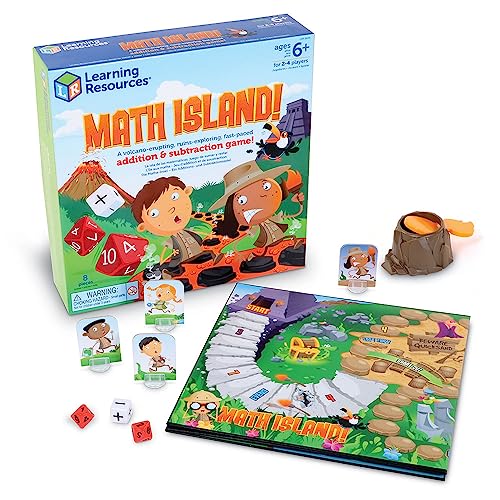
- Adventure-style addition and subtraction practice
- Volcano popper keeps gameplay exciting
- Good for 2-4 players ages 6+
Best For: Hands-on family math practice
Flash Card Challenge
School Zone Math War Addition & Subtraction Game Cards

- Competitive addition and subtraction flash card game
- Portable 56-card set for home or travel
- Large double-sided cards are easy to use
Best For: Quick, portable math fact practice
Fast-Paced Family Pick

- Fast category game with 120 cards
- Builds communication and problem-solving skills
- Great for ages 6+ and family game night
Best For: Kids who like lively, replayable group games
STEM Logic Builder

- 3D shape-matching puzzle for logic practice
- 10 challenge cards with increasing difficulty
- Portable, screen-free solo play
Best For: Kids who enjoy independent STEM puzzles
Word Play Starter
Sentence Search Educational Board Game

- Hands-on sentence building with word tiles
- Supports vocabulary, grammar, and reading
- Portable and easy to learn
Best For: Kids practicing early literacy and sentence skills
Animal Trivia Challenger
Guess in 10 National Geographic
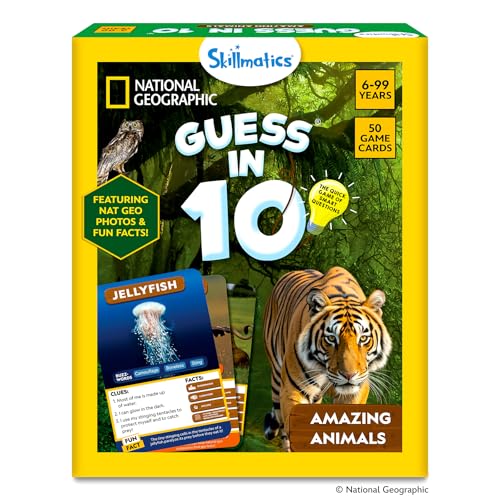
- Quick yes-or-no animal guessing game
- Builds logic, communication, and problem-solving
- Travel-friendly for 2+ players
Best For: Families wanting a fast, portable trivia game
Word-Building Starter – Scrabble Junior Board Game
If you want educational games for 7 year olds that build reading confidence, Scrabble Junior is a strong pick. The two-sided board lets kids start with simple letter matching and grow into creating their own words on the advanced side, so it stays useful as skills improve.
Best For: Kids who are ready to move from letter matching into simple word-building with a game that can grow with them.
Pros:
- Two-sided gameboard offers both beginner and advanced play.
- Supports spelling and vocabulary development.
- Uses cute character tokens for score keeping.
- No batteries required and plays manually.
Cons:
- Only supports 2-4 players.
- Best suited to indoor play.
Overall, this is a practical word game for families who want something educational without feeling like a worksheet. The progression mechanic makes it a good long-term choice for mixed-skill play.
Math Bingo Pick – ThinkFun Zingo 1-2-3
For educational games for 7 year olds that feel quick and engaging, ThinkFun Zingo 1-2-3 blends number practice with easy-to-learn play. It is designed to build counting, simple addition, number sense, and word recognition, making it a flexible option for early elementary learning.
Best For: Kids who enjoy fast-paced number practice and families wanting a simple math-and-skills game.
Pros:
- Supports counting, simple addition, number sense, and word recognition.
- Includes 6 double-sided cards and 72 double-sided tiles.
- Easy to learn with a clear instruction manual.
- Plays with 2-6 players.
Cons:
- Manual setup and play only.
- Uses paper and plastic components rather than a sturdier board format.
This is a solid pick if you want a number-based game that starts quickly and keeps the learning built into the action. The compact tin packaging also makes it easy to store and bring out for repeat play.
Math Adventure Choice – Number Hunter Math Board Game
Number Hunter is a good fit if you want educational games for 7 year olds that make math practice feel more like an adventure. The game focuses on addition, subtraction, and even-and-odd numbers, while keeping the rules simple enough for families and classroom use.
Best For: Kids ages 5-7 who need friendly practice with basic math skills in a board game format.
Pros:
- Teaches and reinforces addition and subtraction skills.
- Includes even and odd number practice.
- Easy to learn: roll dice, move, and complete challenge tiles.
- Designed for homeschool supplies, classroom learning, and family game night.
Cons:
- Rulebook availability is listed as false.
- Paper components may be less durable than heavier game materials.
- Best for indoor play only.
Overall, this is a straightforward math board game that keeps the focus on skill reinforcement rather than complicated gameplay. If your goal is stress-free practice, it covers the basics well.
Travel Trivia Pick – Scholastic USA Travel Card Game
If you are shopping for educational games for 7 year olds that travel well, this Scholastic USA card game is easy to recommend. It turns state names, capitals, nicknames, and facts into quick trivia rounds, so kids can practice geography without a long setup.
Best For: Families who want a compact geography game for road trips, quick sessions, or beginner learners.
Pros:
- Covers state names, capitals, nicknames, and facts.
- Quick and easy to play with minimal setup.
- Compact format is ideal for travel.
- Supports geography and reading comprehension skills.
Cons:
- Limited to 2-4 players.
- Focused on geography, so it is less broad than multi-skill games.
This is a practical pick for families who want a portable learning game that fits into short windows of time. The trivia format keeps it approachable while still reinforcing school skills at home or on the go.
Best for Easy Setup – Learning Resources Math Island Addition & Subtraction Game
If you want educational games for 7 year olds that make math practice feel like play, Math Island turns addition and subtraction into a simple adventure. The game uses number dice, an operation die, and a volcano popper to keep each round active while kids build quicker mental math skills.
Best For: Families who want a hands-on math game for 2-4 players ages 6+ that can work for siblings or parent-led game night.
Pros:
- Makes addition and subtraction practice feel like an adventure game
- Uses 2 ten-sided number dice plus an operation die for varied equations
- Volcano popper adds an exciting, replayable twist
- Includes board, pieces, dice, and instructions in one set
Cons:
- Focused mainly on addition and subtraction, not broader math topics
- Designed for a small group, not solo play
This is a strong pick if you want a tactile, family-friendly way to reinforce early math facts without feeling like a worksheet. The engaging mechanics help keep kids asking to play again.
Flash Card Challenge – School Zone Math War Addition & Subtraction Game Cards
For educational games for 7 year olds that are easy to carry and quick to start, Math War keeps the focus on simple addition and subtraction facts. The competitive card format makes it useful for home, classroom, or travel, and the large colorful cards are designed to feel more like play than drills.
Best For: Kids ages 6+ who enjoy quick card games and need extra practice with basic math facts.
Pros:
- Turns addition and subtraction practice into a competitive card game
- Large 3" x 5" double-sided cards are easy to handle and sort
- Portable set works well at home, in class, or on the go
- Includes game, answer, and parent cards for flexible use
Cons:
- Limited to basic early math practice
- Best with at least two players for the competitive format
This is a practical choice if you want a low-prep math game that can be played in short bursts. It is especially helpful for reinforcing fact fluency without requiring a full board setup.
Fast-Paced Family Pick – Skillmatics Rapid Rumble
If you are shopping for educational games for 7 year olds that also work for the whole family, Rapid Rumble adds speed and word-based thinking to game night. Players race to shout answers that match category cards, so the game supports communication, creative thinking, and quick decision-making in a lively format.
Best For: Kids ages 6 and up who like fast, social games with lots of replay value.
Pros:
- Fast category gameplay keeps kids engaged and moving
- 120 category cards create lots of replay variety
- Supports social, communication, and problem-solving skills
- Includes cards, wooden die, timer, and instructions
Cons:
- Requires quick thinking, so it may feel intense for some kids
- More language- and category-based than academic drill-based
This is a smart option if your child prefers energetic, interactive play over quiet study games. The changing categories help it stay fresh across repeated family game nights.
STEM Logic Builder – Brainometry 3D Puzzle Game
If you’re comparing educational games for 7 year olds, this 3D puzzle is a strong pick for hands-on logic practice. The shape-matching challenges help kids use critical thinking, pattern recognition, and spatial reasoning without screens, and the included cards let the difficulty grow as skills improve.
Best For: Kids who like solo puzzles and STEM-style problem solving.
Pros:
- Uses 10 double-sided challenge cards with progressive difficulty.
- Encourages spatial understanding, fine motor skills, and logic.
- Portable storage box helps keep the 34 pieces organized.
- Screen-free activity works well at home, in class, or on the go.
Cons:
- Designed for one player, so it is not a group game.
- Challenge style is puzzle-based rather than fast-paced.
This is a practical choice if you want a compact STEM toy that builds thinking skills through tactile play. It suits kids who enjoy structured, independent challenges more than competitive board games.
Word Play Starter – Sentence Search Educational Board Game
For families shopping educational games for 7 year olds, this sentence-building set is a smart language-learning option. It turns grammar and word order into a hands-on activity with color-coded tiles, giving kids a structured way to practice vocabulary, reading, and sentence creation.
Best For: Kids learning to build sentences and strengthen early literacy skills.
Pros:
- Includes 120+ color-coded word tiles plus 20 wooden sentence builder tiles.
- Designed by educators to support vocabulary, grammar, and reading growth.
- Step-by-step instruction manual makes it easy to start.
- Portable format works for independent or shared play.
Cons:
- Focuses on language skills rather than action or competitive gameplay.
- Best suited to indoor tabletop use.
Overall, this set is a focused learning tool for kids who benefit from visual, hands-on literacy practice. It is especially useful if you want an educational game that reinforces language fundamentals in a clear, approachable way.
Animal Trivia Challenger – Guess in 10 National Geographic
If you want educational games for 7 year olds that work for family play, this animal trivia card game is a strong fit. Kids ask up to 10 yes-or-no questions to guess the animal, making it a quick, screen-free way to build logic, communication, and problem-solving skills.
Best For: Families and kids who like fast animal trivia and guessing games.
Pros:
- Fast rounds with average playtime of about 20 minutes.
- Includes 50 game cards, clue cards, and a travel-friendly box.
- Encourages logical thinking, decision-making, and communication.
- Works for 2 or more players, making it good for group play.
Cons:
- Requires multiple players or teams to get the full experience.
- Gameplay is trivia-driven, so it may not appeal to kids who prefer hands-on building toys.
This is a good pick if you want a compact game that feels fun while still teaching strategy and question-based thinking. It is especially handy for travel or family game nights when you want something quick to set up and replay.
How We Picked These Educational Games for 7 Year Olds
We looked for games that match the typical abilities of second graders and strong first graders: simple rules, short setup, replay value, and skills that are useful beyond the game itself. We also prioritized options that work well for families, classrooms, and travel.
To make the list practical, we favored games that encourage independent thinking, group play, or parent-led support without requiring a long learning curve.
Quick Comparison
If your child is building early reading skills, word and sentence games are the best fit. For math practice, choose addition, subtraction, and number recognition games. For broader learning, geography, logic, memory, and category games offer more variety and can keep mixed-age groups engaged.
Key Buying Factors for Educational Games for 7 Year Olds
Skill Match
Look for games that are challenging but not frustrating. Seven-year-olds usually need clear directions, visual cues, and enough repetition to build confidence.
Learning Goal
Decide whether you want to support reading, math facts, vocabulary, spatial reasoning, or general knowledge. The best Educational Games for 7 Year Olds focus on one main skill while still feeling playful.
Replay Value
Games with multiple ways to play, changing prompts, or competitive elements tend to get used longer. Replay value matters more than complexity.
Group Size and Portability
Some games are ideal for one-on-one practice, while others shine in family settings or classrooms. If you want travel-friendly learning, choose compact card-based formats or quick board games.
Screen-Free Engagement
At this age, screen-free options can help build focus, conversation, and turn-taking. Games that combine movement, cards, puzzles, or hands-on pieces often hold attention best.
Who Should Buy Which Educational Games for 7 Year Olds?
Choose word and sentence games for kids who are starting to read more independently. Pick math-focused games for children who need extra practice with facts, number sense, or basic operations. Geography and trivia games are a smart choice for curious kids who enjoy memorizing facts and answering questions.
If you want something for the whole family, category, speed, and guessing games usually work well across ages. For quieter play or solo practice, puzzle and logic games are often the most versatile option.