Engineering design kits for teenagers can turn curiosity into hands-on problem solving. The best options teach design thinking, physics, electronics, and mechanics while keeping the build engaging enough to finish.
Below, we focus on kits that offer real learning value, solid build variety, and age-appropriate challenge for teens who like to tinker, build, and test ideas.
Best 10 Engineering Design Kits for Teenagers Picks for 2026
App-Controlled STEM Starter
ELEGOO UNO R3 Smart Robot Car Kit V4

- 24 module parts for robotics learning
- App, IR remote, line-tracking, and obstacle avoidance
- HD instructions and included code support
Best For: Teens who want a guided robot build with coding and control options
Structural Build Lab
Thames & Kosmos Bridges & Skyscrapers Kit

- 20 structural models plus interchangeable parts
- Teaches force, load, compression, and tension
- Includes illustrated manual and assembly guide
Best For: Teens interested in bridges, towers, and structural engineering basics
Hydraulic Robotics Project

- Water-powered arm with six axes
- Rotates up to 270 degrees and can grab objects
- Detailed step-by-step assembly included
Best For: Teens who want a mechanical robotics build powered by hydraulics
Machines & Motion Workshop
Thames & Kosmos Mechanical Engineering Kit

- 20 build projects plus 22 experiments
- Covers gears, force, motion, and simple machines
- Reusable parts with an 80-page color manual
Best For: Teens who want an introductory mechanical engineering kit with lots of variety
Architecture Studio Kit

- Drafts floor plans and builds 3D models
- Includes rulers, tracing paper, and acrylic walls
- Guidebook teaches architecture basics and lingo
Best For: Young builders who like architectural drawing and model making
Structural Engineering Set

- Builds 20+ structural models and buildings
- Teaches trusses, arches, domes, and materials
- Includes a 44-page full-color manual
Best For: Teens who want a guided introduction to structural design
Robotic Arm Build

- Uses motors, PCB boards, and wires
- No soldering required for assembly
- Wood parts and tutorial add a hands-on challenge
Best For: Teens who want a robotics project with circuits and mechanics
Medieval Physics Pick
Thames & Kosmos Catapult Engineering STEM Maker Kit

- Builds six medieval machine models
- Covers force, energy, motion, and trajectory
- Includes safe foam projectiles and target blocks
Best For: teens who enjoy physics-driven builds and castle-themed STEM play
Engine Lab Build

- Motorized model with visible piston movement
- 703-piece build for older teens
- USB charging, no batteries required
Best For: teens interested in car engines and mechanical engineering
Radio Circuit Starter
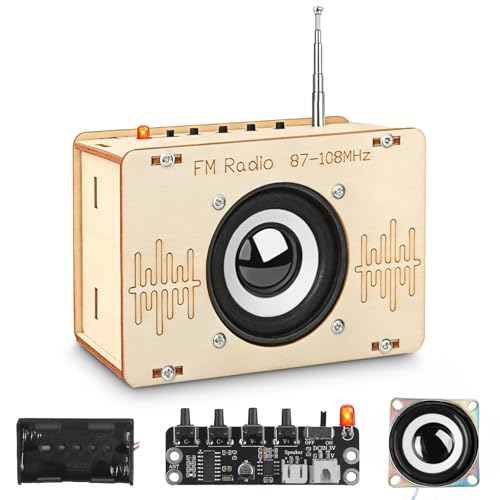
- Teaches circuit basics and radio tuning
- Wooden parts with step-by-step instructions
- Finished radio can be decorated
Best For: teens who want a functional electronics project
App-Controlled STEM Starter – ELEGOO UNO R3 Smart Robot Car Kit V4
If you want engineering design kits for teenagers that mix building, coding, and robotics in one project, this ELEGOO robot car is a strong hands-on choice. It includes multiple modules for obstacle avoidance, line tracing, infrared remote control, and phone/tablet control, so teens can explore how electronics and programming work together.
Best For: Teens who want an all-in-one robot build with coding, remote control, and basic robotics learning.
Pros:
- Includes 24 module parts for a broad robotics build experience.
- Supports app control on Android and iOS, plus IR remote use.
- Comes with step-by-step HD assembly instructions and code.
- Designed to teach programming, electronics assembling, and robotics knowledge.
Cons:
- Requires basic electronic knowledge to get the most out of it.
- May need adult or mentor guidance for first-time builders.
This is a practical pick for teens who enjoy tinkering and want a guided introduction to robotics rather than a simple toy. The learning curve is real, but the included tutorial and coding materials make it easier to turn the build into a rewarding STEM project.
Structural Build Lab – Thames & Kosmos Bridges & Skyscrapers Kit
Among engineering design kits for teenagers, this Thames & Kosmos structural set stands out for teaching how real buildings handle force, load, compression, and tension. Teens build 20 different models with interchangeable pieces, making it a solid choice for learning structural principles through repeated hands-on testing.
Best For: Teens who want to explore structural engineering through bridges, towers, and model-based experiments.
Pros:
- Builds 20 models that focus on structural engineering concepts.
- Includes over 285 interchangeable building pieces for reconfiguration.
- Comes with a 36-page illustrated experiment manual and assembly guide.
- Covers force, load, compression, and tension in a clear way.
Cons:
- Listed skill level is intermediate, so it may not suit absolute beginners.
- Focuses more on structural concepts than on electronics or coding.
This kit is a good fit if you want a more traditional engineering project with physical models and clear science concepts. It offers enough variety to keep teens engaged while still staying focused on how structures are designed and tested.
Hydraulic Robotics Project – Teach Tech Hydrobot Arm Kit
If you’re comparing engineering design kits for teenagers, this hydraulic arm kit is a hands-on way to learn mechanical engineering without batteries. It uses water power to drive six axes of motion, letting teens build and operate a working robot arm that can rotate, grab, and handle different components.
Best For: Teens who like mechanical builds and want a robotics project powered by hydraulics.
Pros:
- Powered by water, so no batteries are required.
- Offers six axes and up to 270 degrees of rotation.
- Can grip objects and swap to suction components for different tasks.
- Includes detailed step-by-step assembly instructions for a true build project.
Cons:
- Designed as an in-depth STEM build, so it takes multiple hours.
- Not a pre-assembled toy, which may be challenging for casual users.
This kit is best for teens who like the satisfaction of a real build and want to see engineering principles in motion. The hydraulic system makes it feel different from typical robot kits and gives the project a strong mechanical focus.
Machines & Motion Workshop – Thames & Kosmos Mechanical Engineering Kit
This Thames & Kosmos kit is a strong pick for engineering design kits for teenagers who want to learn the basics of mechanical systems through building and experimentation. With 20 models and 22 supplemental experiments, it introduces force, motion, gears, energy storage, and simple machines in a practical, hands-on format.
Best For: Teens who want an introductory mechanical engineering kit with lots of model variety.
Pros:
- Includes 20 hands-on building projects plus 22 extra experiments.
- Covers simple machines, gears, gravity, momentum, and energy conversion.
- Reusable components can be combined into different functional models.
- Comes with an 80-page full-color manual with step-by-step guidance.
Cons:
- Best suited for introductory learning rather than advanced engineering work.
- Does not include coding or electronics features.
This kit is ideal for teens who want a broad mechanical engineering overview with clear real-world connections. The reusable build system adds value because it encourages experimentation instead of a one-time assembly.
Architecture Studio Kit – Architecture Kit for Kids
If you’re comparing engineering design kits for teenagers who like to sketch, plan, and build, this architecture set offers a strong hands-on workflow. It lets users draft floor plans, then turn them into 3D models with a magnetic grid base and acrylic walls, making it a practical pick for learning spatial design and basic architectural thinking.
Best For: Kids and teens who want a guided, screen-free introduction to architectural drafting and model building.
Pros:
- Combines drafting tools with a magnetic building system for plan-to-model building.
- Includes a wide set of materials, from tracing paper and rulers to wall stickers and colored pencils.
- Architecture Adventure book and step-by-step guide help explain design basics in an easy way.
- Supports creative customization with patterned paper, reusable stickers, and interior details.
Cons:
- Best suited to structured, step-by-step projects rather than freeform building.
- Focuses more on architecture and drafting than on electronics or mechanical engineering.
This is a good choice if you want engineering design kits for teenagers that emphasize planning, precision, and visualizing ideas in 3D. It feels especially useful for young builders who enjoy drawing as much as constructing.
Structural Engineering Set – Architectural Engineering Kit
For shoppers looking at engineering design kits for teenagers, this Thames & Kosmos set stands out for teaching how structures work. It lets builders create trusses, arches, domes, and scaled building models while learning about architectural design and modern building materials through guided experiments.
Best For: Teens and older kids who want a structure-focused kit with real engineering concepts and guided model builds.
Pros:
- Builds over 20 models of structural elements and real-world buildings.
- Covers core concepts like trusses, arches, domes, and steel-frame-inspired pieces.
- Includes a 44-page full-color manual for guided learning and design ideas.
- Compatible plastic pieces can be used with other Thames & Kosmos engineering and physics kits.
Cons:
- Plastic model parts make it more of a structural-learning kit than a high-tech engineering set.
- Focuses on architecture and construction concepts rather than electronics or programming.
This kit is a strong pick if you want a straightforward engineering design experience centered on how buildings stay standing. It’s especially appealing for learners who enjoy following instructions while still experimenting with their own ideas.
Robotic Arm Build – Robot Arm Kit
If you want engineering design kits for teenagers that mix building with electronics, this robot arm project is a compelling option. It combines motors, PCB microcontroller boards, and wires with a mechanical build, giving users a hands-on way to explore circuits, movement, and problem-solving in one project.
Best For: Teens, tweens, and older kids who want a challenging robotics build with mechanical and circuit-based learning.
Pros:
- Introduces robotics and circuits through motors, PCB boards, and wiring.
- No soldering required, which keeps assembly more approachable.
- Wooden parts and a precise tutorial create a satisfying, skill-building project.
- Works well as a STEM gift or family science project for a wide age range.
Cons:
- Requires 6 AA batteries, which are not included.
- More demanding than simple model kits, so it may be better for patient builders.
This is a good choice for anyone who wants a more technical build with a clear payoff at the end. It offers a nice balance of mechanical assembly and beginner-friendly electronics for teens ready for a bigger challenge.
Medieval Physics Pick – Thames & Kosmos Catapult Engineering STEM Maker Kit
If you want engineering design kits for teenagers that feel hands-on right away, this catapult set is a strong pick. It lets builders assemble six different medieval machines while exploring force, energy, motion, and trajectory through guided experiments and target practice.
Best For: teens who like mechanical builds, physics experiments, and themed STEM projects.
Pros:
- Builds six functional models, including a catapult, trebuchet, ballista, and crossbow variants.
- Includes a 32-page illustrated manual with assembly steps and physics-focused experiments.
- Comes with soft foam balls, foam-tipped projectiles, and cardboard target blocks for safe testing.
- The box converts into a colorable castle, adding a creative display element.
Cons:
- Theme is medieval machinery, so it may appeal less to teens looking for modern tech builds.
- Smaller parts and guided construction may be better for patient, detail-oriented builders.
This kit works well as a practical STEM activity because it combines building, testing, and physics observation in one package. It is a good fit when you want a project that feels playful but still teaches clear engineering concepts.
Engine Lab Build – V8 Engine Model Kit That Runs
For engineering design kits for teenagers that focus on mechanics, this working V8 model is a standout. It uses a transparent cylinder head and motorized action so builders can watch the pistons move and better understand how an engine operates.
Best For: teens who like car mechanics, visible moving parts, and more advanced STEM builds.
Pros:
- Realistic V8 styling with transparent cylinder heads and simulated piston movement.
- USB charging motor design means no batteries are required for operation.
- 703 pieces provide a substantial build for older teens who want a larger project.
- Made from ABS material and tested by ASTM and CPSIA for a safer building experience.
Cons:
- The parts count and mechanical theme make it better suited to older, more patient builders.
- Focuses on engine mechanics rather than a broad range of engineering topics.
This kit is a strong choice if the goal is to make engineering feel concrete and visual. It gives teens a hands-on way to study motion and mechanical structure while building something display-worthy.
Radio Circuit Starter – Build Your Own FM Radio Kit
Among engineering design kits for teenagers, this FM radio project is a practical way to introduce circuits and broadcast tuning. Builders assemble a wooden radio, then use the finished unit to scan the 87–108 MHz range and listen to stations.
Best For: teens who want an electronics build with a useful finished product.
Pros:
- Teaches circuit basics and how radio works through a build-and-use format.
- Automatic station search and retractable antenna add real functionality.
- Precision laser pre-cut wooden parts and step-by-step instructions support assembly.
- Finished radio can be colored and decorated for a custom look.
Cons:
- Requires 2 AA batteries, which are not included.
- The wooden puzzle format may feel less technical than plastic or motorized engineering kits.
This is a smart pick for teens who learn best by building something they can actually use afterward. It blends simple electronics, hands-on construction, and personalization in a compact project.
How We Picked the Best Engineering Design Kits for Teenagers
We looked for kits that do more than entertain. The strongest Engineering Design Kits for Teenagers combine clear instructions, repeatable experiments, and meaningful exposure to core STEM concepts such as force, load, motion, hydraulics, structure, and circuitry. We also favored kits with multiple builds or open-ended play so teens can keep learning after the first project is done.
Durability, part quality, and age fit mattered too. For teen builders, a kit should be challenging without becoming frustrating, and it should feel substantial enough to reward careful assembly.
Quick Comparison
Robotics and robot car kits are best for coding, control systems, and sensors. Hydraulic and mechanical kits are strong choices for understanding motion, leverage, and real-world mechanisms. Structural engineering and architecture kits are ideal for teens interested in buildings, stability, and design. Electronics kits such as radio projects suit learners who want circuits and signals, while engine models appeal to teens who enjoy visible mechanical systems.
Key Buying Factors for Engineering Design Kits for Teenagers
Skill Level and Build Complexity
Match the kit to the teen’s patience and experience. Beginners may prefer guided builds with obvious progress, while more advanced builders often want larger parts counts, deeper explanations, or projects that require troubleshooting.
Core STEM Focus
Choose a kit based on what you want to reinforce. Robotics supports programming and control logic. Structural kits emphasize geometry and load distribution. Mechanical sets highlight gears, cams, and motion transfer. Electronics kits build confidence with circuits and signal flow.
Repeat Value
Some of the best Engineering Design Kits for Teenagers allow multiple builds or modifications. That matters because a one-and-done project can be fun, but a kit with rebuild potential offers more learning per dollar.
Tools, Materials, and Cleanup
Check whether the kit needs batteries, extra tools, glue, or small organizer bins. A cleaner build experience usually means fewer missing parts and less frustration, especially for family projects or classroom use.
Who Should Buy Which Engineering Design Kits for Teenagers?
Buy robotics kits for teens who like coding, movement, and gadgets. Pick structural or architecture kits for future architects, civil engineers, or creative builders. Choose hydraulic and mechanical kits for teens who enjoy hands-on physics. Go with electronics projects for learners who want circuits and practical troubleshooting. If you are unsure, a multi-model STEM kit is often the safest choice because it gives broader exposure and helps reveal where a teen’s interests naturally lean.
For gift buyers, the best pick is the kit that matches the teen’s favorite kind of problem solving: moving robots, working mechanisms, stable structures, or functional electronics.