Engineering kits can turn abstract STEM concepts into something students can build, test, and improve with their own hands. For high school learners, that usually means better engagement and a clearer path from theory to real-world problem solving.
This roundup focuses on kits that offer strong educational value, practical projects, and enough challenge to keep students interested as their skills grow.
Best 10 Engineering Kits for High School Students Picks for 2026
Arduino Starter Kit

- 200+ components for electronics and coding projects
- 35+ guided lessons plus PDF tutorial
- Compatible with Arduino IDE and includes key modules
Best For: High school beginners who want a broad, guided Arduino kit
Snap Circuit Lab

- Over 750 experiments with 80 parts
- No soldering or tools required
- Includes manuals, software, and PC interface
Best For: Students who want easy snap-together circuit experiments
Structural Engineering Kit
Thames & Kosmos Bridges & Skyscrapers

- 20 models focused on structural engineering
- Teaches force, load, compression, and tension
- Includes 285+ pieces and a 36-page manual
Best For: Intermediate students interested in bridges and skyscraper design
Physics Lab Kit
EUDAX Electricity & Magnetism Kit
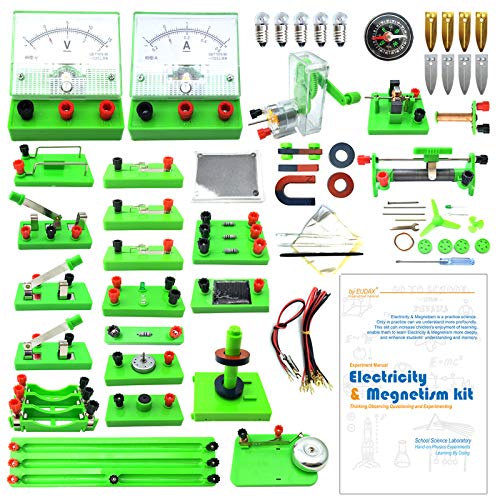
- Built for electricity and magnetism experiments
- Includes 56 electricity items and 21 magnetism items
- Comes with manual, repair tools, and storage bag
Best For: Grades 9-11 students learning electricity and magnetism
Guided Arduino Starter
SunFounder Arduino Uno Learning Lab

- Original Arduino Uno R3 with multimeter and breadboard holder
- 34 lessons plus 40+ free video courses and code examples
- 200+ components with practical beginner-friendly projects
Best For: High school beginners who want a guided Arduino kit
High-Volume Circuit Builder
Snap Circuits Extreme SC-750R Exploration Kit

- Over 750 electronic projects with 80+ pieces
- Includes student training program and study guide
- Features AM radio, lie detector, and solar cell builds
Best For: Students who like hands-on circuit building with a study guide
Structural Design Builder
Thames & Kosmos Architectural Engineering Kit

- Builds over 20 structural and building models
- Covers trusses, arches, domes, and modern materials
- Includes a 44-page full-color guided manual
Best For: Students interested in architecture and structural design
Coding Starter Robot
Makeblock mBot STEM Coding Toy

- Learns coding, electronics, and robotics step by step
- Builds in about 15 minutes with clear instructions
- Includes Scratch/Arduino software plus coding resources
Best For: Beginners who want a guided robotics and coding starter kit
Mechanical Engineering Lab
Thames & Kosmos Machines & Vehicles Kit

- Builds 20 models and adds 22 experiments
- Covers force, motion, gears, gravity, and energy
- Reusable parts and an 80-page manual guide assembly
Best For: Students who want a broad, reusable introduction to mechanical engineering
Hydraulic Hand Project
Thames & Kosmos Mega Cyborg Hand

- Builds a wearable mechanical hand powered by hydraulics
- No motors or batteries required
- Adjustable joints and three hand configurations
Best For: Students who want a striking hands-on build about hydraulics and pneumatics
Arduino Starter Kit – ELEGOO Mega 2560 Project Kit
If you’re comparing engineering kits for high school students, this ELEGOO Mega 2560 starter kit is a strong all-in-one option for learning coding, electronics, and basic robotics. It includes more than 200 components plus a PDF tutorial with 35+ guided projects, so students can work through structured builds instead of guessing where to begin.
Best For: High school students who want a broad Arduino-based starter kit with guided projects and a large parts inventory.
Pros:
- Over 200 premium components included for varied experiments
- 35+ lesson PDF tutorial helps guide beginners step by step
- Compatible with Arduino IDE for widely used programming workflows
- LCD1602 and GY-521 modules come with pin headers, reducing setup hassle
Cons:
- Best suited to students ready to learn electronics and coding, not very young beginners
- Many small parts may require organization during repeated use
Overall, this kit offers a practical blend of instruction and component variety, making it a flexible choice for STEM projects at home or in a classroom. It stands out when you want a single kit that supports progression from simple circuits to more advanced Arduino-style builds.
Snap Circuit Lab – Elenco Snap Circuit Extreme
For shoppers seeking engineering kits for high school students, this Snap Circuits Extreme set focuses on hands-on circuit building with a very low barrier to entry. The snap-together parts require no soldering or tools, and the included manuals, software, and PC-interface cable add extra learning depth for students exploring how circuits behave in real time.
Best For: Students who want an easy-to-use electronics kit with a large number of experiments and no soldering.
Pros:
- Build over 750 experiments using 80 parts
- No tools and no soldering required
- Includes software and PC-interface cable for waveform and frequency viewing
- Comes with five project manuals for structured exploration
Cons:
- More focused on circuit experimentation than programming or robotics
- Plastic snap-fit format may feel less like traditional engineering construction
This is a strong pick if you want immediate, frustration-free circuit experiments with lots of variety. It works especially well for students who learn best by clicking parts together and testing ideas quickly.
Structural Engineering Kit – Thames & Kosmos Bridges & Skyscrapers
If your goal is to find engineering kits for high school students that emphasize real structural concepts, this Thames & Kosmos set is built around bridges, skyscrapers, and load-bearing design. It includes 20 models and an illustrated experiment manual, giving students a clear way to study force, compression, tension, and load through physical builds.
Best For: Students who want to learn structural engineering concepts through model building and guided experiments.
Pros:
- Build 20 different models tied to structural engineering principles
- Teaches force, load, compression, and tension
- Includes over 285 interchangeable pieces for repeated builds
- 36-page illustrated manual supports guided learning
Cons:
- Skill level is listed as intermediate, so it may not be ideal for absolute beginners
- More focused on structural concepts than electronics or coding
This kit is a solid fit for students interested in how buildings and bridges are engineered, not just assembled. It offers a more academic, model-based approach that can complement physics or STEM coursework.
Physics Lab Kit – EUDAX Electricity & Magnetism Kit
Among engineering kits for high school students, this EUDAX lab kit stands out for electricity and magnetism practice with a hands-on, school-lab feel. It is designed for grades 9-11 and includes full-color manuals, repair tools, and a storage bag, so students can work through circuit and magnetism experiments in a more organized way.
Best For: High school students in grades 9-11 who want a lab-style electricity and magnetism kit.
Pros:
- Designed for hands-on electricity and magnetism experiments
- Includes 56 electricity items and 21 magnetism items
- Supports projects like series circuits, parallel circuits, and electromagnets
- Comes with a color manual, repair tools, and storage bag
Cons:
- Batteries are not included and 3 AA batteries are required
- More classroom-lab oriented than open-ended build kits
This is a practical choice for students who want structured physics experiments rather than a general maker kit. It is especially useful when the priority is learning core electricity and magnetism principles through guided activities.
Guided Arduino Starter – SunFounder Arduino Uno Learning Lab
If you want engineering kits for high school students that go beyond basic snap-together fun, this SunFounder set gives learners a real Arduino-based starting point. It combines guided lessons, code examples, circuit diagrams, and a multimeter with 200+ components, so students can practice the fundamentals of electronics and coding through structured projects.
Best For: High school beginners who want a guided Arduino kit with real-world projects and plenty of support.
Pros:
- Includes an Original Arduino Uno R3, multimeter, and RAB breadboard holder for a more complete lab-style setup.
- Comes with 34 lessons, 40+ free video courses, and step-by-step guidance for beginners.
- Offers 200+ components and practical builds like smart trash cans, soap dispensers, and remote-controlled lights.
- RoHS compliant and backed by tutorials, technical support, and an online community.
Cons:
- Designed for beginners, so advanced students may outgrow the pacing quickly.
- Hands-on electronics learning requires time to work through the lessons and projects.
This is a strong pick for students who want a structured introduction to Arduino and circuit design rather than a purely toy-like experience. The mix of lessons, hardware, and project variety makes it easy to build confidence while still doing meaningful engineering work.
High-Volume Circuit Builder – Snap Circuits Extreme SC-750R Exploration Kit
For engineering kits for high school students that focus on experimentation, this Snap Circuits set offers a very approachable way to explore electrical engineering concepts. It includes a student training program with a study guide, plus enough project variety to keep learners building as they work through circuits, switches, sound, and light.
Best For: Students who learn best by building lots of hands-on circuit projects with a clear study guide.
Pros:
- Builds over 750 unique electronic projects with 80+ pieces.
- Includes a student training program and study guide for learn-by-doing instruction.
- Comes with standout parts like an electromagnet, power amplifier, vibration switch, analog meter, and solar cell.
- Features fun builds such as an AM radio, lie detector, and sound-activated switch.
Cons:
- Uses a plastic snap-together system, so it is less open-ended than a true breadboard or microcontroller lab.
- Best suited to foundational electronics rather than advanced coding or programming.
This kit is ideal if you want a huge catalog of quick, engaging circuit builds with enough structure to support independent learning. It is especially useful for students who need hands-on momentum before moving into more advanced engineering tools.
Structural Design Builder – Thames & Kosmos Architectural Engineering Kit
If your goal is to find engineering kits for high school students that lean toward design and structures, this Thames & Kosmos set is a strong fit. It lets learners build structural elements and real-world building models while exploring trusses, arches, domes, and modern building materials through a guided manual.
Best For: Students interested in architecture, structural design, and model building.
Pros:
- Builds over 20 models of structural elements and real-world buildings.
- Introduces trusses, arches, domes, and other core architectural forms.
- Includes a 44-page full-color manual with guided building exercises.
- Plastic parts are compatible with other Thames & Kosmos engineering and physics kits.
Cons:
- No batteries or electronics, so it is not a coding or circuit kit.
- Most useful for structural learning rather than broader engineering topics.
This is a good choice for students who prefer hands-on model building and want to understand how structures work. It adds a more architectural angle to a high school engineering collection and pairs well with other science or physics kits.
Coding Starter Robot – Makeblock mBot STEM Coding Toy
If you’re comparing engineering kits for high school students, the Makeblock mBot is a practical starting point for learning robotics, coding, and basic electronics in a hands-on way. It uses Scratch and Arduino, builds quickly, and offers enough guided functionality to keep newer learners engaged without feeling overwhelming.
Best For: Beginners who want a coding robot kit with clear instructions, software support, and room to grow into more advanced projects.
Pros:
- Introduces coding, electronics, and robotics in a step-by-step format
- Can be built in about 15 minutes with clear instructions
- Includes programming resources, coding cards, and free apps/software
- Supports multiple functions like line-following and obstacle avoidance
Cons:
- Requires 4 AA batteries for the robot and a CR2025 battery for the remote, both not included
- More introductory than advanced for older students with prior robotics experience
Overall, this kit works well as a first robotics platform because it combines simple assembly with guided programming and add-on compatibility. It is especially useful for students who need a structured entry point before moving into more complex engineering projects.
Mechanical Engineering Lab – Thames & Kosmos Machines & Vehicles Kit
For families shopping engineering kits for high school students, this Thames & Kosmos set is a strong hands-on introduction to mechanical engineering. It combines 20 building projects with 22 experiments, helping students connect simple machines, force, motion, gears, and energy to real-world vehicles and structures.
Best For: Students who want a reusable mechanical engineering kit with a broad mix of builds and physics concepts.
Pros:
- Includes 20 mechanical models and 22 supplemental experiments
- Teaches forces, gravity, momentum, gears, and energy conversion
- Reusable building system can be reconfigured into multiple models
- Comes with an 80-page full-color manual with step-by-step guidance
Cons:
- Introductory focus may not challenge students seeking advanced engineering depth
- Plastic component system is more educational than prototype-grade
This is a solid choice if you want a broad mechanical foundation rather than a single-project novelty kit. The variety of builds and experiments makes it a good fit for students exploring how machines work in everyday and industrial settings.
Hydraulic Hand Project – Thames & Kosmos Mega Cyborg Hand
Among engineering kits for high school students, the Mega Cyborg Hand stands out for showing how pneumatics and hydraulics can power real movement without motors or batteries. Students build a wearable mechanical hand and use air pressure, water, and their own fingers to make the joints open, close, and grip objects.
Best For: Hands-on learners who want a dramatic mechanical build focused on hydraulic and pneumatic systems.
Pros:
- Uses no motors or batteries, relying on air pressure and water
- Hydraulic pistons create gripping motion strong enough to lift objects
- Adjustable finger joints and three configurations add flexibility
- Connects directly to industrial robot concepts like automobile components
Cons:
- Focused on one main build rather than a broad kit of projects
- May appeal more to tactile learners than students wanting coding or electronics
This kit is a memorable way to explore mechanical force and fluid systems through an active build. It is especially useful when you want a visually impressive project that ties classroom concepts to real engineering applications.
How We Picked These Engineering Kits for High School Students
We looked for kits that balance educational depth, build quality, and age-appropriate challenge. The best options for Engineering Kits for High School Students should teach core concepts such as circuitry, structures, mechanisms, coding, and systems thinking without feeling overly simplistic or overly specialized.
We also favored kits with clear instructions, repeatable experiments or builds, and enough project variety to support both solo learning and classroom use.
Quick Comparison: What Each Type Does Best
Electronics kits are ideal for learning wiring, sensors, and basic programming. Structural kits focus on forces, load paths, and stability. Mechanical kits emphasize motion, gears, levers, and energy transfer. Robotics kits combine coding with engineering design, while magnetism and electricity labs support deeper science understanding.
Key Buying Factors for Engineering Kits for High School Students
Learning Depth
Choose a kit that matches the student’s current level. Beginners may benefit from guided project-based kits, while advanced students may prefer open-ended builds that allow experimentation and customization.
Project Variety
More projects usually mean more value and more chances to reinforce concepts. Look for kits that cover multiple builds or experiments rather than a single one-time model.
Materials and Durability
High school students need parts that can handle repeated use. Sturdy components, reliable connectors, and well-made structural pieces matter if the kit will be used in a home setting or classroom.
Skill Areas Covered
Match the kit to the student’s interests: coding, architecture, physics, robotics, or electronics. The best Engineering Kits for High School Students connect directly to the type of engineering or STEM pathway the learner wants to explore.
Instructions and Support
Clear manuals, video lessons, and troubleshooting help make a big difference. Kits with guided instruction tend to reduce frustration and improve completion rates.
Who Should Buy Which Engineering Kits for High School Students?
Choose electronics and Arduino-based kits for students interested in programming, hardware, or prototyping. Pick structural and mechanical kits for learners who enjoy physics, design, or civil engineering concepts. Opt for robotics kits if the goal is to combine coding with hands-on movement and automation. For a more science-lab style experience, electricity and magnetism kits are a strong fit.
If you want a versatile starting point, look for a kit with multiple projects, beginner-friendly guidance, and room to grow. If you want more challenge, prioritize open-ended experimentation and broader component sets.