If you manage thousands of photos, the right dock can make backups faster, restores easier, and drive swaps far less painful. For photographers, archivists, and anyone building a simple storage workflow, a good dock is one of the most practical accessories you can own.
This roundup of hard drive docking stations for photo storage focuses on speed, drive support, cooling, and ease of use so you can choose a model that fits your archive size and workflow.
Best 10 Hard Drive Docking Stations for Photo Storage Picks for 2026
Dual-Bay Cloner Dock
SABRENT USB 3.0 Docking Station
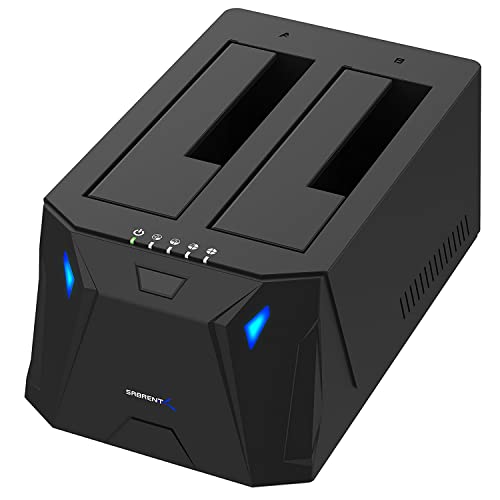
- Dual-bay dock for 2.5-inch and 3.5-inch SATA drives
- Offline cloning support for simple drive duplication
- Plug and play with USB 3.0 speeds up to 5Gbps
Best For: Photographers who want a simple dock for storing, cloning, and moving large photo archives.
Four-Bay Desktop Enclosure

- Four-bay enclosure for 2.5-inch and 3.5-inch SATA drives
- Hot-swappable, tool-free design for easy drive changes
- USB 3.0 up to 5Gbps with USB A/C cable included
Best For: Users who want a multi-drive enclosure for a growing photo collection.
Single-Bay Lay-Flat Dock
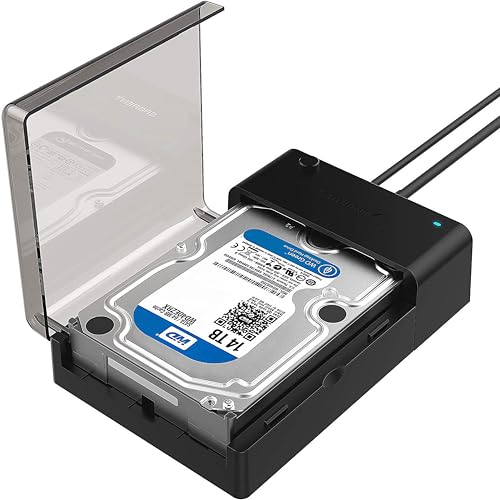
- Single-bay dock for bare SATA drives and SSDs
- Tool-free lay-flat design with hot-swap support
- Includes 12V adapter for stable 3.5-inch drive use
Best For: Anyone who wants a simple one-drive dock for occasional photo backups and file transfers.
Fan-Cooled Four-Bay DAS
CENMATE Aluminum Drive Enclosure

- Four-bay DAS with aluminum body and cooling fan
- Supports 2.5-inch and 3.5-inch SATA HDDs and SSDs
- Tool-free, hot-swappable design with USB 3.0
Best For: Users who want a cooled multi-drive enclosure for large photo archives.
Dual-Bay Offline Cloning Dock
SABRENT USB-C Hard Drive Docking Station

- Offline 1-to-1 cloning without a computer
- Two SATA drives mount separately over USB-C
- Tool-free, hot-swappable dual-bay design
Best For: Photographers who want a simple dual-drive dock for backups and cloning
Four-Bay High-Capacity Media Dock

- Four bays with up to 128TB total capacity
- 10Gbps USB-C for faster large-file transfers
- Built-in fans and independent bay power switches
Best For: Creators who need a high-capacity dock for large photo libraries and archives
Five-Bay Offline Duplicator Dock
ORICO USB-C 5 Bay Hard Drive Docking Station

- Five bays with up to 100TB expansion
- Offline 1:4 duplication without a computer
- Supports S.M.A.R.T., TRIM, and SATA drives
Best For: Photographers and power users who want multi-drive expansion with offline duplication
Multi-Bay Photo Backup Dock
5-Bay USB-C Dock for 2.5in Drives

- Holds up to five 2.5-inch SATA drives
- USB-C transfer speeds up to 10Gbps
- Built-in fan and hot-swap design
Best For: Managing multiple 2.5-inch drives for photo backups and transfers
Dual-Bay Clone Dock
USB 3.0 Dock with Offline Copy

- Two-bay dock for 2.5-inch and 3.5-inch SATA drives
- Offline clone works without a computer
- USB 3.0 transfer up to 5Gbps
Best For: Duplicating photo drives and keeping a backup copy ready
Dual-Bay Cloner Dock – SABRENT USB 3.0 Docking Station
If you want hard drive docking stations for photo storage that can also duplicate drives offline, this SABRENT dual-bay dock is built for practical backup workflows. It supports 2.5-inch and 3.5-inch SATA HDDs and SSDs, works plug and play, and can handle drives up to 10TB each, making it a straightforward choice for archiving photo libraries.
Best For: Photographers who want a simple dock for storing, cloning, and moving large photo archives.
Pros:
- Supports 2.5-inch and 3.5-inch SATA HDDs and SSDs
- Offline cloning support up to 60Mbps
- Plug and play with no drivers needed
- USB 3.0 speeds up to 5Gbps
Cons:
- Only supports SATA drives, not IDE/PATA or M.2 drives
- Drive capacity support tops out at 10TB per drive in the supplied notes
- Dual-bay design may be more than some single-drive users need
For photo storage, the main advantage here is flexibility: you can keep two bare drives ready for backups or cloning without opening a computer. If you want a dock that does more than just read a drive, this is a useful all-around option.
Four-Bay Desktop Enclosure – CENMATE Tool-Free Storage Hub
For hard drive docking stations for photo storage, this CENMATE 4-bay enclosure is a strong fit if you want one desktop unit to organize multiple drives. It supports 2.5-inch and 3.5-inch SATA HDDs and SSDs, offers hot-swappable, tool-free access, and lists up to 20TB per drive, so it works well as a practical photo archive hub.
Best For: Users who want a multi-drive enclosure for a growing photo collection.
Pros:
- Four-bay design supports multiple drives at once
- Tool-free installation and hot-swappable convenience
- USB 3.0 connection with up to 5Gbps transfer rate
- Includes USB A/C 3.0 cable for broad compatibility
Cons:
- No RAID functionality is mentioned in the supplied notes
- Only supports SATA HDDs and SSDs
- Requires external power for operation
This enclosure makes sense when your photo storage needs are starting to outgrow single-drive docks. It is designed for easy drive swapping and straightforward expansion, which is helpful when managing separate volumes for originals, edits, and backups.
Single-Bay Lay-Flat Dock – SABRENT USB 3.0 SATA Dock
If you need a compact option among hard drive docking stations for photo storage, this SABRENT single-bay dock keeps things simple. It works with bare SATA 2.5-inch and 3.5-inch drives and SSDs, includes a 12V power adapter, and uses a tool-free lay-flat design that makes quick access to a photo backup drive easy.
Best For: Anyone who wants a simple one-drive dock for occasional photo backups and file transfers.
Pros:
- Supports SATA I/II/III HDDs and SSDs
- Tool-free, hot-swap friendly lay-flat design
- Includes a 12V power adapter for 3.5-inch drives
- USB 3.0 with UASP support for better real-world performance
Cons:
- Single-bay design only supports one drive at a time
- Uses USB Type-A, not USB-C, out of the box
- Does not support IDE/PATA, M.2 NVMe, M.2 SATA, or SAS drives
This is a no-frills dock for users who mainly need to mount one bare SATA drive for photo archiving or recovery. If you want a compact, straightforward dock rather than a multi-bay storage station, it fits that role well.
Fan-Cooled Four-Bay DAS – CENMATE Aluminum Drive Enclosure
When photo storage needs push beyond a basic dock, this CENMATE aluminum 4-bay enclosure offers a more robust desktop setup. It supports 2.5-inch and 3.5-inch SATA HDDs and SSDs, includes a cooling fan, and is positioned as a DAS rather than a RAID or NAS device, which keeps the focus on direct attached storage.
Best For: Users who want a cooled multi-drive enclosure for large photo archives.
Pros:
- Four bays support up to 80TB total capacity in the supplied notes
- Built-in fan and aluminum-alloy construction for cooling
- Hot-swappable and tool-free for quick drive changes
- USB 3.0 with up to 5Gbps transfer speeds
Cons:
- Fan noise is listed around 40-50 decibels
- No RAID or NAS support is included in the product description
- Requires external power via the included 12V adapter
This model is aimed at users who want more thermal management and more bays than a small dock provides. For photo libraries that keep growing, the extra capacity and cooling make it a practical desktop archive enclosure.
Dual-Bay Offline Cloning Dock – SABRENT USB-C Hard Drive Docking Station
If you want hard drive docking stations for photo storage that can both back up and move files quickly, this SABRENT dual-bay model is a practical pick. It works with 2.5-inch and 3.5-inch SATA HDDs or SSDs, mounts two drives at once over USB-C, and even supports offline cloning when you need a direct drive-to-drive copy without a computer.
Best For: Photographers who want a simple dual-drive dock for backups, file transfers, and offline cloning.
Pros:
- Offline 1-to-1 cloning works without a PC, up to 60MBps
- Dual bays can mount as separate drives when connected by USB
- Tool-free, hot-swappable design with an LED per bay
- Supports 2.5-inch and 3.5-inch SATA HDDs and SSDs
Cons:
- SATA only; no IDE, M.2, or NVMe support
- USB-C cable is included, so USB-A users may need an adapter or alternate cable
- Offline cloning target must be the same size as the source or larger
Overall, this is a straightforward dock for photographers who value easy access to two drives and the option to clone backups without booting a computer. It is best suited to SATA-based storage workflows rather than mixed-format drive collections.
Four-Bay High-Capacity Media Dock – WAVLINK 4-Bay SATA Enclosure
For photo storage setups that need room to grow, this WAVLINK unit stands out among hard drive docking stations for photo storage because it supports four SATA drives and up to 128TB total capacity. The 10Gbps USB-C connection is geared toward large file transfers, and the aluminum shell plus built-in fans are designed to help keep multiple drives cool during heavier workloads.
Best For: Creators who want a four-drive enclosure for large photo libraries, archives, and workspace flexibility.
Pros:
- Four SATA bays with support for 2.5-inch and 3.5-inch drives
- USB 3.2 Type-C port supports up to 10Gbps transfer speeds
- Built-in temperature-controlled fans for cooling
- Independent power switches for each bay and hot-swap support
Cons:
- 2.5-inch drives require additional mounting brackets that are not included
- HDMI output depends on host USB-C video support
- Larger and heavier than a basic two-bay dock
This is a strong choice if your workflow involves multiple drives and you want a dock that can scale with a growing photo archive. The extra display and peripheral connectivity are useful bonuses, but the main appeal is its large-capacity, four-bay storage design.
Five-Bay Offline Duplicator Dock – ORICO USB-C 5 Bay Hard Drive Docking Station
If you need hard drive docking stations for photo storage that can handle big libraries and direct disk duplication, this ORICO five-bay model is built for that kind of workflow. It supports 2.5-inch and 3.5-inch SATA HDDs and SSDs, offers offline cloning for four copies at once, and includes aluminum-alloy construction with a vertical layout to help with heat dissipation.
Best For: Photographers and power users who want multi-drive expansion with offline duplicator capability.
Pros:
- Five-bay design with up to 100TB capacity expansion
- Offline 1:4 duplication without a computer
- Supports S.M.A.R.T. and TRIM functions
- USB 3.2 Type-C plus included C-to-C/C-to-A cable
Cons:
- Specifications list support for one device quantity, so check your use case carefully
- Designed around SATA drives only
- Cloning overwrites the target disk, so backups are necessary first
This dock makes sense when you need both extra bays and a built-in duplication workflow for archive management. It is especially useful for photo storage setups where large volumes of data and regular drive copying are part of the routine.
Multi-Bay Photo Backup Dock – 5-Bay USB-C Dock for 2.5in Drives
If you want hard drive docking stations for photo storage that can handle a growing archive, this Sabrent 5-bay dock is built for stacking multiple 2.5-inch SATA SSDs or HDDs in one place. It connects over USB-C at up to 10Gbps, supports hot-swapping, and includes active cooling so you can keep several drives ready for backup or transfer work.
Best For: Photographers or creators who need to manage multiple 2.5-inch SATA drives at once for backups, transfers, or rotating storage.
Pros:
- Supports one to five 2.5-inch SATA SSDs/HDDs simultaneously and independently.
- USB-C connection supports up to 10Gbps for faster transfers.
- Built-in 80mm fan helps keep drives cool during sustained use.
- Tool-free, hot-swappable design makes drive changes simple.
Cons:
- Works with 2.5-inch SATA drives only, not 3.5-inch models.
- Best for users who have several matching small-format drives to dock.
For photo storage workflows built around multiple laptop-size drives, this dock offers a lot of flexibility in a single USB-C unit. The combination of five bays, cooling, and independent drive access makes it a practical pick for frequent backup rotation.
Simple All-Purpose Backup Dock – SATA Dock for 2.5/3.5 Inch Drives
For buyers comparing hard drive docking stations for photo storage, this ORICO dock is a straightforward single-bay option that supports both 2.5-inch and 3.5-inch SATA HDDs and SSDs. It uses USB 3.0 with UASP support for up to 5Gbps transfers, includes tool-less hot-swapping, and can handle drives up to 22TB.
Best For: Users who want a simple, flexible dock for backing up or moving photo libraries on one SATA drive at a time.
Pros:
- Supports both 2.5-inch and 3.5-inch SATA HDDs/SSDs.
- UASP and USB 3.0 support up to 5Gbps transfer speeds.
- Compatible with Windows, Mac, Linux, iPad OS, and more.
- Includes tool-less hot-swap design plus 22TB drive support.
Cons:
- Single-bay design is not ideal for users who need multiple drives connected at once.
- Does not support IDE or SAS drives.
This dock focuses on broad compatibility and easy everyday use rather than extra features. It is a solid fit if you mainly need one reliable dock for photo backup, disk imaging, or data transfer.
Dual-Bay Clone Dock – USB 3.0 Dock with Offline Copy
If you need hard drive docking stations for photo storage that can also duplicate drives without a computer, this FIDECO dual-bay dock stands out for its offline clone feature. It supports two 2.5-inch or 3.5-inch SATA HDDs/SSDs, transfers data over USB 3.0 at up to 5Gbps, and offers a plug-and-play setup for quick access to storage.
Best For: Users who want to copy a photo archive from one SATA drive to another without relying on a PC.
Pros:
- Dual-bay design supports two SATA HDDs/SSDs at once.
- Offline clone function works without a computer.
- USB 3.0 supports data transfer rates up to 5Gbps.
- Plug-and-play design with broad Windows, Mac, and Linux compatibility.
Cons:
- Only supports SATA drives, not other drive interfaces.
- New drives must be initialized before use.
This is a practical choice if your photo workflow includes drive-to-drive copying or backup duplication. The offline cloning feature adds convenience, while the dual-bay layout makes it easier to keep a source drive and backup drive connected together.
How We Picked the Best Hard Drive Docking Stations for Photo Storage
We prioritized models that suit photo libraries and backup-heavy workflows: stable SATA compatibility, straightforward hot-swapping, support for 2.5-inch and 3.5-inch drives, and connectivity that won’t slow down large transfers. We also looked at bay count, cooling, cloner functions, and whether the dock is better for everyday backups or larger archive management.
Quick Comparison
Single-bay docks are best for quick offloads and one-drive access. Dual-bay models add convenience for copying, duplicating, or rotating working and backup drives. Four- and five-bay options are the strongest fit for growing photo archives, especially if you want to keep multiple jobs, backups, or long-term storage drives connected at once.
Key Buying Factors for Hard Drive Docking Stations for Photo Storage
Drive Type and Capacity
Make sure the dock supports the drive sizes you actually use. Many photo workflows still rely on 3.5-inch HDDs for bulk storage, while 2.5-inch SSDs are useful for active projects. If you mix both, choose a dock that handles each without adapters.
Speed and Connection
For large RAW files and video-heavy photo projects, USB 3.0 works well for everyday use, but USB-C and 10Gbps models are better if you move big archives often. Faster connections reduce transfer bottlenecks when backing up multiple terabytes.
Cooling and Long Transfers
Photo archives often mean long copy sessions, so thermal control matters. Docks with fans or better ventilation help protect drive performance during extended transfers and reduce the risk of heat-related slowdowns.
Hot Swap and Cloning Features
Hot-swappable docks are easier for daily workflow changes. Cloning is useful if you want a simple way to duplicate a source drive to a backup drive without relying on software. That can be especially helpful for off-site backup rotation.
Who Should Buy Which Hard Drive Docking Stations for Photo Storage?
If you need a simple one-drive workflow, a single-bay dock is usually enough. Choose a dual-bay model if you want backup redundancy or drive cloning. Pick a four- or five-bay dock if you maintain a growing photo archive, run multiple projects, or want a more permanent desktop storage hub. For most users, the best choice comes down to how many drives you manage today and how quickly that number is likely to grow.