Small businesses need storage tools that are fast, simple, and reliable. A good dock makes it easier to back up client files, clone drives, and move data between systems without extra hassle.
Below, we’ve narrowed the field to versatile options that fit common office workflows, from single-bay backups to higher-capacity multi-drive setups.
Best 10 Hard Drive Docking Stations for Small Businesses Picks for 2026
Simple SATA Dock
SABRENT USB 3.0 to SATA Hard Drive Docking Station
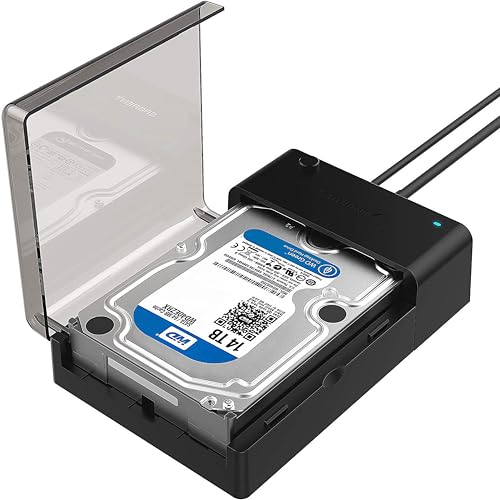
- Single-bay dock for bare SATA HDDs and SSDs
- Tool-free, hot-swappable, plug-and-play operation
- Includes 12V adapter for stable 3.5-inch drive use
Best For: small offices that want a basic single-drive dock for bare SATA media
Dual-Bay Cloning Dock
SABRENT USB-C Hard Drive Docking Station & Cloner

- Offline cloning works without a computer
- Two separate bays for simultaneous drive access
- Supports 2.5-inch and 3.5-inch SATA drives
Best For: small teams that need both drive duplication and dual-drive access
Five-Bay Storage Enclosure
ORICO 5 Bay USB 3.1 Hard Drive Enclosure

- Five-bay enclosure for centralized SATA storage
- Includes 12V/10A power and an 80mm cooling fan
- Supports up to 5 x 22TB drives
Best For: small businesses needing a higher-capacity desktop storage enclosure
Five-Bay USB-C Dock
SABRENT 5-Bay USB-C Docking Station

- Five bays for up to five 2.5-inch SATA drives
- USB-C with up to 10Gbps transfer support
- Built-in cooling fan and hot-swap design
Best For: small offices that need high-density access to multiple 2.5-inch drives
4-Bay Offline Cloning Dock
SABRENT 4-Bay USB 3.0 Hard Drive Docking Station

- Holds up to four SATA HDDs or SSDs
- Offline cloning works without a computer
- Trayless USB 3.0 design for easy swaps
Best For: Small offices needing multi-drive access and simple offline cloning
Dual-Bay Dock with USB Hub
MAIWO Hard Drive Docking Station Cloner

- Dual-bay SATA dock with offline cloning
- Includes 3 USB 3.0 hub ports
- Supports 2.5-inch and 3.5-inch HDDs/SSDs
Best For: Small teams needing a cloner with built-in USB expansion
Quad-Bay Pro Dock
StarTech.com 4-Bay USB 3.0 To SATA Hard Drive Docking Station

- Quad-bay dock for backups and imaging
- Hot-swappable bays with independent controllers
- Dual fans help with drive cooling
Best For: IT-heavy offices that need a pro-grade multi-drive dock
Compact Dual-Bay Clone Dock

- Dual-bay support for 2.5-inch and 3.5-inch SATA drives
- Offline cloning works without a computer
- USB 3.0 plug-and-play setup with no driver needed
Best For: Small teams needing simple drive access and offline cloning
Stable Bezel Backup Dock

- Supports up to 2x20TB SATA HDDs or SSDs
- Fixed bezel design adds drive stability
- Offline cloning and UASP help streamline backups
Best For: Businesses that want a stable dock for backups and cloning
Metal Power-Control Dock

- USB 3.0 and USB-C support for flexible connections
- Metal enclosure with built-in power switch
- Supports offline cloning and automatic sleep mode
Best For: Teams wanting USB-C flexibility and controlled power management
Simple SATA Dock – SABRENT USB 3.0 to SATA Hard Drive Docking Station
If you need one of the simplest hard drive docking stations for small businesses, this SABRENT dock focuses on quick access to bare SATA drives without extra setup. It supports 2.5-inch and 3.5-inch SATA HDDs and SSDs, making it a practical choice for drive cloning, file recovery, or rotating backup media on a shared workstation.
Best For: Small offices that need a straightforward single-drive dock for bare SATA drives.
Pros:
- Supports SATA I/II/III 2.5-inch and 3.5-inch drives and SSDs
- Tool-free, hot-swappable design for fast drive changes
- Includes a 12V power adapter for stable use with 3.5-inch drives
- Plug-and-play on Windows, macOS, and Linux
Cons:
- Does not support IDE/PATA, M.2, NVMe, or drives already in enclosures
- Uses USB-A on the host side, so USB-C-only systems need an adapter
- S.M.A.R.T. diagnostics are not passed through the USB bridge
Overall, this is a practical pick if your team works mainly with loose SATA drives and wants dependable, no-fuss docking at a desktop workstation.
Dual-Bay Cloning Dock – SABRENT USB-C Hard Drive Docking Station & Cloner
For small businesses that need more than simple docking, this SABRENT model adds offline cloning to the mix. It can copy one SATA drive to another without a computer, while also letting both bays mount separately over USB-C when you do want to manage files from a PC or Mac.
Best For: Teams that want a dual-bay dock for drive copying and everyday file access.
Pros:
- Offline 1-to-1 cloning works without a computer
- Dual bays mount as separate drives over USB for file management
- Supports bare 2.5-inch and 3.5-inch SATA HDDs and SSDs
- USB-C cable and power adapter are included
Cons:
- Only supports SATA drives, not IDE, M.2, or NVMe
- USB-C connection may require a different cable if your computer lacks USB-C
- Offline cloning speed is limited to up to 60MBps by design
This is a strong fit when backup workflows matter, since it combines a two-bay dock with standalone cloning in one compact unit.
Five-Bay Storage Enclosure – ORICO 5 Bay USB 3.1 Hard Drive Enclosure
If your small business needs centralized storage rather than a single-drive dock, this ORICO 5-bay enclosure is built for larger desktop data pools. It supports multiple 2.5-inch and 3.5-inch SATA drives, includes a USB/Type-C cable, and is positioned as a plug-and-play option for home-style data management and grouped storage.
Best For: Small businesses that want a desktop multi-drive enclosure for centralized storage.
Pros:
- Five-bay design supports up to 5 x 22TB drives
- USB-C connectivity with a 2-in-1 USB/Type-C cable
- 12V/10A power supply supports stable multi-drive use
- Quiet 80mm fan helps with cooling during sustained operation
Cons:
- Supports SATA drives only
- Detailed specs in the listing can be inconsistent, so verify fit and capacity needs carefully
- More of a storage enclosure than a quick-swap docking tool
As a larger-capacity desktop unit, this model makes the most sense when the priority is shared storage expansion and organized drive management.
Five-Bay USB-C Dock – SABRENT 5-Bay USB-C Docking Station
Among hard drive docking stations for small businesses, this SABRENT 5-bay unit stands out for handling multiple 2.5-inch SATA drives at once over USB-C. It is designed for simultaneous, independent use of up to five drives and adds active cooling, making it a useful desktop hub for media work, backups, or multi-drive file staging.
Best For: Workstations that need five-bay access to multiple 2.5-inch SATA drives.
Pros:
- Holds up to five 2.5-inch SATA SSDs or HDDs up to 15mm tall
- USB-C connection supports up to 10Gbps
- Built-in 80mm fan helps keep drives cool during sustained use
- Hot-swappable, tool-free, and plug-and-play
Cons:
- Designed for 2.5-inch drives only, not 3.5-inch drives
- Requires external power from the included 12V/3A adapter
- One USB-C port means compatibility depends on your host system’s available connection
This is a good fit when you need density and cooling in one dock, but it is best matched to teams working primarily with smaller 2.5-inch SATA drives.
4-Bay Offline Cloning Dock – SABRENT 4-Bay USB 3.0 Hard Drive Docking Station
For small businesses that need to move, back up, or manage several drives at once, this hard drive docking station for small businesses offers a straightforward 4-bay setup with trayless insertion and USB 3.0 connectivity. It supports 2.5-inch and 3.5-inch SATA HDDs and SSDs, making it useful for routine storage work without a complicated setup.
Best For: Office teams that want a simple multi-drive dock with offline cloning and plug-and-play use.
Pros:
- Supports up to four 2.5-inch or 3.5-inch SATA drives in one dock.
- Offline clone function copies drives without a computer.
- Trayless, tool-free design keeps drive swaps simple.
- USB 3.0 connection offers up to 5Gbps transfer speeds.
Cons:
- Requires the dock to be powered off for direct drive insertion.
- Cloning is limited to the dock’s offline workflow.
Overall, this is a practical pick when a small business wants a compact dock for backups and drive duplication with minimal setup. The four-bay layout and included power adapter make it better suited to regular office use than a basic single-drive reader.
Dual-Bay Dock with USB Hub – MAIWO Hard Drive Docking Station Cloner
Among hard drive docking stations for small businesses, this MAIWO model stands out for combining a dual-bay SATA cloner with a 3-port USB 3.0 hub. It supports 2.5-inch and 3.5-inch HDDs and SSDs, offers offline cloning, and is designed for backup, file transfers, and data recovery tasks.
Best For: Small teams that want a two-drive cloner plus extra USB ports in one unit.
Pros:
- Dual-bay design supports 2.5-inch and 3.5-inch SATA HDDs and SSDs.
- Offline cloning runs without connecting to a computer.
- Includes 3 USB 3.0 hub ports for added connectivity.
- USB 3.0 interface supports 5Gbps transfers and is backward compatible.
Cons:
- Only supports two drives at a time.
- Plastic enclosure may be less rugged than metal alternatives.
This is a smart choice if your office needs a compact duplicator with a little extra desktop flexibility. The separate power adapter and clear clone indicators make it easy to use for routine storage work.
Quad-Bay Pro Dock – StarTech.com 4-Bay USB 3.0 To SATA Hard Drive Docking Station
If your business needs a more capable dock for backups, imaging, or frequent drive swaps, this hard drive docking station for small businesses delivers a 4-bay design with hot-swappable, tool-less access. It supports 2.5-inch and 3.5-inch SATA HDDs and SSDs over USB 3.2 Gen 1, and includes dual fans for cooling.
Best For: IT-focused offices that want a high-capacity dock with active cooling and hot-swap bays.
Pros:
- Accesses up to four SATA drives at once for backup or imaging.
- Independently powered controllers allow hot swapping without affecting other bays.
- Dual 40mm fans help maintain drive temperature during use.
- Tool-less, tray-less top-loading design speeds up drive changes.
Cons:
- Larger footprint than simpler dual-bay docks.
- Cooling fans may be unnecessary for light-duty use.
For teams that regularly handle multiple drives, this is the most work-ready option in the lineup. The combination of hot-swap support, cooling, and professional support makes it a strong fit for ongoing office storage tasks.
Compact Dual-Bay Clone Dock – FIDECO Dual-Bay SATA Dock
If you need hard drive docking stations for small businesses, this FIDECO dual-bay dock is a straightforward option for quick storage access, backups, and drive-to-drive cloning. It supports 2.5-inch and 3.5-inch SATA HDDs and SSDs, works plug-and-play over USB 3.0, and is designed to keep daily storage tasks simple.
Best For: Small teams that want an affordable dual-bay dock for easy drive access and offline cloning.
Pros:
- Supports two SATA HDDs or SSDs at once for flexible workflow use.
- Offline clone mode lets you copy drives without connecting to a computer.
- USB 3.0 support offers up to 5Gbps transfer speeds.
- Plug-and-play setup with no driver installation needed.
Cons:
- Only supports SATA HDDs and SSDs.
- New drives need initialization before they can be recognized.
For small business backup routines and occasional drive swaps, this dock covers the core tasks without adding complexity. Its dual-bay design and clone function make it especially useful when speed and convenience matter more than advanced features.
Stable Bezel Backup Dock – WAVLINK Dual-Bay 20TB Dock
This WAVLINK dock is a practical pick for hard drive docking stations for small businesses that need quick backups and easy file transfers. It supports two SATA HDDs or SSDs, includes a fixed bezel design for added drive stability, and offers offline cloning for copying data without using a computer.
Best For: Small businesses that want a stable dual-bay dock for backups, transfers, and offline cloning.
Pros:
- Supports 2.5-inch and 3.5-inch SATA I/II/III drives up to 2x20TB.
- Offline clone function simplifies drive-to-drive copying.
- UASP support can improve transfer performance over standard USB 3.0.
- Tool-free, hot-swappable, and plug-and-play design keeps setup easy.
Cons:
- Clone mode requires the target drive to be the same size or larger than the source.
- Uses a plastic enclosure rather than metal.
For offices that value stability and straightforward backup workflows, this dock is a well-rounded choice. The fixed bezel and broad OS compatibility help it fit into mixed-device environments without much hassle.
Metal Power-Control Dock – WAVLINK USB-C Dual Bay Dock
For hard drive docking stations for small businesses, this WAVLINK model is a strong fit when you want USB 3.0 and USB-C flexibility in a dual-bay dock. It supports 2.5-inch and 3.5-inch SATA HDDs and SSDs, includes UASP support, and uses a metal enclosure with a built-in power switch for more controlled day-to-day use.
Best For: Small businesses that need a USB-C compatible dock with reliable power control and offline cloning.
Pros:
- Supports USB 3.0 and USB-C connections for broader compatibility.
- Works with two SATA drives and supports offline cloning.
- Metal enclosure and built-in power control switch add durability and convenience.
- Automatic sleep mode helps reduce energy use during inactivity.
Cons:
- Offline clone is not supported online and requires proper source-to-target capacity matching.
- Not compatible with M1/M2-based Mac systems.
This dock is a solid option for teams that want a more durable unit with flexible connectivity. The combination of USB-C support, power control, and sleep mode makes it easier to manage in busy small-office settings.
How We Picked These Hard Drive Docking Stations for Small Businesses
We focused on Hard Drive Docking Stations for Small Businesses that balance speed, compatibility, and everyday usability. Priority went to models that support common 2.5-inch and 3.5-inch SATA HDDs and SSDs, offer stable USB connectivity, and are practical for backups, cloning, or rotating archive drives. We also considered bay count, offline clone support, power delivery, and whether the design makes sense for shared office use.
Quick Comparison: Which Dock Fits Which Workflow?
Single-bay docks are best for quick drive access, one-off backups, and occasional data transfers. Dual-bay models are ideal if you need cloning or frequent drive swaps. Four- and five-bay docks are better for teams managing larger archives, media libraries, or multiple backup jobs at once. If your office uses both laptops and desktops, USB-C and USB 3.0 flexibility can also simplify setup across different machines.
Key Buying Factors for Hard Drive Docking Stations for Small Businesses
Compatibility
Make sure the dock supports the drive sizes and interfaces you use most often. For many small teams, broad SATA compatibility matters more than niche features.
Speed and Connectivity
USB 3.0 and USB-C are the most useful standards for day-to-day business work. If you move large files regularly, look for UASP support or other features that improve real-world transfer performance.
Capacity and Bay Count
Choose the smallest bay count that still matches your workflow. A compact dock is easier to store, while multi-bay units reduce the need to swap drives constantly.
Offline Cloning
For IT backups, migration tasks, or replacing aging drives, offline clone support can save time and reduce mistakes. It is especially helpful when you need a simple hardware-based copying process.
Power and Cooling
Higher-capacity docks should have a stable power adapter and sensible thermal design. For busy environments, fan cooling can help maintain consistent performance during longer sessions.
Who Should Buy Which Hard Drive Docking Stations for Small Businesses?
If you need occasional backups or occasional drive access, a single-bay dock is usually enough. If you handle migrations, recovery work, or duplicate drives often, a dual-bay clone dock is the most efficient choice. If your business manages many drives, archives, or shared storage assets, a 4-bay or 5-bay model will be easier to scale around. For mixed office setups, the best Hard Drive Docking Stations for Small Businesses are the ones that match your current workload while leaving room to grow.