A laptop screen extender can turn a single-display setup into a more productive mobile workstation for travel, remote work, studying, and presentations. The models in this roundup cover compact dual-screen designs as well as larger triple-monitor configurations.
We focused on practical differences that matter in daily use, including screen size, resolution, connection options, mounting range, weight, portability, and multi-screen flexibility.
Best 10 Laptop Screen Extenders Under 300 Picks for 2026
Best Plug-and-Play Value
Funhill 14.1-inch Laptop Screen Extender

- 1080p IPS display with 60Hz refresh rate
- USB-C and HDMI connectivity without drivers
- Includes connection and power cables
Best For: Travel-friendly dual-screen productivity
Best No-Driver Flexibility
Anyking 15.6-inch Detachable Monitor

- 15.6-inch 1080p IPS display with 330-nit brightness
- Five display modes and 90-degree screen rotation
- No drivers; supports HDMI, USB-C, and VESA mounting
Best For: Flexible travel-to-desk monitor use
Most Flexible Large-Screen Extender
Wixzet 15.6-inch Detachable Monitor

- Large 15.6-inch FHD IPS panel
- Detachable standalone-monitor design
- Adjustable stand with 100W PD support
Best For: Professionals wanting a versatile, ergonomic portable display
Best Triple-Screen Setup
ZUMWALT P7 Dual 15.6-inch Extender
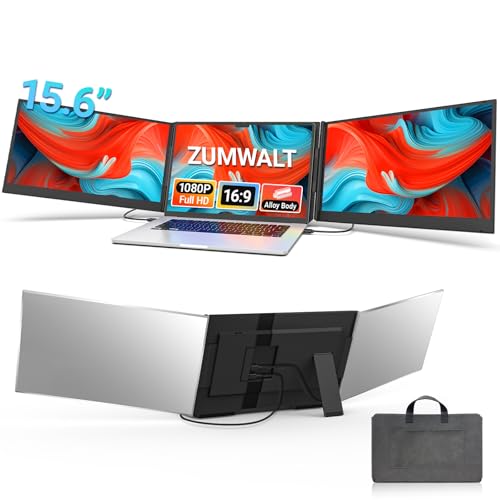
- Creates a triple-screen workspace
- Two 15.6-inch FHD displays
- Includes cables, adapter, and carrying bag
Best For: Multitaskers needing maximum portable screen space
Lightweight Travel Pick
Blackview 14-inch FHD Extender

- 1.3-pound, 0.17-inch-thin design
- 300-nit 1080p IPS display with 100% sRGB
- Includes cables and protective case
Best For: Frequent travelers needing a lightweight second screen
Triple-Screen Productivity Pick

- Supports dual-monitor or triple-screen setups
- Dual 1080p IPS panels with 300-nit brightness
- Adjustable built-in stand up to 90 degrees
Best For: Users who want maximum multitasking space
Balanced Portable Pick

- 1.87-pound, 0.27-inch-thin design
- 1080p IPS display with 300-nit brightness
- Includes cables and supports multiple operating systems
Best For: Mobile users wanting a lightweight dual-screen workstation
Best One-Cable Triple-Screen Setup – KYY 15.6-inch Triple Screen Extender
For shoppers comparing laptop screen extenders under 300, the KYY X90D stands out with two 15.6-inch Full HD IPS panels and a streamlined one-cable USB-C connection after driver installation. Its aluminum construction, adjustable stand, and rotating screens suit demanding multi-monitor workstations.
Best For: Stock traders, financial analysts, designers, and professionals who need a portable triple-screen workspace.
Pros:
- Two 15.6-inch 1080p IPS screens with 178-degree viewing angles and 300-nit brightness.
- One USB-C cable can connect the extender after the required driver setup.
- Supports screen rotation from 0 to 360 degrees and a built-in stand adjustable up to 90 degrees.
- Works with Windows, macOS, Chrome OS, Android, and Linux, with included cables and power adapter.
Cons:
- Drivers must be downloaded before use.
- Not compatible with PS5, Xbox Series X, and other gaming consoles.
- Its triple-screen design may be less convenient than a single portable monitor for simple setups.
The KYY is a strong choice when maximum screen real estate matters more than the simplest setup. Verify your laptop’s port support and allow time for driver installation before relying on it for work.
Best Plug-and-Play Value – Funhill 14.1-inch Laptop Screen Extender
Among laptop screen extenders under 300, the Funhill 14.1-inch model is a flexible dual-screen option with both USB-C and HDMI connectivity. It requires no driver installation and includes the cables needed for a straightforward setup across laptops, phones, and selected gaming devices.
Best For: Remote workers, travelers, programmers, traders, and users who want an easy dual-screen setup.
Pros:
- 14.1-inch 1080p IPS display with a 60Hz refresh rate and clear Full HD resolution.
- Supports USB-C or HDMI connections without driver installation.
- Includes USB-C, USB-A, HDMI-to-Mini-HDMI, and adapter cables.
- Offers extend, duplicate, portrait, and other display modes, plus 0-to-280-degree rotation.
Cons:
- HDMI use requires a separate USB-A or USB-C cable for power.
- USB-C video requires a full-featured USB-C port with DisplayPort or Thunderbolt support.
- The 14.1-inch screen is smaller than the 15.6-inch displays in some competing extenders.
The Funhill is a practical pick for buyers who value broad connection options and no-driver setup. Check your laptop’s USB-C capabilities, especially if you plan to use a single cable.
Best Freestanding Dual Display – QQH 15.6-inch Aluminum Extender
For shoppers seeking laptop screen extenders under 300, the QQH Z80A offers two slim 15.6-inch 1080p IPS displays in a freestanding aluminum design. It sits behind the laptop rather than attaching to the screen, providing a clean dual-display arrangement for compatible 12-to-16-inch laptops.
Best For: Users with 12-to-16-inch laptops who want a stable, freestanding dual-screen workstation.
Pros:
- Two 15.6-inch Full HD IPS panels with 300-nit brightness and 178-degree viewing angles.
- Ultra-slim aluminum construction with a built-in 90-degree-adjustable stand.
- Each display rotates 360 degrees and has dedicated controls for brightness, contrast, and color temperature.
- Supports Windows, macOS, ChromeOS, Android, and Linux after driver installation.
Cons:
- Drivers must be installed before connecting the extender.
- Designed for 12-to-16-inch laptops; larger laptops are not recommended.
- Requires a laptop port that supports the needed USB-C or USB-A functionality.
The QQH is appealing if you prefer a freestanding design that does not clip onto or stress the laptop display. Its laptop-size restriction and software requirement are the main compatibility checks to make before buying.
Best No-Driver Flexibility – Anyking 15.6-inch Detachable Monitor
The Anyking is a versatile choice among laptop screen extenders under 300, combining a 15.6-inch 1080p IPS display with five display modes, a height-adjustable stand, and VESA mounting support. It also works with HDMI or full-featured USB-C, so it can serve as a laptop extender or general portable monitor.
Best For: Remote workers and travelers who want a detachable monitor that can also support desk, phone, or console use.
Pros:
- 15.6-inch 1080p IPS screen with 330-nit brightness and 60Hz refresh rate.
- Supports landscape, portrait, extend, mirror, and rotated display modes.
- No driver installation is required for setup.
- Includes a height-adjustable stand, 90-degree rotation, and 75-by-75mm VESA mount support.
Cons:
- HDMI connections require a separate USB-A power cable.
- Single-cable operation depends on a full-featured USB-C port.
- Compatibility is listed for Windows, Mac OS, and Android, rather than a wider range of operating systems.
The Anyking offers the most flexible physical setup in this group, especially for buyers who may move between travel and desk use. Its no-driver design keeps installation simple, while HDMI power requirements should be planned for when USB-C video is unavailable.
Best Value FHD Extender – DZVW 14-inch Portable Monitor
For shoppers comparing laptop screen extenders under 300, the DZVW S1 is a compact 14-inch option with a Full HD IPS display, broad laptop compatibility, and straightforward connection choices. It supports extended, mirrored, and portrait viewing for work, entertainment, or travel.
Best For: Remote workers and travelers who want a lightweight 1080p second screen for compatible laptops.
Pros:
- 14-inch 1920 x 1080 IPS display with 300-nit brightness and a 178-degree viewing angle.
- Supports extend, mirror, and portrait modes.
- Works with Windows, Mac, Chrome, Linux, Android, and gaming consoles when the required ports are available.
- Folds to about 0.9 inches thick and weighs roughly 2.3 pounds.
Cons:
- HDMI connections require an additional USB-A-to-USB-C cable for power.
- Compatibility depends on having a full-featured USB-C or HDMI port; some devices, including certain Surface Pro models, may not be supported.
The DZVW S1 balances portability, useful display modes, and clear 1080p output. It is a practical pick when you want a simple second screen without stepping up to a larger, heavier extender.
Most Flexible Large-Screen Extender – Wixzet 15.6-inch Detachable Monitor
Among laptop screen extenders under 300, the Wixzet stands out for its larger 15.6-inch panel, detachable design, adjustable stand, and multiple operating modes. It is built for users who want a more adaptable workstation at home, in an office, or while traveling.
Best For: Professionals who want a larger portable display that can also function as a standalone monitor.
Pros:
- 15.6-inch 1080p IPS display with 280-nit brightness, 100% sRGB coverage, and a 178-degree viewing angle.
- Supports extend, mirror, portrait, and detached standalone-monitor use.
- Offers adjustable height, 192-degree horizontal rotation, and support for 13- to 17.3-inch laptops.
- USB-C supports up to 100W PD reverse charging when connected to a suitable power adapter.
Cons:
- At approximately 2.75 pounds, it is heavier than smaller 14-inch extenders.
- HDMI setups may require separate power, and USB-C video requires compatible Thunderbolt or DisplayPort Alt Mode support.
The Wixzet offers the most adjustability and flexibility of these options, especially for users who value a larger screen and detachable operation. Check your laptop’s ports and power setup before buying.
Best Triple-Screen Setup – ZUMWALT P7 Dual 15.6-inch Extender
For buyers seeking laptop screen extenders under 300 with maximum workspace, the ZUMWALT P7 expands a compatible laptop into a triple-screen setup. Its two 15.6-inch Full HD panels are aimed at multitaskers who want more room for applications without carrying a traditional desktop monitor.
Best For: Professionals, coders, and multitaskers who need a portable triple-screen workspace.
Pros:
- Adds two 15.6-inch 1080p displays for a triple-screen configuration.
- Uses an aluminum-alloy shell and includes a leather carrying bag.
- Supports extended, mirrored, and portrait viewing modes.
- Includes cables, a power adapter, and a carrying bag.
Cons:
- Weighs about 4 pounds, making it less portable than single-screen extenders.
- Full functionality with USB-C requires compatible full-featured ports and two USB-C-to-USB-C cables.
- Some MacBook and other setups may require an H5-T cable, HDMI, USB-A power, and driver installation.
The ZUMWALT P7 delivers the largest workspace here, but its extra screen and connectivity requirements add weight and setup considerations. Confirm compatibility carefully if you use an M1, M2, or M3 MacBook or lack full-featured USB-C ports.
Lightweight Travel Pick – Blackview 14-inch FHD Extender
For shoppers comparing laptop screen extenders under 300, the Blackview SCM6 stands out as a particularly light dual-screen option. Its 1.3-pound, 0.17-inch-thin design is made for mobile work, while the 14.1-inch 1080p IPS display supports extension, mirroring, landscape, and portrait modes.
Best For: Frequent travelers who want a lightweight second screen with broad device compatibility.
Pros:
- Very portable 1.3-pound, 0.17-inch-thin design.
- Bright 300-nit Full HD IPS display with 100% sRGB coverage.
- Includes Type-C, USB-C-to-USB-A, and HDMI cables plus a protective case.
- Supports Windows, Mac, ChromeOS, Android, Linux, and compatible Switch devices.
Cons:
- Its 14.1-inch panel may feel compact beside larger laptops.
- HDMI connections require a separate USB-C-to-USB-A cable for power.
The Blackview is a strong fit when carrying weight matters most. Its included case, flexible connection options, and blue-light filtering add practical travel appeal, though buyers should confirm that their laptop has a compatible full-function USB-C port if they want the simplest setup.
Triple-Screen Productivity Pick – Enzion 14-inch FHD Extender
Among laptop screen extenders under 300, the Enzion S10PRO is designed for users who want to turn a laptop into a triple-screen workstation. It uses dual 14-inch 1080p IPS panels and supports extended, mirrored, portrait, and presentation modes for multitasking.
Best For: Remote workers, traders, designers, programmers, and students who prioritize maximum screen space.
Pros:
- Creates a dual-monitor or triple-screen setup from a compatible laptop.
- Dual 1080p IPS displays offer 300-nit brightness and 100% sRGB coverage.
- Built-in telescopic stand adjusts up to 90 degrees.
- Compatible with 13- to 17-inch laptops and Windows, Mac, Chrome, and Switch devices.
Cons:
- At roughly 3.0 to 3.37 pounds, it is heavier than the other options here.
- Some laptops, including certain M1/M2/M3 MacBooks, may need an additional H5-T cable and driver installation.
The Enzion offers the most expansive workspace in this group, making it useful for spreadsheets, meetings, and creative applications running simultaneously. Its extra screen area comes with more carrying weight, and compatibility requirements should be checked before ordering.
Balanced Portable Pick – 14.2-inch FHD Dual Extender
For laptop screen extenders under 300, this 14.2-inch model balances portability, straightforward setup, and viewing flexibility. The 1.87-pound, 0.27-inch-thin monitor provides a 1080p IPS image and supports extended, mirrored, and portrait viewing for mobile multitasking.
Best For: Travelers, remote workers, students, and programmers seeking a lightweight dual-screen setup.
Pros:
- Lightweight 1.87-pound design fits laptops from 14 to 17.3 inches.
- 1080p IPS display provides 300-nit brightness and a 226-degree adjustable view.
- Plug-and-play connections use USB-C or HDMI plus USB-A, with cables included.
- Supports Windows, macOS, ChromeOS, Linux, and Android.
Cons:
- It is designed as a dual-screen extender rather than a triple-screen solution.
- Laptops without full-function USB-C require HDMI and USB-A connections.
This model is a practical middle ground for buyers who want more workspace without the weight of a larger triple-screen unit. Its broad compatibility and adjustable viewing angle are useful for travel, while checking the laptop’s available ports will help avoid connection surprises.
How We Picked the Best Laptop Screen Extenders Under 300
We evaluated these 10 Laptop Screen Extenders Under 300 based on the features most likely to affect real-world usability. Our comparison considered display size and 1080p resolution, claimed laptop-size compatibility, connection and power requirements, hinge or mounting flexibility, portability, and whether the design supports dual- or triple-screen use.
We also considered practical trade-offs. A larger extender may provide more workspace but add weight, while an ultra-slim model is easier to travel with but may offer fewer adjustment options. Product claims should still be checked against your laptop’s ports, operating system, and maximum supported external displays.
Quick Comparison
| What to Compare | Best Fit | Main Trade-Off |
|---|---|---|
| 14-inch dual-screen extender | Frequent travelers and smaller laptops | Less workspace than larger models |
| 15.6-inch dual-screen extender | Remote workers wanting a larger second display | More bulk and weight |
| Triple-screen extender | Multitaskers needing several views at once | Higher weight, power, and setup demands |
| Detachable model | Users who want flexible placement | May require more adjustment during setup |
| Ultra-light design | Commuters and business travelers | Potentially fewer ergonomic options |
Key Buying Factors for Laptop Screen Extenders Under 300
Compatibility and Ports
Confirm that the extender fits your laptop’s screen size and chassis design, particularly if your computer has a narrow lid, unusual hinge placement, or a very thin profile. USB-C is convenient, but not every USB-C port supports video output. Some setups may need HDMI, USB-A power, a hub, or an adapter.
Screen Size and Resolution
Most options here use 1080p Full HD panels, which is a sensible balance of sharpness, compatibility, and price. A 14-inch model is generally easier to carry, while a 15.6-inch screen can feel more comfortable for spreadsheets and side-by-side documents. Match the extender’s size and aspect ratio to your laptop to avoid an awkward setup.
Weight, Thickness, and Stability
Check the listed weight before choosing a triple-screen model. Extra panels can significantly affect the balance of the laptop lid, especially when used on a small desk or tray. A slim, lightweight extender is more practical for travel, but make sure its mounting system feels secure and does not place excessive strain on the hinge.
Power and Setup
Plug-and-play does not always mean cable-free. Brightness, refresh rate, and the number of active screens can affect power consumption. If you plan to work from battery power, look for efficient operation and carry the required cables or adapters. Windows support is often broader than macOS support, so verify compatibility before buying.
Who Should Buy Which Laptop Screen Extenders Under 300?
Choose a 14-inch dual-screen model if portability is your priority or your laptop is compact. Choose a 15.6-inch extender if you value a larger second workspace for documents, editing, or research. Choose a triple-screen model if you regularly monitor several applications and can accept additional weight and setup complexity.
Detachable and multi-mode designs suit users who want more placement flexibility, while ultra-light models are better for frequent commuters. Before ordering, confirm your laptop’s dimensions, video-output capability, operating system support, and available USB power.