Learning to tell time gets easier when kids can see, touch, and practice with the right clock. The best learning clocks for 5 year olds combine clear numbers, color coding, and hands that move in a simple, forgiving way.
Whether you need a classroom teaching clock, a quiet wall clock for home, or an interactive toy that turns time-telling into a game, this roundup focuses on practical options that help young learners build confidence fast.
Best 10 Learning Clocks for 5 Year Olds Picks for 2026
Hands-On Classroom Learning
Time Activity Set for Telling Time
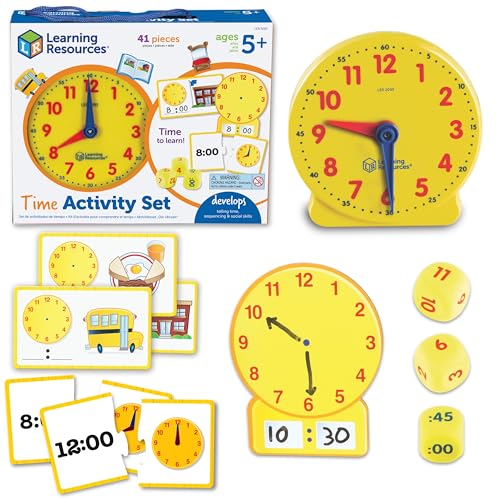
- Real analog clock with moving hands
- Includes cards, puzzles, dice, and guide
- Good for classrooms or guided practice
Best For: Teachers and homeschoolers who want hands-on time practice
Wooden Shape Sorting

- Wooden clock with 12 removable number shapes
- Rotating hour and minute hands
- Teaches time plus shapes and fine motor skills
Best For: Younger kids starting with tactile early-learning play
Teacher Demonstration Clock

- Hour hand advances with minute hand movement
- Minute hand moves in 1-minute increments
- Includes stand and activity guide
Best For: Classroom demonstrations and guided time-telling practice
Silent Wall Clock Learning
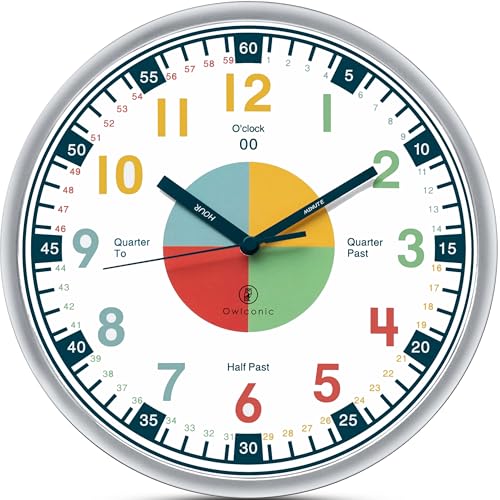
- Color-coded numbers and labeled hands
- Silent sweep movement with no ticking
- Includes free downloadable workbook
Best For: Quiet rooms and classrooms that need a teaching wall clock
Talking learning clock
Interactive Bedtime Learning Clock for Preschoolers

- Reads the time aloud in two styles.
- Quiz mode lets kids practice hands-on.
- Sleep mode adds lullabies and soft light.
Best For: Preschoolers who learn best with audio, lights, and interactive practice.
Silent wall learning clock
Color-Coded Analog Teaching Clock for Kids

- Fully labeled face makes reading easier.
- Silent movement avoids distracting ticking.
- Includes a printable activity e-book.
Best For: Bedrooms, classrooms, and homeschool spaces that need a quiet teaching clock.
Two-mode time trainer
Telly Jr. Interactive Teaching Clock

- Teaches analog and digital time.
- Quiz mode adds active practice.
- LCD screen updates as hands move.
Best For: Kids who want guided time practice with quiz-style feedback.
Colorful Silent Pick
Colorful 10-Inch Kids Learning Wall Clock

- Color changes every hour to support learning
- Silent non-ticking movement for quiet rooms
- Labeled hands help kids read the clock
Best For: Kids rooms, classrooms, and playrooms
Montessori Puzzle Pick

- Clock toy doubles as a shape-sorting puzzle
- Movable hands support time practice
- Wooden build with color-coded number blocks
Best For: Hands-on preschool learning and motor-skill practice
Classroom Time Trainer
Learning Resources Big Time Mini Clock

- Hidden gears keep time accurate as hands move
- Color-coded hands aid time reading
- Tabletop stand included for easy setup
Best For: Guided time teaching for preschool and early elementary
Hands-On Classroom Learning – Time Activity Set for Telling Time
If you’re shopping for learning clocks for 5 year olds, this time activity set gives kids a practical way to practice with a real analog clock. The moving hands, activity cards, puzzles, and write-and-wipe practice make it a strong pick for guided lessons, centers, or extra time-telling practice.
Best For: Teachers, homeschool parents, and 5-year-olds who learn best through hands-on clock activities.
Pros:
- Includes a teaching clock plus activity cards, puzzles, dice, and a guide for varied practice.
- Uses moving hour and minute hands to help children learn through direct manipulation.
- Supports hours, half-hours, and broader time-telling practice.
- Made for independent use or teacher-led classroom instruction.
Cons:
- Best suited to structured learning rather than free play.
- Cards and accessories may require adult organization during setup.
Overall, this set is a flexible teaching tool if you want learning clocks for 5 year olds that go beyond a simple display clock. It offers multiple ways to practice, which can help reinforce time concepts in a classroom or home setting.
Wooden Shape Sorting – Melissa & Doug Clock Puzzle
This wooden clock is a simple, tactile option for learning clocks for 5 year olds who are still building number recognition and basic time skills. The removable pieces, rotating hands, and extension activities make it useful for early learning, especially when you want time-telling mixed with shape and color practice.
Best For: Preschool and early elementary kids who need a hands-on introduction to numbers, shapes, and time.
Pros:
- 12 removable shaped number pieces support sorting and placement practice.
- Minute and hour hands rotate for basic clock play and early time recognition.
- Includes extension activities to reinforce learning concepts.
- Also teaches fine motor skills, numbers, colors, and shapes.
Cons:
- More of an early-learning puzzle than a full time-teaching system.
- Not designed for advanced time-telling practice.
If you want a softer introduction to time concepts, this clock keeps the learning simple and hands-on. It’s a good fit for children who benefit from matching, sorting, and manipulating pieces before moving to more detailed analog clocks.
Teacher Demonstration Clock – Big Time Student Clock
For learning clocks for 5 year olds, this student clock is a straightforward teaching aid that makes analog time easier to demonstrate. The hidden gear mechanism keeps the hour hand moving correctly as the minute hand changes, which is helpful when kids are learning the relationship between the two hands.
Best For: One-on-one practice, small groups, and classroom demonstrations of analog time.
Pros:
- Hidden gear mechanism automatically advances the hour hand with the minute hand.
- Minute hand moves in 1-minute increments for precise practice.
- Includes a removable stand and activity guide.
- Designed to help students learn to tell time on a 12-hour clock.
Cons:
- Requires a battery to operate.
- Less interactive than a full activity set with multiple pieces.
This is a solid choice if you want a clear, teacher-friendly clock that demonstrates how analog time works. It’s especially useful when consistency and accuracy matter more than extra game-like features.
Silent Wall Clock Learning – Owlconic Kids Wall Clock
If you want learning clocks for 5 year olds that stay on the wall and teach as they keep time, this silent model is built for that purpose. The color-coded numbers, labeled hands, minute track, and time-language markings make it easier for kids to move from seeing the clock to actually reading it.
Best For: Bedrooms, classrooms, and homeschool spaces where a quiet instructional wall clock is needed.
Pros:
- Color-coded numbers and labeled hour/minute hands support step-by-step learning.
- Includes time language like Quarter Past, Half Past, and Quarter To.
- Silent sweep movement avoids ticking noise.
- Shatter-proof acrylic face and screw-secured battery compartment add durability and safety.
Cons:
- Works more as a learning display than a hands-on practice toy.
- Requires a battery for operation.
This clock is a practical option if you want everyday exposure to analog time without classroom noise. It combines clear teaching features with the convenience of a regular wall clock, which can reinforce lessons throughout the day.
Talking learning clock – Interactive Bedtime Learning Clock for Preschoolers
If you want learning clocks for 5 year olds that feel playful instead of worksheet-like, this talking clock is a strong fit. Kids can hear the time read aloud, practice moving the hands, and switch between teaching modes on their own.
Best For: Preschoolers who need a hands-on clock that teaches time, supports independent play, and doubles as a gentle bedtime routine helper.
Pros:
- Reads any set time aloud in two ways: simple and advanced.
- Includes Quiz, Time, and Sleep modes for varied practice.
- Uses lights, sounds, and cheerful feedback to keep kids engaged.
- Built-in lullabies and soft color glow can help at bedtime.
Cons:
- Requires 3 AAA batteries, though they are included.
- Designed for indoor use only.
Overall, this is a feature-rich choice for families who want a learning clock that does more than just display time. Its mix of quiz play, voice prompts, and sleep mode makes it especially practical for everyday learning at home.
Silent wall learning clock – Color-Coded Analog Teaching Clock for Kids
For parents and teachers comparing learning clocks for 5 year olds, this wall clock is a simple, visual option. Every minute is numbered, and the color-coded hands make it easier for kids to read a real analog clock with less guessing.
Best For: Kids who need a quiet, wall-mounted teaching clock for bedrooms, classrooms, or homeschool spaces.
Pros:
- Fully labeled hands and numbers help children read time confidently.
- Silent sweeping movement keeps it free of ticking noise.
- Works as both a learning tool and room decor.
- Includes a printable activity e-book for step-by-step practice.
Cons:
- Must be mounted on the wall.
- Uses 1 AA battery, which is not included.
This is a good pick if you want a clear, everyday reference clock rather than an interactive toy. The labeled layout and silent movement make it especially practical for calm learning environments.
Two-mode time trainer – Telly Jr. Interactive Teaching Clock
If you’re shopping for learning clocks for 5 year olds, this interactive model stands out for teaching both analog and digital time. It uses learning mode and quiz mode to turn time practice into a simple back-and-forth activity.
Best For: Children who are ready to practice time in five-minute increments and want an interactive clock with quiz-style learning.
Pros:
- Teaches both analog and digital time.
- Learning mode updates the LCD screen as the hands move.
- Quiz mode asks kids to match the time shown on the screen.
- Includes batteries and is made for ages 3+.
Cons:
- Uses three AA batteries, which may need replacing over time.
- Learning mode teaches in five-minute increments rather than minute-by-minute detail.
This is a solid pick for families who want a more guided learning experience with clear feedback. The mix of analog and digital practice makes it a useful bridge between toy clock play and real-world time reading.
Colorful Silent Pick – Colorful 10-Inch Kids Learning Wall Clock
If you’re comparing learning clocks for 5 year olds, this 10-inch wall clock is built to make time-telling more visual and engaging. The colored hour changes every hour, and the labeled hour and minute hands help children connect the face of the clock with the idea of time.
Best For: Kids bedrooms, classrooms, and playrooms where a quiet, easy-to-read teaching clock is needed.
Pros:
- Silent non-ticking mechanism is ideal for bedrooms and classrooms.
- Color changes every hour to help keep kids engaged.
- Labeled hour and minute hands support early time-learning.
- Battery-operated design makes placement simple on any wall.
Cons:
- Requires 1 AA battery, which is not included.
- Wall-mount design is less flexible than tabletop learning clocks.
- Best suited to indoor spaces only.
This is a practical pick if you want a decorative teaching clock that doubles as room decor. It focuses on visual learning and quiet operation, which makes it especially appealing for shared learning spaces.
Montessori Puzzle Pick – Wooden Sorting Time Clock Toy
For learning clocks for 5 year olds, this wooden sorting clock adds a hands-on puzzle element to time practice. Kids can match the 12 blocks, move the hands, and practice numbers, colors, shapes, and daily routine concepts in one toy.
Best For: Preschoolers ages 3-5 who learn best through tactile play and sorting activities.
Pros:
- Movable hour and minute hands make time practice interactive.
- 12 color-coded blocks support number, color, and shape recognition.
- Sturdy wood construction with no sharp edges.
- Works as both a clock toy and a sorting puzzle.
Cons:
- Manual toy, so it is not a real working clock.
- Best for supervised use under age 3.
- Smaller learning clock size may feel more like a tabletop toy than a classroom aid.
This is a strong choice if you want a multi-skill educational toy rather than just a teaching clock. It blends time learning with fine motor practice, which can be useful for young children building foundational skills.
Classroom Time Trainer – Learning Resources Big Time Mini Clock
If you want learning clocks for 5 year olds that feel more like a teaching aid than a toy, this mini clock is a solid option. It uses hidden gears to keep the time correct as children spin the hands, and the color-coded hands make the hour and minute markings easier to follow.
Best For: Classroom tables, homeschool setups, and older preschoolers who need hands-on time skill practice.
Pros:
- Hidden gears help maintain the correct time while hands are moved.
- Color-coded hands match the hour and minute markings.
- Includes a removable plastic stand for tabletop use.
- Compact size is easy to keep on a desk or learning station.
Cons:
- Smaller 4-inch size may be less visible from a distance.
- Designed for ages 5+, so it is less suited to younger toddlers.
- Tabletop format is not ideal if you specifically want a wall clock.
This is the most structured learning tool in the group and a good fit for guided instruction. Its compact format and educational design make it useful when you want a clock that supports repeated practice without distractions.
How We Picked the Best Learning Clocks for 5 Year Olds
We focused on Learning Clocks for 5 Year Olds that make time concepts easier to understand, not just clocks that look educational. Priority went to clear analog faces, readable minute markers, durable materials, and layouts that support step-by-step instruction. We also looked for useful extras such as color-coded hands, movable hands, silent operation, and talking or quiz-based learning modes.
Quick Comparison
Teaching clocks and tabletop manipulatives are best for direct instruction and practice. Wall clocks work well for daily exposure in bedrooms, playrooms, and classrooms. Interactive models add engagement for children who learn best through audio prompts, games, or hands-on quizzes. If your child is just starting, choose a highly visual model with labeled numbers and strong contrast; if they are ready to practice independently, a quieter wall clock or quiz-style toy may be the better fit.
Key Buying Factors for Learning Clocks for 5 Year Olds
Readability: Large numbers, minute ticks, and color contrast matter more than decorative details. A clock should make it easy to identify hour and minute positions at a glance.
Hands and labels: Look for separate hour and minute hands that are clearly different in size or color. Labeled minute increments, especially in fives, help children connect counting with time-telling.
Learning style: Some children benefit from a manipulable teaching clock, while others learn better from a wall clock they see every day. Interactive talking clocks can be helpful for repetition and self-checking.
Noise and placement: For bedrooms and quiet classrooms, a non-ticking or silent design is often worth prioritizing. For study spaces, a tabletop clock may be more useful than a decorative wall model.
Durability: Five-year-olds need sturdy construction, secure hands, and materials that hold up to repeated practice. Wood, reinforced plastic, and stable stands are all good signs.
Who Should Buy Which Learning Clocks for 5 Year Olds?
If you want hands-on instruction, choose a teaching clock or manipulatives set. If you want everyday reinforcement, a silent wall clock is a smart pick for a bedroom or classroom. If your child enjoys games and audio feedback, an interactive talking model can keep them engaged longer. For Montessori-style learning or tactile play, sorting and puzzle-style clocks are a strong choice. The best option depends on whether you want guided teaching, daily exposure, or independent practice with Learning Clocks for 5 Year Olds.