Teaching time starts with the right visual tools, and the best learning clocks for preschoolers make that lesson feel simple, playful, and repeatable. From magnetic demo clocks to wooden Montessori-style toys, the right choice can turn a confusing concept into a daily routine.
We focused on options that help young children see hour and minute hands clearly, practice matching numbers, and build confidence with time-telling basics.
Best 10 Learning Clocks for Preschoolers Picks for 2026
Classroom Learning Toolkit
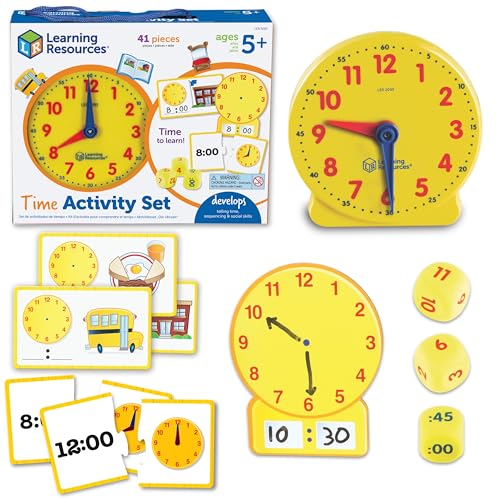
- Multiple time-learning activities in one set
- Realistic analog clock with moving hands
- Good for guided lessons or independent practice
Best For: Classroom use and structured time-telling practice
Shape-and-Time Starter

- 12 removable pieces for sorting and matching
- Hour and minute hands rotate for practice
- Builds fine motor, number, shape, and time skills
Best For: Preschoolers learning through hands-on sorting
Teacher Demonstration Pick

- Automatic gear keeps hour hand synced
- Minute hand moves in 1-minute steps
- Includes stand and activity guide
Best For: Demonstration-style analog time teaching
Magnetic Home Helper

- Magnetic backing and hanging slot for display
- Clear numbers and helpful time phrases
- Strong board construction for durability
Best For: Wall display and everyday early time lessons
Quiet wall clock pick

- Silent non-ticking movement
- Colorful easy-read numerals and hands
- Battery-powered wall mount
Best For: Quiet rooms and everyday time-teaching decor
Hands-on time practice
Learning Resources Big Time Mini Clock

- Spin-the-hands learning clock
- Color-coded hour and minute hands
- Removable stand for tabletop use
Best For: Hands-on preschool and classroom time practice
Interactive lesson board
ANCOMEDO Magnetic Writable Teaching Clock

- Large dry-erase teaching surface
- Magnetic or hanging display options
- Colorful movable hands for practice
Best For: Guided time lessons in classrooms or homeschool
Interactive talking clock

- Reads time aloud in two ways
- Quiz, time, and sleep modes
- Lullabies and soft night light
Best For: Kids who want guided time-telling practice and a bedtime-friendly toy
Bulk practice kit

- Includes 25 clocks for group use
- Wipe-off cards support repeat practice
- Manual design needs no batteries
Best For: Classrooms and homeschool settings needing lots of practice clocks
Game-based learning clock
Coogam Wooden Clock Teaching Time Toy

- Teaches analog and digital time
- Includes flashcards and board game
- Solid wood, screen-free design
Best For: Kids who learn best through playful, hands-on time-telling activities
Classroom Learning Toolkit – Time Activity Set
If you want learning clocks for preschoolers that go beyond a simple display, this time activity set gives kids multiple ways to practice. The hands-on clock, write-and-wipe clock, cards, puzzles, dice, and guide make it easy to move from basic clock play to early time-telling practice.
Best For: Preschoolers and early elementary learners who benefit from a structured, classroom-friendly time-telling set.
Pros:
- Includes several activities for repeated practice and different learning styles
- Realistic analog clock with moving hour and minute hands
- Designed for independent use, teacher-led lessons, and small groups
- Supports learning hours, half-hours, and other early time concepts
Cons:
- Geared toward ages 5 and up, so it may be advanced for some younger preschoolers
- More of a teaching set than a simple toy clock
This is a flexible option if you want one kit that can support both guided instruction and extra practice. It works especially well when you need a durable classroom-style resource rather than a single standalone clock.
Shape-and-Time Starter – Wooden Shape Sorting Clock
For learning clocks for preschoolers, this wooden shape sorting clock adds a lot of value in one simple toy. Children can place the 12 removable pieces, move the hour and minute hands, and practice numbers, shapes, and time concepts at the same time.
Best For: Younger children who need a hands-on clock for shape sorting, number recognition, and early time learning.
Pros:
- 12 removable pieces encourage hands-on matching and sorting
- Minute and hour hands rotate for basic time-telling practice
- Also supports fine motor skills, numbers, colors, and shapes
- Includes extension activities for extra early-learning reinforcement
Cons:
- Best suited to basic early learning rather than advanced time reading
- Material details are inconsistent in the supplied notes
This is a strong pick if you want a simple, multi-skill preschool clock toy that feels playful and educational. It’s especially useful for toddlers and preschoolers who learn best through sorting and manipulation.
Teacher Demonstration Pick – Big Time Student Clock
This is one of the more practical learning clocks for preschoolers if you want a clear teaching clock that behaves like a real analog model. The hidden gear mechanism automatically advances the hour hand as the minute hand moves, which helps show how time works in a simple, visual way.
Best For: Kids who are ready for a more realistic demonstration clock for learning to tell time.
Pros:
- Hidden gear mechanism keeps the hour hand synced automatically
- Minute hand moves in 1-minute increments for precise practice
- Includes a removable stand and activity guide
- Easy-to-read 12-hour clock format for instruction
Cons:
- Requires a battery, unlike many manual teaching clocks
- May suit guided learning better than free-play use
Choose this model if your main goal is a clear teacher-style demonstration of analog time. It’s especially useful when you want children to see the relationship between the hour and minute hands as time changes.
Magnetic Home Helper – Happy Face Education Clock
If you want learning clocks for preschoolers that are easy to display, this magnetic board-style clock is a practical choice. It uses movable hands, clear numbers, and helpful phrases like “quarter to,” making it a straightforward visual aid for early time lessons.
Best For: Homes, classrooms, or homeschool spaces that need a durable wall-style teaching clock for young children.
Pros:
- Magnetic strips and hanging slot make it easy to display
- Strong board construction helps it hold up better during use
- Annotated with numbers and useful time phrases
- Designed to encourage participation with a colorful, friendly design
Cons:
- Focused on display and teaching, not interactive sorting or puzzles
- Best for basic numeracy and literacy support rather than advanced clock reading
This is a solid option if you want a durable visual teaching tool that can live on the wall or in a learning corner. It keeps time learning simple, approachable, and easy to reference during everyday lessons.
Quiet wall clock pick – Silent Kids Wall Clock
If you want learning clocks for preschoolers that also work as room decor, this 8-inch wall clock keeps the focus on easy reading. The colorful numerals and hands are designed to help young children understand time without adding visual clutter, while the non-ticking movement makes it a calm fit for bedrooms, classrooms, and play spaces.
Best For: Parents and teachers who want a quiet, easy-to-read wall clock for everyday time teaching.
Pros:
- Colorful numerals and hands are meant to make reading time simpler for kids.
- Completely silent, non-ticking movement supports quiet rooms and naps.
- Battery-powered design is straightforward to place on a wall.
- Works as both a teaching aid and a decorative clock for multiple rooms.
Cons:
- Uses 1 AA battery, which is not included.
- Wall-mount format is less flexible than tabletop learning tools.
Overall, this is a practical pick if you want a simple analog clock that helps kids see the numbers and hands clearly while staying silent in the background. It is less of a hands-on manipulative and more of an everyday visual aid.
Hands-on time practice – Learning Resources Big Time Mini Clock
For learning clocks for preschoolers that focus on active practice, this mini clock is built to let kids spin the hands and see how time changes. The hidden gears keep the time aligned as the hands move, and the color-coded design helps make hour and minute markings easier to follow during early time lessons.
Best For: Hands-on practice for kids who are starting to learn the basics of telling time.
Pros:
- Hands-on design lets children manipulate the clock directly.
- Hidden gears help maintain the correct time while the hands are moved.
- Color-coded hands match the hour and minute markings.
- Includes a removable stand for tabletop use.
Cons:
- Small 4-inch size may be better for close-up practice than group viewing.
- Manual winding design is less like a standard real clock for wall display.
This is a strong choice if your goal is tactile teaching rather than decor. It is compact, classroom-friendly, and focused on helping young learners physically explore time concepts.
Interactive lesson board – ANCOMEDO Magnetic Writable Teaching Clock
This large teaching model is a useful option for learning clocks for preschoolers when you want kids to see, write, and practice time on the same surface. The colorful movable hands, dry-erase face, and magnetic mounting options make it suited to homeschool lessons, classroom demonstrations, and repeated practice sessions.
Best For: Teachers and parents who want a large visual clock for guided time lessons and practice.
Pros:
- Large 12 x 11-inch size gives kids a clear view during teaching.
- Dry-erase surface lets children write, wipe, and practice repeatedly.
- Colored movable hands and easy-to-read numerals support time lessons.
- Can be hung or attached to a magnetic surface for flexible setup.
Cons:
- Made of cardboard with a dry-erase surface, so it is less durable than a plastic clock.
- Manual teaching tool is meant for practice, not everyday timekeeping.
As a demonstration clock, this is the most lesson-oriented option in the set. It is best when you want an interactive teaching aid that supports both telling time and writing it down.
Interactive talking clock – BEST LEARNING Learning Clock
If you’re comparing learning clocks for preschoolers, this BEST LEARNING option adds a lot of guided practice without feeling like a worksheet. Kids can set a time, hear it read aloud in two ways, and move between Time, Quiz, and Sleep modes for play that covers both learning and wind-down time.
Best For: Preschoolers who do well with interactive, solo time-telling practice plus a bedtime-friendly night light.
Pros:
- Reads the set time aloud in two ways for clearer learning
- Three modes help with time practice, quizzes, and sleep routine
- Includes lullabies, soft light colors, and a 60-minute timer
- Built for little hands with turnable hands and a slip-proof base
Cons:
- Requires AAA batteries, though they are included
- More feature-rich than a basic practice clock
This is a strong pick if you want one toy that teaches, quizzes, and doubles as a calming bedtime accessory. The award-winning design and included batteries make it especially easy to use right out of the box.
Bulk practice kit – 25 Pcs Teaching Clock Kit
For families or teachers shopping learning clocks for preschoolers, this 25-piece kit is built for repeated practice and group use. It includes one large demonstration clock plus 24 smaller student clocks, with wipe-off cards that make it easy to practice telling time again and again.
Best For: Classrooms, homeschool groups, or siblings who need multiple hands-on clocks for practice.
Pros:
- Large set includes 1 demo clock and 24 student clocks
- Erasable laminated cards support repeated time practice
- Hands can turn to let kids mark different times
- No batteries needed and fully manual
Cons:
- Cardboard build is less durable than wood or plastic
- Designed more for practice than play features
This kit makes the most sense when you need quantity and simple, classroom-style repetition. It is less of a toy and more of a practical teaching tool, which is exactly what many time-telling lessons need.
Game-based learning clock – Coogam Wooden Clock Teaching Time Toy
If you want learning clocks for preschoolers that feel more like a game than a lesson, this Coogam wooden set is a solid choice. It combines an analog clock, digital time practice, flashcards, and a board game for 2 to 4 players, giving kids multiple ways to work on time concepts.
Best For: Preschoolers who learn best through games, hands-on practice, and family or classroom play.
Pros:
- Combines analog and digital time learning in one set
- Includes flashcards and a board game for interactive practice
- Reusable dry-erase cards add extra practice value
- Solid wood construction gives it a more durable feel
Cons:
- No batteries or lights, so it is a purely manual learning toy
- Game format may be less direct than a simple clock-only trainer
This is a good pick if you want a screen-free, hands-on time-learning set with more variety than a basic teaching clock. The mix of game play and reusable practice cards helps keep lessons active and engaging.
How We Picked These Learning Clocks for Preschoolers
We looked for clocks that are age-appropriate, easy to manipulate, and useful for repeated practice. Strong picks for Learning Clocks for Preschoolers should have clear numbering, durable hands, and teaching features that match how young kids learn best: by touching, moving, and seeing.
We also favored models that work in different settings, including home learning, preschool classrooms, and homeschool lessons. Helpful extras like write-on faces, magnetic pieces, talking prompts, and quiet operation can make a big difference depending on your environment.
Quick Comparison
In general, wood and basic analog teaching clocks are best for simple hands-on practice, while large demo clocks are better for group instruction. Interactive clocks with lights, sounds, or quiz modes can keep attention longer, but they are usually best as supplements rather than the only teaching tool. If you want a classroom setup, look for larger faces and easy visibility; for personal practice, choose compact clocks with moveable hands and clear hour markers.
Key Buying Factors for Learning Clocks for Preschoolers
Visibility and Number Design
Preschoolers need big, easy-to-read numbers and a face that doesn’t feel cluttered. High contrast between the dial, hands, and labels helps children focus on the relationship between hour and minute positions.
Hands That Move Easily
The best teaching clocks let children move the hands without frustration. Hands should be sturdy enough to stay in place during practice but smooth enough for little fingers to adjust.
Learning Style and Feature Set
Choose a clock that fits how you plan to teach. Some children learn best with a tactile wooden clock, while others benefit from a demonstration clock, a digital-analog combo, or a talking clock that reinforces concepts aloud.
Size and Setting
Larger clocks are usually better for classrooms or shared lessons, while smaller versions work well for tabletop practice and travel. Consider whether you need a wall-mounted teaching aid, a portable manipulatives set, or a toy that doubles as an educational game.
Durability and Noise Level
For home use, a quiet or non-ticking clock can be a bonus. For frequent handling, choose materials that can stand up to drops, dragging, and repeated hand movement.
Who Should Buy Which Learning Clocks for Preschoolers?
If you want a simple starter tool, a basic analog teaching clock is usually the best fit. If your child learns through games and sounds, an interactive option may keep them engaged longer. For classrooms or homeschool groups, larger demonstration clocks and kit-style sets offer the most flexibility. And if you want a gentle everyday visual aid, a quiet wall clock can support time awareness without feeling like a lesson.
Ultimately, the best choice depends on your child’s attention span, your teaching style, and how often you’ll use the clock. For many families, one hands-on practice clock plus one larger display clock is the most practical combination.