Hands-on tools can make a big difference when kids are learning numbers, patterns, place value, and fractions. The right set turns abstract ideas into something they can see, touch, and build.
In this roundup of the best math manipulatives for elementary students, we focus on practical options that support core skills, classroom use, and home learning.
Best 10 Math Manipulatives for Elementary Students Picks for 2026
Counting & Building Starter Set

- 100 linking cubes for counting and patterning
- Supports addition, subtraction, and skip counting
- Snap-together design for hands-on STEM play
Best For: Kindergarten and early elementary math practice
Geometry & Pattern Bulk Set
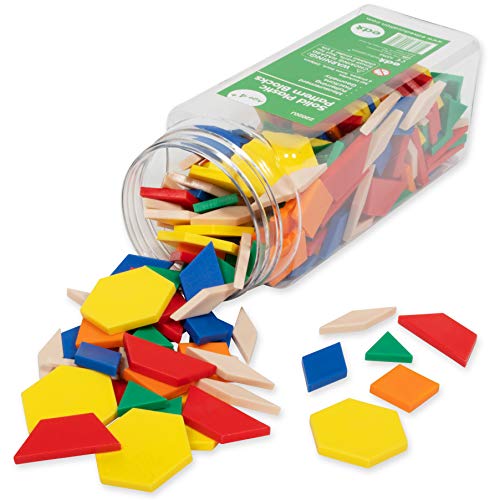
- 250-piece set with standard geometric shapes
- Great for symmetry, fractions, and patterning
- Storage jar helps with cleanup and travel
Best For: Geometry lessons and creative math exploration
Counting & Sorting Bear Set

- 102 colorful bear counters for early math
- Good for counting, sorting, and color recognition
- Includes storage bucket and activity guide
Best For: Preschool and early elementary counting practice
Fraction Learning Set
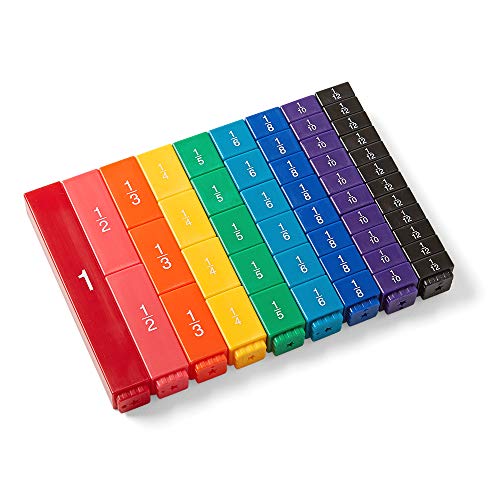
- 51-piece set for fraction modeling and comparison
- Covers halves through twelfths
- Durable plastic cubes are easy to clean
Best For: Upper elementary fraction lessons
Counting Cubes Starter Set
edxeducation Math Cubes, 100 Linking Blocks

- 100 linking cubes in 10 colors
- Embossed shapes support sorting and recognition
- Soft-click connections are easy for small hands
Best For: Preschool and early elementary counting, sorting, and patterning
Fraction Visual Learning Kit
Torlam Fraction Manipulatives with Flip Chart

- Flip charts show fractions, decimals, and percentages
- Fraction circles make parts of a whole easier to see
- Includes 20 task cards for guided practice
Best For: Visual fraction learning and homeschool review
Elementary Math Cube Activity Set
Learning Resources MathLink Cubes Activity Set

- Covers number sense, operations, fractions, and geometry
- Includes 100 cubes plus 15 write-and-wipe cards
- Compatible with all MathLink Cubes sets
Best For: Versatile classroom or homeschool math practice
Primary Pick
Base Ten Blocks with Place Value Chart

- Complete base-ten set with mat and storage box
- Supports place value, counting, addition, and subtraction
- Lightweight, non-toxic plastic for small hands
Best For: Teachers or homeschoolers who want a simple, organized base-ten starter set
Most Versatile
Wooden Ten-Frame Math Game Set

- 153-piece set with ten-frames, counters, dice, and boards
- Built for addition, subtraction, counting, and number sense
- Wooden parts and storage bag make it classroom-friendly
Best For: Hands-on learners who benefit from math games and visual practice
Value Option

- 133-piece plastic set with mat and place value chart
- Good for counting, place value, decimals, and operations
- Lightweight, non-toxic, and easy to clean
Best For: Affordable base-ten practice for classrooms or homeschool
Counting & Building Starter Set – MathLink Cubes for Early Math
If you’re shopping for math manipulatives for elementary students, this 100-piece MathLink Cubes set is a practical pick for counting, patterning, and simple operations. The cubes snap together on all sides, making them useful for hands-on math practice, STEM activities, and classroom or homeschool work.
Best For: Kindergarten and early elementary learners who need a versatile manipulative for counting, addition, subtraction, and patterns.
Pros:
- Supports counting to 100, skip counting, making 10, addition, and subtraction
- Geometric cutouts add a tactile element for patterning and visual learning
- Also reinforces color identification, shape identification, matching, and fine motor skills
- Compact 100-piece set works well for home, homeschool, or classroom use
Cons:
- Smaller 100-piece count may feel limited for larger classroom groups
- Best suited to early math concepts rather than advanced elementary topics
Overall, this is a flexible starter manipulative that covers a wide range of foundational math skills without being complicated to use. It’s a solid everyday choice when you want one set that can support multiple early learning activities.
Geometry & Pattern Bulk Set – 250 Pattern Blocks
For families or teachers comparing math manipulatives for elementary students, this 250-piece pattern block set is a strong choice for geometry, symmetry, fractions, and creative design. The standard shapes and colors fit together cleanly, so kids can build without awkward gaps while exploring early math ideas.
Best For: Elementary learners who need a large, versatile set for geometry lessons, patterning, and spatial reasoning.
Pros:
- Includes 250 standard pattern blocks in six geometric shapes
- Useful for symmetry, fractions, measurement, shape attributes, and patterning
- Blocks fit together smoothly with no awkward gaps or holes
- Jar with handle makes storage and travel easier
Cons:
- Primarily focused on geometry and pattern-based learning, not counting practice
- Bulk set may be more than some individual households need
This set works well when you want a durable, standard pattern block collection that can support a lot of lesson types. It is especially useful for visual learners who benefit from building and comparing shapes.
Counting & Sorting Bear Set – Baby Bear Counters
If you need math manipulatives for elementary students at the earliest levels, these Baby Bear Counters are a simple and effective option. The colorful bears are designed for counting, sorting, and color recognition, and the included activity guide helps make them easy to use right away.
Best For: Preschool, pre-K, and early elementary students learning counting, sorting, and color recognition.
Pros:
- Supports counting, sorting, and early color recognition
- 102-piece set provides enough counters for small-group or independent activities
- Includes storage bucket and activity guide printed inside the bucket
- Small bear size is well suited to hands-on learning
Cons:
- More limited for advanced elementary math skills beyond early counting work
- Best for tactile activities rather than more structured geometric modeling
This is a straightforward beginning math tool that focuses on the basics young children need most. It’s a good pick if your priority is simple, tactile practice with counting and sorting.
Fraction Learning Set – Rainbow Fraction Tower Cubes
When you’re choosing math manipulatives for elementary students, fraction tools can make a big difference once kids start working with parts of a whole. This 51-piece Rainbow Fraction Tower Cubes set helps students visualize fractions, compare values, and model equivalent relationships with colorful, durable pieces.
Best For: Upper elementary students learning fractions, equivalency, ordering, and mixed numbers.
Pros:
- Helps students name fractions and decimals and compare or order fractions
- Covers halves, thirds, fourths, fifths, sixths, eighths, tenths, and twelfths
- Useful for improper fractions, mixed numbers, and fraction operations
- Durable, easy-to-clean plastic pieces with clear visual support
Cons:
- Best suited to fraction instruction rather than general early math practice
- Set size is focused, so it may not serve as a broad all-purpose manipulative
This set is a targeted teaching aid for one of the hardest elementary math topics. If fractions are the goal, the tower-style cubes make the relationships between values much easier to see.
Counting Cubes Starter Set – edxeducation Math Cubes, 100 Linking Blocks
If you want math manipulatives for elementary students that are simple to use across sorting, patterning, and early number work, this 100-piece linking cube set is a practical pick. The cubes connect on all sides with a soft click, and the 10 colors plus embossed shapes make it easy to build activities that match different skill levels.
Best For: Preschool, kindergarten, and early elementary learners who need hands-on counting, sorting, and pattern-building materials.
Pros:
- 100 cubes in 10 colors give you plenty of pieces for small-group or individual use.
- Embossed geometric shapes add an extra layer for shape recognition and sorting.
- Soft-click connections make them easy for small hands to stack, link, and build.
- Includes an activity guide for ideas and structured use at home or in class.
Cons:
- Best suited to early math skills rather than more advanced elementary concepts.
- No batteries or digital features, so all activities are hands-on only.
- Pieces are small enough that adult supervision may be needed for younger children.
This set works well as a flexible starter manipulative because it supports several foundational skills without being complicated. The combination of color, shape, and easy linking makes it useful for repeated practice and open-ended exploration.
Fraction Visual Learning Kit – Torlam Fraction Manipulatives with Flip Chart
For math manipulatives for elementary students who are starting to work with fractions, this set focuses on making the concept visual and easier to explain. The double-sided flip charts cover fraction-to-decimal and percentage conversion, while the fraction circles and task cards turn review into a more interactive lesson.
Best For: Elementary, kindergarten, and homeschool learners who need a visual way to understand fractions and related conversions.
Pros:
- Double-sided flip charts show fraction, decimal, and percentage relationships.
- Fraction circles help students see parts of a whole more clearly.
- Includes 20 task cards to support practice and quick review activities.
- Collapsible flat base is designed for easier desk use and storage.
Cons:
- Focused mainly on fractions, so it is less versatile than general math manipulatives.
- Designed for tabletop use rather than active building or large-group play.
- The compact size makes it easy to store, but limits display scale.
This is a good choice if your main goal is helping children visualize fraction relationships instead of relying on memorization alone. The mix of charts, circles, and task cards gives teachers and parents a straightforward way to guide practice.
Elementary Math Cube Activity Set – Learning Resources MathLink Cubes Activity Set
If you’re comparing math manipulatives for elementary students, this MathLink Cubes activity set stands out for covering a wide range of skills in one box. The 100-color cube set comes with write-and-wipe cards and an activity guide, so students can use the pieces for number sense, place value, operations, fractions, measurement, and geometry.
Best For: Elementary classrooms and home learners who need a versatile cube set with structured math activities.
Pros:
- Supports many elementary math topics, including operations, fractions, and geometry.
- Includes 100 cubes, 15 double-sided write-and-wipe cards, and an activity guide.
- Cubes connect on all sides and are compatible with all MathLink Cubes sets.
- Works well for hands-on skill building and guided classroom practice.
Cons:
- Many of the activities are better suited to structured use than free play.
- Requires guided instruction to get the most out of the included cards and lessons.
- As a cube set, it may overlap with other linking-block manipulatives you already own.
This set is the most broadly useful option here if you want one manipulative that can grow with a child’s math skills. It pairs physical cubes with activity support, which makes it easier to turn practice time into actual lesson time.
Primary Pick – Base Ten Blocks with Place Value Chart
If you want math manipulatives for elementary students that make place value easier to teach, this base ten blocks set is built for hands-on number work. It includes a storage box, cube, flats, rods, units, and a reusable writing mat, so it works well for counting, addition, subtraction, and early place value practice.
Best For: Classroom or homeschool use where teachers want a compact base ten set with a mat and easy storage.
Pros:
- Includes 1 cube, 10 flats, 20 rods, 100 units, plus a storage box and mat
- Useful for place value, number sense, decimals, addition, and subtraction
- Made from safe, non-toxic, lightweight plastic that is easy to clean
- Small size is designed for children’s hands and supports building shapes too
Cons:
- Best suited to basic base-ten learning rather than a wide variety of games
- Plastic construction may feel less premium than wooden alternatives
This is a practical choice if you want a straightforward manipulative kit that supports core early math skills without extra setup.
Most Versatile – Wooden Ten-Frame Math Game Set
For math manipulatives for elementary students that go beyond counting, this wooden ten-frame set adds games, writing boards, dice, and visual counters. It is designed to help kids see number patterns, practice addition and subtraction, and build confidence through hands-on activities.
Best For: Families, classrooms, or homeschoolers who want a richer math game set for interactive practice.
Pros:
- Large 153-piece set with ten-frames, counters, markers, boards, cards, dice, stars, and storage bag
- Supports addition, subtraction, skip counting, multiplication, and number sense
- Wooden pieces are polished for safer handling and long-term use
- Includes multiplayer game cards and writing boards for more engaging practice
Cons:
- More pieces mean more setup than a basic manipulative set
- Focused on ten-frame learning, so it may not replace other math tools
This set stands out if you want a more interactive option that turns early math practice into play while still staying educational.
Value Option – 133-Piece Base Ten Blocks Set
This 133-piece set is a solid pick if you need math manipulatives for elementary students that cover the essentials of base-ten learning. It includes a place value chart, a reusable mat, and colorful plastic cubes that can be used for counting, number sense, and simple operations.
Best For: Budget-conscious buyers who want a compact, reusable base-ten manipulative set for early grades.
Pros:
- Includes 133 pieces with a mat and place value chart
- Supports 10 concepts, place value, decimals, addition, and subtraction
- Lightweight, non-toxic plastic is sturdy and easy to clean
- Designed for classrooms, kindergarten, and homeschooling use
Cons:
- Fewer accessories than some larger math sets
- Mostly focused on base-ten and counting activities
If you want a straightforward, reusable starter set for early math practice, this one covers the basics without adding unnecessary extras.
How We Picked the Best Math Manipulatives for Elementary Students
We prioritized sets that cover multiple early math skills, offer durable materials, and work well for both home and classroom use. We also looked for manipulative types that align with common elementary topics like counting, addition, subtraction, place value, patterning, symmetry, and fractions.
Value mattered too: larger sets, clear organization, and age-appropriate versatility can make a kit more useful over time.
Quick Comparison
Think in terms of the skill you want to teach. Linking cubes are great for counting and operations, pattern blocks support geometry and visual reasoning, counters are ideal for early number sense, fraction tools help with equivalency and comparisons, and base ten sets are best for place value.
If you need one flexible purchase, choose a mixed-use manipulative set. If you’re targeting a specific unit, match the tool to the lesson.
Key Buying Factors for Math Manipulatives for Elementary Students
Skill Focus
Start with the grade-level goal. Kindergarten and first grade often benefit from counters, ten-frames, and linking cubes. Second through fifth grade usually need more support for place value, multiplication, and fractions.
Piece Count and Variety
Larger counts are better for classroom sharing and repeated practice. A broader mix of shapes or colors can also support sorting, patterning, and partner activities.
Durability and Safety
Look for sturdy plastic or well-finished wood that can handle frequent use. For younger children, smooth edges and age-appropriate sizing are important.
Storage and Organization
Sets with trays, charts, or containers are easier to keep complete. Good storage also makes cleanup faster, which matters in classrooms and homeschool spaces.
Instructional Value
The best Math Manipulatives for Elementary Students are not just toys; they should help children move from concrete models to mental understanding. Tools with printable activities, charts, or clear color coding can make lessons easier to plan.
Who Should Buy Which Math Manipulatives for Elementary Students?
Choose counting and linking cubes for early learners who need help with number sense and simple operations. Pick pattern blocks if your focus is shapes, symmetry, and visual problem-solving. Fraction sets are best for upper elementary students learning equivalency, decimals, and percent relationships.
For mixed-age homes or classrooms, a place value set or a versatile cube kit usually offers the widest use. If you want the simplest path to stronger understanding, start with the manipulative that matches your next unit, then expand from there.