When kids can touch, move, and group objects, early math tends to click faster. The best math manipulatives for kindergarten turn counting, patterns, addition, and subtraction into simple, visible steps.
In this roundup, we focused on classroom-friendly and home-friendly options that support real early learning without adding unnecessary complexity.
Best 10 Math Manipulatives for Kindergarten Picks for 2026
Hands-On Counting Starter
MathLink Cubes for Kindergarten

- Covers counting, skip counting, and making 10
- Includes shape cutouts for patterning and matching
- Supports fine motor skills and early STEM play
Best For: Kindergarten counting practice and open-ended math exploration
Ten-Frame Visual Practice

- Helps children see number patterns and making 10
- Includes 24 boards plus 20 task cards
- Durable silicone design works well for small hands
Best For: Structured early number-sense practice and counting centers
Activity-Card Cube Kit

- Includes cubes, activity card, markers, and stickers
- Supports counting, sorting, place value, and addition
- Also works for creative building and hands-on play
Best For: Guided kindergarten math activities with extra learning materials
Shape-Sorting Cubes

- 100 cubes in 10 colors for sorting and patterning
- Embossed shapes add extra early math practice
- Includes an activity guide for home or classroom use
Best For: Preschool and kindergarten math with shape and color sorting
Counting & Sorting Starter
Learning Resources Baby Bear Counters

- 102 bear counters in 6 colors
- Supports counting, sorting, and color recognition
- Includes storage bucket and activity guide
Best For: Tactile early learners practicing counting and sorting
Ten-Frame Number Sense

- 4 jumbo magnetic ten frames with counters
- Includes flash cards, dice, and markers
- Supports base-ten, place value, and counting
Best For: Visual teaching of number sense and place value
Complete Math Toolkit
hand2mind Take Home Math Manipulatives Kit
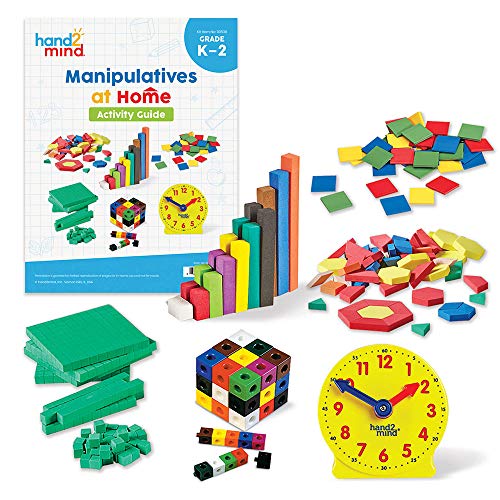
- Includes snap cubes, base ten blocks, and more
- Covers counting, sorting, patterns, and time
- Good all-in-one kit for K-2 practice
Best For: Buyers who want a broad kindergarten math set
Wooden Ten-Frame Learning Set

- 6 ten-frames plus counters, stones, dice, and boards
- Helps visualize counting, addition, subtraction, and skip counting
- Wooden pieces come with a storage bag and box
Best For: Families wanting a reusable wooden math kit for preschool through 2nd grade
Wooden Number Block Starter Set

- Finger board, 13 number blocks, and 10 problem cards
- Teaches number recognition, counting, addition, and subtraction
- Smooth natural wood design for everyday use
Best For: Young children ages 3-5 who need a simple first math manipulative set
Dice Popper Math Game Kit
Math Board Games with Dice Poppers

- Includes dice poppers, strawberries, tongs, and dry-erase board
- Turns counting and addition into a hands-on game
- Reusable board makes repeated practice easy
Best For: Kids who enjoy active math games and hands-on addition practice
Hands-On Counting Starter – MathLink Cubes for Kindergarten
If you’re comparing math manipulatives for kindergarten, these MathLink Cubes are a flexible choice for early counting, patterning, and simple addition practice. The set is built for hands-on learning, with snap-together cubes that also support color and shape identification, matching, and fine motor skill development.
Best For: Kindergarten and homeschool practice with counting, making 10, and early STEM exploration.
Pros:
- Supports a wide range of math skills, including counting to 100, skip counting, comparison, addition, subtraction, and graphing.
- Geometric shape cutouts add visual and tactile variety for patterning and matching.
- Helps build fine motor skills, eye-hand coordination, and motor planning.
- 100-piece set gives enough cubes for small activities or basic classroom use.
Cons:
- No activity cards are included, so lesson ideas may need to come from the teacher or parent.
- Plastic linking cubes are simple tools, so they may not hold attention without guided activities.
Overall, this is a dependable all-purpose option if you want math manipulatives for kindergarten that can grow with a child’s skills. It is especially useful when you want one set that covers both early number concepts and open-ended building.
Ten-Frame Visual Practice – Ten Frame Math Set
For math manipulatives for kindergarten, ten frames are a practical way to help children see number patterns and number relationships. This set gives kids 24 durable ten-frame boards plus task cards, making it useful for guided counting, making 10, and quick review activities in preschool or early kindergarten settings.
Best For: Early number sense, place value introduction, and calm hands-on counting practice.
Pros:
- Designed to visualize number patterns, making 10, and number correspondence.
- Includes 20 task cards for classroom interaction or home practice.
- Thick silicone design is durable and easy for small hands to manipulate.
- Can double as a sensory tool with a calming, pressable feel.
Cons:
- Focused mainly on ten-frame work, so it is less versatile than linking cube sets.
- Best for structured activities rather than free-building play.
This is a strong pick if your priority is number sense rather than open-ended construction. The included task cards make it easier to turn the set into a ready-to-use counting center.
Activity-Card Cube Kit – SpriteGru Math Linking Cubes
If you want math manipulatives for kindergarten that come with built-in guidance, this cube set is easy to use in homeschool or classroom settings. The package includes 100 linking cubes, activity materials, dry erase markers, and star stickers, so it supports counting, sorting, color work, and early equation practice right out of the box.
Best For: Guided math play with added activities, visual learning, and creative building.
Pros:
- Includes a reusable double-sided card, markers, and star stickers for added activities.
- Supports early math skills such as counting, sorting, comparison, place value, addition, and subtraction.
- 100 colorful cubes are lightweight and easy for small hands to link together.
- Also encourages creativity by letting children build names, robots, windmills, and other shapes.
Cons:
- Some extras are more activity-oriented than math-focused, so not every component will be used for every lesson.
- Manual setup is required for games and practice activities.
This set stands out if you want a more complete learning kit instead of plain cubes alone. It balances math practice with hands-on creativity, which can be especially helpful for keeping young learners engaged.
Shape-Sorting Cubes – edxeducation Math Cubes
These math manipulatives for kindergarten are a solid choice if you want linking cubes that do more than count. Each cube connects on all sides and has embossed geometric shapes, giving children a hands-on way to sort by color or shape while building number sense, patterns, and simple math models.
Best For: Kindergarten and preschool learners who need counting blocks with shape and color sorting options.
Pros:
- 100 cubes in 10 colors provide plenty of pieces for sorting, patterning, and building.
- Embossed shapes on each cube add another layer of learning beyond counting.
- Soft-click connections make the cubes easy for small hands to use.
- Includes an activity guide for structured home or classroom use.
Cons:
- More open-ended than a curriculum kit, so adults may need to plan activities.
- The small size may be easy to misplace without a storage system.
Overall, this is a versatile, classroom-friendly cube set for kids who are ready to sort, count, and build. The combination of shape embossing and color variety makes it useful across several early math lessons.
Counting & Sorting Starter – Learning Resources Baby Bear Counters
If you want simple math manipulatives for kindergarten that support early counting practice, this 102-piece bear set is an easy hands-on option. The colorful counters can be used for sorting, color recognition, and basic counting activities, and the included bucket stores everything neatly when the lesson is over.
Best For: Preschool and kindergarten learners who need a tactile counting and sorting manipulative.
Pros:
- 102 colorful bear counters support counting, sorting, and color recognition.
- Hands-on design suits tactile learners.
- Includes a storage bucket and printed activity guide.
- No batteries or setup needed for manual play.
Cons:
- Focused mainly on early counting and sorting, not broader math topics.
- Smaller individual pieces may be better for supervised use.
This is a straightforward manipulatives set for building early number skills through play. It works best as a basic classroom or homeschool counting tool rather than an all-in-one math kit.
Ten-Frame Number Sense – Jumbo Magnetic Ten Frames Set
For math manipulatives for kindergarten that make number sense more visual, this jumbo magnetic ten frame set gives kids a clear way to work with ten, counting, and simple operations. The large frames, thick counters, and included activity cards make it useful for home or classroom practice.
Best For: Teaching foundational number sense, place value, and one-to-one correspondence.
Pros:
- Includes 4 jumbo magnetic ten frames and 44 thick counters.
- Comes with 73 double-sided flash cards, 4 dice, and 4 dry erase markers.
- Designed to support base-ten concepts, addition, subtraction, and place value.
- Foam counters are thick and easy for little hands to grab.
Cons:
- More structured than open-ended manipulatives.
- Best suited to guided math activities rather than free play.
This set stands out if you want a visual teaching tool with built-in practice materials. It’s especially useful for helping young learners see how numbers work within ten and beyond.
Complete Math Toolkit – hand2mind Take Home Math Manipulatives Kit
If you’d rather buy one kit than piece together multiple math manipulatives for kindergarten, this take-home set covers several core skills in one box. It includes snap cubes, base ten blocks, pattern blocks, color tiles, and a learning clock, making it a practical choice for practice with counting, sorting, patterns, and time.
Best For: Families or teachers who want a broad kindergarten math toolkit in one purchase.
Pros:
- Combines six popular manipulatives in one 292-piece kit.
- Includes snap cubes for patterns and number sense.
- Includes foam base ten blocks and counting tiles for counting and place value.
- Learning clock adds time-telling practice for young students.
Cons:
- Less focused than a single-purpose manipulative set.
- Many small pieces mean organization is important.
This kit is a strong all-around option when you need variety for kindergarten math practice. It gives you multiple tools for different lessons without having to shop item by item.
Wooden Ten-Frame Learning Set – Wooden Ten-Frame Set
If you’re comparing math manipulatives for kindergarten, this wooden ten-frame set is built for hands-on counting, addition, and subtraction practice. The mix of ten-frames, counters, number stones, dice, and dry-erase boards gives kids several ways to model numbers and practice early math skills.
Best For: Preschool, kindergarten, and early elementary learners who benefit from a multi-activity wooden math kit for home or homeschool.
Pros:
- Includes 6 wood ten-frames, 60 counters, 60 number stones, dice, cards, markers, and boards
- Supports visualization for counting, addition/subtraction, skip counting, and number sense
- Made from polished wood with a storage bag and box for easier organization
- Designed for multiplayer math games and repeated practice
Cons:
- Many included pieces may require adult help for setup and cleanup
- Best suited to structured math activities rather than open-ended play
Overall, this is a flexible classroom-style kit for families who want a durable, reusable way to teach early math. The range of components makes it especially useful if you want one set that can grow with a child through multiple skills.
Wooden Number Block Starter Set – BSADIY Number Counting Blocks
For parents shopping math manipulatives for kindergarten, this wooden number-block set keeps things simple and focused. It uses finger boards, numbered blocks, and problem cards to guide children from number recognition into basic counting, addition, and subtraction.
Best For: Toddlers and preschoolers ages 3-5 who are just starting to build number recognition and early arithmetic confidence.
Pros:
- Combines number recognition, counting, addition, and subtraction in one compact toy
- Includes 1 wooden finger board, 13 number blocks, 10 problem cards, bases, and holder
- Natural wood construction is sanded smooth for a splinter-free feel
- Easy to use at home or while traveling
Cons:
- Smaller set than some classroom-style manipulatives
- Focused mainly on basic math within 10
This is a practical pick if you want a straightforward learning toy without a lot of extra pieces. Its simple format can make early math less intimidating for young children who are just beginning to practice.
Dice Popper Math Game Kit – Math Board Games with Dice Poppers
If you want math manipulatives for kindergarten that feel more like a game, this dice-popper set is a strong option. Children use the poppers, strawberries, tongs, and dry-erase board to build addition problems, count objects, and write answers as they play.
Best For: Kids who learn best through active, repeatable math games at home, in preschool, or in early elementary classrooms.
Pros:
- Includes a dry-erase board, 2 dice poppers, marker, 24 plastic strawberries, bowl, and tongs
- Makes addition practice interactive by combining rolling, counting, and writing
- Reusable board supports repeated math activities and quick cleanup
- Also helps build fine motor skills through tongs and hands-on counting
Cons:
- More game-based than traditional manipulative sets
- Primarily focused on addition and counting
This kit is a good fit if you want a playful, low-prep way to keep math practice engaging. The combination of movement and repetition can make it easier for young learners to stay interested during short practice sessions.
How We Picked the Best Math Manipulatives for Kindergarten
We chose products that support core kindergarten math skills: counting, one-to-one correspondence, comparing quantities, making ten, and basic addition and subtraction. We also favored sets that are age-appropriate, durable, easy to store, and flexible enough for both guided lessons and independent practice.
Quick Comparison
Different Math Manipulatives for Kindergarten serve different learning goals. Linking cubes are strong for counting, building, and patterning. Ten-frame sets help children see number relationships and early addition. Counters and bear figures work well for sorting and simple tallying. Multi-piece kits are a better fit when you want one purchase that covers several early math concepts.
Key Buying Factors for Math Manipulatives for Kindergarten
Skill Focus
Match the tool to the skill you want to teach. Ten frames are ideal for number sense and composing numbers. Cubes are better for hands-on counting, measurement, and building equations. Counters are useful for sorting, grouping, and visualizing sets.
Piece Count and Variety
More pieces matter when a child is learning to count past 10 or when multiple students will share the same set. For home use, smaller sets may be enough. For classrooms or siblings, larger packs usually offer better value and fewer interruptions.
Durability and Size
Choose sturdy pieces that are easy for small hands to grasp. Jumbo or chunky designs can reduce frustration and are especially helpful for younger kindergarteners still developing fine motor control.
Storage and Cleanup
Sets that come with trays, cards, or organized cases are easier to keep in rotation. This is especially important for classroom use and homeschooling, where quick setup can make practice more consistent.
Instructional Support
Task cards, activity ideas, and multi-use components can make a big difference. The best tools reduce prep time and help adults guide practice without needing to create every activity from scratch.
Who Should Buy Which Math Manipulatives for Kindergarten?
If you want a simple all-purpose option, choose cubes. If your child is working on number recognition and making ten, ten-frame manipulatives are the strongest fit. If you need a versatile classroom or homeschool solution, a mixed kit is often the smartest buy. For younger children or sensory learners, counters and chunky pieces can be the easiest starting point.
In short, the best Math Manipulatives for Kindergarten are the ones your child will actually use often. Look for clear skill alignment, sturdy construction, and enough variety to grow with early math lessons.