Choosing microscopes for homeschool science is easier when you know which features actually help kids learn. The best models balance clear optics, simple setup, durable construction, and age-appropriate magnification.
Below, we focus on microscopes that fit real homeschool use: prepared slides, project-friendly kits, digital viewing options, and sturdy designs that can handle repeat lessons at home.
Best 10 Microscopes for Homeschool Science Picks for 2026
Dual-Light Biology Starter
Emarth 40X-1000X Student Microscope Kit
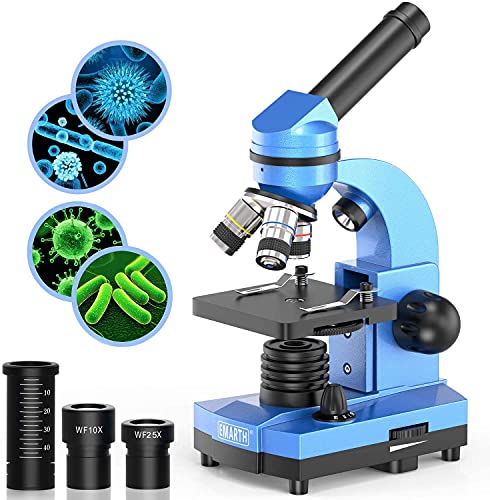
- 40X to 1000X compound microscope
- Top and bottom LED illumination
- 52-piece educational kit included
Best For: Beginners needing a real school-and-homeschool microscope
Easy Science Explorer
National Geographic Kids Microscope Kit

- Up to 400X magnification
- Above-and-below LED lighting
- Includes guide, slides, and specimens
Best For: Younger homeschool students starting microscope work
All-Metal Home School Pick
AmScope M150C 1000X Compound Microscope

- 40X to 1000X with five magnification settings
- All-metal frame with optical glass lenses
- LED light runs on outlet or AA batteries
Best For: Homeschool learners needing a durable classic microscope
Portable Pocket Lab
1000X Handheld Digital Microscope for Kids

- 1000X optical + digital magnification
- 2MP camera with photo/video storage
- 8 LEDs and anti-shake design
Best For: Young homeschoolers and portable STEM exploration
Metal STEM Lab Kit
100X-2000X Microscope for Students

- 100X-2000X magnification range
- Top and bottom dual LED lighting
- All-metal frame with fine focus
Best For: Older students and structured slide-based homeschool lessons
Complete Beginner Kit

- 58-piece kit with slides and tools
- 100X-1200X beginner magnification
- Colorful guide for early STEM learning
Best For: Kids ages 5-12 and complete home science starters
Advanced Home Lab Microscope
Fitense 40X-2000X Monocular Kit

- 40X-2000X magnification range
- Dual LED lights for varied specimens
- Slides, coverslips, bag, and phone holder included
Best For: homeschool families wanting a feature-rich starter microscope
Portable Digital Science Viewer
BEBANG Kids Digital Microscope

- 200x-1000x digital zoom range
- Rechargeable with 32GB card included
- Pocket-sized with EVA case and neck strap
Best For: travel-friendly homeschool science and photo/video capture
Complete STEM Slide Lab
Mileonaim 61-Piece Kids Microscope Kit

- 61-piece kit with tools and slides
- 100X-1200X magnification levels
- Phone holder and carrying case included
Best For: home educators who want a slide-making STEM kit
Classroom-Ready STEM Kit – AmScope 1200X 52-Piece Microscope Kit
If you want microscopes for homeschool science that feel like a real lab setup, this AmScope kit gives kids a full hands-on introduction to biology and specimen viewing. The 120X to 1200X range, LED ring light, and included slides and tools make it easy to move from simple observation to more detailed study.
Best For: Homeschool families who want a complete beginner-friendly compound microscope kit with lots of accessories.
Pros:
- Six magnification settings from 120X to 1200X for varied viewing
- LED ring light and rotating color filter wheel help improve visibility
- 52-piece kit includes sample slides and a hard ABS case
- Monocular design and metal body support everyday student use
Cons:
- Monocular viewing is less flexible than binocular models
- Battery-powered design may require ongoing battery changes
This is a strong all-in-one choice if you want a structured microscope kit rather than just the microscope itself. It leans heavily into STEM learning and gives young scientists plenty to explore right away.
Dual-Light Biology Starter – Emarth 40X-1000X Student Microscope Kit
Among microscopes for homeschool science, this Emarth model stands out because it is described as a real compound microscope for school, homeschool, and adult beginners. The 40X to 1000X range, top and bottom illumination, and included educational kit make it a practical option for biology lessons and simple lab-style experiments.
Best For: Families and students who want a true beginner compound microscope with dual lighting and a full accessory kit.
Pros:
- 40X to 1000X magnification covers a wide beginner range
- Top and bottom LED illumination helps with different specimen types
- 52-piece kit includes prepared slides, blank slides, and tools
- Metal frame and 6 color filters add durability and viewing flexibility
Cons:
- Batteries are not included
- Monocular setup may be less comfortable for longer sessions
This is a well-rounded pick if you want a microscope that can handle schoolwork and home experiments without feeling like a toy. It offers useful lighting and enough accessories to start learning right away.
Easy Science Explorer – National Geographic Kids Microscope Kit
If you are shopping for microscopes for homeschool science for younger learners, this National Geographic kit focuses on ease of use and guided exploration. It offers up to 400X magnification, above-and-below LED lighting, and a mix of prepared slides, rocks, minerals, and blank slides for at-home experimentation.
Best For: Younger homeschool students who want a simple, guided microscope kit with engaging specimen variety.
Pros:
- Up to 400X magnification is suitable for early science exploration
- Above and below LED lighting helps with different specimen types
- Includes prepared slides, rocks and minerals, and blank slides
- Lab guide, tweezers, pipette, and specimen dish support hands-on lessons
Cons:
- Lower maximum magnification than some other options here
- Plastic construction is less rugged than metal-bodied models
This kit is a good fit when you want something approachable and activity-driven rather than highly technical. The included guide and specimen mix make it especially useful for structured homeschool learning.
All-Metal Home School Pick – AmScope M150C 1000X Compound Microscope
For families comparing microscopes for homeschool science, this AmScope model is built like a traditional student microscope with all-metal construction and optical glass lenses. It offers 40X to 1000X magnification, cordless LED lighting, and a design that is specifically described as ideal for home school and student science learning.
Best For: Homeschool students from elementary through high school who need a sturdy, classic compound microscope.
Pros:
- 40X to 1000X magnification with five set positions
- All-metal framework and optical glass elements
- LED illumination works with an outlet or AA batteries
- Designed specifically for home school and student science use
Cons:
- Does not include an accessory-heavy educational kit
- Monocular head is less versatile than binocular options
This is a strong choice if you care more about durability and core microscope performance than extras. Its flexible power options and sturdy build make it a practical long-term homeschool tool.
Portable Pocket Lab – 1000X Handheld Digital Microscope for Kids
If you’re shopping for microscopes for homeschool science, this handheld digital microscope is a simple way to turn nature walks, backyard finds, and kitchen experiments into visual lessons. Its 1000X optical plus digital magnification, 2MP camera, and manual focus make it better suited to real observation than a basic toy microscope.
Best For: Younger homeschoolers and families who want a portable, easy-to-use microscope for everyday STEM exploration.
Pros:
- 1000X optical + digital magnification with manual focus for close inspection
- 2MP camera with photo and video storage for documenting discoveries
- 8 adjustable LEDs with anti-shake design for clearer viewing in different light
- Kid-friendly ABS body with CE/FCC/CPC safety certifications
Cons:
- Designed for handheld use, so it’s not a full lab-style compound microscope
- 2-hour battery life may limit longer sessions without USB power nearby
- Best for portable observation rather than slide-based classroom work
This is a practical pick if you want a device children can use quickly and independently while still capturing images for projects or science portfolios. The tradeoff is that it favors portability and ease of use over the more traditional microscope setup.
Metal STEM Lab Kit – 100X-2000X Microscope for Students
For families comparing microscopes for homeschool science, this compound microscope is built for more structured lessons and higher-magnification viewing. The all-metal frame, dual LED illumination, and 100X-2000X range make it a better fit for students who want to study slides, translucent specimens, and opaque samples with more control.
Best For: Older homeschool students, beginner hobbyists, and families who want a more traditional compound microscope kit.
Pros:
- 100X-2000X magnification with WF25X eyepiece and 2X Barlow lens
- Top and bottom LED lighting for opaque and translucent specimens
- All-metal frame with coarse and fine focus for more precise adjustments
- Includes slides, phone adapter, and carrying case for a fuller STEM setup
Cons:
- Recommended for students over 12, so it may be less ideal for younger children
- Needs AC power or 3 AA batteries, which are not included
- More complex than a handheld model for quick, casual use
This kit makes sense if your homeschool plan includes regular slide observation and you want equipment that feels closer to a school lab. It offers more versatility and a sturdier build, but it does ask for a bit more setup and supervision.
Complete Beginner Kit – 58-Piece Kids Microscope Set
If you want microscopes for homeschool science that come ready for lesson time, this 58-piece kit is designed to get beginners started right away. With prepared specimens, blank slides, tools, and a colorful guide, it supports guided exploration of plants, insects, and everyday objects without needing extra accessories.
Best For: Kids ages 5-12 and families who want a complete beginner microscope kit for home learning.
Pros:
- 58-piece set with 13 prepared specimens, 31 blank slides, and lab tools
- 100X-1200X magnification for beginner-friendly observation
- Colorful guide helps kids learn microscope parts and basic skills
- Climate Pledge Friendly certified with reduced packaging
Cons:
- Requires 2 AA batteries, which are not included
- Smaller size and beginner focus may not satisfy advanced users
- More of a guided learning kit than a high-end lab microscope
This is the easiest all-in-one choice for homeschoolers who want a complete starter setup with slides and tools included. It’s especially useful when you want an educational microscope kit that supports both independent curiosity and parent-guided lessons.
Advanced Home Lab Microscope – Fitense 40X-2000X Monocular Kit
If you want microscopes for homeschool science that can grow with a student’s curiosity, this Fitense kit offers a wide magnification range and a more traditional compound-microscope setup. It includes top and bottom LED lighting, a 5-color filter wheel, specimen slides, coverslips, and a phone holder, so it’s built for both observation and simple documentation.
Best For: homeschool families who want a full-featured starter microscope with stronger magnification and extra accessories.
Pros:
- 40X-2000X magnification with 3 objective lenses, 2 eyepieces, and a 2X Barlow lens
- Dual LED lighting helps with both solid and transparent specimens
- Includes slides, coverslips, a storage bag, and a phone holder
- 5-color filter wheel adds contrast options for viewing
Cons:
- AAA batteries are not included if you use battery power
- More advanced than a basic beginner toy microscope
Overall, this is a strong choice if your homeschool science plans include more detailed specimen study and you want a kit with real utility beyond casual viewing.
Portable Digital Science Viewer – BEBANG Kids Digital Microscope
For families shopping microscopes for homeschool science, this BEBANG digital microscope stands out for portability and built-in photo/video capture. The rechargeable design, 32GB card, real glass slides, and compact EVA case make it easy to use for lessons, quick observations, and storing results.
Best For: homeschoolers who want a small, rechargeable digital microscope for travel-friendly science activities.
Pros:
- 200x-1000x 5-level zoom range covers a broad set of beginner observations
- Built-in rechargeable battery offers about 2.5 hours of use per charge
- Includes 32GB card for photos and video plus an EVA hard case
- Compact pocket size with neck strap makes it easy to carry
Cons:
- Lower maximum magnification than some compound microscopes
- Small size may be less suited to a traditional bench-style lab setup
This is a practical pick if you want a screen-based microscope that is easy to pack, simple to charge, and ready for quick homeschool science exploration.
Complete STEM Slide Lab – Mileonaim 61-Piece Kids Microscope Kit
If you’re comparing microscopes for homeschool science and want a kit that supports hands-on learning, this Mileonaim set is built around exploration and slide making. It combines a 100X-1200X microscope with prepared and blank slides, plus tools for creating specimens, making it useful for both observing and practicing basic lab skills.
Best For: homeschool families looking for a complete educational microscope kit with plenty of slide-making supplies.
Pros:
- 61-piece set includes prepared slides, blank slides, and lab tools
- 100X, 400X, and 1200X magnification supports a range of learning activities
- LED light and phone holder add convenience for viewing and sharing
- Carrying case makes the kit easy to store and transport
Cons:
- Magnification options are more limited than multi-lens compound microscopes
- Plastic slide count suggests a more child-focused setup than a heavy-duty lab kit
For families who want a science kit that feels complete right out of the box, this is a balanced option that supports both observation and active experiments.
How We Picked These Microscopes for Homeschool Science
We prioritized models that support steady learning, not just high magnification numbers. That means practical focusing, usable lighting, solid build quality, and accessories that make it easier to start lessons right away. We also considered age range, whether the microscope is better for biology basics or casual discovery, and how well the kit supports independent use.
Quick Comparison
For younger children, kid-friendly kits and digital microscopes are often the easiest entry point. For older students, compound microscopes with glass optics and stronger magnification ranges are better suited to slides, cells, and structured lab work. If you want one device for mixed ages, a durable compound microscope with LED lighting is usually the most versatile choice.
Key Buying Factors for Microscopes for Homeschool Science
Magnification Range
Lower ranges around 40X to 400X are often enough for beginners and prepared slides. Higher ranges can be useful, but they do not always produce better images unless the optics and lighting are strong.
Optics and Focus Control
Glass lenses typically deliver clearer views than basic plastic optics. Smooth coarse and fine focus controls make a big difference when kids are learning to center specimens and sharpen images.
Lighting
LED illumination is important for home use because it stays cool and gives brighter, more consistent viewing. Dual lighting or adjustable brightness helps when working with translucent slides and opaque objects.
Included Accessories
A strong homeschool kit often includes prepared slides, blank slides, tools, and storage. These extras help turn the microscope into a full lesson kit rather than a single-use toy.
Durability and Age Fit
Metal-bodied microscopes are generally better for repeated use, while handheld digital models can be great for quick exploration. Match the design to the student’s age, patience level, and how independently they will use it.
Who Should Buy Which Microscopes for Homeschool Science?
If you are teaching younger elementary students, choose a simple kids’ kit or digital microscope that emphasizes discovery and easy setup. Middle school learners usually benefit from a compound microscope with slides and a broader magnification range. For high school homeschool science, a sturdier all-metal model with glass optics is the best long-term value.
If you want the most flexible option, look for a balanced compound microscope that can handle both beginner exploration and more structured biology work. That gives you room to grow without replacing the microscope too soon.