Motorized STEM kits turn building time into a hands-on lesson in engineering, mechanics, and problem-solving. The best options keep kids engaged while helping them learn how moving parts, power, and structure work together.
Below, you’ll find a focused roundup of standout kits for different ages and skill levels, from beginner-friendly builds to more advanced robotic projects.
Best 10 Motorized Stem Building Kits Picks for 2026
Motorized Starter Build Set
107-Piece Motorized Erector Set

- 107 pieces with motor, tools, and storage box
- 10 build options including robots and vehicles
- Good for early STEM skills and creative play
Best For: Younger kids who want an easy motorized STEM starter kit
Working Engine Demo
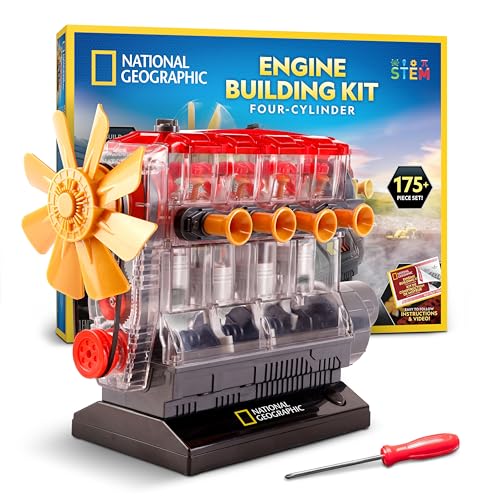
- 175+ pieces with tools and illustrated instructions
- Working engine shows pistons, valves, and gears in motion
- Clear design makes mechanics easy to observe
Best For: Kids who want a realistic engine-focused STEM build
Robot Build Variety

- 36 robot builds with 14 motorized models
- Sorting tray and video guides support easy setup
- Good for STEM learning and problem-solving
Best For: Older kids who enjoy robotics and multi-build kits
Mechanical Learning Lab

- 20 builds and 22 supplemental experiments
- Teaches force, motion, gears, and energy
- Reconfigurable parts add long-term play value
Best For: Kids who want a hands-on mechanical engineering learning kit
Multi-Model Starter Set

- 330-piece set with 12 buildable models
- Includes a 57-page illustrated guide
- Made for ages 6+ with motorized builds
Best For: Beginner builders who want variety and a simple STEM introduction
Hands-On Science Builder

- 107 pieces with an integrated motor unit
- Build 50 models one at a time
- Includes step-by-step instructions
Best For: Kids who want a compact, guided motorized STEM kit
Programmable Robotics Set
5-in-1 App-Controlled Robot Kit
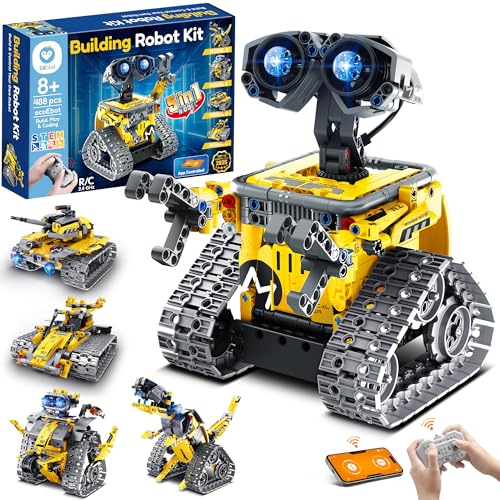
- 488-piece robotics kit with 5 build options
- App and remote control modes
- Rechargeable for repeat play
Best For: Older kids ready for programmable robot building and control
Editor’s Pick
10-in-1 Motorized STEM Building Kit

- Builds 10 different models one at a time
- Includes a motorized power module
- Designed for ages 4-8 and beginner builders
Best For: Younger kids who want a simple motorized STEM kit
Classroom Choice

- Includes 4 solar-powered car kits
- No batteries needed; runs on sunlight
- Good for classrooms, clubs, or family projects
Best For: Group STEM activities for ages 8-12
Advanced Build
Robotic Arm STEM Engineering Kit

- Uses motors, PCB boards, and wires
- Builds a mechanical robotic arm
- No soldering required for assembly
Best For: Older builders who want a tougher robotics project
Motorized Starter Build Set – 107-Piece Motorized Erector Set
If you want motorized stem building kits for younger builders, this 107-piece set is a flexible entry point. It includes an electric motor, wheels, nuts, bolts, and tools, plus 10 possible engineering designs such as robots, vehicles, helicopter, plane, cars, and trucks. The model is built one at a time, which keeps the project focused and easier to manage for kids who are just getting started.
Best For: Kids ages 4+ who are new to motorized building toys and need a simple, hands-on intro to STEM play.
Pros:
- 107 pieces with motor, wheels, tools, and storage box
- 10 build ideas for robots, aircraft, and vehicles
- Designed to support creativity, hand-eye coordination, and concentration
- Non-toxic ABS/TPR materials with easy cleanup
Cons:
- Only one model can be built at a time
- Requires AA/AAA batteries for operation
- Best suited to simpler builds rather than advanced mechanics
This is a practical pick for families who want a motorized set that balances variety with simplicity. It focuses more on play-and-learn building than on deep mechanical detail, which makes it approachable for younger kids.
Working Engine Demo – Clear 4-Cylinder Engine Kit
Among motorized stem building kits, this National Geographic engine model stands out if you want a more realistic mechanical demonstration. Kids assemble a clear 4-cylinder engine with 175+ parts, then use 3 AA batteries to bring the pistons, valves, and gears into motion. The transparent design makes it easy to see how the engine works while also keeping the build hands-on.
Best For: Kids who are curious about engines, cars, and how moving parts work in real machines.
Pros:
- Working model with moving pistons, valves, and gears
- 175+ pieces plus tools, instructions, and learning guide
- Clear engine housing helps kids observe the mechanics
- Strong educational focus on mechanics and engineering
Cons:
- Batteries are required but not included
- More specialized than general build-and-play kits
- Better for kids interested in engine mechanics than broad vehicle builds
This kit is a good choice when the goal is learning, not just assembling. It gives kids a visible working engine model that connects STEM concepts to real-world automotive mechanics.
Robot Build Variety – 36-in-1 Motor Robotic Kit
If you’re comparing motorized stem building kits for older kids, this 36-in-1 robotics set offers a lot of build variety. It includes 36 different robot models, with 14 motorized options ranging from walking machines to racing cars. The parts tray, printed instructions, and video tutorials also make it easier to sort pieces and finish builds without as much frustration.
Best For: Ages 8-13 who like robotics, repeated builds, and screen-free problem-solving challenges.
Pros:
- 36 total robot builds with 14 motorized models
- Sorting tray helps with cleanup and organization
- Includes both a full-color booklet and video tutorials
- Encourages logic, mechanics, and hands-on learning
Cons:
- More complex than beginner motorized kits
- Best suited to kids who enjoy repeated rebuilding
- Plastic build system may feel less open-ended than loose-parts sets
This set works well for kids who want a robotics kit with lots of repeat play value. It leans into structured building and guided learning, which can be a plus for families that want a more organized project.
Mechanical Learning Lab – Machines & Vehicles STEM Kit
This Thames & Kosmos set is a strong option if you want motorized stem building kits that teach more than just assembly. It includes 20 hands-on building projects and 22 supplemental experiments, covering simple machines, force, gravity, gears, momentum, and energy. The reconfigurable parts system lets kids keep rebuilding models like a crane, windmill, elevator, tightrope walker, and all-wheel drive ATV.
Best For: Kids ages 8+ who want a deeper introduction to mechanical engineering and physics.
Pros:
- 20 building projects plus 22 extra experiments
- Reusable parts can be rearranged into multiple models
- Covers core concepts like force, motion, gears, and energy
- 80-page full-color manual with step-by-step instructions
Cons:
- More instructional than toy-like play sets
- Not focused on motorized action in the same way as engine or robot kits
- May be best for kids who enjoy reading and following detailed directions
This is the most academically focused option in the group. It’s a better fit for families who want a reusable engineering kit with clear educational value and lots of structured learning.
Multi-Model Starter Set – 12-in-1 STEM Building Kit
If you want motorized stem building kits that give kids plenty to build without getting overly complex, this 330-piece set is a practical place to start. It supports 12 different models, including animals, cranes, race cars, fans, and other mechanical builds, so kids can keep trying new ideas as their skills grow.
Best For: Kids ages 6+ who want an introduction to STEM building with multiple motorized model options.
Pros:
- 12-in-1 design offers a wide variety of build options from one box
- 57-page illustrated instruction book helps make assembly easier to follow
- 330 pieces and included tools support hands-on family or solo building
- ABS plastic construction is designed with smooth edges and durability in mind
Cons:
- Manual building focus may be a better fit for kids who like step-by-step projects than fast play
- Some models may be more appealing than others depending on a child’s interests
This kit works well as a broad, beginner-friendly STEM option with enough model variety to stay interesting over time. It is especially appealing if you want a gift that mixes creative play with mechanical building.
Hands-On Science Builder – 50-in-1 Motorized Kit
Among motorized stem building kits, this 50-in-1 set stands out for kids who like exploring one model at a time. With 107 pieces, clear instructions, and an integrated motor unit, it gives children a hands-on way to build, test, and learn through simple engineering play.
Best For: Kids ages 6-12 who enjoy beginner-friendly science kits with motorized builds and lots of model variety.
Pros:
- 50-in-1 design offers many possible models, built one at a time
- Integrated motor unit adds movement and makes builds more interactive
- Clear step-by-step instructions support an easy beginner experience
- Designed to build logical thinking, problem solving, and fine motor skills
Cons:
- Requires 3 AAA batteries, which are not included
- Only one model can be built at a time, so it is less open-ended than larger free-build sets
This is a solid choice if you want a compact STEM kit that balances guided building with motorized fun. It should suit kids who like experimenting with different creations without needing a very large piece count.
Programmable Robotics Set – 5-in-1 App-Controlled Robot Kit
If your shopping list for motorized stem building kits leans toward robotics, this 488-piece set brings together building, control, and early programming. Kids can assemble five different models, then use the app or remote to move the robot and explore basic programming features.
Best For: Kids ages 8+ who want a more advanced STEM kit with app control, remote control, and programmable play.
Pros:
- 5-in-1 build includes a robot, dinosaur, car, tank, and more
- Dual control modes let kids use either the app or the remote
- Programmable features add a coding-style learning component
- Rechargeable battery design supports repeat play without constant battery swaps
Cons:
- More advanced than a basic building kit, so younger kids may need help
- Battery is included, but the experience depends on keeping it charged
This kit is best when you want a robot project that grows with a child’s skills and offers more than simple assembly. It combines mechanical building with interactive control for a stronger STEM focus.
Editor’s Pick – 10-in-1 Motorized STEM Building Kit
This motorized stem building kit is a solid pick for younger kids who want hands-on construction play with moving parts. It lets children build one model at a time, including an excavator, crane, and racing car, while the electric motor adds extra excitement beyond basic blocks.
Best For: Kids ages 4-8 who are just getting started with engineering-style building toys and like simple motorized models.
Pros:
- 10-in-1 design offers multiple model builds from one set.
- Motorized power module brings finished builds to life.
- Supports construction, fine motor, logical thinking, and problem-solving skills.
- Includes a storage bucket for easier cleanup.
Cons:
- Only one model can be built at a time.
- Requires 2 AA batteries, which are not included.
- Best suited to younger builders rather than advanced STEM projects.
Overall, this is a practical choice if you want motorized stem building kits that feel fun and educational without being overly complex. It balances active play with straightforward engineering learning.
Classroom Choice – Bulk Solar Robot Car STEM Kit
If you are comparing motorized stem building kits for older kids, this solar robot pack stands out for its renewable-energy angle. It includes four individual solar car builds with manuals and screwdrivers, making it a good fit for classroom activities, clubs, or group projects.
Best For: Ages 8-12 doing group STEM projects, classroom builds, or family activities focused on solar power.
Pros:
- Includes 4 complete kits, each with a manual and screwdriver.
- Solar-powered design teaches motion using sunlight, with no batteries required.
- Supports STEM learning in robotics, engineering, and renewable energy.
- Made with non-toxic materials and built for indoor or outdoor use.
Cons:
- Best results depend on sunlight for the solar feature.
- Younger children may need adult guidance.
- Focuses on car builds rather than a wide variety of model types.
This is a strong option when you want a hands-on kit that mixes construction with energy concepts. The bulk pack format makes it especially useful when several kids need to build at once.
Advanced Build – Robotic Arm STEM Engineering Kit
For shoppers looking at more challenging motorized stem building kits, this robot arm set offers a deeper engineering-style build. It combines motors, PCB microcontroller boards, wires, and wooden parts to create a mechanical arm that teaches circuits and movement through assembly.
Best For: Older kids, teens, and adults who want a more challenging robotics project with mechanical assembly.
Pros:
- Includes motors, PCB microcontroller boards, and wires for robotics learning.
- Teaches electronic circuits and mechanical movement through hands-on building.
- Wooden construction and detailed assembly create a more involved challenge.
- No soldering required, and it includes all needed accessories.
Cons:
- Requires 6 AA batteries, which are not included.
- The build is more complex than beginner kits.
- Single-project format offers less variety than multi-model sets.
This kit makes sense if the goal is a more advanced, satisfying build rather than a quick toy assembly. It is a stronger fit for kids who already enjoy tinkering and are ready for a more detailed STEM challenge.
How We Picked the Best Motorized Stem Building Kits
We focused on Motorized Stem Building Kits that offer a good mix of educational value, build quality, and age-appropriate challenge. We also looked for clear instructions, repeat build potential, and features that help kids stay engaged beyond the first assembly.
For families, the most useful kits are the ones that balance fun with learning: enough complexity to teach real concepts, but not so much that younger builders lose interest.
Quick Comparison
At a high level, these kits fall into a few groups: simple electric builds for younger kids, multi-model engineering sets for flexible play, and robotics or coding kits for older builders. Basic motorized sets are best for first-time engineers, while app-controlled and remote-control kits are better for kids who want a bigger challenge.
Key Buying Factors for Motorized Stem Building Kits
Age and Skill Level
Start with the builder’s actual experience, not just the age on the box. Younger kids usually do best with larger pieces, fewer steps, and straightforward motorized action. Older kids can handle more parts, gears, sensors, and more advanced assembly.
Type of Motion
Some kits emphasize simple spinning or rolling, while others add pistons, robot arms, steering, or coding-based movement. Think about what kind of hands-on learning you want: mechanical motion, robotics, or a mix of both.
Build Variety
Multi-model kits add value because kids can rebuild several times instead of completing one project and moving on. If you want longer use, look for sets that support multiple builds or expandable designs.
Power Source
Battery-powered kits are usually the easiest to use indoors. Solar kits are great for introducing renewable energy, but they depend on bright light. Remote-control and app-based options add interactivity, but they may require more setup.
Instructions and Support
Clear diagrams, labeled parts, and beginner-friendly guidance make a big difference. This is especially important for motorized builds, where wiring and component placement need to be accurate for the model to work properly.
Who Should Buy Which Motorized Stem Building Kits?
If you want a first engineering toy, choose a simple motorized set with fewer pieces and a clear payoff. If you’re shopping for a child who already enjoys building, a larger multi-model or robotics kit will usually deliver more value.
For kids interested in science and real-world machines, mechanical engine or motion-based kits are a strong fit. For future coders and tech fans, remote-control, app-controlled, and robot arm kits offer a more advanced challenge and longer-lasting play.
In short, the best Motorized Stem Building Kits match the child’s age, patience, and interests. The right pick should feel exciting to build, rewarding to use, and useful as a learning tool long after the box is opened.