Choosing the right oscilloscope for a classroom means balancing clarity, durability, and ease of use. The best models help students see waveforms quickly without overwhelming them with setup or hidden complexity.
Below, we focus on options that fit teaching labs, electronics courses, and student projects, with an emphasis on practical features that matter in real classroom use.
Best 10 Oscilloscopes for Classrooms Picks for 2026
Classroom-Ready 4-Channel Decoder Scope
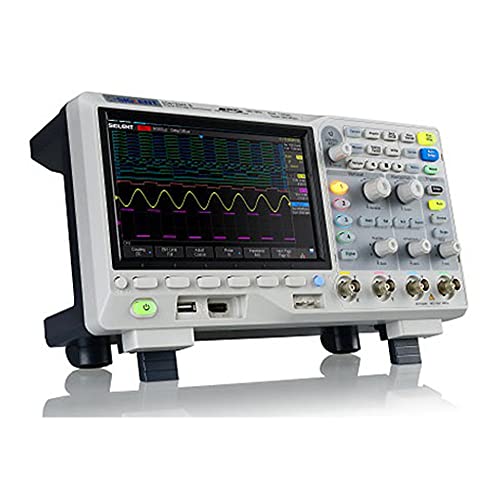
- 4 channels for classroom demos
- Built-in Iic, Spi, Uart/Rs232, Can, Lin decoding
- Includes 4 passive probes and USB cable
Best For: Teaching labs needing four channels and protocol decoding
Budget Lab Pick

- Cost-effective economy oscilloscope
- 14 trigger modes with 5 serial protocol decodes
- Arbitrary waveform output for lab exercises
Best For: Budget-conscious classrooms needing trigger and decode features
Portable Touchscreen Classroom Scope

- 7-inch touchscreen with gesture control
- 6000 mAh battery for portable use
- Stores screenshots and waveform data
Best For: Portable demos and hands-on classroom use
High-Speed Bench Choice
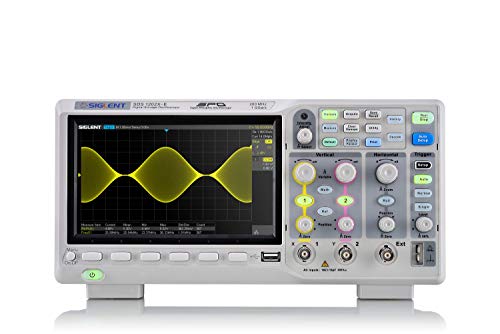
- 200 MHz bandwidth with 1 GSa/s sampling
- Up to 14 Mpts record length
- Serial decode for Iic, Spi, Uart, Rs232, Can, Lin
Best For: Classrooms needing higher bandwidth and deeper captures
Compact 3-in-1 Classroom Tool
FNIRSI 2C53T 50MHz Handheld Scope

- Combines scope, multimeter, and signal generator
- 50MHz bandwidth with 250MSa/s sampling
- Portable with 3000mAh battery and Type-C charging
Best For: labs, training rooms, and portable student use
Desktop Lab Performer
RIGOL DS1202Z-E 200MHz Classroom Scope

- 200MHz 2-channel scope with 1GSa/s sampling
- 24Mpts memory and 30,000 wfms/s capture rate
- Includes serial decoding for UART, I2C, and SPI
Best For: classroom labs and more advanced benchtop learning
Best for Comfort
Hantek DSO2C10 100MHz Classroom Oscilloscope

- 100MHz, 2-channel economy oscilloscope
- Arbitrary waveform output and 14 trigger modes
- Supports serial protocol triggers and decoding
Best For: schools and entry-level lab setups on a budget
Advanced Portable Lab Scope
FNIRSI DPOS350P 4-in-1 350MHz Digital Oscilloscope

- 350 MHz, 2-channel scope with 1 GSa/s sampling
- Includes FFT, frequency response analysis, and DDS output
- 7-inch touchscreen and 8000 mAh battery for portability
Best For: Upper-level electronics classes and advanced lab demos
Budget Handheld Class Scope
HANMATEK HO11 10MHz Portable Oscilloscope

- 10 MHz bandwidth with 48MSa/s sampling
- Lightweight 166g body and USB-C rechargeable battery
- 2.8-inch color display with auto/normal/single triggering
Best For: Intro electronics lessons and portable classroom kits
Bench-Lab Teaching Scope
RIGOL DS1102Z-E 100MHz Digital Oscilloscope

- 100 MHz, 2-channel bench oscilloscope with 1 GSa/s sampling
- Deep memory up to 24 Mpts and 30,000 wfms/s capture rate
- Supports RS232/UART, I2C, and SPI decoding
Best For: Electronics labs and embedded systems classes
Classroom-Ready 4-Channel Decoder Scope – Siglent SDS1104X-E 100MHz 4CH
Siglent Technologies SDS1104X-E 100Mhz Digital Oscilloscope 4 Channels Standard Decoder, Grey
Check Price On AmazonFor oscilloscopes for classrooms, the Siglent SDS1104X-E is a strong fit when you want a dependable 4-channel bench scope with built-in serial decoding. It gives instructors and students enough capability for mixed-signal labs, protocol demonstrations, and everyday waveform viewing without moving into specialty territory.
Best For: Teaching labs that need four channels and standard protocol decoding.
Pros:
- 4-channel design suits multi-point classroom demonstrations
- Standard decoder support includes Iic, Spi, Uart/Rs232, Can, and Lin
- Includes 4 passive probes and USB cable in the box
- Compact bench-friendly size at 12.2 x 5.12 x 5.91 inches
Cons:
- Four-channel series extras like MSO digital channels are optional
- USB AWG module is also listed as an optional accessory
Overall, this is a practical classroom oscilloscope if your curriculum benefits from four channels and common serial bus decoding. It balances lab usefulness with straightforward included accessories.
Budget Lab Pick – Hantek DSO2D15 150MHz 2CH
When comparing oscilloscopes for classrooms, the Hantek DSO2D15 stands out as a cost-effective lab instrument with enough features for hands-on instruction. Its 2-channel design, serial protocol trigger support, and arbitrary waveform output make it useful for practical coursework and classroom experiments.
Best For: Budget-conscious teaching labs that want useful trigger and decode features.
Pros:
- Cost-effective economy oscilloscope for education use
- Supports arbitrary waveform output
- Includes 14 trigger modes
- Standard serial protocol triggers and decodes for 5 protocols
Cons:
- Only 2 channels, which may limit some multi-signal lessons
- Positioned as an economy model rather than a premium lab scope
This model makes sense if your classroom needs solid basics plus a few advanced teaching tools without pushing the budget. It is especially appealing for labs that value protocol work and signal generation features.
Portable Touchscreen Classroom Scope – FNIRSI 1013D Plus 100MHz
For oscilloscopes for classrooms that need portability, the FNIRSI 1013D Plus offers a touch-driven handheld experience with a 7-inch display. It is a useful option for demonstrations, student use at shared workstations, and quick signal checks where a compact design matters more than a traditional benchtop footprint.
Best For: Portable classroom demos and hands-on student use.
Pros:
- 7-inch TFT touchscreen with gesture-based operation
- Built-in 6000 mAh battery for up to 4 hours of use
- Stores up to 1000 screenshots and 1000 waveform data sets
- Includes FFT viewing and Lissajous display functions
Cons:
- 2-channel design may be limiting for more advanced lab setups
- Portable format is less like a traditional bench scope
- Best suited to lighter classroom duty than heavy instrumentation use
This is a good classroom choice if you want a compact, easy-to-carry oscilloscope with modern touch controls. Its storage and analysis features help make student demonstrations more interactive.
High-Speed Bench Choice – Siglent SDS1202X-E 200MHz 2CH
If you need oscilloscopes for classrooms with more speed headroom, the Siglent SDS1202X-E brings a 200 MHz class bandwidth and strong sampling performance. It is a straightforward bench option for labs that focus on signal capture, serial bus work, and clear classroom demonstrations.
Best For: Teaching labs that want higher bandwidth and solid capture performance.
Pros:
- 200 MHz bandwidth for more demanding instructional signals
- Real-time sampling rate up to 1 GSa/s
- Record length up to 14 Mpts for longer captures
- Supports serial bus triggering and decode for Iic, Spi, Uart, Rs232, Can, and Lin
Cons:
- Only 2 channels, so it is less flexible than 4-channel classroom scopes
- Heavier bench-style setup than a portable classroom unit
For classrooms that need stronger bandwidth and deeper capture tools, this model offers a clear step up in capability. It is a good match for labs where signal detail matters more than channel count.
Compact 3-in-1 Classroom Tool – FNIRSI 2C53T 50MHz Handheld Scope
If you want oscilloscopes for classrooms that can do more than just show waveforms, the FNIRSI 2C53T is a practical all-in-one option. It combines a 2-channel 50MHz oscilloscope, a 19999-count multimeter, and a signal generator in a handheld design, which can help students move between measurement modes without swapping gear.
Best For: Labs, training rooms, and students who need a portable scope with built-in meter and signal generation features.
Pros:
- 3-in-1 design adds oscilloscope, multimeter, and signal generator functions in one unit.
- 2-channel scope offers 50MHz bandwidth, 250MSa/s sampling, and automatic measurement.
- Built-in 3000mAh battery and Type-C charging make it easy to move between benches.
- Includes useful features like math operation, cursor measurement, persistence mode, and XY mode.
Cons:
- 2.8-inch display is smaller than a desktop lab oscilloscope.
- 1Kpts record depth is modest compared with deeper-memory bench models.
- Best suited to hands-on learning rather than advanced long-capture analysis.
For classroom use, this model stands out when flexibility matters more than bench-level depth. It gives learners a broad feature set in a compact package, which can be especially helpful for introductory electronics and troubleshooting exercises.
Desktop Lab Performer – RIGOL DS1202Z-E 200MHz Classroom Scope
Among oscilloscopes for classrooms, the RIGOL DS1202Z-E is a strong desktop choice when you need more capture depth and a more professional lab feel. Its 200MHz bandwidth, 1GSa/s real-time sampling, and deep memory make it well suited for showing both fast events and longer signal behavior during demonstrations.
Best For: Classroom labs, electronics courses, and student work where a more capable benchtop oscilloscope is useful.
Pros:
- 200MHz bandwidth and 1GSa/s real-time sampling support a wide range of lab exercises.
- 24Mpts memory depth helps preserve more detail in longer captures.
- 30,000 wfms/s waveform capture rate can help reveal intermittent glitches.
- Includes serial bus trigger and decoding for RS232/UART, I2C, and SPI.
Cons:
- It is a full desktop scope, so it is less portable than handheld classroom options.
- Feature set may be more than basic labs need.
- Requires bench space and setup compared with compact battery-powered tools.
This model makes sense when the classroom goal is to teach with a more capable bench instrument rather than a starter handheld. The deep memory, decoding support, and high capture rate give instructors room to demonstrate more advanced troubleshooting and embedded topics.
Best for Comfort – Hantek DSO2C10 100MHz Classroom Oscilloscope
If you are comparing oscilloscopes for classrooms on a tighter budget, the Hantek DSO2C10 is positioned as a cost-effective economy option. It offers 100MHz bandwidth, 2 channels, arbitrary waveform output, and multiple trigger and protocol features that can support everyday teaching and lab work.
Best For: Schools, training benches, and entry-level lab setups that need a practical low-cost scope.
Pros:
- 100MHz bandwidth with 2 channels covers many basic classroom experiments.
- Supports arbitrary waveform output for added teaching flexibility.
- Includes 14 trigger modes and serial protocol triggers/decodes.
- Marketed as a cost-effective economy oscilloscope for education and research.
Cons:
- Specifications are less detailed in the provided notes than the higher-end models.
- It is an economy model, so it is not the most feature-rich option here.
- May be less suitable if you need deep-memory or premium display features.
For classroom use, this is the straightforward budget pick when you want core oscilloscope functionality without stepping into a more expensive bench platform. It should fit well in teaching environments where value and basic capability matter most.
Advanced Portable Lab Scope – FNIRSI DPOS350P 4-in-1 350MHz Digital Oscilloscope
If you need oscilloscopes for classrooms that can also support more advanced demos, the FNIRSI DPOS350P packs a lot into a handheld format. It combines a 350 MHz, 2-channel oscilloscope with spectrum analysis, frequency response testing, and a built-in DDS signal generator, so instructors can move from basic waveform viewing to deeper lab exercises on one device.
Best For: Upper-level electronics classes, lab demonstrations, and instructors who want an all-in-one portable scope with extra analysis tools.
Pros:
- 350 MHz bandwidth and 1 GSa/s sampling for demanding classroom demonstrations
- 4-in-1 design adds FFT spectrum analysis, frequency response analysis, and DDS signal generation
- 7-inch touchscreen with X-Y mode, cursor tools, and 12 auto measurements
- 8000 mAh battery and USB-C charging support portable lab use
Cons:
- More feature-rich than many classroom users will need for introductory labs
- Handheld form factor may be less familiar than a traditional bench scope
Overall, this is the most capable option here for teachers who want to demonstrate multiple measurement concepts without swapping equipment. The tradeoff is complexity, but that extra capability can be a plus in advanced or project-based courses.
Budget Handheld Class Scope – HANMATEK HO11 10MHz Portable Oscilloscope
The HANMATEK HO11 is a compact choice for oscilloscopes for classrooms when the goal is simple, hands-on signal viewing rather than high-end performance. With 10 MHz bandwidth, 48MSa/s sampling, and a small color screen, it covers basic measurement tasks while staying easy to carry between lab stations or teaching spaces.
Best For: Introductory electronics lessons, portable lab kits, and budget-conscious classroom use.
Pros:
- 10 MHz bandwidth and 48MSa/s sampling for basic classroom measurements
- Lightweight 166g handheld design with USB-C rechargeable battery
- 2.8-inch full-color TFT display with simple menu navigation
- Advanced edge triggering with auto, normal, and single modes
Cons:
- Much lower bandwidth than bench scopes meant for more advanced work
- Small display is less comfortable for extended bench viewing
This model makes sense when portability and simplicity matter more than deep analysis features. It is a practical pick for beginner-friendly classroom work, but not the right choice for higher-frequency or more complex lab applications.
Bench-Lab Teaching Scope – RIGOL DS1102Z-E 100MHz Digital Oscilloscope
For classrooms that want a traditional bench instrument, the RIGOL DS1102Z-E is a strong fit among oscilloscopes for classrooms. It offers 100 MHz bandwidth, 2 channels, 1 GSa/s sampling, and deep memory, making it useful for both basic signal observation and longer captures that help students see intermittent behavior.
Best For: Electronics labs, embedded systems classes, and teachers who want a bench-style scope with deeper capture features.
Pros:
- 100 MHz bandwidth with 1 GSa/s real-time sampling
- Deep memory up to 24 Mpts for longer captures
- 30,000 wfms/s waveform capture rate helps show intermittent glitches
- Serial decode support for RS232/UART, I2C, and SPI
Cons:
- Weighs 8.83 pounds, so it is less portable than handheld scopes
- More bench-focused than a compact teaching tool for quick carry-around demos
This is the most classroom-friendly bench scope in the group for sustained lab work and protocol troubleshooting. It balances readable display, deep capture options, and connectivity features that support instruction and documentation.
How We Picked the Best Oscilloscopes for Classrooms
For Oscilloscopes for Classrooms, we prioritized straightforward controls, enough bandwidth for common lab exercises, at least two channels for comparison work, and display/readout quality that supports fast instruction. We also favored models with strong value, because classroom purchases often need to serve many students over multiple terms.
Quick Comparison
In general, 100 MHz to 200 MHz models cover most introductory and intermediate electronics topics, while 50 MHz units suit basic analog work and simpler demonstrations. Handheld options can be useful for mobile troubleshooting or small lab stations, but benchtop units are usually better for dedicated teaching benches because they’re easier to read and more comfortable for repeated use.
Key Buying Factors for Oscilloscopes for Classrooms
Bandwidth and Sample Rate
Choose enough bandwidth to avoid clipping the signals students will actually measure. For many classrooms, 100 MHz is a practical baseline, while 200 MHz offers more room for higher-frequency labs and future-proofing.
Channel Count
Two channels are essential for comparing input and output signals, phase relationships, and digital timing exercises. Four-channel models can be especially helpful for more advanced demonstrations.
Display, Controls, and Learning Curve
A clear screen and intuitive controls reduce setup time and make it easier for instructors to keep the class moving. Touch interfaces can be helpful, but physical controls are often faster during live demonstrations.
Size, Portability, and Durability
Benchtop oscilloscopes generally offer the best classroom experience, while compact or handheld units work well when desk space is limited or equipment needs to move between stations.
Software and Decode Features
Built-in measurement tools and protocol decoding can be useful in digital electronics courses, especially when students are learning serial communication and signal timing.
Who Should Buy Which Oscilloscopes for Classrooms?
If you’re outfitting an introductory lab, a solid 100 MHz two-channel benchtop scope is usually the smartest starting point. For mixed-level programs or advanced coursework, stepping up to 200 MHz or a four-channel model can improve flexibility. If you need a budget-friendly student station or portable demo tool, a simpler compact scope may be enough. The best choice depends on whether your priority is teaching basics, supporting multiple users, or handling broader lab applications.