Choosing the right scope can make troubleshooting faster, safer, and far less frustrating. For hobbyists, repair techs, and makers, the best oscilloscopes for home workshops balance bandwidth, channel count, usability, and price.
Our roundup focuses on practical models that fit common bench tasks like checking power rails, audio signals, PWM, microcontrollers, and basic automotive diagnostics.
Best 10 Oscilloscopes for Home Workshops Picks for 2026
Bench-Ready 200 MHz Performance
Siglent SDS1202X-E 200 MHz, 2-Channel Scope
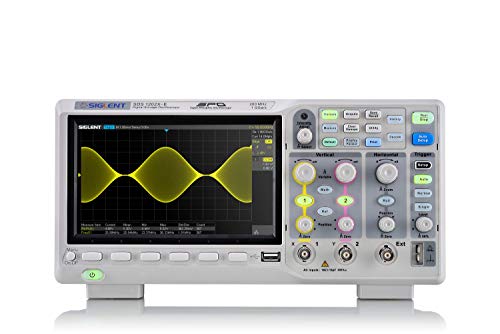
- 200 MHz bandwidth with up to 1 GSa/s sampling
- 14 Mpts record length for longer captures
- Serial decode for I2C, SPI, UART, RS232, CAN, and LIN
Best For: Workshop users wanting higher bandwidth and serial protocol support
Budget-Friendly Lab Scope
Hantek DSO2D15 150 MHz 2CH Oscilloscope

- 150 MHz bandwidth with 2 channels
- Arbitrary waveform output for added bench use
- 14 trigger modes and serial decode support
Best For: Budget buyers who want many lab features for the money
Portable 3-in-1 Troubleshooter
FNIRSI 2D15P 100MHz 3-in-1 Scope

- 2-channel oscilloscope with 100 MHz bandwidth
- Includes TRMS multimeter and 10 MHz DDS generator
- 4.3-inch touchscreen plus 5000 mAh battery
Best For: Compact workspaces needing scope, meter, and generator in one
Versatile 4-Channel Value Pick
Rigol DS1054Z 50 MHz 4-Channel Oscilloscope

- 4 analog channels for multi-signal comparison
- Up to 24 Mpts memory depth and 1 GSa/s sampling
- Serial decode for RS232/UART, I2C, and SPI
Best For: Workshops needing four channels for debugging and teaching
Portable All-in-One Pick

- 2-channel oscilloscope, multimeter, and signal generator
- 10MHz bandwidth with 50MSa/s sampling
- 3000mAh battery with Type-C charging
Best For: Home workshop users who want a portable multitool
Best Bench Upgrade
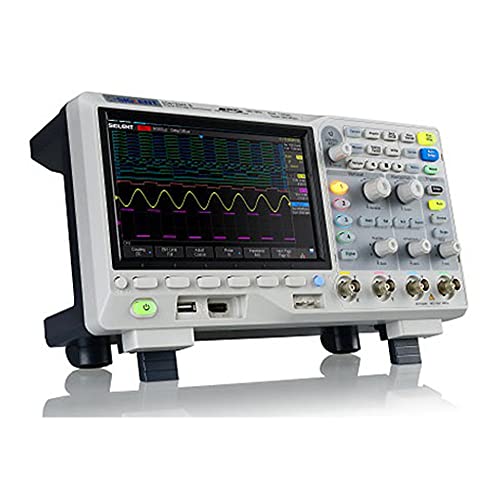
- 100MHz, 4-channel bench oscilloscope
- Built-in decoder support for Iic, Spi, Uart/Rs232, Can, and Lin
- Includes 4 passive probes and USB cable
Best For: Home workshop users who want a fuller bench scope with decoding
Portable Diagnostics Pick

- 3-in-1 handheld scope, meter, and DDS generator
- 10MHz bandwidth with 48MSa/s sampling
- 19999-count multimeter with auto-ranging
Best For: Hobbyists needing a portable scope-meter for quick diagnostics
Bench-Grade Midrange Pick
RIGOL DS1102Z-E 100MHz Deep-Memory Scope

- 100 MHz, 2 channels, 1 GSa/s sampling
- Up to 24 Mpts deep memory for longer captures
- Serial decoding and LAN/USB connectivity
Best For: makers who want a serious bench oscilloscope for debugging and longer captures
Portable Budget Tool
FNIRSI DSO-510 Handheld Scope and Generator

- 10 MHz handheld oscilloscope with 48 MS/s sampling
- Built-in DDS generator with 13 waveform types
- 1000 mAh battery and Type-C charging
Best For: hobbyists who want a pocketable scope with basic signal generation
All-in-One Field Choice
ZT-703S 3-in-1 Handheld Oscilloscope

- 3-in-1 tool: scope, multimeter, and generator
- Dual-channel operation up to 50 MHz in high-speed mode
- Type-C charging plus data transfer
Best For: users who want one portable tool for scope, meter, and signal testing
Bench-Ready 200 MHz Performance – Siglent SDS1202X-E 200 MHz, 2-Channel Scope
If you want one of the more capable oscilloscopes for home workshops, the Siglent SDS1202X-E brings 200 MHz bandwidth, 2 channels, and up to 1 GSa/s real-time sampling. Its 14 Mpts record length and built-in serial bus trigger/decode support make it a practical choice for capturing longer events and checking common interfaces like I2C, SPI, UART, RS232, CAN, and LIN.
Best For: Home workshop users who want a higher-bandwidth bench scope with solid serial decoding support.
Pros:
- 200 MHz bandwidth with up to 1 GSa/s real-time sampling
- 14 Mpts record length helps with longer captures
- Serial bus triggering and decode for I2C, SPI, UART, RS232, CAN, and LIN
- Two-channel design keeps the setup straightforward for everyday bench work
Cons:
- Only 2 channels, so it is less flexible than 4-channel models
- Focused on bench use rather than compact field-portable diagnostics
For home workshop troubleshooting, this Siglent model stands out when you need stronger bandwidth and deeper capture capability without moving into a more complex multi-channel setup. It is a good fit if serial communication checks are part of your regular work.
Budget-Friendly Lab Scope – Hantek DSO2D15 150 MHz 2CH Oscilloscope
The Hantek DSO2D15 is a cost-effective oscilloscope for home workshops that need useful lab features without a premium price tier. With 150 MHz bandwidth, 2 channels, arbitrary waveform output, and 14 trigger modes, it covers a lot of everyday troubleshooting and test work, while the built-in serial protocol trigger/decode support adds extra value for digital electronics.
Best For: Budget-conscious hobbyists and students who want a feature-rich bench instrument.
Pros:
- 150 MHz bandwidth and 2-channel design suit many repair and test tasks
- Arbitrary waveform output adds versatility for bench experiments
- 14 trigger modes plus 5 serial protocol triggers/decodes
- Positioned as a cost-effective economy oscilloscope
Cons:
- Only 2 channels, which may limit more advanced comparison work
- Less compact than some handheld-style alternatives
If your home workshop priorities are value and function, this Hantek is easy to justify. It packs in useful trigger and decoding tools that can make debugging more efficient than a bare-bones scope.
Portable 3-in-1 Troubleshooter – FNIRSI 2D15P 100MHz 3-in-1 Scope
For home workshops where portability matters, the FNIRSI 2D15P combines a 2-channel oscilloscope, TRMS multimeter, and DDS signal generator in one compact tool. It offers 100 MHz bandwidth, 500 MS/s sampling, a 4.3-inch IPS touchscreen, and built-in battery power, making it a flexible pick for quick diagnostics, bench checks, and on-the-go measurements.
Best For: Users who want a compact all-in-one diagnostic tool for mixed electronics tasks.
Pros:
- Combines oscilloscope, multimeter, and 10 MHz DDS signal generator
- 100 MHz bandwidth with 500 MS/s sampling
- 4.3-inch IPS touchscreen for quick interaction
- 5000 mAh battery supports extended field or workshop use
Cons:
- 2-channel scope design may be limiting for more complex comparisons
- Touchscreen form factor may not suit users who prefer a traditional bench layout
This model makes sense when you want one device to cover several common troubleshooting jobs. It is especially appealing for compact workspaces where separate instruments would take up more room.
Versatile 4-Channel Value Pick – Rigol DS1054Z 50 MHz 4-Channel Oscilloscope
The Rigol DS1054Z is a strong fit for home workshops that benefit from four channels and deep capture features in a practical bench scope. It provides 50 MHz bandwidth, up to 1 GSa/s sample rate, and standard memory depth up to 24 Mpts, while the high waveform capture rate and intensity-graded display help expose intermittent issues during electronics debugging.
Best For: Users who want a dependable 4-channel scope for teaching, debugging, and embedded work.
Pros:
- 4 analog channels offer more comparison flexibility than 2-channel models
- Up to 1 GSa/s sampling and standard memory depth up to 24 Mpts
- Up to 30,000 wfms/s capture rate helps reveal intermittent events
- Serial decode for RS232/UART, I2C, and SPI plus FFT and filters
Cons:
- 50 MHz bandwidth is lower than some higher-bandwidth alternatives
- Larger bench footprint than compact handheld instruments
For many home workshop users, the DS1054Z offers one of the most useful combinations of channel count, memory depth, and debug features. It is especially well suited to embedded bring-up and teaching setups where multiple signals need to be watched at once.
Portable All-in-One Pick – FNIRSI 2C23T Plus Handheld
For shoppers comparing oscilloscopes for home workshops, the FNIRSI 2C23T Plus stands out as a compact 3-in-1 tool that combines a 2-channel oscilloscope, multimeter, and DDS signal generator. It’s designed for quick troubleshooting, basic circuit checks, and signal testing without needing three separate devices.
Best For: Home workshop users who want an all-in-one handheld tester for electronics, school projects, and general repair work.
Pros:
- Combines oscilloscope, multimeter, and signal generator in one handheld unit.
- 2-channel scope with 10MHz bandwidth and 50MSa/s sampling rate.
- Multimeter offers 10000 counts plus voltage, current, resistance, capacitance, and temperature testing.
- Built-in 3000mAh battery, Type-C charging, and data storage/export support.
Cons:
- 10MHz bandwidth is better suited to basic and mid-level tasks than advanced high-speed work.
- Small 2.8-inch display may feel limited compared with larger bench scopes.
Overall, this model makes sense if you want one portable device that covers several workshop measurement needs. It is especially practical when space is limited and convenience matters more than advanced oscilloscope depth.
Best Bench Upgrade – Siglent SDS1104X-E 4-Channel
Siglent Technologies SDS1104X-E 100Mhz Digital Oscilloscope 4 Channels Standard Decoder, Grey
Check Price On AmazonAmong oscilloscopes for home workshops, the Siglent SDS1104X-E is the more traditional bench-style option in this group. With 4 channels, 100MHz bandwidth, and included protocol decoder support, it is aimed at users who need broader visibility across circuits and more room to grow.
Best For: Home workshop builders who want a full-size 4-channel scope for deeper troubleshooting and protocol work.
Pros:
- 4-channel design gives more flexibility for comparing multiple signals.
- 100MHz bandwidth is a strong fit for a wide range of workshop electronics tasks.
- Standard decoder support includes Iic, Spi, Uart/Rs232, Can, and Lin.
- Includes 4 passive probes and USB cable in the package.
Cons:
- Much less portable than handheld options.
- Requires a more permanent workspace and mains power setup.
This is the best match if your home bench is where most of your debugging happens and you want more channels plus decoding support. It is a better fit for serious bench work than quick grab-and-go diagnostics.
Portable Diagnostics Pick – FNIRSI DST-210 Handheld Combo
If you’re shopping oscilloscopes for home workshops and want a compact diagnostic helper, the FNIRSI DST-210 is built around portability and fast function switching. It combines a 10MHz, 48MSa/s oscilloscope with a 19999-count multimeter and DDS signal generator, making it useful for electronics and automotive-style troubleshooting.
Best For: Hobbyists and repair users who want a handheld scope-meter for circuit checks, signal simulation, and fast measurement changes.
Pros:
- 3-in-1 design combines oscilloscope, multimeter, and DDS generator.
- 10MHz bandwidth with 48MSa/s sampling and waveform save/export support.
- 19999-count multimeter with auto-ranging, data hold, and temperature measurement.
- 3000mAh rechargeable battery and Type-C charging for portable use.
Cons:
- 10MHz bandwidth limits it to lighter-duty oscilloscope work.
- Handheld format and 2.8-inch screen are less expansive than a bench scope.
For a home workshop, this model is a practical middle ground between a basic meter and a dedicated bench oscilloscope. It favors convenience and quick diagnostics, especially if you move between bench and field work.
Bench-Grade Midrange Pick – RIGOL DS1102Z-E 100MHz Deep-Memory Scope
If you want one of the more capable oscilloscopes for home workshops, the RIGOL DS1102Z-E is a strong bench-style option. Its 100 MHz bandwidth, 2 channels, and 1 GSa/s real-time sampling give you room for electronics debugging, education projects, and embedded bring-up, while the deep memory helps preserve longer captures without losing detail.
Best For: Makers and hobbyists who want a serious bench oscilloscope for longer captures, serial bus work, and general troubleshooting.
Pros:
- 100 MHz bandwidth with 2 analog channels and up to 1 GSa/s sampling
- Deep memory up to 24 Mpts for longer captures at higher sample rates
- 30,000 wfms/s capture rate helps reveal intermittent glitches
- USB, LAN, and trigger/output connections support bench integration
Cons:
- Bench-focused design is less portable than handheld models
- More scope than you need for very basic hobby testing
This is the most capable option here for workshop use if you care about waveform detail, event review, and serial protocol troubleshooting. It stands out when you need a stable lab instrument rather than a grab-and-go tool.
Portable Budget Tool – FNIRSI DSO-510 Handheld Scope and Generator
The FNIRSI DSO-510 is a compact choice for oscilloscopes for home workshops when portability matters most. It combines a 10 MHz handheld oscilloscope with a DDS signal generator, making it useful for quick checks, simple signal simulation, and on-the-go troubleshooting without taking up bench space.
Best For: Hobbyists who want a pocketable oscilloscope with a built-in signal generator for basic electronics work.
Pros:
- Handheld 10 MHz scope with 48 MS/s sampling
- Built-in DDS signal generator with 13 waveform types
- One-key AUTO helps quickly set up periodic and non-periodic signals
- Built-in 1000 mAh battery and Type-C charging
Cons:
- 10 MHz bandwidth is limited for more demanding signals
- Smaller 2.8-inch display is less spacious than bench scopes
For light diagnostic work, this is a practical all-in-one handheld option. It is best treated as a convenience tool for basic testing and signal generation rather than a replacement for a full-size lab oscilloscope.
All-in-One Field Choice – ZT-703S 3-in-1 Handheld Oscilloscope
If you want oscilloscopes for home workshops that do more than one job, the ZT-703S packs a handheld oscilloscope, multimeter, and signal generator into one portable unit. It offers dual channels, automatic waveform recognition, and selectable operating modes, which makes it a flexible pick for quick electronics checks and mixed testing tasks.
Best For: Users who want one portable tool for oscilloscope readings, multimeter checks, and basic signal generation.
Pros:
- 3-in-1 design combines oscilloscope, multimeter, and signal generator
- Dual channels with up to 50 MHz bandwidth in high-speed mode
- Multimeter mode includes 25,000 counts for common electrical tests
- Type-C charging and data transfer add convenience
Cons:
- High-speed mode draws more power than normal mode
- Storage depth of 128K is modest compared with larger bench scopes
This model makes sense when portability and versatility matter more than maximum bench performance. It is especially useful if you want fewer separate tools on hand while still covering the basics of scope, meter, and generator use.
How We Picked These Oscilloscopes for Home Workshops
We prioritized models that make sense for real-world bench use: enough bandwidth for common analog and digital repairs, at least two channels for comparing signals, and a display/interface that is usable without a steep learning curve. We also considered sampling rate, probe quality, decoding support, and whether a unit offers extra tools like a multimeter or signal generator.
Quick Comparison: What Matters Most
If you work mostly on simple hobby circuits, a 50MHz to 100MHz scope is often enough. For mixed-signal work, embedded debugging, and more flexible troubleshooting, 100MHz to 200MHz options are easier to grow into. Four-channel scopes are especially helpful when you need to compare clocks, data lines, and power signals at the same time. Handheld 2-in-1 or 3-in-1 units can save space, but bench scopes usually deliver better screens, controls, and measurement depth.
Key Buying Factors for Oscilloscopes for Home Workshops
Bandwidth and Sample Rate
Bandwidth determines how accurately the scope can represent fast signals. For home workshop use, 50MHz is a practical entry point, while 100MHz or higher gives more room for digital electronics and mixed projects. Sample rate should rise with bandwidth so waveforms stay clean and measurements remain useful.
Channels and Decoding
Two channels are enough for many repairs, but four channels are better if you debug buses, compare timing, or trace system behavior across multiple points. Protocol decoding is not essential for everyone, but it can be a major time-saver if you work with serial interfaces.
Form Factor and Extras
Bench scopes are usually the best all-around choice for Oscilloscopes for Home Workshops because they offer larger displays and easier controls. Handheld models make sense when portability matters more than advanced analysis. Built-in multimeter and signal-generator functions can be useful, but they should not replace core oscilloscope performance.
Software, Triggers, and Probes
Stable triggering and straightforward menus matter more than flashy specs. Good probes, proper compensation, and reliable auto-setup can make an affordable scope feel much more capable. Look for the features you will use regularly instead of paying for extras you may never touch.
Who Should Buy Which Oscilloscopes for Home Workshops?
Beginners and general DIY users should favor easy-to-use two-channel bench models in the 50MHz to 100MHz range. Hobbyists working on microcontrollers, repairs, or embedded systems will usually benefit from a 100MHz four-channel scope. If you need portability for automotive or field work, a handheld combo unit may be the better fit. For the best long-term value, choose the scope that matches your most common projects, not just the highest headline specs.