Physics is easier to teach when students can see waves move, reflect, interfere, and stand still in real time. That is where the right demonstration kit makes a big difference.
These physics wave demonstration kits are built for hands-on learning, from simple spring models to advanced lab systems and ultrasonic experiments.
Best 10 Physics Wave Demonstration Kits Picks for 2026
Premium Classroom Helix
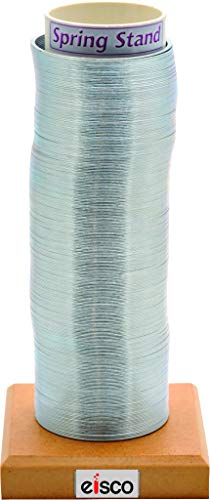
- 20 cm closed height creates a bigger visual demo.
- Wooden stand supports immediate classroom use.
- Metal-and-wood build suits repeated teaching use.
Best For: Teachers and STEM classrooms needing a sturdy wave display
Versatile Wave Kit

- Two springs support multiple wave demonstrations.
- Covers longitudinal, transverse, and reflection lessons.
- Compact design is easier to store and handle.
Best For: Classroom lessons covering several wave behaviors
Interactive Water Waves

- Shows interference, refraction, diffraction, and reflection.
- Includes tank, wave bar, light source, and accessories.
- Projects clear patterns for classroom viewing.
Best For: Water-wave and interference demonstrations in STEM labs
Simple Spring Set
United Scientific Wave Demonstrator
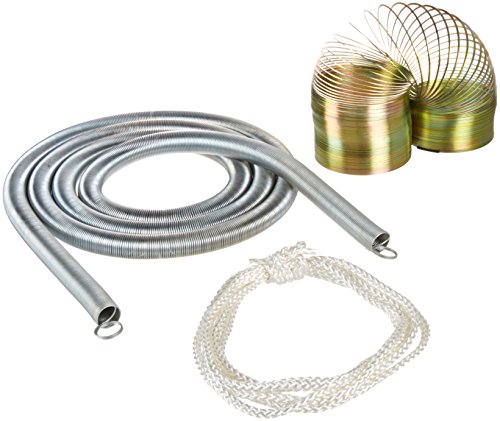
- Includes two helical springs plus cotton string.
- Basic setup suits straightforward classroom demos.
- Made in the United States.
Best For: Educators wanting a no-frills wave demonstration set
Standing Wave Classroom Model
Safe Wooden Physics Teaching Aid

- Visual standing-wave demonstration model
- Safe wooden materials for classroom use
- Simple assembly with step-by-step instructions
Best For: Classroom demos, exhibitions, and guided STEM learning
Rocket Acoustic Levitator Kit

- Ultrasonic levitation with standing-wave behavior
- Includes 12V adapter and illustrated manual
- Some parts simplified for easier soldering
Best For: College STEM projects, maker activities, and physics demos
Wave Generation Spring

- Shows transversal and longitudinal waves
- Expands from 20 inches to 12 feet
- Good for reflection, wavelength, and frequency demos
Best For: Physics classrooms and hands-on wave lessons
DIY Ultrasonic Levitation STEM Kit

- DIY kit with transducers, PCB, and instructions
- Explains standing waves, resonance, and levitation
- Beginner-friendly soldering project for STEM learners
Best For: Beginners and hobbyists who want a hands-on levitation build
Classroom Standing Wave Lab Kit
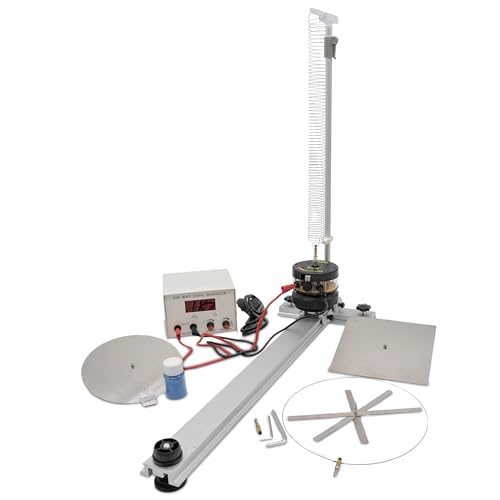
- Includes generator, Chladni plate, string, weights, and pulley
- Built for standing waves, resonance, and harmonic motion demos
- Classroom-ready kit for repeated physics lab use
Best For: Teachers and labs needing a durable wave demonstration setup
Compact Ultrasonic Levitation Kit

- Compact build that levitates 2–3 mm foam balls
- Shows standing waves, nodes, and acoustic radiation force
- Streamlined soldering kit with included instructions
Best For: STEM learners who want a small ultrasonic levitation demo
Premium Classroom Helix – Eisco Wave Form Helix
If you want physics wave demonstration kits that create a strong visual impact, this Eisco wave form helix is built for hands-on teaching. Its tall 20 cm closed height and durable metal-and-wood construction make it a practical classroom tool for showing standing waves and wave motion in a clear, memorable way.
Best For: Teachers, STEM classrooms, and hobbyists who want a sturdy wave demonstration piece for repeated use.
Pros:
- Twice the standard closed height for a more dramatic wave display.
- Includes a wooden stand for ready-to-use presentation.
- Designed for classroom and home lab physics demonstrations.
- Can stretch up to 65 feet for extended wave demonstrations.
Cons:
- More of a dedicated demonstration tool than a multi-part kit.
- Best suited to wave lessons rather than broader physics topics.
This is a strong choice if your priority is a durable, attention-grabbing wave demo that students can see clearly from across the room.
Versatile Wave Kit – Wave Formation Spring Kit
This wave formation spring kit is a practical option for physics wave demonstration kits when you want to show more than one type of motion. With both a narrow steel spring and a helical spring, it supports visible demonstrations of longitudinal and transverse waves, plus reflection and transmission.
Best For: Classroom instruction that needs a compact kit for showing multiple wave behaviors.
Pros:
- Includes two different springs for varied demonstrations.
- Supports longitudinal and transverse wave examples.
- Also helps illustrate reflection, transmission, sound, and seismic topics.
- Compact size makes it easier to handle and store.
Cons:
- Less visually dramatic than a large helix display.
- No extra accessories beyond the springs are noted.
If you need a straightforward teaching kit that connects wave concepts to real-world physics, this set offers solid flexibility in a manageable package.
Interactive Water Waves – Compact Ripple Tank
For physics wave demonstration kits focused on water behavior, this compact ripple tank is designed to make interference and other wave effects easy to observe. The included light source, wave bar, and accessories help project clear patterns for classroom teaching and introductory lab work.
Best For: Physics and STEM instruction centered on water-wave behavior and interference patterns.
Pros:
- Demonstrates interference, reflection, refraction, and diffraction.
- Includes ripple tank, wave bar, light source, and accessories.
- Projects sharp wave patterns for easier student observation.
- No batteries required and runs in manual mode.
Cons:
- Requires a bit more setup than a simple spring demo.
- Plastic construction may feel less rugged than metal-based kits.
This is the best fit if you want a more visual, lab-style demo that helps students connect wave theory to clearly projected water patterns.
Simple Spring Set – United Scientific Wave Demonstrator
United Scientific WDSET1 Wave Demonstrator Set with Two Helical Springs and Cotton String
Check Price On AmazonThis wave demonstrator set is a basic, classroom-friendly option for physics wave demonstration kits. With two helical springs and cotton string, it gives instructors the core materials needed for straightforward wave demonstrations without extra complexity.
Best For: Educators who want a simple wave demo set with the essentials only.
Pros:
- Includes two helical springs and cotton string.
- Simple format is easy to introduce in class.
- Made in the United States.
Cons:
- Very limited product details are provided.
- Lacks the extra features found in more advanced kits.
If you only need a no-frills wave demonstration set, this one keeps the setup basic and focused on core classroom use.
Standing Wave Classroom Model – Safe Wooden Physics Teaching Aid
This physics wave demonstration kit is designed to make standing waves easier to see and explain in a classroom or lab setting. Its safe wooden build, clear visual demonstration of wave behavior, and simple assembly make it a practical teaching aid for hands-on learning.
Best For: Teachers and students who want a straightforward standing-wave model for classroom demos, exhibitions, and guided STEM activities.
Pros:
- Demonstrates standing wave phenomena with visual experiments.
- Made from safe, friendly wooden materials for classroom use.
- Supports repeated demonstrations and practical exploration.
- Includes clear step-by-step instructions for easy assembly.
Cons:
- Focused on standing waves rather than a wider range of wave types.
- Requires assembly before use.
- Best suited for guided educational use rather than casual play.
Overall, this model is a solid pick if you want a low-risk, hands-on way to introduce standing-wave concepts. It keeps the learning focused and visual, which can help students connect physics ideas to a physical demonstration.
Rocket Acoustic Levitator Kit – Soldering Practice Demo
This physics wave demonstration kit combines a rocket-shaped build with an ultrasonic levitation experiment, making it a more engaging option for students and hobbyists. It is aimed at hands-on learning, with a build process that still teaches basic soldering while keeping some parts easier to assemble.
Best For: College STEM learners, maker projects, and anyone who wants a visible standing-wave and acoustic levitation demo.
Pros:
- Shows standing-wave principles through ultrasonic levitation.
- Includes a 12V DC power adapter and color instruction manual.
- Designed to reduce soldering difficulty with some through-hole parts.
- Rocket-shaped design adds visual appeal to the experiment.
Cons:
- Requires soldering and assembly before the demo works.
- Uses lightweight foam balls for the levitation effect, so the demo is specialized.
- Primarily aimed at adult learners and STEM users.
As a learning kit, this one stands out for turning acoustic levitation into a hands-on build. It is a good fit if you want a project that blends electronics practice with a clear physics demonstration.
Wave Generation Spring – Hands-On Physics Model
GSC International N-00007 Wave Generation Spring for Physics Classroom Modeling and Equipment.
Check Price On AmazonIf you need a simple physics wave demonstration kit for classroom modeling, this spring-based option makes it easy to show both transversal and longitudinal waves. Its lightweight design and long expansion range make it useful for hands-on STEM lessons and wave-velocity activities.
Best For: Physics classrooms and instructors who want a flexible spring model for demonstrating wave motion.
Pros:
- Demonstrates both transversal and longitudinal waves.
- Supports experiments on reflected waves, wavelength, and frequency.
- Expands from 20 inches to 12 feet for versatile demonstrations.
- Light material helps prevent tangling during use.
Cons:
- Very simple model compared with electronic demonstration kits.
- Designed mainly for classroom modeling rather than self-contained experiments.
- Requires an instructor or setup space to get the most value.
This is the most flexible teaching aid in the group if your goal is to explain basic wave behavior clearly. It is especially useful when you want a reusable model for a range of live classroom demonstrations.
DIY Ultrasonic Levitation STEM Kit – Build-a-Standing-Wave Project
If you want physics wave demonstration kits that also double as a soldering project, this DIY ultrasonic levitation kit offers a hands-on way to explore standing waves, resonance, and acoustic levitation. It is designed as a beginner-friendly build with included components and step-by-step guidance, making it a practical choice for learners who want to see wave physics in action.
Best For: Beginners, hobbyists, and STEM learners who want a build-it-yourself levitation demo.
Pros:
- Complete DIY kit with transducers, PCB, instructions, and soldering components included.
- Teaches standing waves, resonance, and other STEM concepts through a visible levitation effect.
- Beginner-friendly design with clear diagrams and troubleshooting tips.
- Compact build that can work as a science fair or classroom demonstration project.
Cons:
- Requires soldering, so it is not a no-assembly classroom demo.
- Focused on a single ultrasonic levitation effect rather than a broad multi-experiment lab kit.
- Best suited to adults or supervised learners rather than very young children.
Overall, this is a strong pick if your goal is an interactive physics wave demonstration kit that combines electronics practice with an eye-catching wave phenomenon. It is more of a maker project than a ready-to-run classroom rig, but that is exactly what makes it appealing for hands-on STEM learning.
Classroom Standing Wave Lab Kit – Chladni Plate Resonance Demo
For buyers comparing physics wave demonstration kits for lab or classroom use, this standing wave demonstration kit stands out as a more complete teaching setup. It includes a variable frequency generator, vibration generator, Chladni plate, weights, pulley, string, and support hardware, giving educators multiple ways to demonstrate standing waves, resonance, and harmonic motion.
Best For: Teachers, physics labs, and students who need a durable demonstration kit for repeated use.
Pros:
- Includes a broad set of components for multiple standing wave and resonance experiments.
- Designed for physics classrooms, labs, and educational demonstrations.
- Helps students visualize wave patterns, frequencies, and harmonic motion.
- Built with metal/plastic materials and intended for repeated use.
Cons:
- At 14 pounds, it is much less portable than compact tabletop kits.
- More of a lab demonstrator than a personal DIY build project.
- May be more equipment than casual hobbyists need.
This kit is the best fit when the priority is structured instruction and repeatable classroom demonstrations. It gives you the tools to show wave behavior clearly, but it is less about making a single novelty effect and more about supporting broader physics lessons.
Compact Ultrasonic Levitation Kit – 40 kHz Wave Demo
This compact ultrasonic levitation kit is a focused choice among physics wave demonstration kits when you want a small build that makes acoustic standing waves visible. Using 40 kHz ultrasonic transducers, it levitates lightweight foam balls and turns abstract concepts like nodes and acoustic radiation force into a clear classroom or desk demo.
Best For: STEM learners and educators who want a compact ultrasonic levitation demonstration.
Pros:
- Shows ultrasonic standing waves and levitation in a compact device.
- Includes only essential components for a streamlined soldering project.
- Detailed English instructions and digital manual support are provided.
- Useful for independent study, classroom demos, or science exhibits.
Cons:
- Requires a 12V DC power supply that is not included.
- Levitates only very light 2–3 mm foam balls, so the effect is limited.
- Assembly and troubleshooting may be challenging for absolute beginners without soldering experience.
As a compact wave demo, this kit is especially appealing if space and simplicity matter. It is less expansive than a full lab setup, but it does a good job of making the physics of standing waves visible in a small, focused package.
How We Picked These Physics Wave Demonstration Kits
We focused on kits that help demonstrate core wave concepts clearly, with an emphasis on classroom usability, lesson value, and setup practicality. Priority went to options that support multiple experiments, durable components, and age-appropriate learning.
We also considered whether a kit is better suited for basic wave motion, interference and standing waves, or more advanced demonstrations such as ultrasonic levitation and vibration patterns.
Quick Comparison
For simple visible motion and classroom modeling, spring-based kits are the easiest starting point. Ripple tanks are the strongest choice for water-wave interference and reflection demonstrations. If you want more advanced STEM or lab-style experiments, generator-based and ultrasonic kits offer the broadest range of modern wave concepts.
Key Buying Factors for Physics Wave Demonstration Kits
Wave Type
Choose a kit based on the concept you want to teach. Longitudinal and transverse wave kits are ideal for core mechanics lessons, while ripple tanks are better for surface-wave behavior. Standing wave and Chladni-style systems are useful for resonance, harmonics, and vibration patterns.
Age and Skill Level
Simple spring and string models are best for younger students or introductory classes. More technical kits with frequency control, soldering, or lab components are better for high school, AP Physics, or university-level instruction.
Setup and Durability
Look for sturdy stands, reliable spring materials, and clear instructions if the kit will be used often in a classroom. If portability matters, compact and low-maintenance designs are easier to store and reuse.
Learning Breadth
The best Physics Wave Demonstration Kits make it easy to show more than one principle. Kits that support reflection, transmission, interference, resonance, and standing waves usually deliver better value than single-purpose models.
Who Should Buy Which Physics Wave Demonstration Kits?
Elementary and middle school teachers: Start with spring, string, or simple wave form models for visual basics and safe handling.
High school physics teachers: Choose ripple tanks or standing-wave systems for richer demonstrations tied to curriculum topics.
College labs and STEM programs: Look for generator-driven, vibration, or ultrasonic kits when you need precision, resonance studies, or more advanced experimental depth.
Homeschool buyers: A compact, durable kit with clear physical wave motion usually offers the best balance of cost, repeatability, and ease of use.
Select the kit that matches your lesson goals first, then compare durability, space needs, and experiment variety. That approach will make your wave demonstrations more effective and easier to repeat.