Science learning sticks best when kids can touch, test, and play their way through it. That is why the best science educational games for kids mix real concepts with simple, engaging gameplay.
From chemistry kits and electronics to trivia, habitats, and space games, these picks are designed to make STEM feel exciting, approachable, and age-appropriate.
Best 10 Science Educational Games for Kids Picks for 2026
Science Magic Set
National Geographic Science Magic Kit

- 100+ science experiments with a magic-trick format
- Includes wand, gloves, and materials for 20 core tricks
- Bonus guide adds 85+ more experiments with household items
Best For: Hands-on kids who like science, magic, and performance-style play
Fact-Packed Card Game

- Classic Go Fish gameplay with a science theme
- 13 categories and 4 facts on each card
- Designed for 2-6 players with cards and instructions
Best For: Families wanting a quick, familiar science trivia card game
Build-It Electronics Kit

- 100+ electronics projects in one kit
- Color-coded snap pieces; no soldering or tools needed
- Teaches circuitry and basic electrical engineering
Best For: Kids 8+ who like hands-on electronics and STEM building
Science Trivia Game

- 500+ science questions for replayable trivia play
- Covers biology, physics, chemistry, and more
- 15-minute rounds for quick family game night sessions
Best For: Families wanting a fast, science-focused trivia game
Hands-On STEM Pick

- 30 science challenge cards
- Uses simple, common materials
- Great for classroom or homeschool
Best For: Elementary kids who enjoy guided science challenges
Geology Game Set
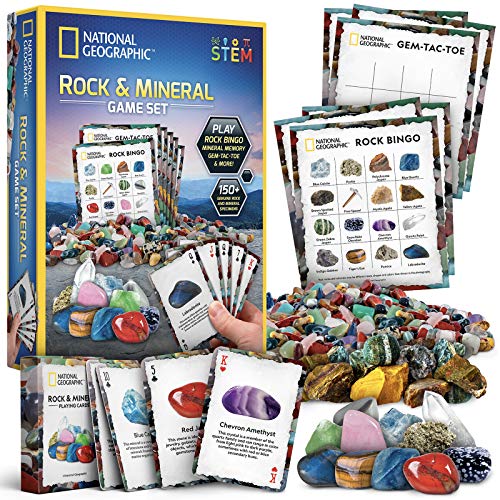
- Multiple geology game modes
- Includes real rock and gem specimens
- Cards double as flash cards
Best For: Kids who enjoy rocks, minerals, and family play
Chemistry Game Pick

- Teaches periodic table basics
- Easy-to-learn card gameplay
- Durable linen-finish cards
Best For: Players who want a simple chemistry-focused learning game
Space Trivia Guessing Game
Skillmatics Guess in 10 NASA Space

- NASA-themed guessing game about space and planets
- Portable set with 50 cards and 6 clue cards
- Quick 20-minute rounds for 2-6 players
Best For: Kids 8+ who like space trivia and fast family gameplay
Ecology Card Drafting Game

- Build habitats using animals and ecology concepts
- Teaches biodiversity, sustainability, and balance
- Quick 15-20 minute game for 2-6 players
Best For: Kids, families, and classrooms learning about ecology and habitats
Chemistry Strategy Game

- Builds chemistry knowledge around the periodic table
- Strategic play with real element and trend concepts
- Made for ages 10+ and 2-6 players
Best For: Middle schoolers, families, and classrooms focused on chemistry
Science Magic Set – National Geographic Science Magic Kit
If you want science educational games for kids that feel more like a show than a lesson, this National Geographic kit is a strong pick. It blends 100+ experiments with magic-style presentation, so kids can use chemistry and physics to perform tricks for family and friends while still learning through hands-on play.
Best For: Kids who enjoy hands-on experiments, magic tricks, and interactive STEM play at home.
Pros:
- Includes 20 science magic tricks plus a bonus guide with 85+ additional experiments using common household items.
- Comes with a magic wand and white gloves to help kids present the tricks like a real performance.
- Focuses on chemistry and physics in a format that feels fun and memorable.
- No batteries required and everything needed for the core tricks is included.
Cons:
- Many of the bonus experiments rely on common household items, so prep can vary.
- Best suited to kids who like showy, hands-on activities rather than quiet tabletop play.
This is a good option if you want a science kit that emphasizes excitement and presentation as much as learning. It stands out by turning STEM activities into performable tricks instead of standard experiments.
Fact-Packed Card Game – Go Fish Science
For families looking for science educational games for kids that are easy to learn and quick to play, Go Fish Science is a simple fit. It keeps the familiar Go Fish rules but swaps in science themes like planets, gems, sharks, poisonous plants, and the universe, with each card also including four facts to reinforce learning.
Best For: Kids who like familiar card games and want to learn science facts in a casual group setting.
Pros:
- Uses the classic Go Fish format, making it easy for kids to pick up quickly.
- Covers 13 science and wonderment categories grouped into sets of four.
- Each card includes 4 facts, so gameplay doubles as light science review.
- Works for 2-6 players and comes with cards and instructions.
Cons:
- Learning depth is limited to trivia-style facts rather than experiments or building.
- Best for kids who already enjoy card games and group play.
This game is a practical choice for families that want something fast, portable, and educational without a steep learning curve. It is especially useful for casual play where the science content is built into an already familiar game structure.
Build-It Electronics Kit – Snap Circuits Jr. SC-100
Snap Circuits Jr. SC-100 is a strong option if you want science educational games for kids that teach real electronics through hands-on building. It includes over 100 projects and uses color-coded snap pieces, so kids can start exploring circuitry without soldering or extra tools.
Best For: Kids age 8+ who want to build electronic projects and learn circuitry basics by doing.
Pros:
- Includes 100+ projects for extended play and repeated learning.
- Color-coded, numbered parts snap together easily on the included grid.
- No soldering or tools are required to get started.
- Built for STEM learning with practical electrical engineering basics.
Cons:
- Batteries are required and are not part of the no-tools setup.
- Most suitable for kids who enjoy building and troubleshooting rather than card or trivia games.
This kit is a standout for families who want a more technical STEM toy with a large number of projects. It offers a hands-on path into circuitry while keeping the setup straightforward for younger builders.
Science Trivia Game – Quokka Family Card Game
If you want science educational games for kids that work well for family game night, this Quokka trivia card game is built around fast question-and-answer play. It includes 500+ science questions covering biology, physics, chemistry, and more, with rounds designed to run about 15 minutes.
Best For: Families and kids who enjoy quick trivia games and want lots of science questions in rotation.
Pros:
- Includes 500+ questions, so there is plenty of replay value.
- Covers a broad range of science topics, including biology, physics, and chemistry.
- Short 15-minute rounds make it easy to fit into family game night.
- Works for 2+ players and supports friendly competition.
Cons:
- It is a trivia game, so it is less hands-on than experiment-based toys.
- Best suited to players who are comfortable with question-based gameplay.
This is a practical pick for families that want a quick educational game with a lot of repeat play. The large question count and broad topic mix make it a flexible choice for mixed-age group time.
Hands-On STEM Pick – STEM Challenge Cards
If you want science educational games for kids that mix reading, problem-solving, and simple building, this Carson Dellosa STEM set is a practical pick. The 30 cards cover physical, life, earth, and space science with hands-on activities that use common materials and easy directions, so it fits well for classroom centers, homeschool lessons, or at-home enrichment.
Best For: Elementary kids who like short, hands-on science challenges that are easy to set up.
Pros:
- 30 activity cards cover multiple science topics, including earth and space science.
- Uses simple, common materials with easy-to-follow directions and hints.
- Compact card format is convenient for storage and on-the-go learning.
- Works well for centers, classroom lessons, and homeschool use.
Cons:
- Requires gathering materials for each activity.
- More of a guided challenge set than a traditional board game.
Overall, this is a solid choice if you want flexible STEM activities that encourage critical thinking and problem-solving without needing a large kit of supplies.
Geology Game Set – Rock Bingo Explorer
For science educational games for kids who love rocks, fossils, and collecting, this National Geographic set turns geology into a mix of bingo, memory, trivia, and flash cards. It includes rock specimens, gemstone specimens, game boards, and fact cards, making it easy to play together while learning about rocks and minerals in an interactive way.
Best For: Families and mixed-age kids who want a playful geology game with real specimens.
Pros:
- Includes multiple game styles: rock bingo, mineral memory, gem-tac-toe, and trivia.
- Comes with 25 rock specimens and 150+ rock, mineral, and gemstone specimens.
- 52 playing cards can double as flash cards or be used in traditional card games.
- Designed for kids to learn and play together, with parents welcome too.
Cons:
- Best suited to kids interested in geology and collecting.
- Some game modes may be better for older kids than younger players.
This is a strong choice if you want a hands-on science game that feels varied and collectible, with enough components to keep the learning fresh.
Chemistry Game Pick – Periodic Table Card Game
If you want science educational games for kids that make chemistry feel approachable, this Valence card game is built around the periodic table and related STEM concepts. It uses simple instructions, strategic gameplay, and durable linen-finish cards, so it works well as a classroom tool, family game, or gift for young science fans.
Best For: Kids, families, and educators looking for an easy-to-learn chemistry game.
Pros:
- Teaches chemistry concepts and periodic table basics through hands-on gameplay.
- Simple instructions make it accessible for a wide range of players.
- Durable linen-finish cards are made for repeated use.
- Designed for 2-4 players and works in homes or classrooms.
Cons:
- Focused specifically on chemistry rather than broader science topics.
- Best fit for players interested in element and periodic table learning.
For families or teachers who want a compact, replayable chemistry game, this one delivers a clear educational focus without feeling overly complicated.
Space Trivia Guessing Game – Skillmatics Guess in 10 NASA Space
If you want science educational games for kids that feel more like a fast-moving trivia challenge than a lesson, this NASA space version is a smart pick. Players ask up to 10 questions to identify the mystery card, using clue cards and bonus questions to narrow down planets, the Milky Way, and more.
Best For: Families and kids ages 8+ who want a portable space-themed game for game night, travel, or quick play.
Pros:
- Teaches space facts through interactive guessing and question strategy
- Includes 50 collectible game cards and 6 clue cards in a portable box
- Supports 2-6 players with about 20 minutes of playtime
- Encourages communication, problem-solving, and creative thinking
Cons:
- Focused specifically on space, so it is less broad than general science games
- Best suited to kids 8 and up, not younger players
As a science educational game for kids, it works well when you want learning, competition, and portability in one package. The NASA imagery and quick rounds make it especially easy to bring out for family nights, road trips, and playdates.
Ecology Card Drafting Game – Ecosystem Habitat Builder
For science educational games for kids that introduce real ecology ideas in a playable way, Ecosystem is a strong classroom or family-night option. Players draft and arrange cards to build habitats with animals like bears, foxes, and rabbits, learning about biodiversity, sustainability, and how species fit together.
Best For: Families, teachers, and kids who want a biology-based game about habitats, ecology, and biodiversity.
Pros:
- Teaches ecology and biodiversity through building balanced ecosystems
- Card drafting and set collection create strategic but approachable gameplay
- Works for 2-6 players in about 15-20 minutes
- Screen-free and suitable for home, classroom, or group play
Cons:
- Strategy-focused gameplay may be more appealing to older kids and adults
- Less hands-on than some science games that use physical components or experiments
This is a good choice if you want a game that ties directly into environmental science without feeling like a worksheet. Its short playtime and clear ecological theme make it easy to use as a learning tool or a repeat-play family game.
Chemistry Strategy Game – Periodic Game of the Elements
If you are comparing science educational games for kids and want one with a stronger chemistry focus, Periodic is built around the periodic table and real element concepts. Players move across the table, collect elements, and use periodic trends, making it a good fit for learners who are ready for a more strategic challenge.
Best For: Kids 10+ and families who want a chemistry-themed strategy game that supports classroom learning.
Pros:
- Uses real elements, groups, periodic trends, and chemistry vocabulary
- Designed to teach periodic table structure and related principles
- Strategic gameplay with action economy, tactical movement, and set collection
- Suitable for 2-6 players and aligned to STEM and NGSS standards
Cons:
- Recommended minimum age is 10, so it is not ideal for younger kids
- More complex than simpler science games for casual play
This is the most academic of the three and makes the most sense when you want a real chemistry tie-in rather than a general science theme. It should appeal to classroom use, science-minded families, and players who enjoy strategy as much as learning.
How We Picked These Science Educational Games for Kids
We focused on games and kits that combine educational value with real playability. The strongest options teach a clear science concept, are age-appropriate, and encourage repeat use rather than one-time novelty. We also favored products with hands-on interaction, solid learning depth, and formats that work for solo play, family game night, or classroom-style use.
Quick Comparison: Which Format Fits Your Child?
If your child likes building and experimenting, science kits and electronics sets are usually the best fit. If they prefer fast-paced play, trivia and card games may be a better match. For kids who enjoy facts and collecting, rock, mineral, space, and periodic table games can make learning feel more like discovery than study. The best Science Educational Games for Kids match both the child’s age and their attention style.
Key Buying Factors for Science Educational Games for Kids
Age Range and Reading Level
Check the recommended age carefully. Some games depend on reading, strategy, or memory, while others are more hands-on and beginner-friendly. Younger kids usually do best with simple instructions and visual learning, while older kids can handle more detail and longer play sessions.
Subject Area
Think about whether you want broad STEM exposure or a focused topic. Chemistry, physics, space, geology, ecology, and electronics all support different learning goals. Narrow-topic games can be great when a child already has a favorite science interest.
Replay Value
Strong replay value matters if you want the product to last. Look for open-ended experiments, expandable challenges, trivia decks, or strategy-based play that stays interesting after the first use.
Group Vs. Solo Use
Some Science Educational Games for Kids are ideal for family game night, while others are better for independent exploration. If you want a shared activity, choose a game that supports multiple players and quick turns. For quiet learning time, kits and challenge sets are often better.
Who Should Buy Which Science Educational Games for Kids?
Choose experiment kits for hands-on learners who like building and testing. Pick trivia or card games for social kids who enjoy competition and fast rounds. Go with science-themed strategy or concept games if you want something that grows with your child and works well for older elementary or middle school ages. If you are shopping for a classroom, group play, or family gift, prioritize durability, clear instructions, and broad educational appeal.
In short, the best choice is the one that matches your child’s age, interests, and preferred way of playing. That is what turns a game into a learning tool they will actually want to use again.