Looking for science kits for homeschoolers that actually keep kids engaged? The best options do more than entertain—they help teach observation, problem-solving, and basic scientific thinking through hands-on experiments.
In this roundup, we focused on kits with strong educational value, age-appropriate activities, and enough variety to support at-home learning without turning prep time into a project of its own.
Best 10 Science Kits for Homeschoolers Picks for 2026
Ultimate 150-Experiment Pick
UNGLINGA 150 Experiments Science Kit

- 150 experiments across chemistry, physics, and earth science
- Step-by-step illustrated manual for home use
- Includes tools and kid-friendly materials
Best For: Families wanting a large, flexible homeschool science kit
Gross Science Crowd-Pleaser
National Geographic Gross Science Kit

- 45 experiments total, including 30 with household items
- Kid-friendly illustrated guide for each step
- Teaches polymers, reactions, and pH science
Best For: Kids ages 8+ who like lively, high-interest STEM
Curriculum-Friendly STEM Cards
Carson Dellosa STEM Challenges Cards

- 30 cards covering earth, space, life, and physical science
- Uses simple, common materials
- Compact boxed set for easy storage
Best For: Homeschoolers wanting low-prep, curriculum-style STEM work
Balanced 70-Experiment Set
UNGLINGA 70 Lab Experiments Science Kit

- 70 experiments with chemistry and STEM activities
- Includes volcano, crystal, balloon rocket, and fruit circuits
- Illustrated manual explains the science
Best For: Homeschoolers wanting a mid-size, varied experiment kit
Earth Science Explorer
65-Experiment Earth Science Lab
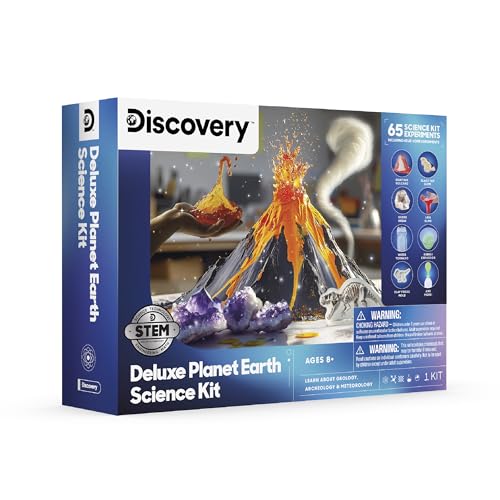
- 65 activities across experiments and DIY projects
- Covers volcanoes, fossils, weather, crystals, and slime
- Includes tools, ingredients, and clear instructions
Best For: homeschool families wanting a broad earth science kit with lots of guided activities
Guided Science Lab
National Geographic Earth Science Kit

- Includes volcanoes, crystals, tornadoes, and dig kits
- Full-color guide explains the science behind each activity
- Clear instructions make it easy for ages 8-12
Best For: homeschoolers who want an earth science kit with built-in teaching support
Beginner STEM Starter
Melican 60+ Science Experiment Kit

- 60+ hands-on experiments for ages 8+
- Includes manual, tools, and safety goggles
- Good for chemistry-style homeschool activities
Best For: families wanting a first hands-on science kit with simple guided experiments
National Geographic Mega Lab Pick
75-Experiment Mega Science Lab
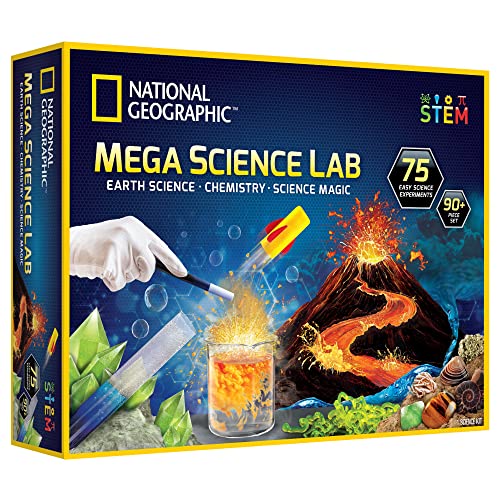
- 45 core experiments plus 30 bonus household-item activities
- Covers earth science, chemistry, and science magic
- Includes real rock, mineral, and crystal specimens
Best For: Homeschool families wanting one broad, multi-topic science kit
Starter Scientist Choice
80 Science Lab Experiments Set

- 80 guided experiments with step-by-step cards
- Includes goggles, test tubes, droppers, and measuring tools
- Built for simple-to-challenging hands-on learning
Best For: Families wanting a high-activity starter science kit with lots of tools
Magic-Style Science Pick
Science Magic Kit with 100+ Experiments

- 20 included science-magic tricks plus 85+ bonus activities
- Includes wand and gloves for performance-style learning
- Blends physics and chemistry into demo-friendly experiments
Best For: Homeschoolers who like dramatic, show-and-tell science activities
Ultimate 150-Experiment Pick – UNGLINGA 150 Experiments Science Kit
If you want science kits for homeschoolers that can keep lessons fresh for weeks, this UNGLINGA set stands out for variety. It includes 150 experiments across chemistry, physics, earth science, surface tension, and more, plus a step-by-step illustrated manual that makes it easier to guide kids through hands-on learning at home.
Best For: Families who want a broad, all-in-one homeschool science kit with lots of experiment options.
Pros:
- Huge 150-experiment variety across multiple science topics
- Illustrated manual supports easy at-home instruction
- Includes science tools and kid-friendly materials
- Can also use some regular household items for extra projects
Cons:
- Best suited to families who want a large kit with many moving parts
- Plastic components may not feel as premium as classroom lab gear
For homeschoolers, the appeal here is repeat use: there is enough content to build several science sessions without running out quickly. It is a practical choice when you want learning through play and a kit that supports parent-led lessons at home.
Gross Science Crowd-Pleaser – National Geographic Gross Science Kit
For science kits for homeschoolers that make lessons memorable, this National Geographic set leans into gross-out experiments while still teaching real concepts. It includes 15 hands-on experiments plus 30 more activities using household items, with kid-friendly instructions and illustrations to walk students through each step.
Best For: Kids who stay engaged with playful, high-interest chemistry and STEM activities.
Pros:
- 45 total experiments, including 30 using common household items
- Illustrated instructions make experiments easier to follow
- Covers polymers, chemical reactions, and pH science
- Built around hands-on STEM learning with a fun theme
Cons:
- Gross theme may not appeal to every child
- Designed for ages 8 and up, so younger learners may need help
This kit works well when you want science to feel more like an event than a worksheet. It is a strong homeschool pick for kids who learn best through curiosity, vivid reactions, and experiments that are hard to forget.
Curriculum-Friendly STEM Cards – Carson Dellosa STEM Challenges Cards
If you prefer science kits for homeschoolers that fit neatly into a lesson plan, these Carson Dellosa STEM Challenges cards are a simple, flexible option. The set includes 30 hands-on activity cards covering physical, life, earth, and space science, with directions, materials needed, challenge explanations, and hints on each card.
Best For: Homeschool families who want low-prep STEM activities that are easy to store and reuse.
Pros:
- 30 activity cards covering multiple science areas
- Uses common materials and easy-to-follow directions
- Compact boxed set is easy to store and carry
- Works well for homeschool curriculum, centers, and classroom lessons
Cons:
- Card-based format is less like a traditional lab kit
- Requires gathering simple materials for each challenge
This is the most curriculum-style option in the group, which makes it useful if you want structure without a lot of clutter. It is a smart choice for parents who value repeatable, low-prep STEM practice over flashy experiments.
Balanced 70-Experiment Set – UNGLINGA 70 Lab Experiments Science Kit
This UNGLINGA kit is a balanced choice for science kits for homeschoolers who want plenty of variety without going all the way up to 150 experiments. It offers 70 experiments, including a volcano, crystal growing, balloon rocket, and fruit circuits, along with an illustrated manual that explains the science behind each activity.
Best For: Families who want a mid-size homeschool science kit with a strong mix of chemistry and hands-on fun.
Pros:
- 70 experiments give you substantial variety
- Includes engaging projects like volcanoes, crystals, and fruit circuits
- Illustrated guide explains both steps and science concepts
- Kid-friendly ingredients are included
Cons:
- Less expansive than larger all-in-one experiment kits
- Details suggest a focus on chemistry-style activities over broader science tools
For homeschool use, this set lands in a practical middle ground: enough experiments to stretch over many sessions, but not so large that it feels overwhelming. It is a good fit when you want a structured kit that still leaves room for parent-led discussion and repetition.
Earth Science Explorer – 65-Experiment Earth Science Lab
If you want science kits for homeschoolers that combine variety with clear earth-science themes, this Discovery kit offers a broad mix of volcanoes, fossils, weather, crystals, and slime. It includes both hands-on experiments and at-home DIY activities, so it works well for families looking to spread learning across multiple sessions.
Best For: homeschool families who want a wide earth science unit with lots of experiment variety and built-in materials.
Pros:
- 65 total activities, including hands-on experiments and DIY projects
- Covers geology, meteorology, archaeology, chemistry, and crystals
- Includes tools and ingredients such as a volcano mold, excavation bricks, and crystal powder
- Designed for ages 8+ with clear instructions and adult supervision
Cons:
- Best suited to kids old enough for guided experimentation
- Earth-science focus may be narrower than a general-purpose STEM kit
- Adult help is recommended for the activities
This is a strong pick if you want a homeschool-friendly kit that keeps returning to the same core science themes in different ways. The mix of digging, growing, building, and observing gives it solid replay value for home learning.
Guided Science Lab – National Geographic Earth Science Kit
For science kits for homeschoolers that lean into earth science with strong educational support, this National Geographic set stands out for its learning guide and activity variety. It includes volcano experiments, crystal growing, water tornadoes, and geologic dig kits, making it a practical option for families who want experiments plus explanation.
Best For: homeschoolers who want a guided earth science kit with a clear learning guide and shareable activities.
Pros:
- More than 15 experiment activities with multiple earth science topics
- Includes dueling water tornadoes, volcano building, crystal growing, and dig kits
- Full-color learning guide explains the science behind the activities
- Designed with clear, easy-to-follow instructions for kids ages 8-12
Cons:
- Activity count is described as 100+ overall, but core experiments are fewer
- Earth science focus may not cover as many STEM areas as broader kits
- Some experiments are better when shared with family or classmates
This kit is a good fit for homeschoolers who value structure and context as much as hands-on fun. The combination of easy instructions and a detailed guide makes it easier to turn experiments into teachable lessons.
Beginner STEM Starter – Melican 60+ Science Experiment Kit
If you’re comparing science kits for homeschoolers and want a beginner-friendly option with lots of variety, this Melican set offers 60+ experiments in chemistry-focused, hands-on form. The kit includes materials, tools, a manual, and safety goggles, which makes it useful for parent-led learning at home.
Best For: families looking for a first science kit with many simple experiments and included safety gear.
Pros:
- 60+ experiments with activities like volcanic eruptions, dinosaur egg digs, milk animation, and lava lamps
- Includes materials, tools, a manual, and safety goggles
- Experiments are described as straightforward for kids 8+
- Encourages curiosity, observation, and critical thinking through STEM play
Cons:
- Product details point more toward chemistry than a broad science curriculum
- Instruction help from parents is suggested
- Material type and overall build are basic plastic kit components
This is a sensible entry-level homeschool kit when you want lots of experiments without a steep learning curve. It looks especially useful for families who want a simple, hands-on way to introduce scientific thinking.
National Geographic Mega Lab Pick – 75-Experiment Mega Science Lab
If you’re comparing science kits for homeschoolers, this National Geographic set stands out for covering earth science, chemistry, and science magic in one box. It mixes guided experiments with a bonus booklet of household-item activities, so it can support both structured lessons and flexible at-home discovery.
Best For: Homeschool families who want one broad, all-in-one kit with a mix of geology, chemistry, and wow-factor experiments.
Pros:
- Includes 45 core experiments plus 30 bonus activities using common household items
- Covers multiple topics: volcanoes, crystals, fossils, chemistry reactions, and science magic
- Includes real rock, mineral, and crystal specimens for hands-on learning
- No batteries required
Cons:
- Some experiments rely on bonus household supplies outside the kit
- May be more than a very young learner needs, since it’s made for ages 8+
- Large, multi-part kit may take setup time for parents
This is a strong pick if you want a homeschool-friendly science kit that offers variety without needing separate purchases for every topic. The mix of hands-on experiments and simple follow-up activities makes it easy to stretch across multiple learning sessions.
Starter Scientist Choice – 80 Science Lab Experiments Set
For science kits for homeschoolers that focus on simple hands-on practice, this 80-experiment set offers a wide range of guided activities in one package. It’s built around step-by-step instruction cards and a good mix of included tools, which can help younger students build confidence as they move from easier experiments to more involved ones.
Best For: Families looking for an activity-heavy starter kit with lots of guided experiments and kid-friendly lab tools.
Pros:
- Includes 80 science experiments with step-by-step guidance
- Comes with goggles, test tubes, droppers, measuring tools, gloves, and more
- Designed to move from simple to challenging experiments
- Safe materials and sealed chemical bottles for repeated use
Cons:
- Product notes do not detail specific science topics as clearly as some larger kits
- Age guidance is broad, so parent supervision may still be needed
- Plastic-heavy components may feel less substantial than premium lab kits
This kit is a practical choice if you want lots of activities and a more classroom-like setup at home. The included tools and clear guidance make it easier to turn short lessons into repeatable science sessions.
Magic-Style Science Pick – Science Magic Kit with 100+ Experiments
If you want science kits for homeschoolers that feel more like a performance, this National Geographic set blends chemistry and physics with magic tricks. It includes materials for 20 hands-on tricks plus a large bonus booklet of household-item experiments, making it useful for both lesson time and extra exploration.
Best For: Homeschoolers who enjoy dramatic, presentation-style science and want a kit that doubles as a mini magic show.
Pros:
- Combines science experiments with magic tricks for more engaging demonstrations
- Includes materials for 20 tricks plus 85+ bonus household experiments
- Comes with a magic wand and white gloves for performance-style fun
- No batteries required
Cons:
- Only 20 experiments use the included materials directly; the rest are bonus activities
- Household items are needed for many of the extra experiments
- Best suited to ages 8+, so it may be too advanced for younger kids
This is a smart option if your homeschooler learns best through attention-grabbing demos and hands-on showmanship. It adds variety without losing the educational focus, especially for chemistry and physics-based activities.
How We Picked These Science Kits for Homeschoolers
We prioritized kits that offer real learning value, not just novelty. That means clear experiment variety, age fit, manageable setup, and materials that support repeated use or multiple lessons. We also looked for kits that work well in a homeschool setting, where parents may need something structured enough to teach from but flexible enough to fit different schedules.
Quick Comparison: What These Kits Are Best for
Some of the kits in this roundup lean toward chemistry and reactions, while others focus on earth science, geology, or mixed STEM activities. For younger learners, simpler hands-on builds and guided experiments usually work best. Older kids often benefit more from kits with more experiments, stronger science explanations, and opportunities to record observations.
Key Buying Factors for Science Kits for Homeschoolers
Age Range and Independence
Check whether a kit matches your child’s reading level and motor skills. If you want more independent work, look for Science Kits for Homeschoolers with clear instructions and experiments that don’t require constant adult help. For younger students, parent-led kits can still be excellent if the setup is straightforward.
Subject Focus
Choose a kit that fits your homeschool goals. Chemistry kits are great for reactions and experimentation, while earth science kits help with geology, fossils, volcanoes, and crystals. Mixed STEM kits can be a good all-around option if you want broader exposure.
Hands-On Value and Reusability
Look for kits that include enough experiments to last beyond one afternoon. Kits with multiple activities, reusable tools, or extra learning prompts tend to give better long-term value and make lesson planning easier.
Instruction Quality
Clear, step-by-step directions matter a lot in a homeschool environment. Good instructions reduce frustration and help kids connect each experiment to the science behind it. Bonus points if the kit explains vocabulary or encourages prediction and observation.
Who Should Buy Which Science Kits for Homeschoolers?
If your child loves messy, high-energy experiments, choose a chemistry or “gross science” style kit. If you want a more academic fit for unit studies, earth science and geology kits usually integrate well into homeschool curricula. For families that want variety, a general STEM kit with multiple experiment types can cover more ground and keep interest high.
Ultimately, the best choice depends on your child’s age, your teaching style, and whether you want a one-time activity or a kit that can support several lessons. The strongest Science Kits for Homeschoolers make it easy to learn, easy to teach, and fun enough that kids want to keep going.