Science kits can turn abstract concepts into hands-on discovery, which is exactly why they work so well for middle school learners.
These picks focus on experiments, engineering, chemistry, and electronics that help students build confidence while actually enjoying the process.
Best 10 Science Kits for Middle School Students Picks for 2026
Top Pick
National Geographic Mega Science Lab
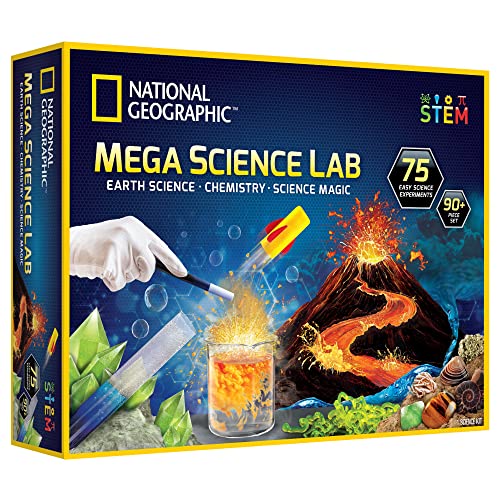
- Three kits in one: earth science, chemistry, and science magic
- 45 experiments plus 30 bonus activities with household items
- Includes real rock, mineral, and crystal specimens
Best For: Middle schoolers who want broad, hands-on variety
STEM Lab Pick
EUDAX Electricity and Magnetism Kit
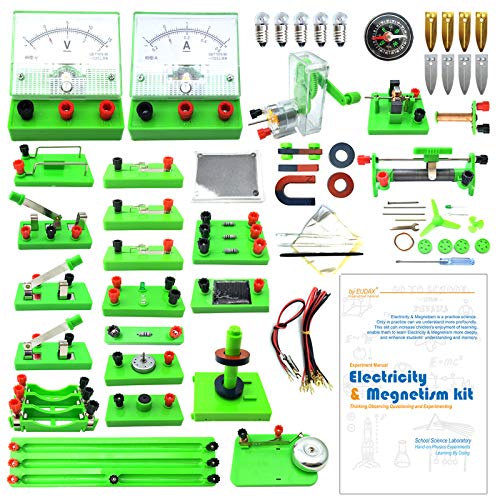
- Hands-on electricity and magnetism experiments
- Includes circuit, battery, and electromagnet projects
- Full-color manuals and storage bag included
Best For: Older middle schoolers and early high school students
Earth Science Pick
National Geographic Earth Science Kit

- Crystal growing, volcanoes, and water tornadoes
- Includes rock collection and two dig kits
- Full-color guide explains the science
Best For: Kids who like geology and discovery-based experiments
Engineering Pick
Thames & Kosmos Structural Engineering Kit

- Build 20 models about bridges and skyscrapers
- Teaches force, load, compression, and tension
- Includes 285+ pieces plus illustrated manual
Best For: Middle schoolers who like engineering and building models
Science Magic Kit

- 20 science magic tricks with included materials
- 85+ bonus experiments using household items
- Blends chemistry and physics with performance flair
Best For: Students who like interactive science and show-and-tell style experiments
Microscope Kit

- 100X-1200X magnification with LED light
- 58-piece set includes slides, specimens, and tools
- Metal body with carrying box for easy storage
Best For: Beginners who want a practical microscope kit for home or classroom use
Chemistry Model Kit

- 406 pieces for atoms, bonds, and hybridization models
- Color-coded parts help show molecular structure
- Portable box included for storage and transport
Best For: Students studying chemistry who learn best by building models
Chemistry starter kit

- 45 guided chemistry experiments
- Includes volcano, geyser, and rocket activities
- Kid-friendly illustrated instructions
Best For: Introductory chemistry practice with lots of guided, hands-on fun
Electronics project kit

- More than 1,200 buildable projects
- No soldering or tools needed
- Color-coded parts and guide simplify setup
Best For: Hands-on circuitry practice with easy, screen-free building
All-around science experiment kit

- 50+ guided science experiments
- Illustrated manuals explain the science
- ASTM safety standards and refund support
Best For: A varied, giftable science kit with clear instructions
Top Pick – National Geographic Mega Science Lab
If you’re comparing science kits for middle school students, this National Geographic Mega Science Lab stands out for sheer variety. It combines earth science, chemistry, and science magic in one box, plus a bonus guide with household-item experiments, so students can keep exploring without feeling boxed into just one topic.
Best For: Middle schoolers who want a broad, hands-on science kit with multiple experiment types in one package.
Pros:
- Includes three science kits in one: earth science, chemistry, and science magic
- Offers 45 core experiments plus 30 bonus activities using common household items
- Includes real rock, mineral, crystal specimens and other hands-on materials
- Clear fit for STEM learning, critical thinking, and observation skills
Cons:
- Broad focus may be less specialized than a dedicated chemistry or physics kit
- Some activities rely on household items for the bonus experiments
This is a strong all-around pick if you want one science kit that feels substantial and varied. It’s especially appealing for students who like switching between different kinds of experiments instead of sticking to a single subject.
STEM Lab Pick – EUDAX Electricity and Magnetism Kit
For science kits for middle school students that lean more technical, this EUDAX lab kit focuses on basic electricity and magnetism. It’s built around hands-on circuit and electromagnetism projects, making it a good choice for students who are ready to move beyond simple demonstrations and into guided lab-style learning.
Best For: Students in grades 9-11 who want a practical introduction to electricity, circuits, and magnetism.
Pros:
- Covers basic electricity and magnetism with a hands-on lab approach
- Includes projects like series circuits, parallel circuits, fruit battery, and electric bell making
- Comes with full-color manuals and a storage bag for organization
- Designed to help students learn, think, and explore through experiments
Cons:
- Batteries are not included and 3 AA batteries are needed
- Best suited to older students rather than beginners in the lower middle-school range
This kit makes the most sense if your student enjoys physics-style problem solving and building simple models. The project list is especially useful for learners who like seeing how electricity and magnetism work in real setups.
Earth Science Pick – National Geographic Earth Science Kit
This National Geographic set is a practical choice if you want science kits for middle school students centered on geology and earth science. It combines crystal growing, volcano experiments, rock collection activities, and dig kits, so students get a mix of discovery and guided experimentation.
Best For: Students who enjoy earth science projects, rock collecting, and hands-on discovery activities.
Pros:
- Includes more than 15 experiment activities and 100+ science activities overall
- Features volcano building, crystal growing, water tornadoes, and dig kits
- Full-color learning guide explains the science behind the experiments
- Designed for sharing with family, friends, or classmates
Cons:
- Focused mainly on earth sciences rather than multiple STEM subjects
- Some activities are better for guided use than independent open-ended play
If your student is curious about rocks, crystals, and geological processes, this kit keeps the experience engaging without getting overly complex. It’s a solid pick for learners who like seeing science connect directly to real-world earth science topics.
Engineering Pick – Thames & Kosmos Structural Engineering Kit
For science kits for middle school students that emphasize engineering, this Thames & Kosmos set is built around model structures and basic physics concepts. Students build 20 models while learning about force, load, compression, and tension, which makes it a strong option for learners who like construction-based challenges.
Best For: Students who want an engineering-focused kit with model building and structural science concepts.
Pros:
- Builds 20 different models tied to structural engineering concepts
- Teaches force, load, compression, and tension through hands-on builds
- Includes over 285 interchangeable building pieces
- Comes with a 36-page illustrated experiment manual and assembly guide
Cons:
- More specialized than a general science kit
- Listed skill level is intermediate, so it may be less approachable for younger or less experienced students
This kit is a smart pick for students who enjoy building and want to understand why structures stand or fail. It offers a more focused engineering experience than an all-purpose science box, which is exactly what some middle schoolers will prefer.
Science Magic Kit – Magic-Style STEM Experiments
If you want science kits for middle school students that feel more like a show than a worksheet, this National Geographic set is a strong pick. It mixes chemistry and physics with 20 guided magic tricks, then adds a bonus booklet with 85+ extra household-item experiments for students who want to keep going.
Best For: Students who enjoy hands-on experiments, performing tricks, and learning the science behind them.
Pros:
- Includes 20 science magic tricks with all needed materials
- Bonus guide adds 85+ more experiments using common household items
- Magic wand and white gloves make it fun to present
- Combines chemistry and physics in a highly engaging format
Cons:
- Some activities are presentation-based rather than deep lab work
- May be more appealing to students who like performance-style learning
Overall, this kit stands out if you want a giftable, highly engaging science option that keeps middle school learners active and curious. It is best when the goal is to spark interest first and build confidence through memorable experiments.
Microscope Kit – Beginner Lab with 58 Pieces
For science kits for middle school students who want to observe real specimens up close, this microscope kit offers a practical starter lab. It includes a metal-body microscope with LED light, 100X-1200X magnification, and a full set of slides and tools for immediate use.
Best For: Beginners who want a ready-to-use microscope kit for home, classroom, or guided STEM learning.
Pros:
- 100X-1200X magnification with LED light for close viewing
- 58-piece kit includes prepared specimens, blank slides, and lab tools
- Metal body and carrying box make it more durable and portable
- Designed for beginner STEM learning in home or classroom settings
Cons:
- Requires 2 AA batteries, which are not included
- Best suited to guided exploration rather than advanced microscopy
This is a solid choice if you want a hands-on observation kit that helps students learn microscope basics while exploring plants, insects, and everyday objects. It’s especially useful when you want a straightforward science tool instead of a novelty-style experiment set.
Chemistry Model Kit – 406-Piece Molecular Builder
If you’re comparing science kits for middle school students with a chemistry focus, this molecular model set is built for learning structures, bonds, and reactions through assembly. It includes 406 pieces, a wrench, color-coded atoms and bonds, and hybridization components for building a wide range of models.
Best For: Students who need a hands-on way to study molecular structures and chemistry concepts.
Pros:
- 406 pieces cover atoms, bonds, electronic cloud pieces, and hybridization parts
- Color coding helps distinguish atoms and bond types
- Portable storage box makes it easy to carry and organize
- Designed for middle school through college-level chemistry modeling
Cons:
- Focuses on chemistry models rather than broad experiment play
- Most useful when paired with a lesson or study topic
This kit makes abstract chemistry more concrete, which is exactly what many middle school students need when they start working with molecular structures. It is a strong pick for learners who prefer building and visualizing over traditional experiment kits.
Chemistry starter kit – 45-Experiment Starter Set
If you’re comparing science kits for middle school students, this National Geographic chemistry set is a hands-on option with a strong focus on chemical reactions and simple experiment follow-through. It includes 45 activities, with familiar favorites like a volcano eruption, geyser, and rocket launch, plus kid-friendly illustrated instructions.
Best For: Kids who want an introductory chemistry kit with lots of guided experiments and clear step-by-step support.
Pros:
- 45 experiments provide plenty of repeatable, hands-on science time.
- Includes classic reaction-based projects like a volcano, geyser, and rocket.
- Illustrated instructions help kids follow each step more easily.
- Focuses on chemistry fundamentals and safe experiment habits.
Cons:
- Geared toward younger kids within the 8+ range, so it may feel basic for some middle schoolers.
- Material is centered on chemistry rather than broader science topics.
This is a practical pick if you want a chemistry-focused kit that emphasizes easy setup and lots of activity variety. It works best as an entry-level STEM option rather than a highly advanced lab experience.
Electronics project kit – 66-Piece Circuit Builder
For science kits for middle school students who like building and tinkering, this electronics exploration kit offers a very large project count and a clear introduction to circuitry. The color-coded parts snap onto a plastic grid with no soldering or extra tools, making it easy to start building right away.
Best For: Kids who want a screen-free electronics kit with lots of quick-build projects and a low-friction setup.
Pros:
- Over 1,200 project combinations give the kit strong long-term value.
- No soldering or tools required for fast, frustration-free setup.
- Color-coded, numbered pieces make the circuit layout easier to follow.
- Includes a colorful manual and focuses on practical circuitry learning.
Cons:
- The product details skew broad in age range, so older middle schoolers may outgrow the simplest builds quickly.
- It is mainly electronics-focused rather than a general science kit.
This kit stands out if you want a hands-on electronics project set that encourages experimentation without much setup hassle. It is especially appealing for kids who enjoy building things and learning by doing.
All-around science experiment kit – 50+ Experiment Set
If you want science kits for middle school students that feel structured and varied, this Doctor Jupiter experiment set is built around 50+ guided projects with a strong STEM focus. It includes illustrated step-by-step manuals and covers activities like color-changing volcanoes and rainbow crystals.
Best For: Kids who want a well-rounded experiment kit with clear instructions, STEM learning, and gift-ready presentation.
Pros:
- 50+ experiments provide a broad range of hands-on science activities.
- Illustrated manuals explain each step and the science behind the activities.
- Includes materials for experiments such as baking soda, citric acid, and crystal powder.
- Made to ASTM F963-17 safety standards and backed by a refund guarantee.
Cons:
- It is an experiment kit rather than a deep-dive kit for one specific science subject.
- Some items are consumable, so repeat use depends on remaining materials.
This is a strong all-around choice if you want an engaging kit with enough variety to hold attention over multiple sessions. The instructions and STEM explanations make it especially useful for guided at-home learning.
How We Picked the Best Science Kits for Middle School Students
We looked for kits that offer real educational value, clear instructions, strong variety, and age-appropriate challenge for Science Kits for Middle School Students. We also favored options with repeatable experiments, durable parts, and subjects that support classroom topics like chemistry, physics, earth science, and engineering.
Quick Comparison
The best kit depends on what kind of learner you’re shopping for. Chemistry sets are ideal for reaction-based experiments, electronics kits suit kids who like building and troubleshooting, engineering kits reward problem-solving, and microscopy or geology kits work well for students who enjoy observation and discovery.
Key Buying Factors for Science Kits for Middle School Students
Subject Focus
Match the kit to the student’s interests. A hands-on builder may prefer circuits or structures, while a curious observer may get more from crystals, rocks, or microscope-based exploration.
Challenge Level
Middle schoolers need enough complexity to stay engaged, but not so much that the kit becomes frustrating. Look for clear steps, age guidance, and experiments that can be completed independently or with light supervision.
Experiment Count and Reusability
More experiments can mean longer use, but only if the activities are meaningful. Reusable components, refillable materials, and modular parts add extra value because they extend play and learning beyond one weekend.
Safety and Cleanup
For chemistry-heavy kits, review included materials and supervision needs. Easy cleanup, sturdy storage, and a manageable number of small parts are especially important for at-home use.
Educational Depth
The best Science Kits for Middle School Students do more than entertain. They should connect activities to core concepts such as force, electricity, matter, motion, reaction, and scientific observation.
Who Should Buy Which Science Kits for Middle School Students?
Choose chemistry or magic-style science kits for students who like dramatic reactions and fast payoff. Pick electronics or physics kits for kids who enjoy building systems and testing how things work. Engineering kits are best for problem-solvers who like design challenges, while microscope, earth science, and molecule kits suit students who prefer observation, classification, and deeper science concepts.
If you want a gift that feels both fun and practical, look for a kit that matches the child’s favorite subject and offers enough variety to stay interesting over time. That combination makes learning feel less like homework and more like discovery.