Hands-on anatomy toys can make it much easier for children to understand bones, joints, and how the body fits together. The best skeletal system models for kids turn abstract science lessons into something visual, tactile, and memorable.
Whether you want a classroom aid, a homeschool resource, or a gift that encourages STEM learning, the right model should balance accuracy, durability, age fit, and play value.
Best 10 Skeletal System Models for Kids Picks for 2026
Glow-in-the-Dark STEM Anatomy Kit
GobiDex Human Body Skeleton Model Kit

- 40-piece anatomy set with bones, muscles, and organs
- Glow-in-the-dark bones boost engagement
- Easy to assemble and comes with an illustrated manual
Best For: Kids 8+ who want an interactive STEM anatomy kit
Movable Display Skeleton
NEW HORIZON 17.7" Human Skeleton Model

- Movable arms, legs, and flexible joints for basic study
- Removable skull with openable chin for internal viewing
- Includes base and bracket for display support
Best For: Simple anatomy study and display with movable joints
Glow Bones Learning Kit
National Geographic Human Body Model

- 32-piece body kit with glow-in-the-dark bones
- Includes forceps, ID chart, and Learning Guide
- Designed for hands-on anatomy learning for ages 8+
Best For: Kids who want a guided human body anatomy kit
Articulated Study Skeleton

- Movable joints for shoulders, elbows, wrists, knees, and ankles
- Removable skull with spring-connected chin
- Includes display base, support bar, and study poster
Best For: Kids and beginners who want a compact study skeleton
Poseable Anatomy Pick
14" Poseable Human Anatomy Model
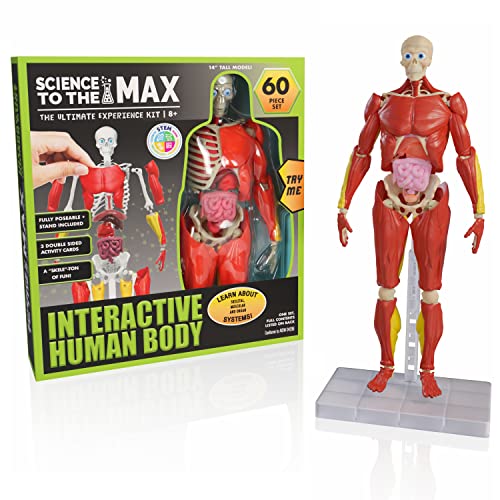
- 60-piece body model with bones, muscles, and organs
- Fully articulated and adjustable for hands-on learning
- Includes illustrated instruction cards and stand
Best For: Kids 8+ who want an interactive anatomy model
Compact Skeleton Choice

- Realistically detailed mini skeleton for study
- Movable arms and legs with removable skull cap
- Compact base fits small desks or shelves
Best For: Portable, entry-level skeleton study and display
Hands-On Anatomy Kit
Human Body Experiments Science Kit

- Includes organ, muscle, lung, vessel, and x-ray activities
- Covers anatomy with a 32-page picture book
- Gift-boxed STEM kit for guided learning
Best For: Kids 5+ who enjoy experiments and body science
Mini Desktop Anatomy Model

- 7.8-inch compact skeleton for desks and tables
- Detachable skull and flexible joints
- Stable base with easy-to-clean plastic build
Best For: Basic anatomy learning on a small desk or classroom display
Squishy Body Learning Kit

- 30 removable body parts with several bones included
- Squishy, tactile design for interactive learning
- Guide and organizer chart support matching and rebuilding
Best For: Younger kids who learn anatomy through touch and repetition
Magnetic Layered Anatomy Model

- Large magnetic skeleton base with seven anatomy layers
- Color-coded pieces and reusable labels
- Info sheets and QR codes add extra learning
Best For: Families and classrooms wanting a larger multi-system anatomy model
Glow-in-the-Dark STEM Anatomy Kit – GobiDex Human Body Skeleton Model Kit
If you want a hands-on option in skeletal system models for kids, this GobiDex kit mixes bones, muscles, and organs into one interactive build. The glow-in-the-dark bones and colorful manual make it a practical pick for kids who learn best by seeing and assembling the body piece by piece.
Best For: Kids ages 8+ who want a glow-in-the-dark anatomy model with broader STEM learning.
Pros:
- 40-piece model includes bones, muscles, and organs for fuller anatomy exploration.
- Glow-in-the-dark bones add visual appeal and make the model more engaging.
- Easy to assemble, disassemble, and reuse at home or in class.
- Comes with a colorful illustrated science manual for guided learning.
Cons:
- More of a full anatomy kit than a skeleton-only model.
- Best suited to ages 8 and up, so it may be too advanced for younger kids.
The GobiDex kit stands out if you want an educational model that goes beyond the bones alone. It combines play value with structured learning, making it a strong choice for curious kids and beginner science learners.
Movable Display Skeleton – NEW HORIZON 17.7" Human Skeleton Model
This NEW HORIZON model is a compact choice for skeletal system models for kids who want a simple, hands-on look at the human skeleton. Its movable joints, removable skull, and openable head help make basic bone structure easier to study, especially for display or introductory anatomy lessons.
Best For: Simple anatomy study, display, and older kids or learners who want movable joints.
Pros:
- 17.7-inch skeleton includes movable arms, legs, and flexible joints.
- Removable skull with a chin that opens for internal observation.
- Made from non-toxic PVC material and designed to be easy to clean.
- Includes a base and bracket for support during display or study.
Cons:
- Product details list the age range as adult, so it may not be a true kids-first model.
- Cannot maintain a fixed posture without the included support.
For families or classrooms that want an affordable skeleton model with articulation, this one delivers the basics well. It’s more of a study and display tool than a toy, but the flexible joints add useful learning value.
Glow Bones Learning Kit – National Geographic Human Body Model
Among skeletal system models for kids, this National Geographic kit is a strong pick for hands-on learning because it combines glow-in-the-dark bones with removable organs and muscles. The included forceps and ID chart make it easier for kids to explore anatomy in a structured way at home or in the classroom.
Best For: Kids 8+ who want a detailed human body model with glowing bones and guided identification tools.
Pros:
- Includes 18 glow-in-the-dark bones plus 9 squishy organs and arm muscles.
- Forceps and an identification chart support interactive learning.
- Comes with a detailed Learning Guide full of body facts.
- Built as a 32-piece kit with a display stand and body shell.
Cons:
- It is a human body kit, not a skeleton-only model.
- The 9-inch size is compact, which may feel small for some displays.
This kit is a good balance of fun and education if you want a model that teaches more than just bones. The glow effect and removable parts make it especially appealing for kids who like interactive science activities.
Articulated Study Skeleton – NLShan Human Skeleton Model
If you’re comparing skeletal system models for kids that can also support more serious study, this NLShan skeleton model offers a compact articulated design with a display stand. The movable joints, removable skull, and included poster make it a practical choice for learning bone structure and basic anatomy.
Best For: Kids, students, and beginners who want an articulated skeleton model for study and display.
Pros:
- Articulated joints move at the shoulders, elbows, wrists, knees, and ankles.
- Removable skull and spring-connected chin let users inspect the head more closely.
- Includes a stable base and metal support bar for display.
- Made from non-toxic PVC and comes with a professional poster.
Cons:
- Product details do not list a kid-specific age range.
- At 17.7 inches, it is a mini model rather than a full-size teaching skeleton.
This model works well when you want an anatomy tool that is small, movable, and easy to keep on a desk or shelf. It leans more educational than playful, but it still has enough flexibility to keep younger learners interested.
Poseable Anatomy Pick – 14" Poseable Human Anatomy Model
If you want skeletal system models for kids that go beyond a simple bone chart, this 14-inch anatomy figure gives children a hands-on way to see bones, muscles, and organs together. It is built for assembly, disassembly, and posing, so it works well for kids who learn best by touching and building.
Best For: Kids ages 8+ who want a poseable, multi-part anatomy model for STEM learning.
Pros:
- 60-piece body model includes bones, muscles, removable organs, and a stand.
- Fully articulated and posable, which makes anatomy more interactive.
- Includes illustrated instruction cards for guided learning.
- Designed for educational use, including homeschooling and science study.
Cons:
- More complex than a basic skeleton-only model.
- Requires assembly and repeated take-apart play.
- Best suited to older kids rather than very young learners.
This is a strong pick if you want a fuller anatomy experience instead of just skeletal basics. It combines the skeleton with major body systems, making it useful for kids who are ready to explore how the body fits together.
Compact Skeleton Choice – 17" Mini Human Skeleton Model
For shoppers comparing skeletal system models for kids, this compact 17.7-inch skeleton is a straightforward study option with a realistic look and movable limbs. It focuses on the core anatomy of the spine, ribs, skull, and jaw, making it a practical entry-level model for observation and basic learning.
Best For: Kids or students who need a simple, portable skeleton model for study and display.
Pros:
- Realistically detailed miniature skeleton design.
- Movable arms and legs for basic positioning.
- Compact size with a 4.75″ x 4.75″ base for smaller spaces.
- Entry-level model with easy removal and installation.
Cons:
- Basic anatomical detail only, with no advanced features.
- Smaller than classroom display models.
- Not as interactive as multi-part anatomy kits.
This model makes sense when you want a simple skeleton that is easy to place on a desk and easy to handle. It is best for learners who need a basic visual reference rather than a full anatomy experience.
Hands-On Anatomy Kit – Human Body Experiments Science Kit
If you’re shopping for skeletal system models for kids with extra activities built in, this science kit turns anatomy into a hands-on experiment session. It includes a skeleton component along with organ, muscle, vessel, lung, and x-ray activities, so kids can explore the body through play as well as model building.
Best For: Kids ages 5+ who learn best through experiments, picture books, and guided activities.
Pros:
- Includes human body experiments covering organs, muscles, vessels, and lungs.
- Comes with a 32-page human body picture book and illustrated directions.
- Features broken-bone x-ray activities and animal x-ray cards.
- Gift-box packaging makes it easy to give for birthdays or holidays.
Cons:
- More of a mixed anatomy experiment kit than a single skeleton model.
- Plastic materials may feel less durable than display-grade models.
- Best for guided play rather than standalone anatomy reference.
This kit is a good fit if you want a broad anatomy learning set instead of a basic bone model. The mix of experiments and visuals helps keep kids engaged while they learn body parts and functions.
Mini Desktop Anatomy Model – 7.8" Movable Skeleton Figure
If you’re shopping for skeletal system models for kids, this mini human skeleton is a simple, desk-friendly option for early anatomy learning. At 7.8 inches tall, it works well on a learning table, classroom desk, or office display, and the movable joints make it easier to point out basic bone structure and motion.
Best For: Kids who want a small, easy-to-display skeleton model for basic anatomy awareness and hands-on teaching.
Pros:
- Detachable skull and flexible joints for interactive learning
- Compact 7.8-inch size fits neatly on desks and tables
- Made from smooth plastic that is easy to clean
- Stable base and bracket help keep it upright during display
Cons:
- Very small size may not suit children who want a larger classroom model
- Focuses on the skeleton only, not the full body systems
This is a practical pick for introducing bones, joints, and basic anatomy in a simple format. It is best viewed as a compact teaching tool rather than a highly detailed display model.
Squishy Body Learning Kit – 30-Piece Hands-On Anatomy Set
For families looking at skeletal system models for kids, this squishy body kit goes beyond bones and adds organs, muscles, and other body parts in a very hands-on format. It includes 30 removable parts, a numbered organizer, and a learning guide, making it a strong choice for kids who learn best by touching, matching, and rebuilding.
Best For: Kids ages 4-8 who want a playful, tactile way to explore body parts, bones, and basic STEM concepts.
Pros:
- 30 removable parts, including bones like the humerus, femur, and clavicle
- Squishy, stretchable design adds a tactile learning experience
- Includes a guide and organizer chart for matching and review
- Hands-on format encourages repeated rebuild-and-learn play
Cons:
- More of a body systems toy than a dedicated skeleton model
- Best suited to younger kids, so older students may want more detail
This kit is a fun option if you want anatomy learning to feel playful and interactive. It gives kids a broad look at the human body while still including key skeletal pieces.
Magnetic Layered Anatomy Model – Large 7-Layer Body Puzzle
If you want skeletal system models for kids that grow into broader anatomy learning, this magnetic body puzzle offers a large skeleton base with seven layered systems to build on top. The bottom-to-top assembly makes the structure easy to understand, while the color-coded pieces and info sheets support guided learning at home or in the classroom.
Best For: Kids ages 5+ who want a large, layered anatomy model that teaches the skeleton plus major body systems.
Pros:
- Large magnetic skeleton base creates a clear starting point
- Seven layered systems cover skeleton, muscles, organs, nerves, and more
- Color-coded pieces are easy for kids to handle
- Includes info sheets, labels, and QR codes for extra learning
Cons:
- Bulkier than a simple skeleton figure, so it needs more space
- May be more than some very young kids need for first anatomy lessons
This is the most complete learning option in the group if you want anatomy to build from bones outward. It works especially well for families or teachers who want a model that can be used across multiple ages and skill levels.
How We Picked These Skeletal System Models for Kids
We focused on models that are age-appropriate, easy to assemble or use, and helpful for teaching real anatomy concepts. Strong picks offer a good mix of visual accuracy, sturdy parts, and learning features such as labels, movable joints, magnetic assembly, or included activity tools. We also favored kits that can support both guided lessons and independent exploration.
Quick Comparison: What Matters Most
When comparing Skeletal System Models for Kids, think about how the model will be used. Smaller figures are often better for desks, shelves, and quick demonstrations, while larger kits are better for repeated study and parent-led teaching. Some sets focus mainly on the skeleton, while others add organs, muscles, or body systems for a broader anatomy lesson. The best choice depends on whether you want simple bone identification or a fuller human body learning experience.
Key Buying Factors for Skeletal System Models for Kids
Age and Complexity
Choose a model that matches the child’s reading level and attention span. Younger kids usually do better with simpler, hands-on models, while older children can handle more detailed anatomy and assembly steps.
Size and Displayability
Consider where the model will live after playtime. A compact stand model is easy to store, while a larger figure can be easier to study and more effective for group learning.
Movable Parts and Assembly
Movable arms, legs, and joints help kids understand how the body moves. Magnetic or snap-together models can also improve engagement, but too many tiny parts may be frustrating for younger users.
Educational Extras
Look for ID charts, labels, activity guides, or added body systems if you want a more complete lesson. These features can help reinforce vocabulary and make the model more useful for schoolwork.
Durability and Safety
Because these toys may be handled frequently, sturdy materials matter. Smooth edges, secure connectors, and age-appropriate part sizes are especially important for younger learners.
Who Should Buy Which Skeletal System Models for Kids?
For younger children or early STEM exploration, pick simpler, interactive anatomy toys that emphasize curiosity and basic body recognition. For homeschoolers and classroom use, choose larger or more detailed Skeletal System Models for Kids that support repeated study and labeling. If you want a gift or display piece, a glow-in-the-dark or mini skeleton model can be both fun and educational. For older kids who are ready for deeper learning, anatomy sets with multiple body systems offer the most value and long-term use.
In short, the best model is the one that matches the child’s age, your learning goals, and how hands-on you want the experience to be.