Choosing the right enclosure can turn an old SSD into fast portable storage, a simple backup drive, or a reliable transfer tool for a Windows PC.
Below, we focus on the best ssd enclosures for windows across NVMe and SATA use cases, with an emphasis on speed, ease of setup, and broad drive compatibility.
Best 10 SSD Enclosures for Windows Picks for 2026
Tool-Free Versatility
SABRENT 10Gbps M.2 NVMe & SATA Enclosure
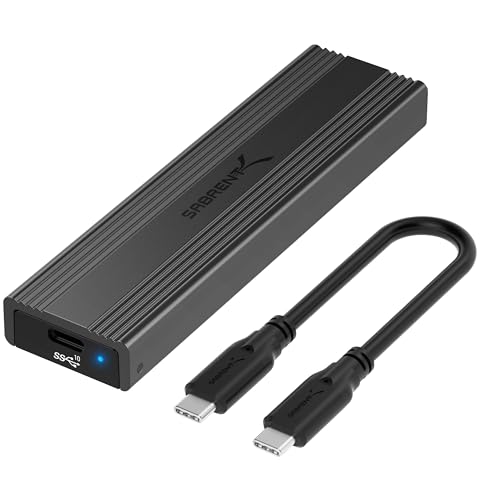
- Works with both NVMe and SATA M.2 SSDs
- Tool-free, bus-powered installation
- Supports Windows 7 or later
Best For: Users who want one enclosure for multiple M.2 drive types
NVMe-Only Portability
UGREEN 10Gbps M.2 NVMe Enclosure

- Supports NVMe M.2 drives up to 8TB
- 10Gbps USB 3.2 Gen 2 connection
- Aluminum case with thermal pad
Best For: Windows users who only need NVMe support in a slim enclosure
Simple SATA Upgrade
SABRENT 2.5in SATA Tool-Free Enclosure
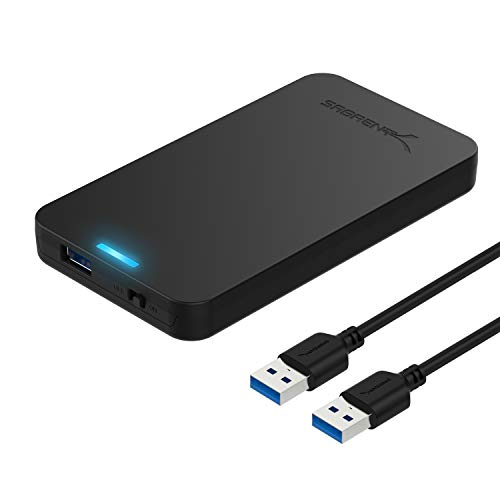
- Fits standard 2.5-inch SATA SSDs
- Tool-free, plug-and-play design
- Supports UASP SATA III and Windows
Best For: People repurposing a 2.5-inch SATA SSD for Windows
Easy NVMe Install
UGREEN USB-C 10Gbps Tool-Free Enclosure
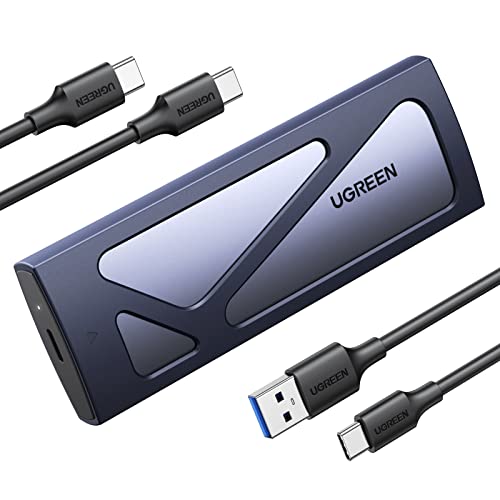
- Tool-free installation with secure buckle design
- Includes USB-C and USB-A cables
- Supports NVMe M.2 drives up to 8TB
Best For: Windows users who want easy NVMe access with flexible cable support
Tool-Free 2.5-Inch Pick
iDsonix 2.5 inch SATA Enclosure

- Tool-free setup for 2.5-inch SATA SSDs/HDDs
- USB-C 3.1 with UASP support and 6Gbps spec
- Windows-compatible with built-in drive protection
Best For: Windows users who want an easy 2.5-inch SATA enclosure
Dual-Protocol M.2 Choice

- Works with both NVMe PCIe and SATA M.2 SSDs
- USB 3.2 Gen2 10Gbps with UASP and Trim support
- Includes USB-C and USB-A cables plus thermal pads
Best For: Windows users who want one enclosure for both NVMe and SATA M.2 drives
Fast NVMe Upgrade

- Built only for PCIe NVMe M.2 SSDs up to 8TB
- USB 3.1 Gen2 10Gbps with UASP support
- Includes USB-C and USB-A cables for flexibility
Best For: Windows users with a PCIe NVMe SSD who want a compact fast enclosure
FIDECO

- Supports M.2 NVMe drives only
- Tool-free sandwich design
- Works with Windows, Mac, and Linux
Best For: Windows users who need a simple NVMe-only enclosure
VCOM

- Supports NVMe and M.2 SATA drives
- Up to 10Gbps for NVMe, 6Gbps for SATA
- Includes cooling-focused metal shell
Best For: Windows users who need one enclosure for both NVMe and SATA drives
dockteck

- Tool-free sliding design
- Supports NVMe and SATA M.2 SSDs
- Compact and easy to travel with
Best For: Windows users who want a slim, flexible enclosure for mixed M.2 drives
Tool-Free Versatility – SABRENT 10Gbps M.2 NVMe & SATA Enclosure
If you want one of the most flexible ssd enclosures for windows, this SABRENT model is a strong pick because it supports both M.2 NVMe and M.2 SATA drives in 2242, 2260, and 2280 sizes. It is tool-free, bus powered, and built for simple plug-and-play use with Windows 7 or later, making it a practical enclosure for everyday storage expansion or drive cloning workflows.
Best For: Windows users who need a single enclosure that works with both NVMe and SATA M.2 drives.
Pros:
- Supports both M.2 NVMe and M.2 SATA drives
- 100% tool-free installation and removal
- 10Gbps USB 3.2 Type-C with bus power
- Ultra-slim aluminum build with thermal pad
Cons:
- Does not fit drives with pre-installed heatsinks
- Not compatible with 2.5in SATA or mSATA drives
This is the kind of enclosure that makes sense if you switch drives often or want one compact case for multiple M.2 formats. The tradeoff is that heatsink-equipped SSDs are out, so it is best suited to bare drives only.
NVMe-Only Portability – UGREEN 10Gbps M.2 NVMe Enclosure
For buyers comparing ssd enclosures for windows, this UGREEN NVMe case keeps the focus on speed and compatibility with M.2 NVMe drives only. It supports M-Key and B+M-Key NVMe SSDs in 2230, 2242, 2260, and 2280 sizes, and it is designed for Windows along with Mac, Linux, Android, and iOS. The aluminum shell and thermal pad are there to help with heat management during high-speed transfers.
Best For: Windows users who need a compact enclosure for an NVMe drive only.
Pros:
- 10Gbps USB 3.2 Gen 2 performance
- Supports up to 8TB NVMe SSDs
- RTL9210 chip with over-current and short-circuit protection
- Aluminum body with thermal pad for cooling
Cons:
- Does not support SATA NGFF or mSATA SSDs
- Not compatible with SSDs that have heatsinks
This enclosure is a good fit if your priority is a simple, portable NVMe-to-USB solution rather than broad drive compatibility. Just make sure your drive is an NVMe model and that your cable and port can actually support 10Gbps speeds.
Simple SATA Upgrade – SABRENT 2.5in SATA Tool-Free Enclosure
If you are looking at ssd enclosures for windows and your drive is a 2.5-inch SATA SSD, this SABRENT enclosure is a straightforward pick. It is optimized for SSDs, supports standard 2.5-inch SATA and SATA II drives, and offers plug-and-play use with Windows without needing drivers. The USB 3.0 connection provides up to 5Gbps when used with a compatible port.
Best For: Windows users repurposing a 2.5-inch SATA SSD for external storage.
Pros:
- Tool-free installation
- Optimized for 2.5-inch SATA SSDs
- UASP support for SATA III performance
- Plug and play with Windows support
Cons:
- Only for 2.5-inch SATA drives
- Plastic enclosure instead of metal
- USB 3.0 speed ceiling is lower than 10Gbps options
This is the more traditional choice in the group: less flexible than M.2 enclosures, but very easy to use if you already have a spare 2.5-inch SATA SSD. It is a practical budget-friendly option when compatibility matters more than cutting-edge speed.
Easy NVMe Install – UGREEN USB-C 10Gbps Tool-Free Enclosure
This UGREEN model is another strong option in ssd enclosures for windows if you want tool-free NVMe storage with a simple setup. It supports M-Key and B+M-Key NVMe SSDs in 2230, 2242, 2260, and 2280 sizes, works with Windows and other major platforms, and includes both USB-C to USB-C and USB-C to USB-A cables. The buckle-style design is meant to keep the drive secure while making installation quick.
Best For: Windows users who want a tool-free NVMe enclosure with both USB-C and USB-A cable options.
Pros:
- Tool-free SSD installation
- 10Gbps USB 3.2 Gen 2 support
- Includes USB-C to USB-C and USB-C to USB-A cables
- RTL9210 chip with UASP and Trim support
Cons:
- Does not support SATA NGFF or mSATA SSDs
- Not compatible with SSDs that have heatsinks
This enclosure is especially useful if you want a quick setup and flexible cable choices for different Windows machines. As with other NVMe-only cases, the main limitation is that it will not work with SATA-based M.2 drives.
Tool-Free 2.5-Inch Pick – iDsonix 2.5 inch SATA Enclosure
If you need one of the simplest ssd enclosures for windows, this iDsonix model is built around quick setup and broad compatibility for 2.5-inch SATA drives. It supports 7mm and 9.5mm SSDs/HDDs, works with Windows, and uses USB-C 3.1 with UASP support for faster transfers when your host device also supports it.
Best For: Windows users who want a tool-free 2.5-inch SATA enclosure for easy drive swaps and everyday backup use.
Pros:
- Tool-free installation with plug-and-play use and no drivers needed
- Supports 7mm/9.5mm 2.5-inch SATA SSDs and HDDs up to 4TB
- USB-C 3.1 interface with UASP support for faster transfer performance
- Includes over-current, over-voltage, and overheating protection
Cons:
- Only for 2.5-inch SATA drives, not M.2 NVMe SSDs
- UASP speed gains depend on both devices supporting the protocol
- Plastic enclosure is practical, but not as premium as aluminum options
This is a straightforward pick if you want an enclosure that is easy to install, widely compatible, and focused on dependable Windows use rather than specialty features.
Dual-Protocol M.2 Choice – SSK NVMe SATA M.2 Enclosure
For buyers comparing ssd enclosures for windows, the SSK option stands out because it supports both NVMe PCIe and SATA M.2 drives in one compact case. It handles 2242, 2260, and 2280 sizes, includes USB-C and USB-A cables, and is designed for plug-and-play use with Windows, Linux, and Mac.
Best For: Users who want one enclosure that can work with either NVMe or SATA M.2 drives on Windows.
Pros:
- Supports both NVMe PCIe and SATA M.2 SSDs
- USB 3.2 Gen2 10Gbps interface with UASP and Trim support
- Includes both USB-C and USB-A cables plus thermal pads and screwdriver
- Aluminum shell helps with portability and heat dissipation
Cons:
- Not compatible with M.2 PCIe AHCI, mSATA, or non-M.2 drives
- SSD must be formatted before use
- Advertised performance depends on using a matching high-speed host connection
This enclosure is a strong fit if you want flexibility first, since it can handle either major M.2 SSD type while keeping the setup simple for Windows-based workflows.
Fast NVMe Upgrade – ORICO M.2 NVMe Enclosure
If your priority is speed, this ORICO pick is a focused option among ssd enclosures for windows because it is designed only for PCIe NVMe M.2 drives. With USB 3.1 Gen 2, UASP support, and included USB-C to C and USB-C to A cables, it is built for quick external access to 2230 through 2280 drives.
Best For: Windows users with a PCIe NVMe M.2 SSD who want a compact 10Gbps enclosure.
Pros:
- Supports PCIe NVMe M.2 SSDs up to 8TB
- USB 3.1 Gen 2 10Gbps with UASP support
- Includes USB-C to USB-C and USB-C to USB-A cables
- Compact aluminum-and-plastic design with good heat dissipation
Cons:
- Does not support M.2 SATA drives
- Not compatible with M.2 PCIe AHCI SSDs
- Drives need to be formatted before first use
This is the right call when you already know you have an NVMe drive and want a small, fast enclosure that keeps the setup simple for Windows use.
FIDECO – Tool-Free 10Gbps NVMe
If you’re comparing SSD enclosures for Windows and want a simple NVMe-only option, the FIDECO enclosure focuses on fast USB 3.2 Gen 2 performance and tool-free setup. It supports M.2 NVMe drives in 2230, 2242, 2260, and 2280 sizes, but it does not work with M.2 SATA drives.
Best For: Windows users with M.2 NVMe drives who want a compact, no-tools enclosure for quick external storage.
Pros:
- USB 3.2 Gen 2 interface with up to 10Gbps theoretical speed
- Tool-free sandwich-style design makes drive swaps easy
- Supports UASP and TRIM
- Compatible with Windows, Mac OS, and Linux
Cons:
- Does not support M.2 SATA SSDs
- New SSDs may need initialization before recognition
The FIDECO is a practical pick if you already know you need NVMe support only and want a portable enclosure that keeps setup simple. Its cooling-friendly design and included USB-C cable with USB-A adapter make it easy to use across different Windows systems.
VCOM – Dual-Protocol M.2 10Gbps
Among SSD enclosures for Windows, the VCOM model stands out if you need support for both NVMe and SATA M.2 drives. It handles M.2 NVMe M Key and M+B Key drives, plus M.2 SATA M+B Key drives, with up to 10Gbps for NVMe and 6Gbps for SATA.
Best For: Windows users who want one enclosure that can work with both NVMe and SATA M.2 SSDs.
Pros:
- Supports both NVMe and SATA protocols
- USB 3.2 Gen 2 with up to 10Gbps for NVMe
- Includes UASP and TRIM support
- Metal/aluminum build with thermal pad for cooling
Cons:
- SATA speeds top out at 6Gbps
- Only supports one drive at a time
This is a versatile choice if your Windows setup includes mixed M.2 drive types and you want fewer compatibility headaches. The included USB-A and USB-C cables, plus wide OS support, make it a flexible everyday enclosure.
Dockteck – Tool-Free Dual-Protocol Slim
If you want SSD enclosures for Windows that are easy to carry and easy to open, the dockteck enclosure is built around tool-free access and broad M.2 support. It works with both NVMe and SATA protocols, supports 2230 through 2280 sizes, and is rated for up to 4TB drives.
Best For: Windows users who want a slim, travel-friendly enclosure for both NVMe and SATA M.2 SSDs.
Pros:
- Tool-free sliding end-cap design
- USB 3.2 Gen 2 with up to 10Gbps, plus 6Gbps for SATA
- Supports NVMe and SATA M.2 drives up to 4TB
- Includes USB-C to C and USB-A to C cables
Cons:
- Auto-sleep kicks in after 15 minutes of inactivity
- Drive not included
The dockteck enclosure is a strong all-around option if you want simple installation, broad compatibility, and a compact form factor. Its support for Windows, Android, and even game consoles makes it a flexible pick for mixed-device use.
How We Picked the Best SSD Enclosures for Windows
For SSD Enclosures for Windows, the most important factors were real-world compatibility, connection speed, thermal design, and how easy each enclosure is to install and use. We favored models that support common M.2 sizes, work cleanly with Windows laptops and desktops, and offer tool-free or low-fuss assembly.
We also looked at whether a product is built for NVMe, SATA, or both, since that determines what kind of drive you can reuse. A good enclosure should make that distinction clear and avoid confusing setup steps.
Quick Comparison
If you want the fastest option for modern SSDs, choose a USB 3.2 Gen 2 NVMe enclosure with 10Gbps support. If you are repurposing a 2.5-inch SATA SSD from an older laptop, a SATA enclosure is the better value. For mixed drive collections, a dual-protocol enclosure can be convenient, but only if you verify support before buying.
Key Buying Factors for SSD Enclosures for Windows
Drive Type and Form Factor
Match the enclosure to your drive first. M.2 NVMe drives need a PCIe/NVMe-compatible enclosure, while M.2 SATA drives and 2.5-inch SATA SSDs use different electronics. Check supported lengths such as 2230, 2242, 2260, and 2280 before you order.
USB Speed and Real-World Performance
10Gbps USB 3.2 Gen 2 is the sweet spot for most Windows users because it offers strong performance without requiring a premium setup. If your PC only has USB 3.0 or USB 3.2 Gen 1, the enclosure will still work, but transfer speeds will be capped by the slower port.
Thermals and Build Quality
Fast SSDs can get warm in compact cases. Aluminum housings, thermal pads, and sensible airflow matter if you plan long file transfers, backups, or game installs. For frequent use, a sturdier enclosure is usually worth the extra cost.
Tool-Free Convenience
Tool-free designs are especially useful for users who swap drives often or want a quick way to clone or migrate data. Just make sure the latch or slide mechanism still feels secure enough for travel.
Who Should Buy Which SSD Enclosures for Windows?
If you want the best all-around choice for Windows, pick a 10Gbps NVMe enclosure with wide M.2 support and a durable shell. If your goal is inexpensive storage expansion, a 2.5-inch SATA enclosure is the simplest path. Power users and IT-minded buyers should look for enclosures that support multiple drive sizes, offer stable USB-C connectivity, and make drive swaps easy.
In short, the best enclosure depends on the SSD you already own and how you plan to use it. Match the interface, confirm the size support, and choose the speed tier that fits your Windows system.