Getting started with astrophotography is much easier when your telescope does more of the heavy lifting for you. The best beginner-friendly models combine stable optics, simple setup, and helpful tracking or app guidance.
Whether you want crisp lunar shots, brighter deep-sky targets, or a fully automated smart scope, this roundup focuses on practical choices that reduce frustration and speed up your first successful images.
Best 10 Telescopes for Astrophotography Beginners Picks for 2026
Smart Imaging Starter
ZWO Seestar S30 Pro Smart Telescope
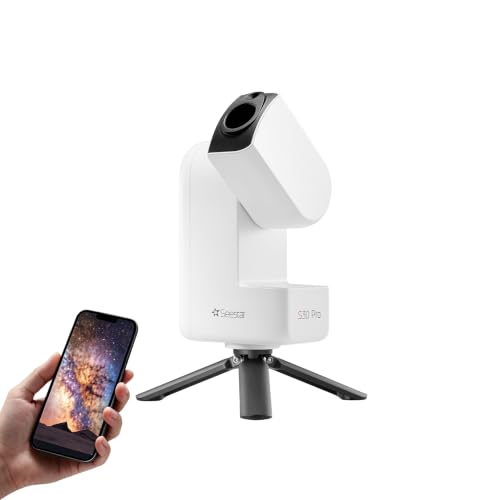
- App-controlled GoTo and tracking
- 4K dual-camera imaging system
- One-tap processing with AI help
Best For: Beginners who want simple smart astrophotography
Classic Visual Pick

- 90mm aperture with 800mm focal length
- Includes phone adapter and travel bag
- Quick setup for beginner astronomy
Best For: Beginners wanting a simple refractor with phone photography
Ultra-Portable Smart Choice

- 3 lb portable smart telescope
- 4K auto-tracking with app control
- Cloud processing for quick results
Best For: Travelers and beginners who want lightweight smart imaging
Manual Deep-Sky Starter
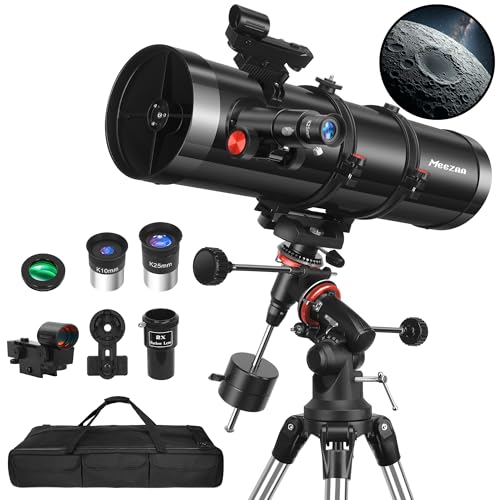
- 150mm aperture for brighter views
- Equatorial mount with slow-motion controls
- Includes phone adapter and moon filter
Best For: Beginners who want a large manual reflector
Best for Easy Setup
Dwarf Mini Smart Telescope for Beginners

- 1.85 lb portable smart telescope
- App control with built-in sky atlas
- EQ mode, 90-second exposure, processing
Best For: Beginners who want a lightweight, app-driven imaging telescope
Serious Refractor Upgrade

- 102mm f/7 ED refractor optics
- Dual-speed focuser and 360° rotator
- OTA-only setup for growing astrophotographers
Best For: Beginners building a more traditional imaging rig
Classic GoTo Starter
Celestron NexStar 5SE for Imaging

- Computerized GoTo mount with SkyAlign
- 5-inch Schmidt-Cassegrain optics
- Built-in wedge for entry-level astroimaging
Best For: Beginners who want automated finding and tracking with imaging potential
Smart Astro Camera Scope
4K Smart Telescope with Dual Screens
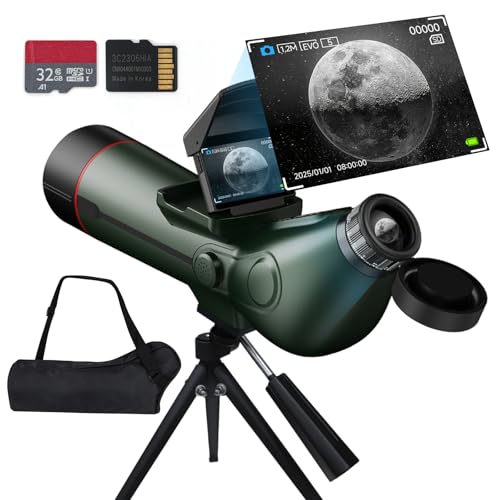
- 80mm aperture with 300mm focal length
- Built-in 4K capture and one-touch photo/video modes
- Dual screens, auto-focus, and 6-hour battery life
Best For: Beginners who want easy moon viewing and simple astrophotography
Smartphone Sky Guide
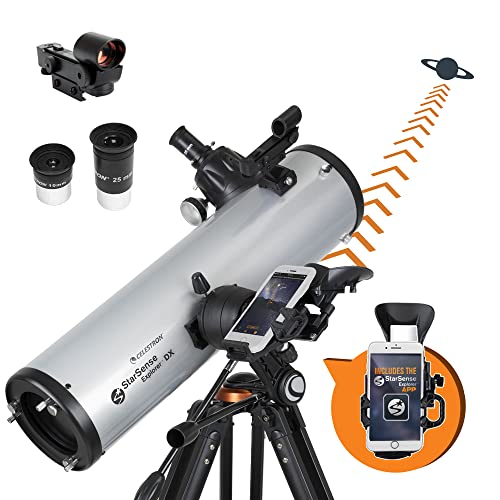
- Phone-guided target finding with StarSense app
- 130mm reflector for Moon, planets, and bright deep-sky views
- Dual-axis slow-motion controls for smoother tracking
Best For: Beginners who want guided observing with a smartphone
Dual-Screen Starter Scope
4K Smart Telescope with 64GB Card

- 3-inch external screen for shared viewing
- 4K imaging with one-touch photo and video modes
- Auto-focus plus included 64GB memory card
Best For: Kids and beginners who want an easy smart telescope with storage
Smart Imaging Starter – ZWO Seestar S30 Pro Smart Telescope
If you want one of the easiest telescopes for astrophotography beginners, the Seestar S30 Pro is built to make the first steps feel simple. Connect the app, let the telescope handle GoTo and tracking, and start capturing the night sky with one-tap imaging modes and built-in processing.
Best For: Beginners who want a fully app-controlled smart telescope for deep-sky, Milky Way, and wide-field imaging without a complicated setup.
Pros:
- Automatic GoTo targeting and tracking help you find objects without manual star-hopping.
- 4K dual-camera design supports both telephoto deep-sky shots and wide Milky Way scenes.
- One-tap imaging modes, noise reduction, and AI scene recognition simplify processing.
- Portable battery-powered design includes anti-dew protection and 128GB storage.
Cons:
- Uses a 30mm objective, so it is not a traditional large-aperture visual telescope.
- Depends on the app and smart automation rather than hands-on manual control.
For beginners focused on easy astrophotography, this model stands out because it automates most of the hard parts while still giving you detailed, polished results. It is especially appealing if you want a compact grab-and-go system for imaging, not just observing.
Classic Visual Pick – 90mm Refractor Telescope Kit
Among telescopes for astrophotography beginners, this 90mm refractor is a straightforward option for learning the sky and taking basic phone photos. It combines a long 800mm focal length, included eyepieces, and a phone adapter in a package that is aimed at quick setup and easy use.
Best For: Beginners who want a traditional refractor with strong moon viewing, simple manual operation, and basic smartphone imaging.
Pros:
- 90mm aperture and 800mm focal length provide solid light gathering and magnification.
- Includes two eyepieces, a 3X Barlow lens, phone adapter, tripod, and carry bag.
- Fully multi-coated optics are designed to improve brightness and clarity.
- Most users can assemble it quickly with the included manual.
Cons:
- Manual focus and alt-azimuth mount are less convenient for astrophotography than tracking systems.
- Phone imaging is basic compared with dedicated smart astrophotography telescopes.
This is a practical starter telescope if you want a more traditional observing experience and plan to experiment with a phone camera. It is best suited to learners who value simple optics and an easy-to-understand setup over automation.
Ultra-Portable Smart Choice – Dwarf 3 Smart Telescope
If portability matters, this is one of the most beginner-friendly telescopes for astrophotography beginners who want to travel light. The Dwarf 3 combines app control, auto-tracking, and built-in processing in a compact 3-pound body that fits easily into a backpack.
Best For: Beginners and travelers who want a lightweight smart telescope for quick astrophotography sessions, wildlife, and panorama imaging.
Pros:
- Very portable at only 3 lb, making it easy to carry on trips and outdoor adventures.
- Dual imaging system handles both telephoto and wide-angle night sky shots.
- 4K auto-tracking and one-touch cloud-powered processing reduce the learning curve.
- App control works with smartphone, laptop, and PC compatibility.
Cons:
- Uses a smaller 35mm objective lens than full-size visual telescopes.
- Focuses more on smart imaging than traditional eyepiece viewing.
For beginners who want to start imaging quickly without hauling a large setup, the Dwarf 3 is a strong fit. Its biggest advantage is how much capability it packs into a travel-friendly design that still supports both sky and daytime shooting.
Manual Deep-Sky Starter – 150EQ Newtonian Reflector
This reflector is a solid pick if you prefer a more hands-on telescope for astrophotography beginners and want stronger light gathering for deep-sky and lunar viewing. The 150mm aperture, equatorial mount, and included phone adapter make it a capable starter kit for learning manual tracking and basic imaging.
Best For: Beginners who want a large-aperture reflector with an equatorial mount for manual tracking and moon, planet, or deep-sky observing.
Pros:
- 150mm aperture offers strong light-gathering power for brighter views.
- Equatorial mount with slow-motion controls supports more accurate manual tracking.
- Includes two eyepieces, 2X Barlow lens, moon filter, phone adapter, and carry bag.
- Quick, tool-free assembly makes it easier for beginners to get started.
Cons:
- Manual focus and manual tracking are less beginner-easy than smart telescopes.
- Large tube and EQ mount make it less portable than compact imaging models.
For learners who want to build real observing skills while still having room to grow, this model offers a more traditional path. It is especially useful if you want aperture and tracking control over automation.
Best for Easy Setup – Dwarf Mini Smart Telescope for Beginners
If you want one of the most approachable telescopes for astrophotography beginners, the DWARF Mini keeps the setup simple while still offering real imaging features. Its app-guided control, auto GOTO, built-in processing, and compact body make it easy to take from unboxing to first target quickly, especially if you plan to travel to darker skies.
Best For: Beginners who want a lightweight, app-controlled telescope for casual deep-sky imaging and easy travel.
Pros:
- Very portable at 1.85 lb, so it is easy to pack for camping or dark-sky trips.
- App control with an interactive sky atlas helps new users find targets fast.
- Auto GOTO, 360° pivot freedom, and built-in processing simplify the workflow.
- EQ mode and 90-second single-frame exposure support more advanced imaging attempts.
Cons:
- It is more specialized for smart imaging than for traditional visual observing.
- Beginners who want a classic manual telescope experience may find it less familiar.
- Best results will still depend on getting to darker skies for faint targets.
This is a practical entry point if your goal is to start capturing nebulae and clusters without wrestling with a complicated setup. It leans heavily into convenience, which makes it especially appealing for first-time astrophotography users.
Serious Refractor Upgrade – SVBONY SV503 102mm ED OTA
The SVBONY SV503 is a stronger optics-first option for telescopes for astrophotography beginners who are ready to build a more traditional imaging setup. Its 102mm f/7 ED design, dual-speed focuser, and 360° field rotator are aimed at cleaner focus and easier camera positioning, which can help a beginner grow into more serious deep-sky work.
Best For: Beginners who want an imaging-friendly refractor OTA and plan to pair it with their own mount and accessories.
Pros:
- 102mm aperture and f/7 focal ratio offer a versatile balance for planets and deep sky.
- S-FPL51 ED glass helps reduce chromatic aberration for sharper, more natural color.
- Dual-speed 1:10 focuser and 360° field rotator make fine adjustments easier.
- 90mm focus travel adds flexibility when using imaging accessories.
Cons:
- This is an OTA only, so you still need a mount and supporting gear.
- Manual focus means it is less automated than smart telescope options.
- At 3.95 kg, it is not the lightest beginner-friendly setup to handle.
For beginners who want to learn the traditional astrophotography path, this telescope offers more optical performance and room to grow. It makes most sense if you are comfortable assembling a fuller imaging rig around the tube.
Classic GoTo Starter – Celestron NexStar 5SE for Imaging
The Celestron NexStar 5SE is a solid stepping-stone choice for telescopes for astrophotography beginners who want automated finding and tracking in a compact Schmidt-Cassegrain design. With SkyAlign, a 40,000+ object database, and a built-in wedge for astroimaging, it offers a beginner-friendly way to start exploring and capturing the night sky.
Best For: Beginners who want a computerized GoTo telescope with room to grow into entry-level astrophotography.
Pros:
- Fully computerized GoTo mount helps you locate and track targets automatically.
- SkyAlign makes setup easier by aligning on any three bright stars or planets.
- Built-in wedge supports polar alignment for improved long-exposure imaging.
- Compact 5-inch SCT design offers a portable way to observe and image.
Cons:
- It still uses manual focus, so imaging adjustments are not fully automated.
- The setup is heavier and less grab-and-go than a mini smart telescope.
- Astroimaging will require more alignment attention than the simplest beginner systems.
This is a capable beginner choice if you want a recognizable telescope platform that can grow with your skills. It blends automation with classic optics, making it a practical bridge between casual observing and entry-level imaging.
Smart Astro Camera Scope – 4K Smart Telescope with Dual Screens
If you’re comparing telescopes for astrophotography beginners, this smart refractor makes the process feel far more approachable. It combines an 80mm aperture, 300mm focal length, auto-focus, and built-in 4K capture so you can observe and record without needing extra gear.
Best For: Beginners who want an all-in-one telescope for moon viewing, stargazing, and simple photo or video capture.
Pros:
- 4K astrophotography camera with one-touch photo and video modes
- Dual-screen design with internal eyepiece and foldable external screen
- Auto-focus, adjustable diopter, and up to 6 hours of battery life
- Supports up to 512GB external storage
Cons:
- 300mm focal length is better for lunar and bright targets than ultra-detailed deep-sky imaging
- Shorter battery life will still require planning for longer sessions
- Smart features may be more than some buyers need for basic visual viewing
This is a practical entry point if you want a beginner-friendly telescope that simplifies astrophotography while keeping setup and operation straightforward. Its strengths are ease of use, built-in recording, and a dual-screen viewing layout.
Smartphone Sky Guide – StarSense Explorer DX 130AZ
For shoppers focused on telescopes for astrophotography beginners, this Celestron model stands out because it helps you find objects before you try to image them. The smartphone-guided navigation system, 130mm reflector, and smooth manual mount make it a strong choice for learning the sky and viewing brighter deep-sky targets.
Best For: Beginners who want a phone-guided telescope for easy target finding and backyard observing.
Pros:
- StarSense Explorer app uses smartphone guidance to locate targets
- 130mm Newtonian reflector provides sharp views of the Moon, planets, and bright deep-sky objects
- Dual-axis slow-motion controls help with smoother manual tracking
- Includes 25mm and 10mm eyepieces plus a StarPointer red dot finderscope
Cons:
- Manual focus and manual operation mean no motorized tracking
- Requires a compatible smartphone to use the guided navigation features
- Heavier setup at 18 pounds makes it less portable than compact smart scopes
This is a sensible pick if you want a beginner telescope that emphasizes learning and locating targets rather than automated imaging. It offers a good balance of aperture, app guidance, and traditional observing for backyard astronomy.
Dual-Screen Starter Scope – 4K Smart Telescope with 64GB Card
If you’re shopping for telescopes for astrophotography beginners, this smart model keeps the learning curve low with auto-focus, dual screens, and built-in 4K imaging. Its 78mm aperture and 300mm focal length are aimed at easy viewing and simple capture of stars and the Moon.
Best For: Kids, families, and first-time astronomers who want a ready-to-use smart telescope with storage included.
Pros:
- Dual-screen setup with a 3-inch external display for shared viewing
- 4K astrophotography capture with one-touch photo and video modes
- Auto-focus and adjustable diopter make it beginner-friendly
- Includes a 64GB memory card and supports up to 512GB storage
Cons:
- 300mm focal length is more suited to moon and bright-object viewing than advanced astrophotography
- Electronic features add complexity compared with a basic manual scope
- Smaller 78mm aperture may limit light gathering versus larger telescopes
This is a good starter option if you want simple operation and built-in recording without buying extra accessories. It is especially appealing for family use because the external screen makes observing more social and easy to follow.
How We Picked the Best Telescopes for Astrophotography Beginners
For Telescopes for Astrophotography Beginners, we prioritized ease of use first, then image potential, portability, and value. The strongest picks offer reliable tracking, straightforward alignment, decent light gathering, and controls that reduce the learning curve. We also favored models that are easier to transport and set up for first-time users.
Quick Comparison
Smart telescopes are the simplest path if you want one-tap capture, app control, and built-in processing. Traditional Newtonian, refractor, and Schmidt-Cassegrain designs can offer more flexibility or aperture for the money, but they usually ask more of the user in setup, balancing, and camera pairing. Compact models are better for grab-and-go sessions, while larger apertures tend to perform better on faint targets when mounted well.
Key Buying Factors for Telescopes for Astrophotography Beginners
Tracking and GoTo
Accurate tracking matters more than raw magnification. A mount that can follow targets smoothly will improve image sharpness and reduce frustration during longer exposures.
Aperture and Focal Length
Larger aperture helps collect more light, which is useful for dim objects. Shorter focal lengths are generally easier for wide-field imaging, while longer focal lengths can be more demanding but better for smaller targets.
Ease of Setup
Beginner astrophotographers should look for models with simple alignment, app guidance, or automated target finding. The faster you can get to the sky, the more likely you are to keep using the telescope.
Mount Stability
A sturdy mount is essential. Even a good optical tube will underperform if the mount shakes, drifts, or is difficult to balance.
Portability and Learning Curve
Portable designs are ideal if you plan to travel to darker skies. If you prefer a more hands-on experience, a conventional telescope may offer more room to learn the fundamentals without locking you into a fully automated system.
Who Should Buy Which Telescopes for Astrophotography Beginners?
If you want the easiest possible start, choose a smart telescope with app control and automated tracking. If you want a balance of hands-on observing and future upgrade potential, a refractor or Schmidt-Cassegrain can be a smarter long-term pick. If you want the most aperture for the price and are willing to learn collimation and mount setup, a Newtonian reflector may be the best fit.
In short, the best Telescopes for Astrophotography Beginners are the ones that match your patience, your travel habits, and how much automation you want between you and your first photo.