A router with an SFP or SFP+ port can connect directly to compatible fiber equipment, add a fast backbone link, or simplify a multi-gig network. The right choice depends on more than wireless speed: port types, ISP compatibility, management features, and upgrade plans all matter.
We compared 10 notable options ranging from compact MikroTik routers to high-performance Wi-Fi 7 and business-focused gateways. Use the guide below to narrow the list by network speed, coverage, controls, and installation needs.
Best 10 Wi Fi Router with Sfp Port Picks for 2026
Best Overall Wi-Fi 5 Pick
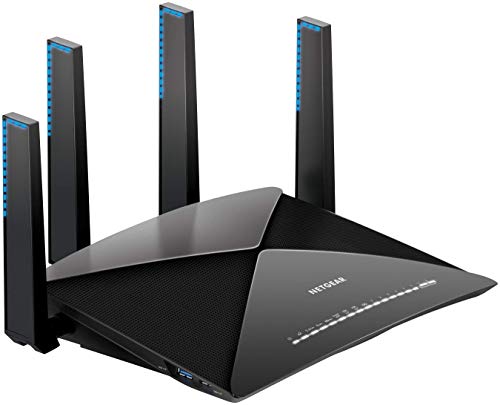
- Tri-band AD7200 Wi-Fi with 60GHz support
- One 10G SFP+ and six 1Gb Ethernet ports
- Two USB 3.0 ports for storage and printers
Best For: Wireless-focused homes needing SFP+ connectivity
Best Wi-Fi 6 Value

- AX3000 Wi-Fi 6 wireless performance
- One gigabit SFP and five gigabit RJ45 ports
- Omada Mesh and multi-WAN load balancing
Best For: Small offices and advanced home networks
Best for Home Labs

- 10G SFP+ cage with 1G and 2.5G Ethernet
- RouterOS platform with WPA2 and WPA3 listed
- USB 3.0 and 1GB of RAM
Best For: Technical users building wired home labs
Best Wired Value

- Five Gigabit Ethernet ports plus 1.25G SFP
- 256MB RAM with advanced RouterOS support
- USB, microSD, PoE output, and IPsec support
Best For: Advanced wired networks without built-in Wi-Fi
Best Wi-Fi 7 Upgrade

- Wi-Fi 7 speeds up to 7200Mbps
- 10G SFP+ and 10G WAN/LAN ports
- Four 2.5G and four 1G Ethernet ports
Best For: Multi-gigabit homes and small offices
Best DIY Wireless Build
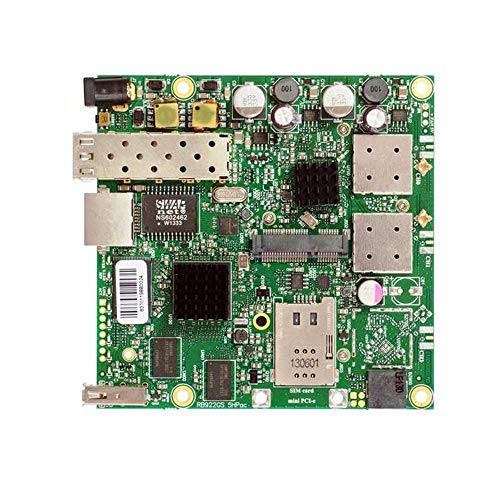
- 802.11ac 2x2 5GHz wireless up to 866Mbps
- SFP, Gigabit Ethernet, USB, and miniPCIe
- Passive PoE input with RouterOS Level 4
Best For: Custom wireless and networking installations
Business Multi-Gig Pick

- Seven 2.5GbE LAN ports plus a flexible SFP uplink
- Multi-WAN failover and SPI firewall protection
- Supports up to 100 VPN tunnels
Best For: Small businesses and multi-building wired networks
Wireless Fiber Flexibility Pick

- Wi-Fi 6 dual-band wireless connectivity
- 2.5G SFP plus five Gigabit Ethernet ports
- PoE-in/out and advanced RouterOS v7 controls
Best For: Home or small-business Wi-Fi networks with fiber uplinks
Compact Wired Value Pick

- Five Gigabit Ethernet ports and a 2.5G SFP port
- PoE-out, USB, and RouterOS support
- Compact wired design for separate access points
Best For: Home labs and small wired networks with external Wi-Fi
Best Overall Wi-Fi 5 Pick – Nighthawk X10 with SFP+
If you need a wi fi router with sfp port plus strong wireless coverage, the NETGEAR Nighthawk X10 combines tri-band Wi-Fi 5 with a 10G SFP+ port. It also provides six 1Gb Ethernet ports, two USB 3.0 ports, and coverage rated up to 2,500 square feet.
Best For: Homes or media-heavy networks that want fast wireless performance and a 10G SFP+ connection in one router.
Pros:
- Tri-band AD7200 wireless performance, including a 60GHz band for compatible devices
- Includes one 10G SFP+ port and six 1Gb Ethernet ports
- Two USB 3.0 ports support shared storage, printers, and personal cloud access
- Supports MU-MIMO, Beamforming+, Dynamic QoS, and Alexa voice controls
Cons:
- Wi-Fi 5 and 60GHz performance depend on compatible client devices
- Its 10G SFP+ port is paired with 1Gb Ethernet LAN ports
The Nighthawk X10 is a feature-rich choice when wireless coverage and advanced connectivity matter more than having several multi-gigabit RJ45 ports.
Best Wi-Fi 6 Value – Omada ER706W AX3000 Router
The Omada ER706W is a practical wi fi router with sfp port for users who want Wi-Fi 6, wired gigabit connectivity, and business-oriented routing features. It includes a 1Gb SFP slot, five gigabit RJ45 ports, Omada Mesh support, and multi-WAN load balancing.
Best For: Homes and small offices that need Wi-Fi 6, VPN support, mesh expansion, and flexible multi-WAN connectivity.
Pros:
- Wi-Fi 6 speeds up to 2,402 Mbps on 5GHz and 574 Mbps on 2.4GHz
- Provides one gigabit SFP slot and five gigabit RJ45 ports
- Supports Omada Mesh without extra cabling between compatible access points
- Includes SSL, IPSec, GRE, WireGuard, PPTP, L2TP, and OpenVPN support
Cons:
- The SFP slot is gigabit rather than 10G
- Advanced features may be more than a basic home network requires
With Wi-Fi 6 and a broad set of VPN and WAN options, the ER706W is a well-rounded option for networks that need more control than a typical consumer router provides.
Best for Home Labs – MikroTik RB5009 10G Router
MikroTik RB5009UG+S+in Router 1G and 2.5G Ethernet and a 10G SFP+ cage USB 3.0
Check Price On AmazonThe MikroTik RB5009 is a compact wired wi fi router with sfp port alternative for technically minded users. It features a 10G SFP+ cage, 1G and 2.5G Ethernet connectivity, RouterOS, 1GB of RAM, and USB 3.0, but it is not presented as an all-in-one wireless access point.
Best For: Home labs and wired networks where RouterOS flexibility, 10G SFP+, and mixed-speed Ethernet are priorities.
Pros:
- Includes a 10G SFP+ cage for high-speed fiber or network connections
- Supports 1G and 2.5G Ethernet connectivity
- Runs RouterOS with WPA2 and WPA3 security listed in the specifications
- Includes 1GB of RAM and a USB 3.0 port
Cons:
- Its supplied details emphasize wired networking rather than built-in Wi-Fi coverage
- RouterOS may require more networking knowledge than a basic consumer interface
The RB5009 is best treated as a powerful wired routing platform. Pair it with a separate access point if you need broad wireless coverage.
Best Wired 10G Option – Alta Labs Route10
The Alta Labs Route10 is a high-performance wi fi router with sfp port for advanced wired deployments, with two 10Gbps SFP+ ports and four 2.5Gbps ports. It does not broadcast Wi-Fi, so wireless coverage requires separate compatible access points.
Best For: Businesses and advanced homes needing 10G wired routing, multi-WAN support, VLANs, VPNs, monitoring, and PoE+ output.
Pros:
- Provides two 10Gbps SFP+ ports and four 2.5Gbps ports
- Supports VLAN tagging, QoS, firewall rules, DHCP, and port forwarding
- Offers multi-WAN load balancing and failover capabilities
- Includes hardware-accelerated VPN support and selected PoE+ output
Cons:
- Does not broadcast Wi-Fi; separate access points are required
- Its professional feature set may be excessive for simple home networks
Route10 stands out for wired throughput and network management rather than wireless convenience. It is a strong foundation for a separate access-point-based network.
Best Wired Value – MikroTik hEX S Gigabit Router
The MikroTik hEX S is a practical choice if you need a network router with SFP port connectivity but do not need built-in wireless service. Its five Gigabit Ethernet ports, 1.25G SFP cage, RouterOS platform, and compact design make it suited to advanced wired network setups.
Best For: Homes, small offices, and network projects that prioritize wired routing, SFP connectivity, and RouterOS configuration flexibility.
Pros:
- Includes five Gigabit Ethernet ports and a 1.25G SFP cage.
- Dual-core 880MHz CPU and 256MB RAM support advanced RouterOS configurations.
- Adds USB, microSD, PoE output, and IPsec hardware encryption support.
Cons:
- Does not provide built-in Wi-Fi, despite the broader wireless-router search category.
- Its advanced RouterOS feature set may require more networking knowledge.
Choose the hEX S when SFP and wired performance matter more than wireless convenience. It is a feature-rich, compact wired router for users comfortable managing RouterOS.
Best Wi-Fi 7 Upgrade – ASUS RT-BE88U with SFP+
The ASUS RT-BE88U is a strong fit for shoppers seeking a Wi-Fi router with SFP port connectivity and high-speed wired expansion. This renewed dual-band Wi-Fi 7 model combines a 10G SFP+ port with a second 10G WAN/LAN port, four 2.5G ports, and four 1G ports.
Best For: Homes and small offices that need Wi-Fi 7 performance, extensive multi-gigabit connectivity, and flexible wired networking.
Pros:
- Wi-Fi 7 supports throughput up to 7200Mbps with Multi-Link Operation and 4096-QAM.
- Offers one 10G SFP+ port, one 10G WAN/LAN port, four 2.5G ports, and four 1G ports.
- Includes AiMesh, Guest Network Pro, built-in VPN features, and USB tethering support.
Cons:
- This listing is renewed and includes a 90-day limited warranty.
- Its advanced features and high-capacity ports may be more than basic networks need.
The RT-BE88U stands out when you want integrated wireless and serious wired capacity. It is especially compelling for demanding streaming, gaming, and multi-gigabit home or office networks.
Best DIY Wireless Build – MikroTik RB922UAGS-5HPacD
The MikroTik RB922UAGS-5HPacD is a flexible option for users building a custom wireless router with SFP port connectivity. It combines 802.11ac 5GHz wireless, a Gigabit Ethernet port, an SFP cage, USB, passive PoE input, and expansion support for specialized deployments.
Best For: DIY networking projects, small offices, and custom wireless installations that need 5GHz Wi-Fi and SFP expansion.
Pros:
- Built-in 802.11ac 2×2 5GHz wireless supports data rates up to 866Mbps.
- Provides an SFP cage, Gigabit Ethernet, USB, and a miniPCIe slot with SIM support.
- Supports passive PoE input and RouterOS Level 4.
Cons:
- Wireless is single-band 5GHz rather than dual-band.
- Its 128MB RAM and 720MHz CPU are less substantial than newer high-performance routers.
- The board-oriented design may require more setup than a conventional consumer router.
This RouterBOARD is best viewed as a customizable platform rather than a plug-and-play home router. Its combination of 5GHz wireless, SFP, expansion, and PoE features suits technically confident buyers.
Business Multi-Gig Pick – D-Link Guardian 700 Pro
The D-Link Guardian 700 Pro is a strong choice if you need a Wi-Fi router with SFP port capabilities for a business network, although its supplied specifications focus on wired networking rather than built-in Wi-Fi. It combines seven 2.5GbE LAN ports, a 2.5GbE WAN port, a flexible 2.5G/1G SFP port, multi-WAN failover, firewall protection, and extensive VPN support.
Best For: Small businesses, branch offices, classrooms, and multi-building networks that need multi-gig wired connectivity and failover.
Pros:
- Seven 2.5GbE LAN ports support servers, cameras, POS systems, and other high-bandwidth devices.
- 2.5GbE/1GbE SFP port supports flexible fiber uplinks for longer-distance connections.
- Supports multi-WAN failover and up to 100 VPN tunnels across several VPN protocols.
- Includes SPI firewall protection and NDAA/TAA compliance.
Cons:
- The supplied notes do not list built-in Wi-Fi capability.
- Its business-oriented feature set may be more than a basic home network requires.
Choose this model when wired multi-gig capacity, centralized control, secure remote access, and connection continuity matter more than wireless functionality in the router itself.
Wireless Fiber Flexibility Pick – MikroTik hAP ax S
The MikroTik hAP ax S is a practical Wi-Fi router with SFP port option for homes and small businesses that want wireless coverage alongside flexible uplink connectivity. Its Wi-Fi 6 dual-band design, five Gigabit Ethernet ports, 2.5G SFP port, PoE support, and RouterOS v7 features make it adaptable for multi-room or multi-device networks.
Best For: Users who want Wi-Fi 6, fiber or high-speed uplink support, and advanced network controls in a compact router.
Pros:
- Wi-Fi 6 dual-band performance supports 2.4 GHz and 5 GHz connectivity.
- Includes five Gigabit Ethernet ports and a 2.5G SFP port for flexible networking.
- PoE-in and PoE-out simplify installation and can power another compatible device.
- RouterOS v7 provides VLAN, firewall, VPN, QoS, and bandwidth-control features.
Cons:
- Ethernet ports are Gigabit, so only the SFP connection provides the listed 2.5G wired option.
- RouterOS offers extensive controls that may require more setup than a basic consumer router.
This is the most balanced option here for buyers who specifically want wireless networking plus an SFP port, especially when PoE and advanced RouterOS management are useful.
Compact Wired Value Pick – MikroTik hEX S
The MikroTik hEX S is a compact wired router for buyers searching for a Wi-Fi router with SFP port features but who plan to use separate wireless access points. It provides five Gigabit Ethernet ports, a 2.5G SFP port, PoE-out, USB, and RouterOS management in an affordable wired-focused design.
Best For: Home labs, small offices, and wired networks using separate access points, switches, or servers.
Pros:
- 2.5G SFP port adds a high-speed fiber or uplink option.
- Five Gigabit Ethernet ports support wired clients and network equipment.
- PoE-out can simplify power delivery to a compatible connected device.
- RouterOS and a dual-core CPU provide a capable platform for network management.
Cons:
- This is a wired router and does not provide built-in Wi-Fi.
- The Ethernet ports are limited to Gigabit speeds.
- The supplied specifications list passive PoE-in rather than broader PoE input support.
Consider the hEX S when low cost, compact wired routing, and a 2.5G SFP port are priorities; pair it with a separate access point if you need wireless coverage.
How We Picked the Best Wi Fi Router with Sfp Port
We focused on routers that include an integrated SFP or SFP+ cage and evaluated them across the features that most affect real-world installations. These include wireless generation and throughput, Ethernet port speeds, fiber-link flexibility, VPN performance, VLAN and firewall support, multi-WAN capability, PoE options, firmware usability, and overall hardware value.
Because an SFP port does not guarantee compatibility with every fiber service, we also considered how practical each model is for home labs, offices, ISP handoffs, and wired-first networks. Advertised wireless ratings are theoretical; client devices, interference, cabling, and internet-plan speed will determine actual performance.
Quick Comparison
- Best for Wi-Fi 7 and multi-gig homes: ASUS RT-BE88U, with Wi-Fi 7 features, dual 10G connectivity, SFP+, and multiple 2.5GbE ports.
- Best for advanced routing: MikroTik RB5009UG+S+IN, offering powerful wired routing, a 10G SFP+ cage, and extensive RouterOS controls.
- Best for compact budgets: MikroTik hEX S models, which prioritize wired routing and fiber connectivity over high-end wireless.
- Best for business multi-WAN use: D-Link Guardian 700 Pro or Alta Labs Route10, depending on management preferences and port requirements.
- Best for an all-in-one wireless gateway: Omada ER706W or MikroTik hAP ax S, combining routing with built-in Wi-Fi.
Key Buying Factors for a Wi-Fi Router with SFP Port
Check SFP Compatibility First
Confirm whether you need SFP or SFP+, the supported speed, connector type, fiber wavelength, and module compatibility. Some ISPs require an approved optical module or an ONT, and many consumer fiber services do not allow a third-party router to replace provider equipment.
Match Wired Ports to Your Network
A 1G SFP port is suitable for many current fiber plans, while 2.5G, 10G, or multi-gig SFP+ is more appropriate for faster service, servers, storage, and backbone links. Check whether the router has enough 2.5GbE or 10GbE copper ports for your switches and access points.
Separate Routing from Wireless Coverage
Wired-focused models such as the hEX S and RB5009 are excellent network gateways but may require separate access points. If you want one device, choose an integrated wireless model and verify placement, antenna design, mesh support, and client compatibility.
Consider Management and Security
VLANs, firewall rules, policy routing, VPN acceleration, failover, traffic monitoring, and remote management can matter more than headline Wi-Fi speeds. MikroTik provides deep control but has a steeper learning curve; Omada, ASUS, D-Link, and Alta Labs may offer a more approachable workflow depending on the setup.
Who Should Buy Which Wi Fi Router with Sfp Port?
Choose the ASUS RT-BE88U for a modern home with Wi-Fi 7 clients and several multi-gig devices. Pick Omada or D-Link for a small office that values centralized administration, segmentation, and failover. Select Alta Labs Route10 when high-speed SFP+ WAN or LAN links and hardware-assisted VPN performance are priorities.
For homelabs, fiber enthusiasts, and experienced administrators, the RB5009 offers an especially capable wired foundation. Choose a MikroTik hEX S or hAP ax S when cost, compact dimensions, and flexible RouterOS features matter more than maximum throughput. The older Nighthawk X10 or 802.11ac MikroTik option makes sense mainly when discounted or when its specific wireless, PoE, or hardware features match an existing setup.