A dependable workstation connection needs more than impressive speed ratings. The right router can reduce latency during video calls, cloud backups, large downloads, remote desktop sessions, and other demanding workloads.
We compared 10 strong options across Wi-Fi standards, coverage, wired connectivity, security features, and overall value to help you choose the best fit for your workspace and internet plan.
Best 10 Wifi Router for Workstation Picks for 2026
Whole-Home Workstation Coverage

- Three-unit Wi-Fi 6 mesh coverage
- Covers up to 6,500 sq. ft.
- Supports up to 150 devices
Best For: Large spaces with dead zones and many connected devices
Secure Multi-Gig Workstation Pick
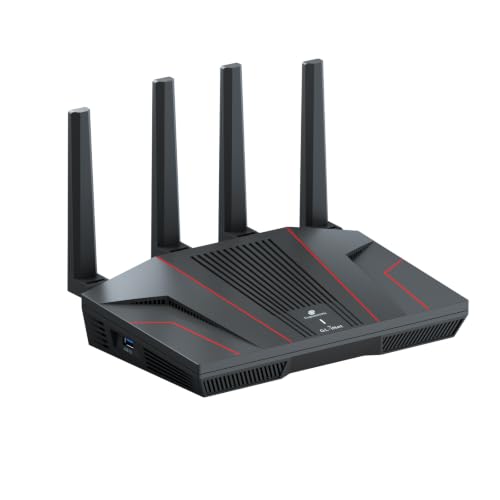
- Integrated ExpressVPN and OpenWrt
- Two 2.5GbE ports
- Wi-Fi 6 for up to 86 devices
Best For: VPN-focused workstations, NAS systems, and multi-gigabit networks
Low-Latency Workstation Upgrade

- Tri-band Wi-Fi 6E up to 5,400 Mbps
- Dedicated 6 GHz band
- VPN server and client support
Best For: Wi-Fi 6E workstations needing responsive, less-congested wireless performance
Best All-Around WiFi 6
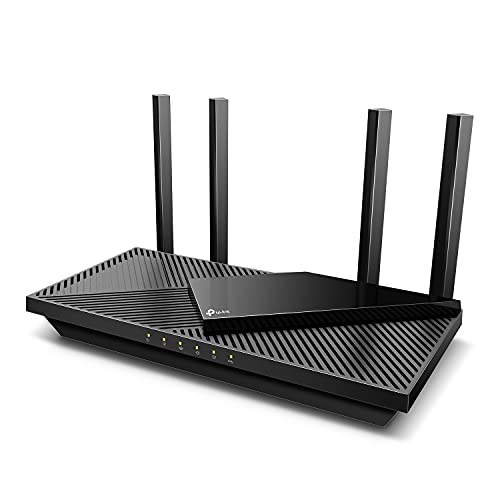
- Up to 2,402 Mbps on 5 GHz
- OFDMA supports multiple simultaneous clients
- Four antennas with beamforming
Best For: Workstations sharing bandwidth with streaming and gaming devices
Best Value Workstation Router
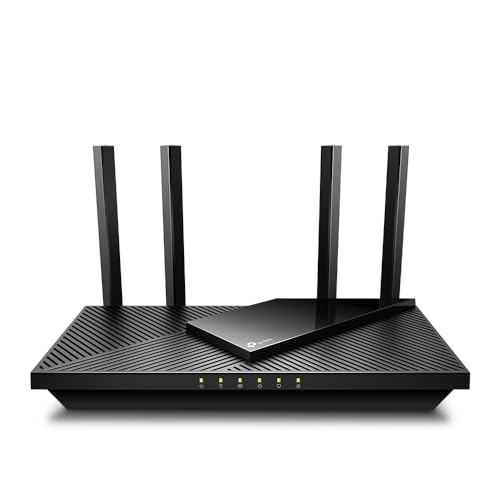
- AX1800 WiFi 6 dual-band performance
- Four antennas with beamforming coverage
- OpenVPN and PPTP VPN server support
Best For: Home offices needing affordable WiFi 6 and Gigabit networking
Best Balanced Wi-Fi 7 Pick
TP-Link BE6500 Dual-Band WiFi 7 Router

- Wi-Fi 7 with MLO, Multi-RUs, and 4K-QAM
- 2.5 Gbps WAN/LAN and 2.5 Gbps LAN ports
- Coverage for up to 2,400 sq. ft. and 90 devices
Best For: Workstations needing balanced wireless and wired performance
Best Heavy-Duty Pick
TP-Link Archer BE230 BE3600 Wi-Fi 7 Router

- Wi-Fi 7 features with up to 3,600 Mbps combined speeds
- Two 2.5 Gbps Ethernet ports
- Coverage for up to 2,000 sq. ft. and 60 devices
Best For: Home offices seeking affordable multi-gig connectivity
Best High-Capacity Pick
TP-Link Archer BE600 BE9700 Tri-Band Router

- Tri-band Wi-Fi 7 with a 6 GHz band
- 10 Gbps port plus four 2.5 Gbps ports
- Coverage for up to 2,600 sq. ft. and 120 devices
Best For: High-performance workstations and multi-gig home networks
Reliable Workstation Router – NETGEAR Nighthawk RAX36
The NETGEAR Nighthawk RAX36 is a practical wifi router for workstation setups that need dependable Wi-Fi 6 performance, wired connectivity, and straightforward coverage. It supports up to 25 devices across 2,000 square feet and includes four Gigabit Ethernet ports for computers, consoles, or other wired equipment.
Best For: Home offices and workstations needing solid Wi-Fi 6 coverage, Gigabit wired connections, and simple app-based management.
Pros:
- AX3000 wireless speeds up to 3 Gbps with Wi-Fi 6
- Four 1G Ethernet ports for wired workstation connections
- Includes built-in VPN support, WPA3 security, and USB 3.0
- Works with internet services up to 1 Gbps
Cons:
- Does not include a built-in cable modem
- Coverage and device capacity are more limited than a mesh system
Choose the RAX36 if you want a conventional router with useful wired ports and enough capacity for a moderate home office. A separate modem is required, and its 1G Ethernet ports may not suit multi-gigabit workstation networking.
Whole-Home Workstation Coverage – TP-Link Deco X55 Mesh
The TP-Link Deco X55 three-pack is a strong wifi router for workstation users who need consistent coverage across a large home or office. Its mesh design covers up to 6,500 square feet, supports up to 150 devices, and allows Ethernet backhaul for more stable connections between units.
Best For: Large homes, distributed workspaces, and households with many devices or Wi-Fi dead zones.
Pros:
- Three-unit Wi-Fi 6 mesh system covers up to 6,500 square feet
- Supports up to 150 connected devices
- Three Gigabit Ethernet ports per unit
- Supports wired Ethernet backhaul and includes basic HomeShield features
Cons:
- Requires a modem for most internet services
- Gigabit Ethernet ports do not provide multi-gigabit wired speeds
- A three-unit system may be excessive for a small workspace
The Deco X55 is best when workstation connectivity depends on eliminating weak-signal areas rather than maximizing a single router’s wired speed. It offers broad coverage and flexible placement, while Ethernet backhaul can help maintain performance where cabling is available.
Secure Multi-Gig Workstation Pick – GL.iNet Fortify AX6000
The GL.iNet Fortify is a feature-rich wifi router for workstation users who prioritize VPN protection, multi-gigabit networking, and advanced routing controls. It combines AX6000 Wi-Fi 6 with two 2.5GbE ports, four 1GbE LAN ports, OpenWrt-based features, and a 12-month ExpressVPN Advanced plan.
Best For: Secure remote work, multi-gigabit desktops, NAS systems, and technically minded users who want advanced network control.
Pros:
- Integrated ExpressVPN with WireGuard performance up to 900 Mbps
- Two 2.5GbE ports plus four 1GbE LAN ports
- OpenWrt features include policy routing, AdGuard Home, Tailscale, and multi-WAN support
- AX6000 Wi-Fi 6 supports up to 86 devices
Cons:
- Coverage is rated for up to 1,500 square feet
- Advanced features may require more networking knowledge
- Actual VPN speeds vary by protocol, server, ISP, and conditions
For a workstation with a fast desktop, NAS, or privacy-sensitive remote-work needs, the Fortify offers the most specialized feature set in this group. Its smaller coverage area makes it better suited to a focused office or network edge than a large whole-home deployment.
Low-Latency Workstation Upgrade – TP-Link Archer AXE75 Wi-Fi 6E
The TP-Link Archer AXE75 is a practical wifi router for workstation users with compatible Wi-Fi 6E devices. Its tri-band design adds a 6 GHz band with 160 MHz channels, providing more available bandwidth and lower congestion for responsive video calls, downloads, and other demanding tasks.
Best For: Workstations with Wi-Fi 6E support that need a dedicated 6 GHz band for responsive, high-capacity wireless connections.
Pros:
- Tri-band Wi-Fi 6E speeds up to 5,400 Mbps
- Dedicated 6 GHz band with 160 MHz channel support
- OFDMA increases capacity for simultaneous device connections
- Includes VPN server and client support, WPA3, and EasyMesh compatibility
Cons:
- The 6 GHz benefits require compatible Wi-Fi 6E devices
- Wired LAN bandwidth is limited to 1 Gbps
- A modem is required for most internet providers
The Archer AXE75 is a good fit when your workstation supports Wi-Fi 6E and you want a less congested wireless band. It is less compelling for older devices or setups that depend primarily on multi-gigabit wired networking.
Best WiFi 7 Upgrade – Nighthawk RS90
The NETGEAR Nighthawk RS90 is a strong wifi router for workstation use when you need WiFi 7 performance, reliable connections for many devices, and broad coverage. Its dual-band design reaches up to 3.6 Gbps and includes a 2.5G port for compatible high-speed networking.
Best For: Busy home workstations handling video calls, large downloads, streaming, and multiple connected devices.
Pros:
- WiFi 7 speeds up to 3.6 Gbps across the 2.4 GHz and 5 GHz bands.
- Supports up to 50 devices across up to 2,000 square feet.
- Includes one 2.5G port, four Gigabit ports, WPA2/WPA3 security, and app-based management.
Cons:
- It is dual-band and does not provide a 6 GHz band.
- Coverage can be reduced by walls, floors, and interference.
- Some modem-router gateways may require bridge mode.
Choose the RS90 if you want a current-generation router with extra capacity for a busy workspace and connected home. Its benefits are most useful when your internet plan and client devices can take advantage of WiFi 7 or the 2.5G port.
Best All-Around WiFi 6 – TP-Link Archer AX55
The TP-Link Archer AX55 is a practical wifi router for workstation setups that need fast dual-band WiFi 6, Gigabit wired connectivity, and support for several simultaneous activities. OFDMA helps multiple clients share bandwidth, while four high-gain antennas and beamforming extend coverage.
Best For: Home workstations used for video calls, streaming, gaming, downloads, and everyday connected-device traffic.
Pros:
- Offers up to 2,402 Mbps on 5 GHz and 574 Mbps on 2.4 GHz.
- OFDMA is designed to reduce latency and jitter for multiple clients.
- Includes four antennas, beamforming, WPA3 support, VPN features, and HomeShield security tools.
Cons:
- It requires a separate modem for most internet providers.
- Actual speeds depend on your internet plan, distance, and obstacles.
- It uses dual-band WiFi 6 rather than WiFi 7 or 6 GHz connectivity.
The Archer AX55 is a balanced choice for a workstation that shares the network with other demanding devices. It combines strong WiFi 6 specifications with useful network controls without requiring a newer WiFi 7 ecosystem.
Best Value Workstation Router – TP-Link Archer AX21
The TP-Link Archer AX21 is a straightforward wifi router for workstation users who want WiFi 6 performance and Gigabit Ethernet at a lower specification tier. Its dual-band AX1800 design supports smoother streaming and gaming while OFDMA helps connect multiple devices efficiently.
Best For: A single home workstation or small household needing dependable WiFi 6 coverage and basic VPN support.
Pros:
- Provides up to 1.8 Gbps total bandwidth, including up to 1,200 Mbps on 5 GHz.
- Four high-gain antennas, beamforming, and an FEM chipset help extend coverage.
- Supports OpenVPN and PPTP VPN servers, WPA3, Gigabit ports, and Alexa control.
Cons:
- A separate modem is required.
- It is dual-band and does not support the 6 GHz band.
- Actual wireless speeds vary with the internet plan, distance, and obstacles.
The Archer AX21 makes sense when your workstation needs modern WiFi 6 features but does not require the higher throughput of WiFi 7. It is best suited to ordinary home-office workloads and moderate device counts.
Best Balanced Wi-Fi 7 Pick – TP-Link BE6500 Dual-Band WiFi 7 Router
If you need a wifi router for workstation use, the TP-Link BE6500 Archer BE400 offers a practical mix of Wi-Fi 7 performance, multi-gig wired connectivity, and broad coverage. Its dual-band design supports up to 5,764 Mbps on 5 GHz and includes Multi-Link Operation, Multi-RUs, and 4K-QAM for compatible devices.
Best For: Workstations, remote workers, and homes that need strong coverage and a 2.5 Gbps wired connection without moving to a tri-band router.
Pros:
- Wi-Fi 7 features can improve throughput, reliability, and latency with compatible devices.
- Includes a 2.5 Gbps WAN/LAN port, a 2.5 Gbps LAN port, and three 1 Gbps LAN ports.
- Rated for up to 2,400 square feet and up to 90 connected devices.
- Supports EasyMesh expansion, app management, VPN connections, and network security features.
Cons:
- It is dual-band and does not provide a dedicated 6 GHz band.
- Actual speeds depend on the internet plan, distance, obstacles, and client-device compatibility.
- A separate modem is required.
The BE400 is a sensible workstation router for users who want Wi-Fi 7 features and faster-than-gigabit Ethernet without the added complexity of a larger tri-band model. Pair it with a compatible multi-gig modem to take advantage of its fastest wired port.
Best Heavy-Duty Pick – TP-Link Archer BE230 BE3600 Wi-Fi 7 Router
The TP-Link Archer BE230 is a straightforward wifi router for workstation setups that want Wi-Fi 7 features and multi-gig Ethernet at a lower scale. It delivers up to 2,882 Mbps on 5 GHz, includes Multi-Link Operation, and provides a 2.5 Gbps WAN/LAN port plus a 2.5 Gbps LAN port.
Best For: Home offices and individual workstations that need a fast wired connection, reliable dual-band Wi-Fi, and manageable coverage for a medium-sized home.
Pros:
- Wi-Fi 7 support includes Multi-Link Operation, Multi-RUs, and 4K-QAM.
- Two 2.5 Gbps Ethernet ports can support a multi-gig internet connection and a fast workstation link.
- Covers up to 2,000 square feet and up to 60 devices according to the supplied specifications.
- Supports EasyMesh, Tether app management, voice control, and built-in security features.
Cons:
- Dual-band operation does not include 6 GHz.
- Coverage and performance vary with walls, distance, network conditions, and device support.
- A separate modem is required for most internet providers.
Choose the Archer BE230 when your priority is a capable workstation connection rather than maximum whole-home capacity. Its two 2.5 Gbps ports make it especially useful for a workstation and internet plan that exceed the 1 Gbps barrier.
Best High-Capacity Pick – TP-Link Archer BE600 BE9700 Tri-Band Router
For demanding offices and busy homes, the TP-Link Archer BE600 is a high-capacity wifi router for workstation use. Its tri-band Wi-Fi 7 design adds a 6 GHz band, supports channels up to 320 MHz, and offers up to 5,765 Mbps on 6 GHz, 2,882 Mbps on 5 GHz, and 1,032 Mbps on 2.4 GHz.
Best For: High-performance workstations, multi-device households, and users with multi-gig internet who want extensive wired capacity and Wi-Fi 7 tri-band performance.
Pros:
- Tri-band Wi-Fi 7 includes 6 GHz support, Multi-Link Operation, Multi-RUs, 4K-QAM, and up to 320 MHz channels.
- Provides one 10 Gbps WAN/LAN port, one 2.5 Gbps WAN/LAN port, and three 2.5 Gbps LAN ports.
- Supports up to 2,600 square feet and 120 connected devices.
- Offers app or web management, VPN support, parental controls, and IoT security features.
Cons:
- The fastest results require compatible Wi-Fi 7 clients, multi-gig networking hardware, and an appropriate internet plan.
- Coverage and throughput can change with distance, walls, interference, and other conditions.
- A separate modem is required.
The Archer BE600 is the strongest fit here for a workstation that must share a network with many high-bandwidth devices. Its 10 Gbps port and multiple 2.5 Gbps LAN ports also leave more room for future upgrades than the dual-band alternatives.
How We Picked the Best Wifi Router for Workstation
We focused on features that matter at a desk: consistent throughput, low latency, reliable coverage, modern security, and fast Ethernet ports for devices that benefit from a wired connection. The selection includes affordable Wi-Fi 6 models, whole-home mesh systems, Wi-Fi 6E routers with the 6GHz band, and newer Wi-Fi 7 options.
We also considered practical differences such as VPN support, network management tools, device capacity, Ethernet speed, and whether a router is better suited to one office or a larger home.
Quick Comparison
| Best For | Recommended Type | Why It Stands Out |
|---|---|---|
| Affordable workstation setup | Wi-Fi 6 dual-band router | Strong everyday performance and value |
| Large or multi-level homes | Three-unit mesh system | More consistent coverage across rooms |
| Busy networks | Wi-Fi 6E or Wi-Fi 7 router | Additional wireless capacity and less congestion |
| Privacy-focused users | Router with built-in VPN features | Convenient encrypted remote access and routing |
| High-speed wired workstation | Premium Wi-Fi 7 router | Higher wireless capacity and faster ports |
Key Buying Factors for a Wi-Fi Router for Workstation Use
Speed and Wi-Fi Standard
Wi-Fi 6 is sufficient for many homes and supports efficient connections for multiple devices. Wi-Fi 6E adds access to the 6GHz band, while Wi-Fi 7 can deliver greater capacity and improved performance when both the router and client devices support the newer standard. Router speed ratings are theoretical, so your internet plan, distance, walls, and client hardware still matter.
Ethernet Ports
A workstation used for large file transfers, gaming, NAS access, or stable video calls may perform best over Ethernet. Check whether the router includes gigabit, 2.5Gbps, or faster ports, and confirm that your computer or dock supports the same speed.
Coverage and Capacity
Choose a conventional router for a compact office or open floor plan. A mesh system is usually more practical when the workstation is far from the router, separated by thick walls, or located on another floor. Consider the number of simultaneous users and smart-home devices, not just the advertised square footage.
Security and Management
Look for automatic firmware updates, WPA3 support, guest networking, parental controls where needed, and a clear management app. VPN functionality can be valuable for privacy, travel, or connecting securely to a work network, but check subscription requirements and performance limits.
Who Should Buy Which Wifi Router for Workstation?
Choose an affordable Wi-Fi 6 router if you need dependable connectivity for a single workstation and a moderate internet plan. Pick a mesh system for broader, more uniform coverage. Wi-Fi 6E is a sensible middle ground for newer laptops and congested neighborhoods, while Wi-Fi 7 is best for buyers planning several years of use, owning compatible devices, or transferring large files across a fast local network.
If privacy and flexible routing are priorities, a VPN-equipped model is worth considering. For the most demanding workstation, prioritize a router with multi-gigabit Ethernet, strong wired backhaul options, and enough capacity for the rest of your household rather than choosing solely by its headline wireless speed.